
Beauty

Spa, Salons, Surgeons

Belikov Vladimir

Highland Heights branch

Dental services. Belikov is a top dentist in USA, year 2003-2012.
More details

Belikov Vladimir

Parma branch

Dental services. Belikov is a top dentist in USA, year 2003-2012.
More details

Elegant Permanent Cosmetics

Alla designs sensational natural-looking brows for you done in fabulous hair stroke! With eyeliner, she artistically creates the illusion of open, almond-shaped eyes, rich with lashes!
More details

Elite Dentistry Center

Elite Dentistry Center is a MODERN, HIGH-TECHNOLOGY Dental Center in Cleveland, Ohio that provides most DENTAL SERVICES in our elegant Dentistry Center.
More details

Kaziner Iakov

Стоматолог

Dental services. After our treatments you will never need a new one again!
More details

Kozikov Alex

Массажист

Certified massage specialist. We will help you to get rid of pain after accidents and injures.
More details

Kramoy Vladimir

Стоматолог

Modern Laser Dentistry.
More details

Kutsikovich Rita

Стоматолог

Our doctors and staff are skillful, experienced professionals with years of success in caring for patients like you. Our personalized treatment approach and focus on details bring about successful results every day. We simply care about your well being.
More details

Pavolotsky Konstantin

Стоматолог

Dental services for kids and adults. If you want a Hollywood smile - call us !
More details

Skorobagatskiy Andrew

Стоматолог

Dental Services. Invisalign® is the convenient, comfortable, and nearly invisible substitute for traditional braces! Find out if Invisalign® is the choice for you!Use AcceleDent® with your existing orthodontics to speed up teeth movement! This can decrease the length of your orthodontic treatment and may help to make your orthodontics more comfortable.
More details

Iarovitskaia Irina

Стоматолог

We pride ourselves as “a group of neighborhood dental offices.” We began as a single office in 1977 and have grown to 16 neighborhood dental offices in Northeast Ohio.
More details

LATEST ARTICLES AND INSIGHTS

The Quiet Thirty-Year War Behind Your Sunscreen Bottle

The Quiet Thirty-Year War Behind Your Sunscreen Bottle

Here's an odd fact about sun protection in North America: for years, a meaningful number of skincare-conscious Americans have been quietly importing sunscreen from South Korea, Japan, and Europe - not because domestic sunscreen doesn't work, but because it's been genuinely behind, technologically, for decades. The reason has almost nothing to do with cosmetic science and almost everything to do with a piece of American law written in 1938, long before anyone had invented the ingredients now sitting on shelves in Seoul and Paris. That finally started to change this year, after one company spent roughly $18 million and more than two decades trying to get a single ingredient approved. This is the story of why your sunscreen has been stuck in the past - and why 2026 is the year that quietly started changing.
More details
Skin Versus Sun

Skin Versus Sun

The New Rules of Summer Protection

Ask anyone who grew up in North America in the 1970s or 80s what summer smelled like, and many will say baby oil and iodine. That was the recipe: a few drops of iodine stirred into baby oil, slathered on skin, sometimes paired with a sheet of foil propped under the chin to bounce extra sun onto the face. A tan wasn't just tolerated - it was the entire point of summer, a visible badge of vitality sold to an entire generation by suntan lotion ads and a culture that had not yet learned to be afraid of the sun. Today, the same ritual would strike most people as faintly reckless. Something changed - not just the sun, but our understanding of what it does to us. This is the story of that shift, and of what protecting your skin actually requires now.
More details
How to lose weight properly after 40

How to lose weight properly after 40

Excess weight is not a matter of weak willpower, and it is not something to joke about. It is a condition that affects health, energy, self-esteem, mobility and quality of life. This becomes especially important after 40, when the body changes, muscle mass gradually declines, hormones become less predictable and the old strategy of just eating less often stops working. That is why any conversation about weight loss should not be about punishing yourself with diets, but about restoring metabolic health, strength and inner control.
More details
The Anatomy of Choosing Right

The Anatomy of Choosing Right

Lingerie by Body Type, Skin Tone, and Color

Lingerie is the one garment layer nobody else sees, which is exactly why most people choose it worst. There is no mirror check from a friend, no fitting-room daylight, no social pressure correcting a bad decision - just a drawer full of things bought on impulse that either don't fit or don't flatter. The same logic that governs a well-chosen swimsuit or a well-cut blazer applies here just as precisely: proportion, undertone, and structure matter more than trend or price tag.
More details
The Secret History of Intimate Grooming

The Secret History of Intimate Grooming

And How to Choose a Shape That Actually Suits You
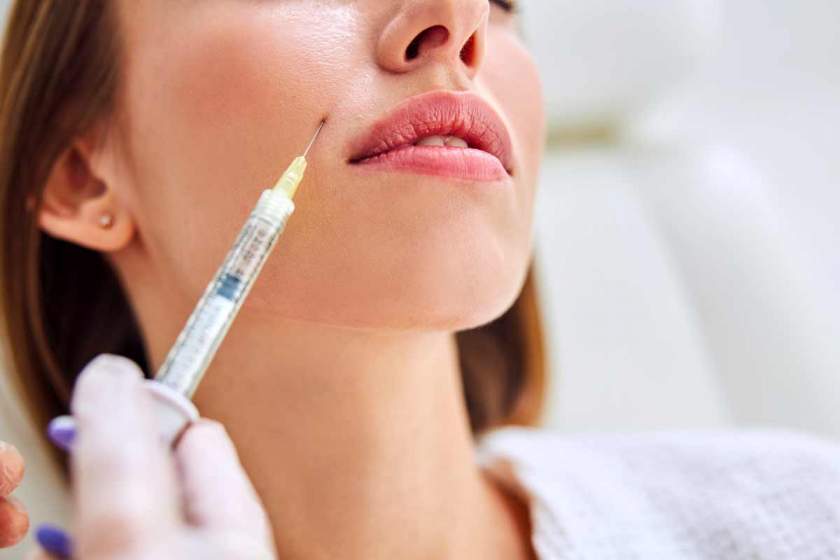
Every era has quietly dictated what a body was supposed to look like in its most private places, and every era has been just as quietly wrong about it. Ancient hygiene practices, medieval religious shame, a single New York nail salon that changed an entire industry in 1987, and a modern shift toward genuine individual choice - the history of intimate grooming is really a history of who gets to decide what your own body should look like. Today, for the first time, that decision has genuinely returned to the individual - and the most interesting development isn't a return to any single "natural" or "bare" default, but a new, wider conversation about matching shape, color, and density to the body itself, the way a good haircut is matched to a face.
More details
How

How "Instagram Face" Became the Look Nobody Wants Anymore

The Kardashian Effect and Its Quiet Reversal

For roughly a decade, one specific aesthetic - exaggerated cheekbones, dramatically fuller lips, a heavily contoured, near-identical facial template - became so globally dominant that dermatologists and plastic surgeons gave it its own shorthand: "Instagram Face." It traced back most directly to the Kardashian-Jenner family's visible influence on global beauty standards. Now, in a genuinely striking full-circle moment, members of that same family and dozens of other celebrities are quietly reversing course - publicly dissolving the very fillers that helped define the look in the first place. The reasons behind the reversal say something real about how beauty trends actually move, and what "natural" is currently worth in a market that spent a decade selling the opposite.
More details
Capsule Wardrobe From Scratch

Capsule Wardrobe From Scratch

The Real History and a Plan That Actually Works

Here's a detail that surprises most people who assume the capsule wardrobe is a recent minimalism trend: the concept's most famous public debut opened with models walking out in nothing but black bodysuits and tights, then progressively layering on piece after piece until a complete outfit emerged in front of the audience. It wasn't an accident or a gimmick - it was a designer proving a philosophical point about clothing in real time. Understanding where this idea actually came from changes how you think about building one for yourself, because the whole concept was never really about owning less. It was about needing considerably less mental energy to get dressed.
More details
The Red Dress, the Red Lipstick

The Red Dress, the Red Lipstick

Why One Color Has Signaled Desire for Millennia

From the red ochre used in prehistoric rituals to the red-light district and the red rose on Valentine's Day, one color has carried an outsized cultural charge across nearly every civilization on record. For most of history, that connection was treated as pure symbolism - a cultural coincidence with no real mechanism behind it. Then, in 2008, two University of Rochester psychologists actually tested it in a laboratory. What they found was more specific, more measurable, and more scientifically contested than the popular version of this story usually admits.
More details
Wardrobe That Actually Works From −20C to +20C

Wardrobe That Actually Works From −20C to +20C

The North American Shoulder-Season Capsule

Anyone who's commuted through a Canadian April knows the specific problem: minus five in the morning, plus fifteen by mid-afternoon, and back down to freezing after sunset, all in a single day that technically counts as "spring." Most wardrobe advice simply doesn't account for this kind of swing, because most wardrobe advice is written for climates that don't have it. The military, however, has been solving exactly this problem for decades, with genuine engineering rigor rather than style-blog guesswork - the U.S. Army's current cold-weather clothing system is explicitly built to function across a range from 4°C down to minus 51, using the same core principle that, translated into ordinary civilian clothing, is the actual foundation of a capsule wardrobe built for Canadian shoulder seasons.
More details
The Mens Capsule Wardrobe

The Mens Capsule Wardrobe

25 Pieces Instead of 200

The popular version of the Steve Jobs story goes like this: he didn't care about clothes, so he wore the same black turtleneck every single day and saved his brainpower for changing the world. The actual story is considerably more useful, and almost the opposite: Jobs cared enormously about how he looked, and specifically hired designer Issey Miyake to think about his wardrobe with real intensity - once - so that he would never have to think about it again each morning. That distinction matters enormously if you're building your own minimalist wardrobe, because it separates a genuinely smart system from a joyless uniform, and it's the entire difference between a capsule wardrobe that works and one that just looks austere.
More details
When Beauty Was Actually Poison

When Beauty Was Actually Poison

A History of Cosmetics That Killed Their Wearers
Here's the part of this story that's genuinely hard to sit with: for most of it, nobody was being tricked. The label on one of the best-selling complexion products of the 1890s said, in plain print, that it contained arsenic. Women bought it anyway, nibbled the wafers on purpose, and kept buying more once the first tin ran out. Beauty being "worth the pain" is an old cliché - but for roughly four centuries, in several different countries, that pain was measured in organ failure, not discomfort. Understanding how deliberately people accepted that trade explains something that still matters: why the regulations governing what's allowed in your bathroom cabinet today exist at all, and how recently - genuinely recently - they arrived.
More details
Mens Underwear Had a Revolution

Mens Underwear Had a Revolution

It Just Started With a Bicycle
Almost nobody thinks of mens underwear as having a real history, but it does - and the origin story is far less glamorous than anything happening in a lingerie boutique. It starts with a Chicago sporting goods company, a genuinely painful problem involving 19th-century cobblestone streets, and a chain of accidental inventions that eventually produced the boxer, the brief, and everything in between. None of it was designed with seduction in mind. All of it, eventually, became exactly that.
More details
When Skincare Became Biohacking

When Skincare Became Biohacking

And Trickled All the Way Down to Fifth Grade

There was a time when skincare meant washing your face, moisturizing, and maybe using sunscreen if you remembered. That era is over. Today's skincare culture runs on protocols, cycles, and schedules that sound less like a beauty routine and borrowed almost entirely from the language of biohacking: skin cycling, slugging, skin flooding - each one framed as a system to optimize, track, and follow with near-clinical precision. Most of this is genuinely useful, invented by real dermatologists solving real problems for adult skin. But there is a twist nobody planned for: these adult-designed protocols have quietly trickled down to eleven-year-olds, triggering an actual government investigation, a failed piece of state legislation, and at least one peer-reviewed study documenting real, sometimes permanent damage. This is the story of how three viral skincare terms actually work - and why one of them landed a major retailer under legal scrutiny.
More details
Underwear Quiet Tech Revolution

Underwear Quiet Tech Revolution

What Is Actually New

For most of the twentieth century, underwear innovation meant a new elastic or a new color. That era is over. The intimate apparel industry is now one of the more active proving grounds for genuine textile science - silver-ion antimicrobial fibers, moisture-sensing period wear, size-free stretch fabrics, and construction methods that didn't exist a decade ago. None of this is marketing gloss. It is a direct response to real, physical problems that generations of women and men were simply told to tolerate.
More details
One Climate, Two Different Kinds of Skin

One Climate, Two Different Kinds of Skin

A North American Guide to Seasonal Skincare

Here's something most skincare advice conveniently ignores: the same face can genuinely need two almost opposite routines within a single calendar year, and nowhere is that truer than in a country that swings between humid summers and brutally dry, centrally-heated winters. Dermatological researchers who study this specifically have pointed to northern Europe and North America as the regions where this seasonal whiplash hits skin hardest - and the mechanism behind it is precise enough to measure in a lab, not just a feeling you get in January. Understanding what's actually happening to your skin barrier across the seasons changes what you should be buying, and when.
More details
Men Have a Typing System Too

Men Have a Typing System Too

It Is Just Rarely Talked About

Nearly every conversation about body typing and style - Kibbe, seasonal color, the fruit-shape charts - centers on women, as if men simply show up in a well-cut suit and the question resolves itself. It doesn't, and it never really has. Men have had their own parallel typing system for almost as long, rooted in 1940s psychology, still used today by fitness professionals and tailors alike - it's just rarely discussed with the same depth or seriousness. Understanding it explains something genuinely useful: why the exact same jacket can look sharp on one man and slightly wrong on another of similar height, and what to actually do about it.
More details
Retinols Retirement Party May Be Premature

Retinols Retirement Party May Be Premature

What Actually Replaces the Gold Standard

For sixty years, dermatology has had exactly one ingredient it could call the undisputed gold standard: retinol. No other over-the-counter active has anywhere near its volume of clinical evidence, and no serious dermatologist disputes that it works. And yet, walk into any Sephora or scroll any skincare feed right now, and you'll find an entire industry quietly suggesting retinol's reign might be ending - replaced by gentler plant extracts, signal-sending peptides, and a genuinely strange new category called exosomes that has already landed at least one company's founder in federal prison. The real story isn't that retinol is being dethroned. It's that the gap between "promising new science" and "proven treatment" has never been wider - or more profitable to blur.
More details
How the Beauty Industry Did a Total 180

How the Beauty Industry Did a Total 180

The Skin Barrier Obsession
For most of the 2010s, the beauty industry sold one message with remarkable consistency: more is more. More acids, more retinol, more exfoliation, more resurfacing, more of everything that promised to strip away the old and reveal the new. Then, almost overnight, that entire vocabulary flipped. Suddenly every serious skincare brand was talking about one thing: the barrier. Protecting it, repairing it, respecting it, never touching it too aggressively again. This isn't a subtle shift in marketing language. It's the industry publicly admitting, in its own roundabout way, that it spent the better part of a decade selling people the tools to damage their own skin - and that some of the most photographed faces in the world have been quietly saying so for years.
More details
The Quiet Revolution

The Quiet Revolution

How Shapewear Became a Billion-Dollar Confidence Machine

In 1998, a 27-year-old fax machine saleswoman in Florida cut the feet off a pair of pantyhose because she couldn't find anything smooth to wear under white slacks. She had no fashion background, no business training, and five thousand dollars to her name. That single, unglamorous act of frustration became Spanx - and, decades later, helped fuel a broader cultural shift in which shapewear stopped being something women hid and started being something they openly credit for how their clothes fit. The story of how that happened says a great deal about who actually gets to invent things, and why.
More details
How a Diabetes Drug Quietly Rewrote the Cosmetic Surgery Industry

How a Diabetes Drug Quietly Rewrote the Cosmetic Surgery Industry

A few years ago, a well-known New York cosmetic dermatologist named Dr. Paul Jarrod Frank started noticing something odd in his practice: patients who had lost significant weight on drugs like Ozempic were coming in feeling thrilled about the number on the scale - and upset about the mirror. They looked, in their own words, older. Frank coined a term for it that has since become genuine shorthand across the entire aesthetics industry: "Ozempic face." It's a rare thing in beauty culture - a phenomenon caused not by a new product or a new procedure, but by the runaway success of a diabetes medication nobody designed with faces in mind at all. And it has already reshaped, in measurable numbers, what an entire industry spends its time doing.
More details
What Actually Leaves the Closet After 30, 40, 50

What Actually Leaves the Closet After 30, 40, 50

And What Genuinely Replaces It

A British survey recently claimed 55 was roughly the age when women stop looking good in current fashion - and the backlash was immediate, loud, and entirely justified. There is no expiration date on style, and the fashion industry itself has spent the past two years proving it, casting women well into their seventies and eighties for major campaigns and runway shows. But something real does still shift in most people's closets across the decades - not because of arbitrary rules about what you're "allowed" to wear, but because of two genuine forces: how your actual body changes, and how your relationship with clothing itself evolves. Understanding both is considerably more useful than any list of things you're supposedly too old for.
More details
Not Just Kibbe

Not Just Kibbe

An Honest Comparison of Every Major Style-Typing System

Somewhere between a TikTok quiz and a genuine century-old theory of visual harmony, style typing has splintered into at least three competing systems, each with its own vocabulary, its own devoted online community, and its own claims about what will actually make you look better. Fruit shapes. Kibbe archetypes. Seasonal color analysis. They get treated online as interchangeable, or worse, as competing truths you have to pick a side on. They're not competing at all - they're answering entirely different questions, with wildly different levels of actual evidence behind them. Knowing which is which changes where you should spend your time, and your money.
More details
Your Skin Type Is Not What You Think It Is

Your Skin Type Is Not What You Think It Is

The 4-Category System Is a Century-Old Marketing Invention

Ask most people their skin type, and you'll get one of four answers: dry, oily, combination, or normal. It's the classification printed on nearly every product label, repeated by every beauty counter employee, and treated as basic biological fact. Here's what almost nobody knows: that four-category system wasn't developed by a scientist. It came from the cosmetics industry itself, and it has barely changed in around a century - even as the actual dermatological understanding of skin moved on decades ago. Meanwhile, research consistently finds that most people are simply wrong about which of even those four categories they belong to. The real story of skin typing is more interesting, more useful, and considerably more scientific than the label on your moisturizer suggests.
More details
How the Kibbe System Actually Works

How the Kibbe System Actually Works

And Why It is More Than Just Know Your Body Shape

Here's a detail that surprises most people who've only heard the name in passing: Marilyn Monroe and Madonna - two women whose public images could hardly look more different - are both classified as the same "pure" type under one of fashion styling's most enduring frameworks. That's not a contradiction. It's actually the entire point of a system built in 1987 that quietly outlasted the fruit-shaped body charts (apple, pear, hourglass) most of us grew up with, precisely because it was never really about size or curves in the first place.
More details
The Woman Who Invented the Bra From Two Handkerchiefs

The Woman Who Invented the Bra From Two Handkerchiefs

In 1913, a 19-year-old New York socialite named Mary Phelps Jacob was getting dressed for a debutante ball when her whalebone corset ruined the look of her sheer new evening gown - the rigid bones kept poking visibly through the fabric at her plunging neckline. Rather than accept it, she called for her maid, two silk handkerchiefs, and some pink ribbon. What she stitched together that evening would eventually be worn, in one form or another, by most of the women on Earth. She sold the patent for $1,500. The company that bought it made more than $15 million from the design over the following decades. This is the actual story - and the story of the myth that grew up around it decades later.
More details
Intimate Hygiene Has Quietly Changed

Intimate Hygiene Has Quietly Changed

What is Actually New

For decades, the intimate hygiene aisle was built almost entirely around one idea: stronger scent, more aggressive cleansing, more antiseptic. It took a genuine shift in medical understanding - and a louder consumer pushback against products that were quietly causing the exact problems they claimed to prevent - to move the entire category somewhere more scientifically grounded. Here's what's actually changed, and why the new default is less about fighting your body and more about working with it.
More details
Russian Advertising Magazine
Russian Flyers
Mobile Spravochnik Apps
Stunning Media - SEO, Web Design, Maps Marketing, Video and Content Production