
How "Instagram Face" Became the Look Nobody Wants Anymore
The Kardashian Effect and Its Quiet Reversal
For roughly a decade, one specific aesthetic - exaggerated cheekbones, dramatically fuller lips, a heavily contoured, near-identical facial template - became so globally dominant that dermatologists and plastic surgeons gave it its own shorthand: "Instagram Face." It traced back most directly to the Kardashian-Jenner family's visible influence on global beauty standards. Now, in a genuinely striking full-circle moment, members of that same family and dozens of other celebrities are quietly reversing course - publicly dissolving the very fillers that helped define the look in the first place. The reasons behind the reversal say something real about how beauty trends actually move, and what "natural" is currently worth in a market that spent a decade selling the opposite.
How One Family's Aesthetic Became a Global Template
The mechanics of how this happened are worth understanding before getting to the reversal. Through the 2010s, a specific set of facial features - high, sculpted cheekbones, a dramatically fuller lip line, a smoothed, contoured jaw, and skin with an almost airbrushed uniformity - became so consistently associated with the Kardashian-Jenner family's public image that the look effectively became a template. Injectors around the world reported patients arriving with reference photos of the same handful of faces, requesting near-identical results regardless of their own starting proportions. Dermatologists eventually coined the term "Instagram Face" specifically to describe this homogenized, filter-adjacent standard - a look optimized less for how a face reads in person than for how it photographs at a specific angle, under specific lighting, through a phone camera.
The Public Reversal, Named and Documented
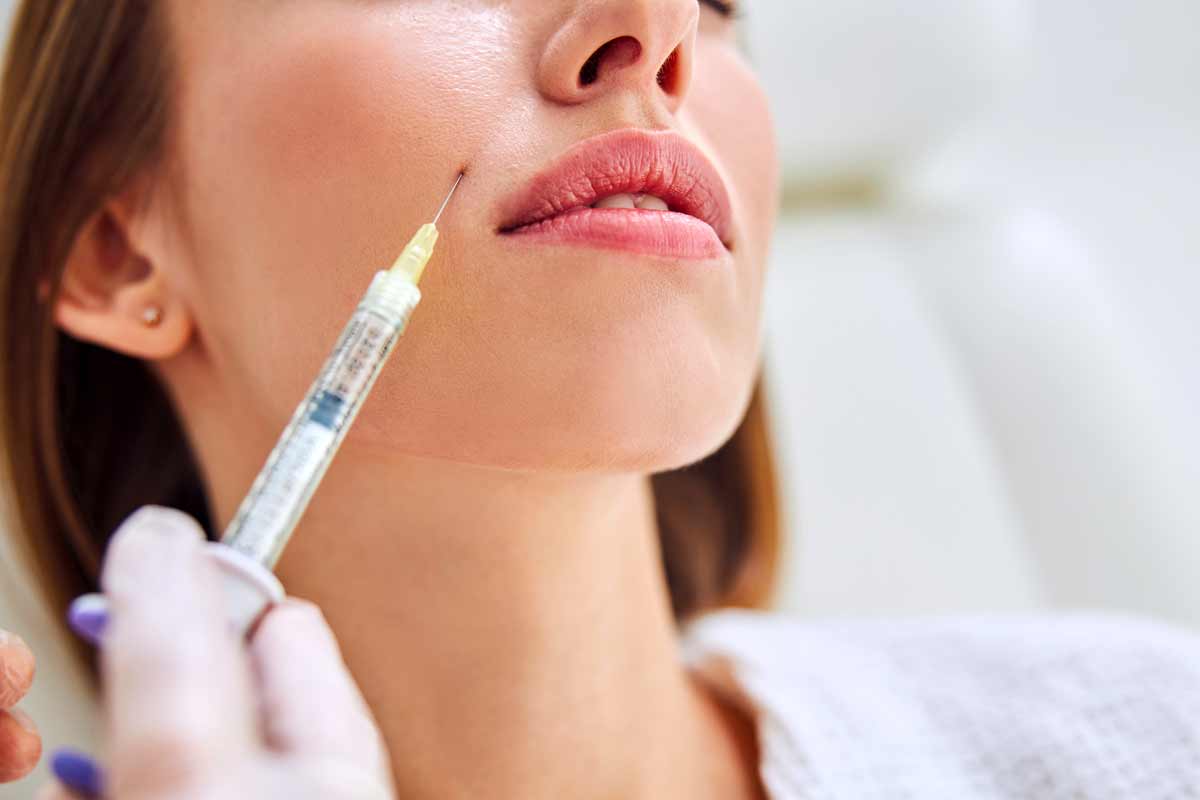
What makes the current moment genuinely notable is how openly celebrities are now discussing the opposite process - dissolving filler rather than adding it - instead of quietly reversing course behind closed doors. Actress Courteney Cox has spoken candidly about having fillers dissolved after years of public speculation about her changing appearance, part of a broader, well-documented wave that also included Real Housewives figure Lisa Rinna and Sex and the City's Kristin Davis, both of whom faced sustained public commentary about visibly altered proportions before choosing to walk it back. Model and entertainer Blac Chyna and television personality Simon Cowell have each spoken publicly about dissolving their own fillers as well. Olivia Culpo reportedly had hers dissolved specifically ahead of her wedding, prioritizing a more recognizable version of her own face for the occasion. Singer Ariana Grande has stated directly that she's been taking an extended, deliberate break from both fillers and Botox. And Madonna's appearance at the 2023 Grammy Awards became a widely discussed cultural flashpoint in its own right, sparking exactly the kind of public conversation about over-filled aesthetics that accelerated the broader backlash already building underneath it.
The Moment That Closed the Loop
Perhaps the most telling detail in this entire story involves Kylie Jenner - a member of the very family most closely associated with popularizing the aesthetic in the first place. During a recent Paris Fashion Week appearance, her under-eye area became the subject of significant public discussion and speculation online, treated by commentators as exactly the kind of visible filler-related side effect the broader backlash had spent the past two years warning about. The family whose look defined an entire aesthetic era became, in that moment, a live example of the exact fatigue that aesthetic era eventually produced - a genuinely rare instance of a trend's origin point and its own correction occurring within the same family, in public, within a matter of years.
What's Actually Replacing the Filler-Heavy Look
Injectors interviewed on this shift describe a fairly consistent 2024-era recalibration: less emphasis on volume and augmentation, considerably more emphasis on what one prominent injector called the three Ts - tone, texture, and tautness - the qualities of skin itself rather than added structural volume. Practices report shifting the bulk of their work toward devices, lasers, microneedling, and platelet-rich plasma treatments, reserving filler for smaller, more targeted corrections rather than broad facial reshaping, with some practitioners describing their current caseload as roughly 90 percent devices and light neuromodulator use, filler added sparingly rather than as the default. Dissolving filler itself - once treated as an admission of a cosmetic mistake - has become a genuinely normalized, destigmatized procedure in its own right, openly discussed by injectors as simply another tool available to patients recalibrating their look, rather than something to hide.
Why the Swing Matters, Beyond Any Single Face
It's worth resisting the urge to treat either extreme - heavily filled or aggressively "natural" - as more authentic than the other; both are, in the end, aesthetic choices shaped by whatever the current cultural moment happens to reward. What the Instagram Face cycle actually demonstrates is how quickly an aesthetic can travel from aspirational to cautionary once its most visible adopters start looking, to public eyes, more alike than individual. The genuinely useful takeaway isn't a verdict on filler itself, which remains a legitimate, well-studied cosmetic option when used thoughtfully - it's a reminder that any single, heavily copied look eventually becomes its own warning label, and that the surest way to avoid becoming a case study in a future backlash is choosing what actually suits your own face, rather than the reference photo everyone else in the waiting room happens to be holding.