
Retinols Retirement Party May Be Premature
What Actually Replaces the Gold Standard
For sixty years, dermatology has had exactly one ingredient it could call the undisputed gold standard: retinol. No other over-the-counter active has anywhere near its volume of clinical evidence, and no serious dermatologist disputes that it works. And yet, walk into any Sephora or scroll any skincare feed right now, and you'll find an entire industry quietly suggesting retinol's reign might be ending - replaced by gentler plant extracts, signal-sending peptides, and a genuinely strange new category called exosomes that has already landed at least one company's founder in federal prison. The real story isn't that retinol is being dethroned. It's that the gap between "promising new science" and "proven treatment" has never been wider - or more profitable to blur.
Why Retinol Earned Its Reputation
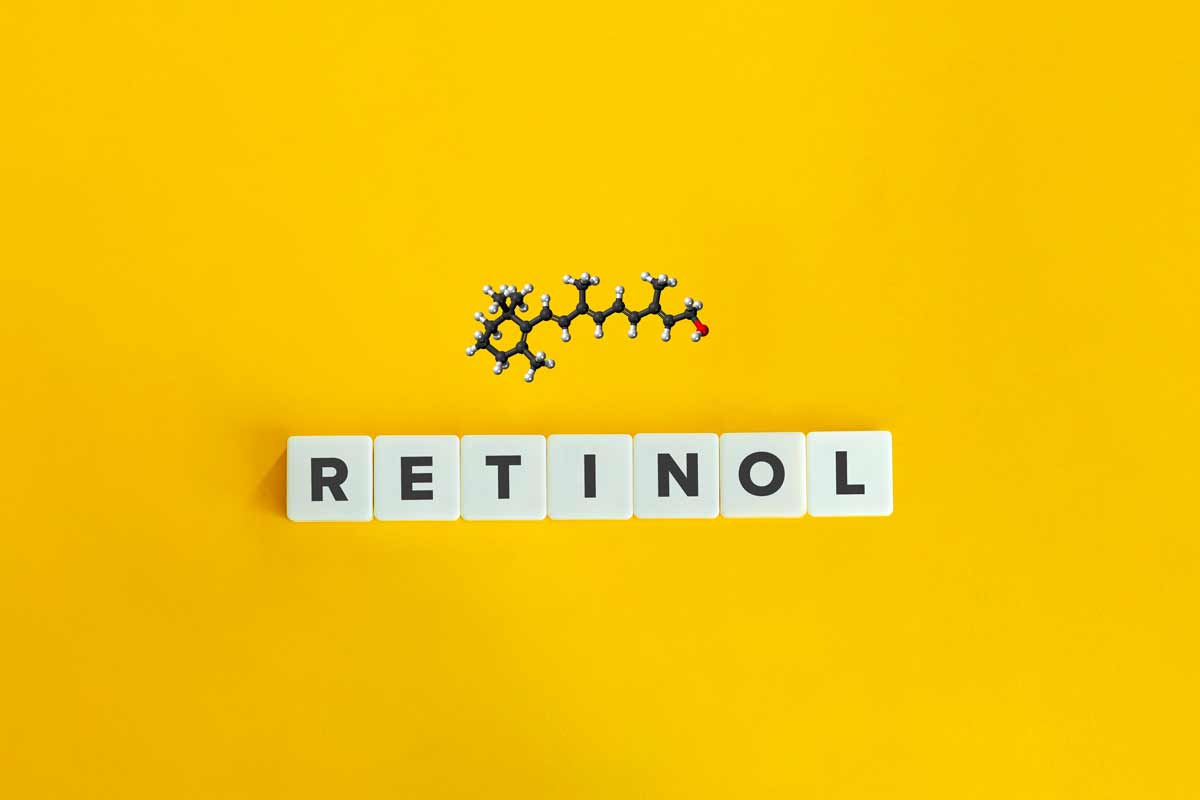
Retinol is a vitamin A derivative that your skin converts, through a multi-step enzymatic process, into retinoic acid - the molecule that actually does the work, binding to retinoid receptors and telling skin cells to behave the way they did years earlier: turning over faster, producing more organized collagen, resurfacing more evenly. With more than six decades of clinical research behind it, it remains the only over-the-counter ingredient proven, at a cellular level, to meaningfully reverse the visible effects of sun damage. A 2020 study in the Journal of Cosmetic Dermatology found that 0.5% retinol improved wrinkle depth by 27 percent after twelve weeks - a real, measurable, unglamorous result.
The catch, and it's a significant one, is tolerance. Up to half of new users go through a period dermatologists call "retinization" - dryness, flaking, stinging, sometimes new breakouts - as skin adjusts to the ingredient, a process that can take weeks and drives a meaningful share of people to quietly abandon the product in their bathroom cabinet. Retinol also increases sun sensitivity, meaning consistent daily SPF isn't optional alongside it, and it's not considered safe during pregnancy, since oral vitamin A derivatives are established teratogens and the topical form is generally avoided out of caution.
The Gentle Challenger With Real Data Behind It
Bakuchiol is the closest thing the alternative camp has to a genuinely credible rival, and unlike most "natural retinol" claims in skincare marketing, this one has an actual head-to-head clinical trial behind it. A landmark study published in the British Journal of Dermatology in 2018 put 44 subjects through a randomized, double-blind, twelve-week trial: one group applied 0.5% bakuchiol cream twice daily, the other 0.5% retinol cream once daily. The result surprised even some of the researchers involved - both groups showed statistically comparable improvement in wrinkles, pigmentation, and skin elasticity, but the bakuchiol group reported meaningfully less irritation and scaling throughout.
Mechanistically, bakuchiol doesn't work the way retinol does - it doesn't bind to the same retinoid receptors - but gene-expression studies show it upregulates several of the same collagen genes (COL1, COL3) and suppresses the same collagen-degrading enzyme (MMP-1) that retinol targets, just through a different molecular route entirely. It's also considerably more stable in sunlight and doesn't appear to increase photosensitivity the way retinol does, though dermatologists still recommend daily sunscreen regardless of what's in your routine. Because it's a plant compound rather than a vitamin A derivative, it's generally considered a reasonable option during pregnancy and breastfeeding - a real, practical advantage for a specific population that otherwise has very few actives available to them.
None of this makes bakuchiol strictly "better" than retinol - the honest reading of the data is that it's comparable in results and meaningfully gentler in delivery, which is a real, useful trade-off rather than a total replacement. Several dermatologists now recommend a genuinely practical middle path: retinol two to three nights a week, bakuchiol on the alternating nights, which maintains most of the benefit of both while meaningfully reducing the irritation that causes so many people to quit retinol altogether.
Peptides: The Quiet, Boring, Legitimate Middle Ground
Peptides - short chains of amino acids that function as signaling molecules - occupy a genuinely useful, if less dramatic, middle tier. Certain peptide sequences can signal skin cells to behave as though they've detected an injury, prompting a mild, non-damaging boost in collagen production without the irritation cascade retinol triggers. The evidence here is real but more modest than retinol's - peptides are broadly considered safe, well tolerated, and reasonably effective as a supporting ingredient, though the research base is thinner and effects are generally smaller than what a well-formulated retinoid delivers on its own. They've become nearly universal in serums marketed as "gentle" anti-aging, precisely because the safety profile is so uncomplicated.
Exosomes: Where the Hype Has Genuinely Outrun the Law
This is where the story turns from interesting science into something closer to a cautionary tale. Exosomes are tiny, membrane-bound packages that cells naturally release to communicate with one another, carrying proteins, lipids, and genetic material that can influence how nearby cells behave - a genuinely fascinating area of active biomedical research, particularly for wound healing. The problem is that "genuinely fascinating area of research" and "approved, proven treatment you can buy at a medspa" are two entirely different things, and a great many businesses have spent the last three years deliberately blurring that line for profit. Consumer search interest in exosome treatments reportedly surged more than 500 percent year-over-year recently, and no exosome product is FDA-approved for any medical or cosmetic use in the United States - not one, as of this writing.
This is not a theoretical concern. Between late 2024 and early 2026, the FDA sent formal warning letters to multiple companies - including Kimera Labs, Chara Biologics, and Evolutionary Biologics - for marketing unapproved exosome products with unsubstantiated regenerative claims. The most serious case involved a company called Liveyon: its founder was sentenced in September 2024 to 36 months in federal prison after pleading guilty to introducing an unapproved drug into interstate commerce with intent to defraud, following a scheme the government says generated roughly $21.6 million in revenue. The CDC directly linked contaminated products from that scheme to bacterial infections requiring hospitalization in 19 patients across eight states. The FDA formally barred the founder from any involvement in drug development in March 2025. This is a genuine federal criminal case, not an internet rumor - and it's a useful reminder that "cutting-edge regenerative science" and "safely regulated product" are not the same claim, however similar they sound in a treatment room's marketing brochure.
None of this means every exosome-adjacent product is dangerous - reputable dermatologists distinguish carefully between injectable exosome treatments sold at medspas (the area with the real regulatory and safety problems) and topical, cosmetic-grade serums containing purified exosome-derived compounds, which are a lower-stakes, lower-claim category. But even dermatologists who are optimistic about the underlying science are candid that there isn't yet evidence exosomes outperform, or even reliably match, well-established ingredients like retinol, peptides, or a properly formulated vitamin C. The honest current verdict, echoed by more than one dermatologist on record: interesting, promising, expensive, and not yet proven.
So What Should Actually Change in Your Routine?
Very little, and that's the least exciting but most useful conclusion available. Retinol remains the most extensively studied over-the-counter anti-aging ingredient in existence, and nothing currently on the market has genuinely dethroned it - bakuchiol is the one credible, evidence-backed complement for people who find retinol too harsh, or who are pregnant or breastfeeding and need an alternative. Peptides are a reasonable, low-risk addition layered on top of either. And exosomes, for now, belong in the category of things worth watching closely rather than things worth paying a premium for - genuinely promising science, riding several years ahead of the regulation that would tell you which products, if any, actually deliver what they claim.