
The country without an army
Costa Rica
Costa Rica: Why one decision made in 1948 turned a small Central American nation into one of the most remarkable destinations in the Western Hemisphere? Some countries are simply pleasant places to vacation. Others feel fundamentally different from everything around them. Costa Rica belongs to the second category.
This small Central American nation, roughly comparable in size to Nova Scotia, contains nearly six percent of the planets biodiversity. Costa Rica accounts for only about 0.03% of Earths surface - yet it is home to thousands of unique plant and animal species, many found nowhere else in the world.
But Costa Rica is known for more than its nature. The country has no army. Not since 1948.
After a brief civil war, President José Figueres Ferrer abolished the military and converted former army barracks into the National Museum. Funds that might otherwise have gone toward defense spending were redirected into education, healthcare and national development. Decades later, another Costa Rican president - Óscar Arias Sánchez - received the Nobel Peace Prize for his role in advancing peace agreements across Central America.
That decision still shapes the atmosphere of the country today. Costa Rica feels different. There is no heavy sense of militarization that exists in many parts of the world. Instead, there are national parks, environmental programs, volcanoes, jungle-covered mountains, Pacific coastlines and a philosophy of life summed up in two words: Pura Vida.
Liberia: the gateway to another world
Most journeys to Costa Rica’s Pacific coast begin in Liberia, the capital of Guanacaste province in the country’s northwest.
Daniel Oduber Quirós International Airport receives direct flights from Toronto, Montreal, Calgary, Vancouver and other North American cities. For many travellers, Liberia serves as the gateway to one of the country’s most beautiful and accessible regions.
Guanacaste is considered the sunniest province in Costa Rica. Even during the rainy season, which generally lasts from May through November, conditions here are often drier and more stable than in many other parts of the country. That is one reason the region remains attractive almost year-round.
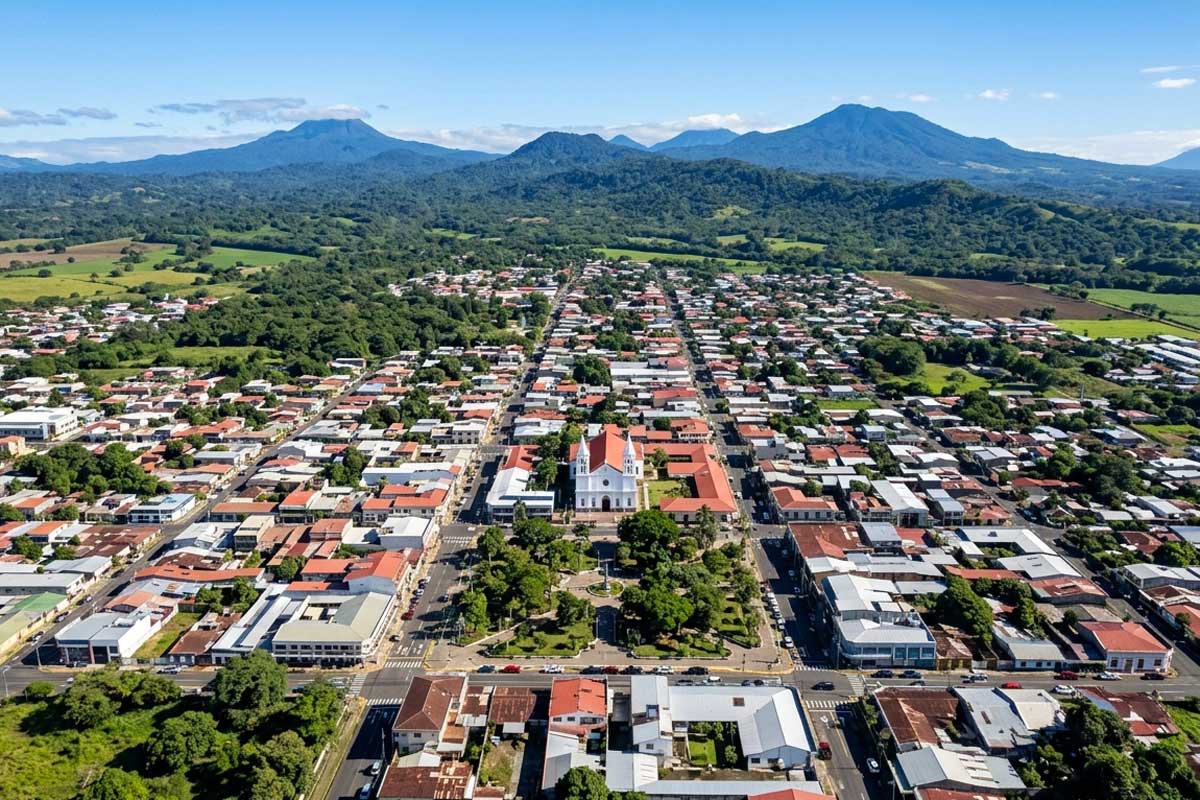
Liberia itself retains the atmosphere of a small colonial town: whitewashed buildings, old streets and a central plaza anchored by a cathedral. Locals call it la ciudad blanca - “the white city.” Most visitors stay only briefly before continuing toward the coast or nearby national parks, all located within roughly thirty to ninety minutes from the airport.
A coastline where every beach feels different
The Guanacaste coastline is not a single resort strip or one uniform experience. Every stretch of coast offers a distinctly different atmosphere.
Playa Hermosa lies about thirty minutes from Liberia Airport. It is a calm bay with clear water and one unusual feature for the Pacific coast: natural shade, with trees extending almost to the shoreline. The beach holds an international Blue Flag certification for water quality and environmental standards. Visitors come here for quiet swimming, snorkeling and a slower pace.
The Papagayo Peninsula is one of the country’s most prestigious resort regions. Home to Four Seasons, Andaz and other world-class luxury properties, it combines calm warm water, protected bays, yachts and dramatic Pacific sunsets with an atmosphere that feels upscale without becoming overwhelming.
Playa Flamingo is known for its white sand, marina and sport fishing culture. Tuna, mahi-mahi and sailfish are common catches, while waterfront restaurants serve ceviche made from fish caught earlier that same day.
Playa Conchal is one of Costa Rica’s rarest beaches. Instead of traditional sand, the shoreline is covered in millions of crushed seashell fragments in pale pink and cream tones. Under sunlight, the beach almost glows. Luxury resorts and golf courses surround the area.
Tamarindo is the surfing capital of Guanacaste. Surf schools, cafés, bars, farmers’ markets and an international atmosphere make it one of the liveliest beach towns in the region, especially popular with younger travellers and digital nomads.
Just a few kilometres north lies Playa Grande, part of Marino Las Baulas National Park. It is one of the world’s most important nesting sites for giant leatherback sea turtles. From May through October, females come ashore at night to lay eggs, and guided nighttime tours allow visitors to witness the process with minimal disturbance to the environment.
Why living without an army matters
On December 1, 1948, President José Figueres Ferrer officially abolished Costa Rica’s military. The decision was later embedded into the country’s 1949 Constitution.
Since then, Costa Rica has remained one of the few nations in the world without a standing army.
Resources that might have funded military expansion were instead invested in schools, universities, healthcare and environmental protection. Today, Costa Rica is considered one of the most environmentally progressive countries on Earth. Roughly a quarter of its territory is protected as national parks, reserves and conservation areas.
Nearly all of the country’s electricity is generated from renewable sources, including hydroelectric, geothermal, wind and solar energy. For Central America, this represents a remarkably unusual development model.
Travellers experience these choices not as abstract politics, but as atmosphere. The country often feels calmer, softer and less tense than many other destinations in the region.
About safety - honestly
Costa Rica remains one of the most stable countries in Central America, though that does not mean it is entirely free of risks.
Like most major tourist destinations, petty crime exists: thefts from rental cars, pickpocketing in crowded areas and beach thefts are the most common concerns, particularly in heavily visited tourist zones.
Basic precautions are generally sufficient: do not leave valuables in rental vehicles, use hotel safes, avoid bringing expensive items to the beach and rely on official taxis or trusted ride services.
At the same time, major resort regions in Guanacaste and on the Papagayo Peninsula are traditionally considered calm, organized and well adapted for international tourism.
Canadians consistently rank among the country’s largest international visitor groups, second only to Americans. That alone says much about how well Costa Rica works for North American travellers.
The biodiversity that draws researchers from around the world
Costa Rica is one of the world’s most important destinations for ecotourism and wildlife observation.
The country is home to more than 900 bird species - more than the United States and Canada combined. It contains four species of monkeys, over 500 butterfly species, six species of wild cats including jaguars and pumas, as well as an extraordinary range of reptiles, amphibians and tropical plants.
About an hour from Liberia lies Rincón de la Vieja National Park, a region of active volcanic activity, thermal springs, waterfalls, fumaroles and tropical forest. Visitors may encounter toucans, howler monkeys and brilliantly coloured tropical frogs.
Another important ecosystem is found in the mangrove reserves along the Tempisque River. Boat tours here allow travellers to observe crocodiles, herons, frigatebirds and dozens of other bird species in their natural habitat.
Pura Vida: more than a slogan
The phrase Pura Vida is heard constantly throughout Costa Rica. It can mean hello, goodbye, thank you, you’re welcome or simply “life is good.”
Literally translated as “pure life,” the phrase represents far more than a casual expression. It reflects an entire philosophy: less rushing, less stress and more awareness of the present moment.
Many researchers connect this mindset to the phenomenon of the Nicoya Peninsula, officially recognized as one of the world’s five “Blue Zones,” regions where unusually high numbers of people live beyond one hundred years. Researchers cite several contributing factors: diets rich in natural foods and beans, lifelong physical activity, strong family ties and a less stressful pace of life.
What travellers should know before visiting
Canadian citizens do not require a visa for stays in Costa Rica of up to 90 days. A valid passport is required.
The national currency is the Costa Rican colón, though U.S. dollars are widely accepted in tourist regions. Credit cards work almost everywhere.
Renting a vehicle at Liberia Airport is one of the most common ways to explore the region. For mountain roads and remote beaches, a four-wheel-drive vehicle is strongly recommended.
The dry season typically runs from December through April. This is peak tourist season and the period with the highest prices. The rainy season, from May through November, brings greener landscapes, fewer visitors and lower rates. Many experienced travellers actually prefer it.
Why Costa Rica is more than another beach vacation
Most tropical destinations follow a familiar formula: ocean, resort, pool, all-inclusive package.
Costa Rica operates differently.
This is a country that chose not only tourism, but also conservation. A country where national parks became part of national identity. A place where travel means more than beaches alone - where volcanoes, rainforests, mangroves, thermal springs and remote ocean coves remain part of everyday reality.
For travellers from Toronto and other North American cities, Costa Rica offers a rare combination: beautiful scenery, reliable infrastructure and the feeling that a trip provides more than photographs alone. It leaves visitors with a sense that they spent time somewhere genuinely meaningful.
Costa Rica made a long-term bet on nature - and won.