
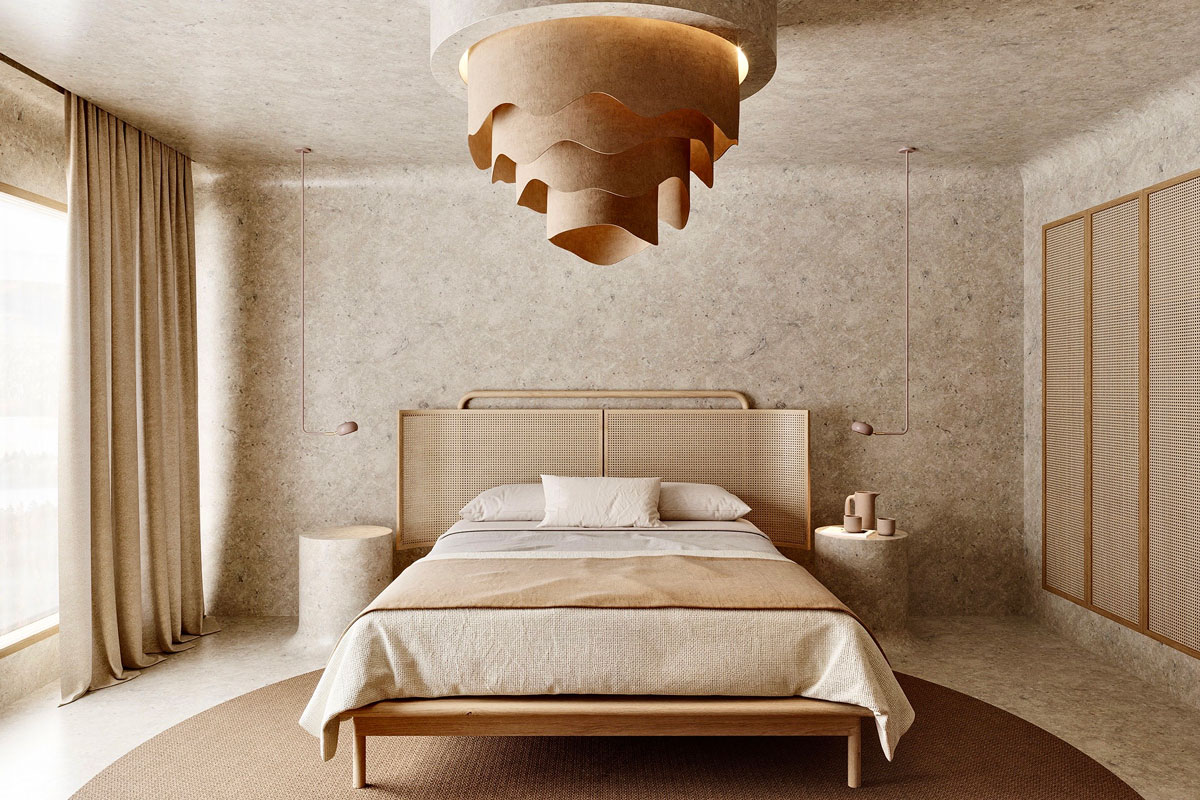
8 things that disrupt healthy sleep
What to remove from your bedroom if you want to sleep better? Good sleep begins with more than a comfortable bed. The bedroom works as a signal to the brain: this is where the body should slow down, calm down and recover. If the room also serves as an office, a souvenir storage space, a cinema, a greenhouse and a place for endless scrolling, it becomes harder for the body to understand that it is time to rest. That is why the bedroom should be treated not as just another room, but as a personal recovery zone.
Check whether your bedroom contains objects that interfere with quiet, darkness, clean air and a psychological sense of calm. Sometimes removing just a few unnecessary things is enough to fall asleep faster, wake up more easily and feel noticeably better in the morning.
Flowering plants
Plants in the bedroom are not a problem in themselves. In fact, calm greenery can make a room feel softer and more inviting. But flowering plants with a strong fragrance are better kept away from the bed. An intense smell can irritate, cause headaches, interfere with relaxation and, in sensitive people, worsen allergy symptoms.
The same applies to fresh-cut flowers. They are beautiful, but pollen, fragrance and water in a vase that is not changed regularly do not always support good sleep. If you want to keep plants in the bedroom, choose easy greenery without a strong scent and wipe the leaves regularly to remove dust.
A work desk
Even if you live in a small apartment, try to separate the work area from the sleep area. The main problem is not the desk itself, but the associations it creates. A laptop, papers, bills, work notes and unfinished tasks remind the brain of deadlines exactly when it needs to switch off.
If there is no other place for the desk, create at least a visual boundary: close the laptop, put documents into a drawer, use a screen, shelf or fabric panel. In the evening, the bedroom should stop being an office. Otherwise, you may find yourself well past midnight answering “one urgent email,” even though you meant to go to bed an hour earlier.
An aquarium or decorative fountain
The sound of water can indeed calm some people, but a source of sound next to the bed is not suitable for everyone. An aquarium filter, bubbling water, lights, humidity and the need for maintenance can become distracting, especially if you wake easily during the night.
The same applies to decorative fountains. In a living room or relaxation corner, they may create a pleasant atmosphere. In the bedroom, however, any constant sound, light or water movement can become an unnecessary stimulus. If you need background sound, it is better to choose gentle white noise, a fan or an app with a timer that turns off automatically.
Mechanical clocks
An ordinary alarm clock with hands can become an unexpected cause of insomnia. Ticking is especially noticeable at night, when the room is quiet and the brain starts focusing on repetitive sounds during the transition into sleep or brief awakenings between sleep stages.
It is better to replace a mechanical clock with a silent alarm or electronic clock with a dim display. The screen should not shine directly into your face or encourage you to check the time in the middle of the night. Sometimes the best alarm clock is the one you can hear in the morning but barely see at night.
A mirror facing the bed
Mirrors in the bedroom are not forbidden; placement is what matters. A large mirror facing the bed or positioned beside it can create a sense of extra movement, reflect light from the street, screens or night lamps, and make the room feel less calm.
Many people feel better when a mirror is not in their line of sight while falling asleep. If a mirror is necessary, place it inside a wardrobe door, in a dressing area or somewhere it does not reflect the bed. A bedroom should calm you, not create the feeling that someone is watching.
Souvenirs and visual noise
Do not turn the bedroom into a museum of memories. Souvenirs, posters, frames, postcards, boxes, figurines and random small objects create visual noise. The more items there are around the bed, the harder it is for the room to feel peaceful, and the more surfaces there are to collect dust.
This does not mean the bedroom must be sterile. One beautiful object, a few calm photographs or restrained décor can be perfectly appropriate. But anything that starts a stream of thoughts, reminds you of tasks, travel, the past, people or unfinished stories is better moved to the living room, office or hallway.
Blinds that let in light
Light is one of the main regulators of sleep. Even if you think you can fall asleep in any lighting, sleep is usually deeper and calmer in a dark room. Streetlights, car headlights, building lights and early summer sunrise can interfere with melatonin production and disrupt the body’s internal clock.
Blinds often do not block light well and also collect dust. If they are not doing the job, replace them with heavy curtains, blackout panels or a combination of blinds and curtains. The fabric does not have to be dark; what matters is that it genuinely blocks the light. Curtains open in the morning and close in the evening. It is a simple rule that works better than many decorative solutions.
Television and gadgets
The scene is familiar: you decide to watch one episode before bed, and suddenly half the night is gone. Television, phones and tablets disturb sleep not only because of screen light. The content itself is often even more powerful: news, series, messages, social media and endless feeds keep the brain engaged.
Modern sleep-hygiene recommendations suggest turning off electronic devices at least 30 minutes before bedtime, and ideally earlier. If removing your phone from the bedroom completely is impossible, turn on Do Not Disturb, reduce brightness, use a warm night mode and do not take the phone into bed. The bedroom should not be the place where you argue in comments, read work messages or watch three more episodes.
What to add to the bedroom for better sleep
Once the unnecessary items are removed, you can add things that truly help create a calm environment: clean air, darkness, quiet, pleasant textile textures and a sense of order.
An air purifier
It is useful to air out the room before sleep, but this is not always possible. If your windows face a busy road, there is construction nearby, pollen levels are high, or you live in an area affected by seasonal smog or wildfire smoke, a good air purifier can be a very worthwhile purchase.
Choose a model with a HEPA filter that is appropriate for the size of the room, and pay attention to the noise level in night mode. An air purifier should help you sleep, not sound like a small airplane beside the bed. It is also important to change filters regularly; otherwise, the device quickly loses its purpose.
A light lavender scent
For many people, the scent of lavender is associated with relaxation, and studies do link lavender aromatherapy with improved subjective sleep quality in some groups. But moderation matters. A bedroom should not smell like a perfume shop.
You can use a light linen spray, a sachet in the wardrobe or a few drops of essential oil in a diffuser with a timer. If you have asthma, allergies, migraines or sensitivity to fragrances, it is better to be careful with scents. A good aroma should be barely noticeable, not intrusive.
Quality bed linen
Beautiful bed linen is not a guarantee of perfect sleep, but it does affect the feeling of comfort. Fabric that feels pleasant against the skin, cleanliness, freshness and neatness help the bedroom feel like a place of rest. It is better to choose natural or high-quality breathable materials: cotton, percale, sateen, linen, bamboo or good modern blends.
Pillow and mattress matter just as much. An uncomfortable pillow can create tension in the neck, while an old or unsuitable mattress can increase back discomfort and interfere with deep sleep. If your pillow has lost its shape, become lumpy or is many years old, it is probably time to replace it. The mattress should be assessed honestly: if you regularly wake up with pain or a feeling of exhaustion, the problem may not be your age, but the surface you sleep on.
Quiet, coolness and order
The ideal bedroom does not have to look like a minimalist hotel, but it should be quiet, dark, cool and comfortable. For most people, a comfortable sleep temperature is roughly in the range of 16–20°C, although personal preferences may vary. If noise is a problem, heavy curtains, a rug, soft textile surfaces, earplugs or white noise can help.
The main idea is simple: the bedroom should work for sleep, not against it. Remove everything that stimulates, distracts, glows, ticks, smells too strongly or reminds you of unfinished tasks. Add what helps the body relax: darkness, clean air, a comfortable bed and a sense of order. Sometimes these simple solutions work better than the most fashionable advice.