
The paradox of civilization: Yellowstone
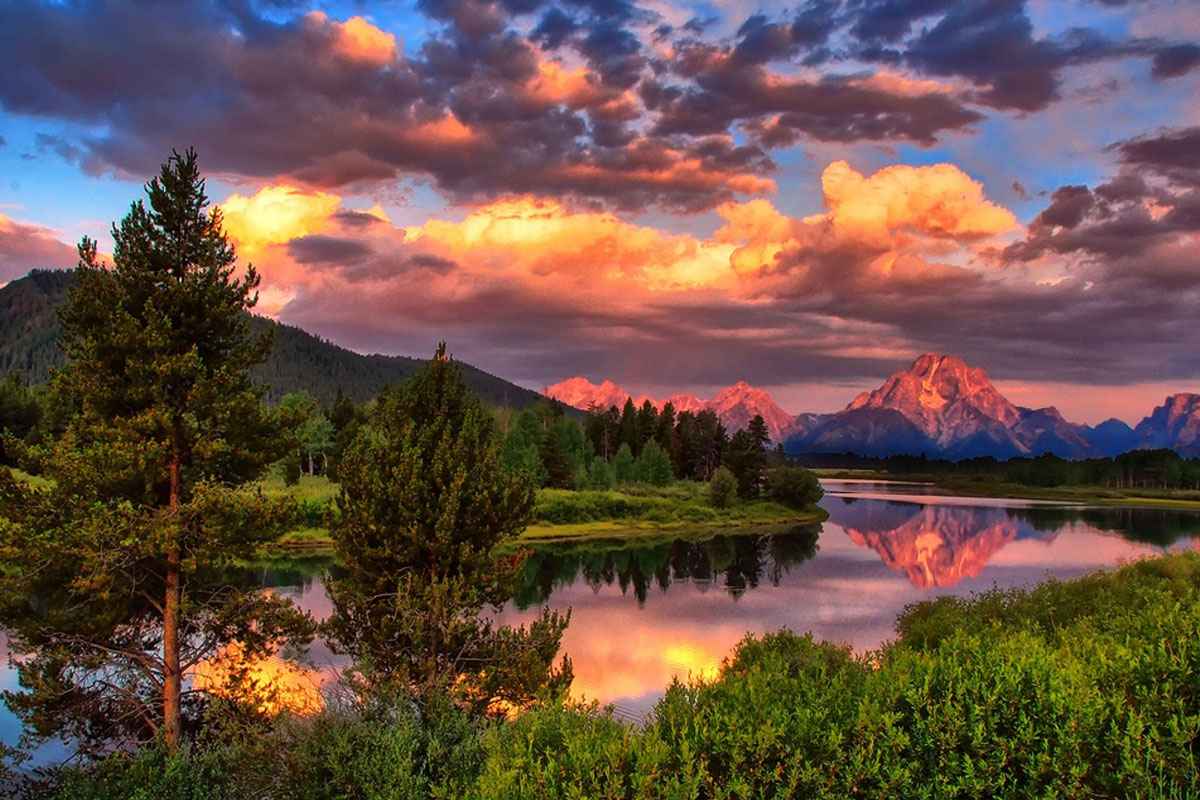
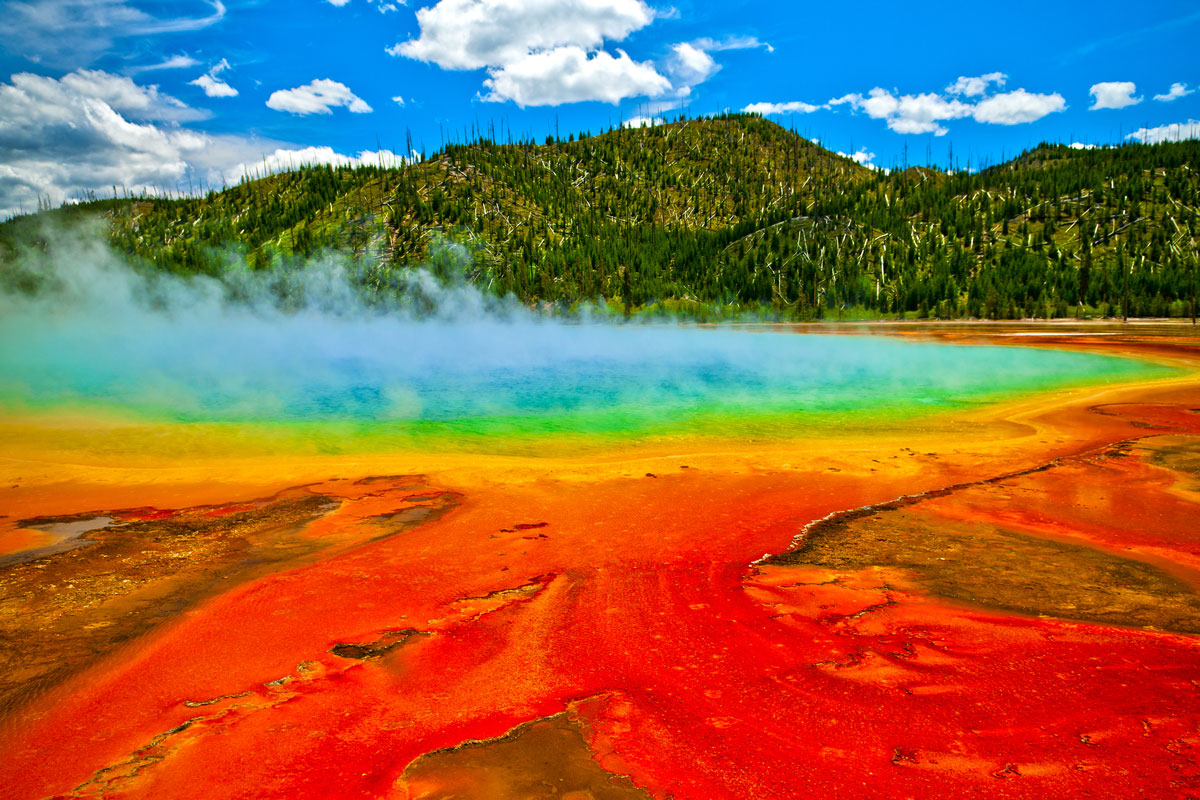
Yellowstone is often imagined through spectacular symbols: the supervolcano, the geysers, the Grand Prismatic Spring, steaming hot pools, bison herds against the mountains and grizzly bears emerging from the mist like ancient owners of the land. But all of that is only the visible part of the story. The real Yellowstone is much deeper. It is not simply a national park. It is the first great experiment of civilization: an attempt to make a pact with wild nature and admit that not everything on Earth must be ploughed, sold, built upon or subordinated to human convenience.
That pact was made in 1872, when Yellowstone became the first national park in the United States. But the pact turned out to be far more complicated than it first appeared. People wanted to preserve nature, but for a long time they did not understand what preservation actually meant. At first, they protected geysers but destroyed predators. They fed bears for tourist spectacle, then tried to teach them to be wild again. They eliminated wolves, and decades later had to bring them back. Yellowstone became not a museum of nature, but a living system in which every human mistake echoed years later through forests, rivers, herds, predators and even the behaviour of grass.
Today, Yellowstone matters not only as a beautiful place to visit. It has become one of the central questions of modern civilization: can we leave nature enough space to remain nature - not scenery, not an open-air zoo, not a safe image through a car window, but a real, complex, sometimes dangerous and therefore living force?
When stories of wonders were not believed
One of the first Europeans to describe the Yellowstone region was John Colter, a member of the Lewis and Clark expedition. In 1807, he travelled through parts of what is now western Wyoming and spoke of a land where fountains of boiling water burst from the earth, steam rose from the ground and hot springs coloured the landscape in impossible shades. People did not believe him. The place he described was mockingly called Colter’s Hell.
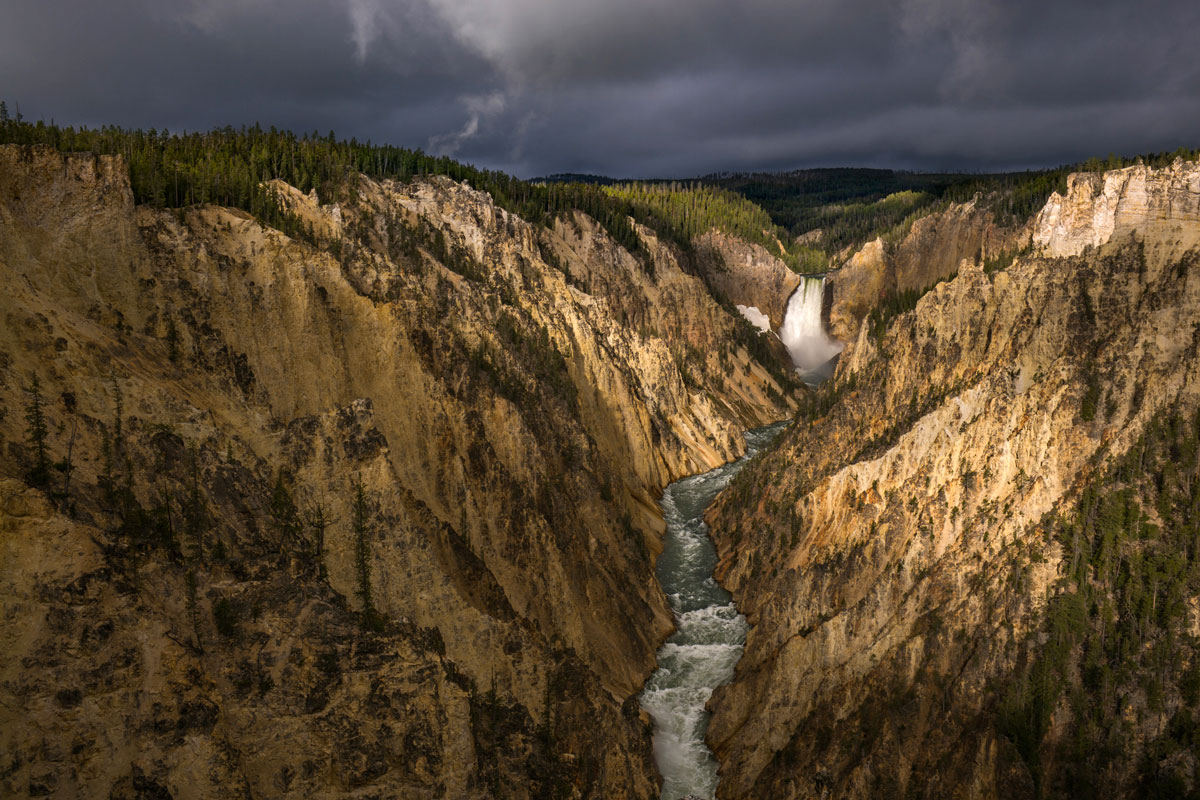
Later, in the mid-nineteenth century, hunter and explorer Jim Bridger brought back similar stories. He too was dismissed as a storyteller. America of that era was already used to frontier legends, but Yellowstone was strange even by the standards of legend: geysers, boiling pools, sulphur vapours, coloured terraces, canyons and waterfalls seemed like the imagination of men who had spent too long in the mountains.
The situation changed after the Civil War, when the U.S. government began studying the northwestern territories more actively. In 1871, the Yellowstone region was explored by an expedition led by geologist and naturalist Ferdinand Hayden. The group included photographer William Henry Jackson and painter Thomas Moran. Their images played an enormous role: they gave Congress and the public not merely a dry report, but visual proof that Yellowstone truly existed - and that it was unique.
On March 1, 1872, President Ulysses S. Grant signed the law creating Yellowstone National Park. The language sounded noble: the park was created “for the benefit and enjoyment of the people.” But within that beautiful idea lay a conflict. Who had the right to this land? What exactly did “for the people” mean? And why were Indigenous peoples, connected to these places for centuries, not included in this new pact between civilization and nature?
A park people did not yet know how to protect
Creating a national park proved easier than understanding how to manage one. In its early years, Yellowstone had no clear protection system, no sufficient budget, no proper staff and no precedent. No one yet knew what a national park meant in practical terms. And while the government spoke in high principles, chaos ruled on the ground.
Commercial hunters and poachers quickly understood that behind the phrase “public park” lay an enormous territory full of animals that could be killed for hides, meat, tongues, antlers and profit. Elk, bison, bighorn sheep and other animals were slaughtered in large numbers. Predators were treated as harmful and dangerous. Wolves were poisoned, bears were killed, and even beavers were targeted for building dams and changing water patterns.
By the end of the nineteenth century, it was clear that without real protection, the park would not survive. In 1886, the U.S. Army was sent to protect Yellowstone. Soldiers guarded the territory for almost three decades, until the National Park Service was created in 1916. Only then did the idea of a national park begin to turn from a beautiful declaration into a functioning system.
Wild nature behind a thin display window
The modern visitor often experiences Yellowstone as a safe natural gallery. From a car window, one can see bison, elk, bears or wolves. Wooden boardwalks lead past hot springs and geysers. Viewpoints offer perfect vistas of canyons and waterfalls. Everything seems organized, regulated and almost museum-like.
But that is an illusion. Step away from the road, follow a trail, descend into a ravine or meet an animal at the wrong moment, and Yellowstone stops being a postcard. This is a place where boiling water can kill faster than a predator; where a bison that looks slow and almost domestic can cause fatal injury; where a grizzly remains a grizzly even if it appears beside the road in front of dozens of smartphones.
The death of Lance Crosby in 2015 was a tragic reminder of this. An employee of a park medical clinic went hiking alone, without bear spray, and encountered a female grizzly with cubs. The bear was protecting her young - as a wild animal does. After the investigation, she was euthanized because she had not only killed a human, but had partially cached the body, meaning she could return to it. The tragedy was double: a man died, and then an animal died for acting according to the logic of its own nature.
Yellowstone teaches an uncomfortable but honest lesson: wild nature is not obliged to be convenient. Its beauty cannot be separated from risk. To admire is not to own. To enter the park is not to acquire the right to suspend its rules.
The supervolcano beneath your feet
Beneath Yellowstone’s visible calm lies another force: geology. The park sits on the Yellowstone Plateau, with an average elevation of about 2,400 metres. On the surface are lodgepole pine forests, mountain meadows, sagebrush, rivers and lakes. But beneath the plateau lies a vast hot spot, where heat from deep within the Earth rises toward the crust.
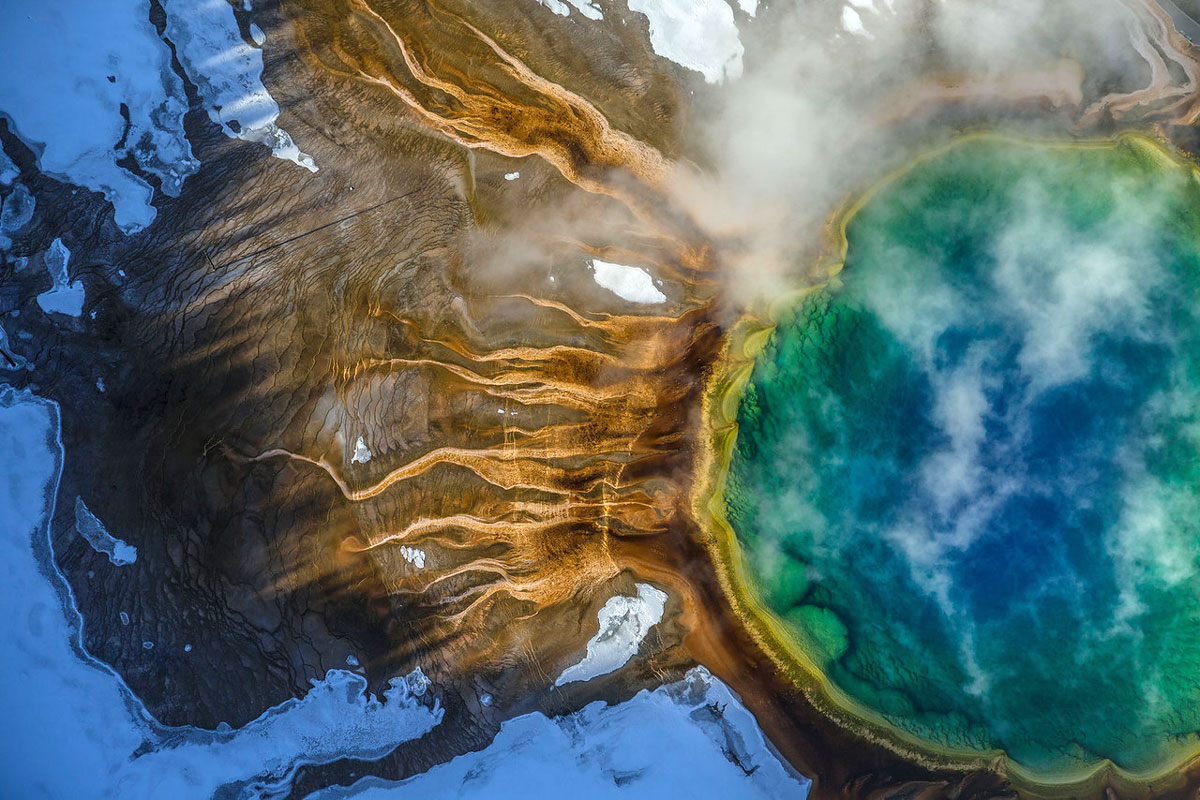
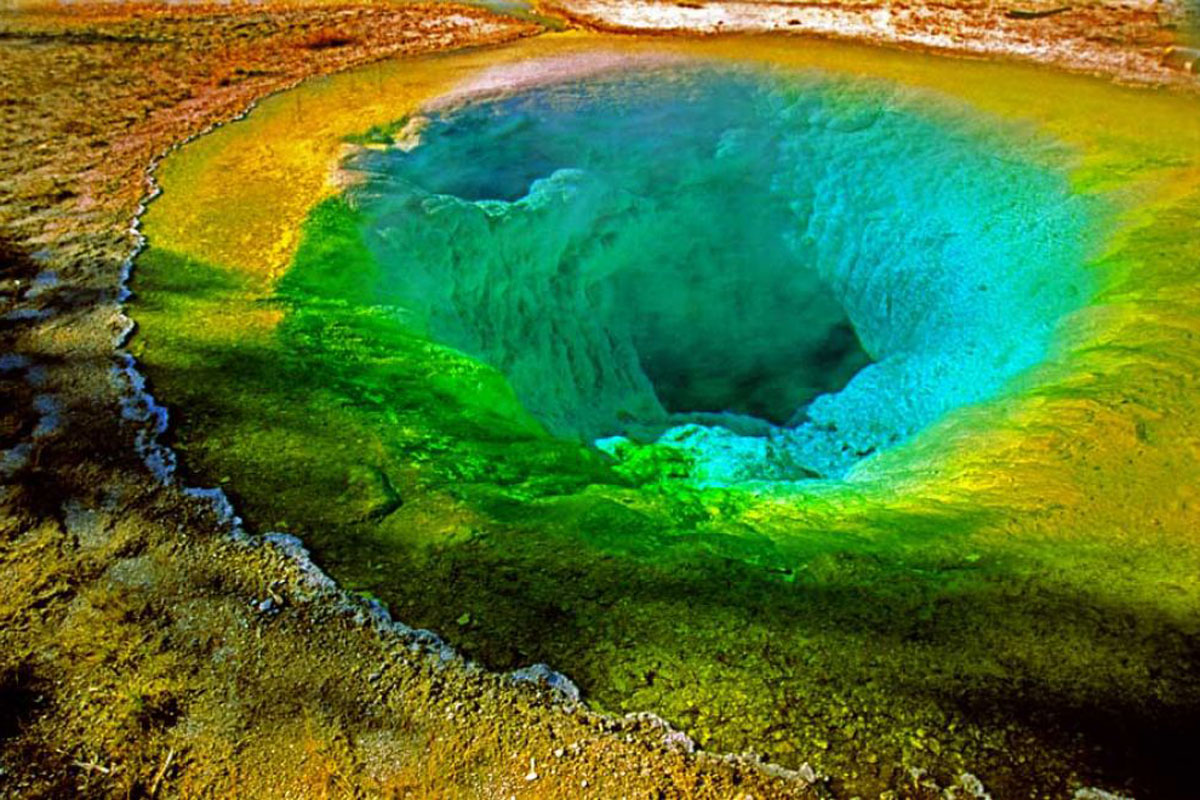
This thermal anomaly feeds the geysers, hot springs, fumaroles and mud pots. Yellowstone is one of the largest hydrothermal areas on the planet. Here, the earth literally breathes: steam escapes from cracks, water changes colour because of minerals and microbes, and the landscape reminds us that the surface of the planet is not as still as we like to imagine.
Geologists have identified evidence of three enormous eruptions in the Yellowstone region over the past 2.1 million years. That is why it is called a supervolcano. But popular fears that it “could explode at any minute” are greatly exaggerated. Yellowstone is active, but scientists continuously monitor its seismic activity, ground deformation, temperatures and gases. The real story of the park today is not a Hollywood scenario of instant apocalypse, but a constant, complex and profound geological life.
Greater Yellowstone: a park larger than the park
When people say “Yellowstone,” they often mean only the national park. Ecologically, however, the idea is much larger. The Greater Yellowstone Ecosystem is one of the largest nearly intact temperate-zone ecosystems in the world. It includes Yellowstone National Park, Grand Teton National Park, national forests, protected areas, private lands, ranches, hunting grounds, migration corridors and spaces where wild nature collides with roads, fences, towns and the economy of the twenty-first century.
This is where the limits of lines on a map become clear. A wolf does not know where the park ends and Montana begins. A grizzly does not read county regulations. A bison moves toward food. Pronghorn need ancient migration routes. A river does not stop at an administrative boundary. An ecosystem lives through connections, while humans often try to manage it through parcels, agencies, laws and competing interests.
This is the central paradox of Yellowstone: to preserve wild nature, it is not enough to draw a beautiful boundary on a map. One must protect the relationships between animals, plants, water, fire, soil, climate and the people living nearby.
Wolves: the return of a missing link
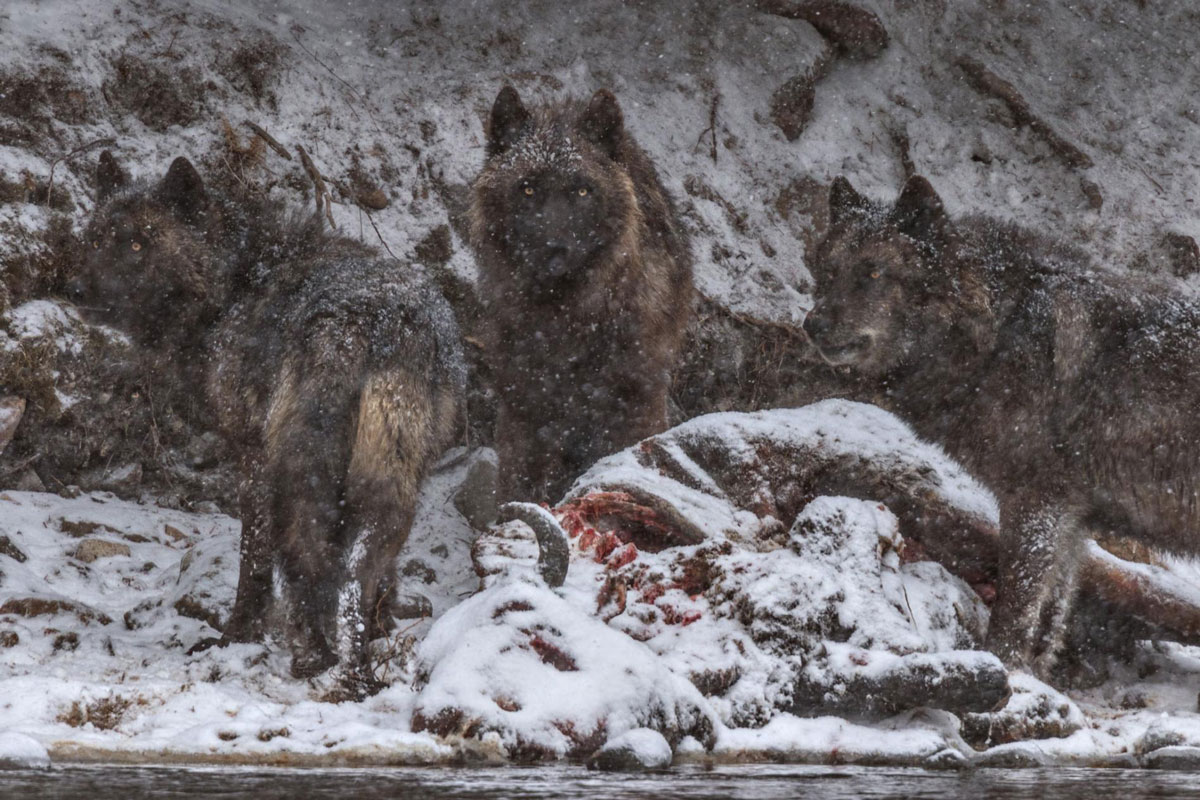
One of Yellowstone’s best-known stories is the return of wolves. By the 1930s, gray wolves had been eliminated from the park. They were seen as a threat to hoofed animals, livestock and human order. But once the predators were removed, the system changed. Elk became too abundant, browsed young trees and shrubs more heavily, and this affected riverbanks, birds, beavers and entire plant communities.
In 1995 and 1996, wolves from Canada were reintroduced to Yellowstone. It became one of the most famous predator restoration projects in the world. The wolves established themselves, formed packs, hunted, changed elk behaviour and restored ecological pressure that had been missing for decades.
But it is important not to turn this story into a simple fairy tale. Wolves did not “fix everything” by magically reappearing. The ecosystem is more complex. It is affected by climate, bison numbers, forest health, disease, drought, fire, human policy and hunting outside the park. The return of wolves was a powerful step toward restoring balance, but not a universal cure. That is the value of Yellowstone as a lesson: nature does not work like a simple machine where one missing part can be replaced and the whole system immediately repaired.
Grizzlies: between fear, admiration and politics
The story of grizzlies in Yellowstone is just as complicated. In the early decades of the tourist era, bears were often fed and allowed to eat garbage near hotels and dumps. This was considered part of the spectacle: visitors could watch “wild nature” almost as a performance. But the bears did not become tame. They remained powerful, intelligent and dangerous animals that quickly learned to associate people with food.
When the park changed its policy and began closing garbage food sources, bears had to readjust to a natural diet. The transition was painful. In the 1970s, the grizzly population in Greater Yellowstone declined sharply, and in 1975 grizzlies received federal protection as a threatened species in the contiguous United States.
Since then, the population has recovered impressively: from roughly 136 animals in 1975 to around a thousand in Greater Yellowstone in recent years. This is one of the best-known successes of American conservation policy. But success has not ended the arguments. The question of removing federal protections, transferring management to states, hunting, conflicts with ranches and human safety remains politically and emotionally charged.
In Yellowstone, the grizzly is not just an animal. It is a symbol of how difficult it is for modern society to live next to real wildness. We want the bear in the landscape, but not at the garbage bin. We want it free, but not dangerous. We want the park to remain wild, but also convenient for millions of visitors. These desires are not always compatible.
Bison, elk, beavers and invisible connections
Yellowstone is famous for its bison. It is one of the few places in North America where a bison population has maintained a continuous connection to wild ancestors. Once, these animals were nearly exterminated across the continent, but in Yellowstone they survived and became a living reminder of America’s lost plains.
Today, bison are both a symbol of success and a source of complicated conflict. When animals leave the park, questions arise about brucellosis, contact with cattle, population management, Indigenous rights and state policy. Even successful recovery of a species does not mean the problem is solved. Sometimes success creates new questions.
Elk, beavers, bald eagles, pronghorn, trout, whitebark pine, insects and even the microscopic organisms in hot springs are all parts of one system. Wolves influence elk. Elk influence young trees. Trees influence beavers and riverbanks. Whitebark pine matters to grizzlies, but suffers from warming, disease and bark beetles. Fire destroys and renews the forest. Climate changes the rules for everyone.
Yellowstone is valuable precisely because it allows us to see not a collection of beautiful objects, but a living network of interdependence. It is not a park of separate wonders, but an enormous organism.
Climate as the new challenge
If the main enemies of Yellowstone in the nineteenth century were poachers, and in the twentieth century mistaken management ideas, then in the twenty-first century one of the main challenges is climate change. Warming affects snowpack, water systems, the frequency and intensity of fires, insect life, forest health, animal migration and food availability.
For a mountain ecosystem, snow is not just a winter landscape. It is a water reserve for summer. If snow melts earlier, soil moisture changes, rivers behave differently, plants experience stress and animals face a different seasonal pattern of food. Everything is connected to everything else.
The climate challenge is especially difficult because it cannot be solved only within park boundaries. Even the most competent national park service cannot stop global warming at an entrance gate. Yellowstone becomes an indicator of what is happening to nature in the wider world.
Why Yellowstone concerns everyone
Yellowstone receives millions of visitors each year. For some, it is a dream road trip; for others, a family journey; for others still, a place of power where one can see a bison, a geyser or a wolf for the first time. But the park does not belong only to those who buy a ticket and drive through the gate. Its meaning is broader. It is part of the world’s natural heritage and one of the great symbols of the idea that some places must be preserved not because they are convenient to use, but because without them humanity becomes poorer.
At the same time, Yellowstone should not become a sacred image without people. Around it live communities, ranches, tourism businesses, roads, hotels, hunters, anglers, guides, scientists, Indigenous representatives and millions of visitors. All have interests. The problem is that human interests often speak louder than the interests of rivers, forests and animals.
The true maturity of civilization is not shown by its ability to control everything. It is shown by its ability to recognize the limits of control. Yellowstone matters because it reminds us that the world was not created solely for our convenience.
The park’s central lesson
Yellowstone is the paradox of civilization in its purest form. We created boundaries, roads, boardwalks, rules, maps, parking lots and viewpoints in order to approach wildness and protect ourselves from it at the same time. We want to see the wolf, but we do not want it to kill. We want to photograph the grizzly, but we do not want to remember that it may defend its food. We want geysers, but forget that boiling water is not an attraction. We want nature to be real, but safe; beautiful, but obedient.
Yellowstone does not offer that simplicity. Its greatness lies precisely in its refusal to become comfortable scenery. Here the earth boils, predators hunt, bison block roads, forests burn, rivers change their banks, and human beings are forced again and again to learn that they are not masters of everything, but participants in a larger and more complicated world.
Perhaps that is why Yellowstone remains so modern. It was created more than a century and a half ago, but its central question is sharper than ever: can civilization live beside wild nature without destroying it or turning it into a managed performance? If the answer is ever yes, it will probably be found here - among geysers, wolves, grizzlies, bison, hot springs and the cold mountain winds of America’s first national park.