
The Superfood Hiding in Plain Sight
What North America Never Learned About Buckwheat
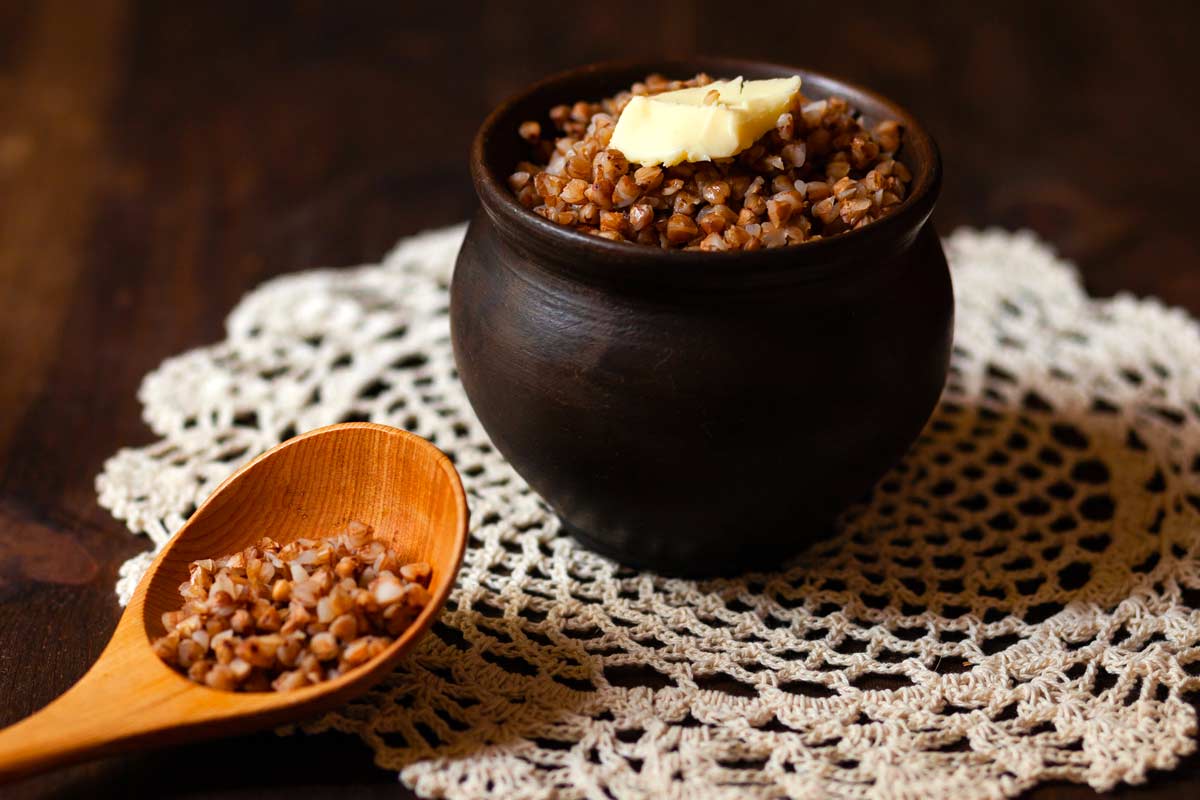
Somewhere in North America right now, a box of cereal is being poured into a bowl, and roughly a third of that box, by weight, is sugar. Meanwhile, in millions of kitchens across the former Soviet Union, breakfast looks entirely different: a small brown seed, boiled in water, sometimes finished with butter or warm milk, eaten by children and grandparents alike for generations. That seed has a complete protein profile rivaling meat, a glycemic index low enough to keep blood sugar calm for hours, and a plant compound so rare that virtually nothing else in the pseudocereal world contains it. It is sold in nearly every North American grocery store, usually in a small, dusty bag near the rice. Almost nobody here knows what to do with it. This is the story of buckwheat - and why it might be the most undervalued food on the continent.
Not a Grain at All
Here is the first surprise: buckwheat isn't wheat, and it isn't a grain. Despite the name, it has no botanical relationship to wheat whatsoever. It is a seed - technically an achene, the same fruit type as a sunflower seed - and its closest relatives are not cereal grasses but rhubarb and sorrel. This makes buckwheat what nutritionists call a pseudocereal: something we eat and cook like a grain, prepared the same way, sitting in the same aisle, but botanically an entirely different kind of plant. Quinoa and amaranth belong to the same category and have become fashionable health foods in North America over the past decade. Buckwheat, despite arriving in the region roughly four centuries earlier than either of them, never got the same marketing.
That botanical distance from wheat turns out to be enormously useful: buckwheat contains no gluten whatsoever. It is naturally, completely safe for anyone with celiac disease or gluten sensitivity - not a processed gluten-free substitute engineered to imitate wheat, but an ancient food that was never related to wheat in the first place.
A 4,000-Year Journey Nobody Talks About
Buckwheat's story begins in the uplands of southwestern China, near the border of Tibet, where genetic and archaeological evidence places its domestication as early as the sixth millennium BC. From there it moved outward along a route almost nobody learns in school: south through the Himalayas, west across the Indo-Myanmar corridor, into Central Asia, over the Caucasus, and finally into Europe - becoming, by roughly 1000 BC, one of the first pan-Eurasian crops in human history, cultivated from Korea to the Balkans centuries before wheat itself had spread that far.
Its name tells its own story of confused geography. The French called it sarrasin - "Saracen wheat" - under the mistaken belief that it had been carried into Europe by the Moors of southern Spain, when in reality it had arrived from the opposite direction, out of Asia. The Dutch, who cultivated it widely and were the first Europeans to bring it across the Atlantic, called it boekweit - "book wheat" - a reference to the shape of its seed, which resembles a tiny beechnut (Dutch boek also echoes "beech"). That Dutch word is the direct ancestor of the English "buckwheat." It reached North American shores in the 17th century, thrived through the 1800s as a staple crop across the Northeast and Midwest, and was gradually pushed out of the American diet over the 20th century by wheat, corn, and eventually the rise of industrially processed breakfast food. It never actually left, though - buckwheat is still grown commercially today in North Dakota, Minnesota, and Washington State, and in Canada, most substantially in Manitoba and Saskatchewan, where a portion of the harvest is exported to Japan for soba noodle production. The grain quietly sitting in a North American pantry, in other words, is not an import. It is a homecoming.
The Flavonoid Almost No Other Food Has
Buckwheat's most distinctive nutritional feature is a compound called rutin - a flavonoid antioxidant that, among all the pseudocereals humans regularly eat, appears in meaningful concentration in essentially nowhere else but buckwheat. Rutin supports the health and flexibility of blood vessel walls, contributes to healthy blood pressure regulation, and has documented anti-inflammatory properties. It shows up alongside a supporting cast of other flavonoids - quercetin, orientin, vitexin - that work in combination to give buckwheat one of the more distinctive antioxidant profiles of any commonly eaten seed or grain.
Then there is the protein. Most plant-based staples are missing at least one essential amino acid - the building blocks the human body cannot manufacture on its own and must get from food. Buckwheat is a genuine exception: its protein contains all nine essential amino acids, including lysine, which is typically the limiting amino acid in cereal grains like wheat and rice. This is a large part of why buckwheat has long been prized in vegetarian and vegan diets across Eastern Europe and Asia, well before "complete plant protein" became a marketing phrase in North America.
The mineral profile rounds out the picture: buckwheat is a genuinely strong source of magnesium, manganese, and copper, three minerals tied respectively to healthy blood sugar metabolism, antioxidant defense, and cardiovascular function.
The Breakfast Comparison That Actually Matters
Here is where buckwheat becomes genuinely relevant to how North Americans actually eat breakfast. A typical bowl of sweetened breakfast cereal delivers a fast glucose spike, a corresponding insulin surge, and - for most people - a crash into hunger and low energy well before lunch. Buckwheat groats sit at the opposite end of that curve. Their glycemic index falls in the roughly 45 to 54 range, generally classified as low to moderate, meaning the rise in blood sugar after eating them is slower and more gradual rather than a spike. Some of that effect comes from resistant starch - a form of starch that resists digestion in the small intestine, travels intact to the colon, and there ferments into short-chain fatty acids that feed beneficial gut bacteria. Boiled buckwheat groats have been measured with meaningfully higher resistant starch content than many other cooked starches, which helps explain why a bowl of kasha tends to keep people satisfied for longer than an equivalent bowl of instant oatmeal loaded with sugar, let alone a sugary cereal.
None of this requires abandoning a bowl-and-milk breakfast routine. Buckwheat groats, cooked and cooled slightly, take milk exactly the way oatmeal does - dairy, oat milk, or otherwise - and can be sweetened lightly with fruit or a drizzle of honey if a savory breakfast isn't your habit. The nutritional profile holds either way.
One Seed, Many Kitchens
Nearly every culture that has grown buckwheat for centuries has developed its own way of turning it into comfort food, and looking across those traditions is a genuinely useful way to expand what "eating buckwheat" can mean.
In the Slavic culinary world, buckwheat groats are called kasha - a word that specifically refers to buckwheat that has been parboiled and then toasted before hulling, which is what gives the familiar reddish-brown groats their deep, nutty flavor. Kasha appears as a savory side dish, a filling for stuffed cabbage, a stuffing for blini, and a simple porridge eaten with milk or butter - the exact breakfast described at the top of this article, eaten daily across Russia, Ukraine, Poland, and the Baltic states for longer than anyone can trace.
In Ashkenazi Jewish cuisine, kasha varnishkes - buckwheat groats tossed with bowtie pasta and caramelized onions - has been a staple of Eastern European Jewish tables for generations and remains a fixture of North American Jewish delis and home cooking to this day, one of the few places buckwheat has genuinely held its ground in mainstream American food culture.
In Japan, buckwheat takes an entirely different form: soba noodles, made from buckwheat flour, served both hot in broth and cold with a dipping sauce, are a cornerstone of Japanese cuisine, and a notable share of the world's highest-quality buckwheat - including grain grown in Tasmania and Canada - is exported specifically for soba production.
In France, buckwheat flour is the traditional base for galettes bretonnes - the savory buckwheat crêpes of Brittany, filled with ham, cheese, or eggs, and, fittingly, entirely gluten-free by accident of history rather than modern reformulation.
The Case for Trying It
Buckwheat is not exotic. It is not imported from across an ocean, and it does not require a specialty grocery trip or a significant premium in price. It is grown across the American Midwest and the Canadian Prairies, sold in the international aisle of most standard supermarkets, and prepared in roughly fifteen minutes on a stovetop - faster than steel-cut oats.
What it offers in return is a food genuinely rare in the modern North American diet: a complete plant protein, a uniquely concentrated source of a cardiovascular-supporting antioxidant found almost nowhere else, a naturally low glycemic profile that keeps energy steady through a morning, and a several-thousand-year track record across some of the longest-lived food cultures on earth. It asks for almost nothing in return - no elaborate recipe, no specialty store, no premium price tag. It only asks to be noticed. For a seed with four thousand years of continuous cultivation behind it and a name that got lost in translation somewhere between the Himalayas and a Dutch trading ship, that seems like a remarkably small thing to ask.