
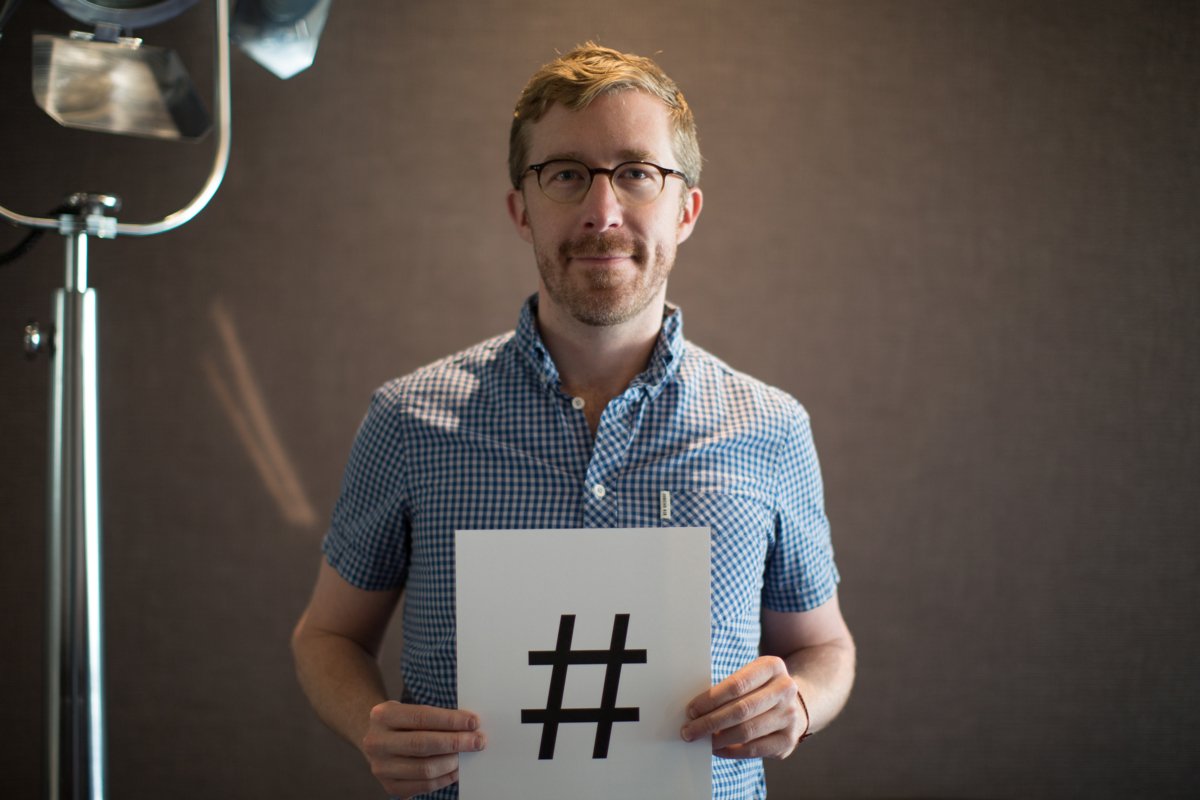
Who invented hashtags
Today, the hashtag feels so natural in digital language that we almost stop noticing it. We place a hash mark before a word to join a conversation, find an audience, signal a mood, launch a campaign, make a joke or take a position. But once, this small symbol was just one persons strange idea - too simple, too technical and, at the time, seemingly too obscure for a mass audience.
Many people assume that hashtags appeared together with Twitter and then migrated to Instagram, Facebook, TikTok and other platforms. In reality, the story was more complicated. Twitter did not originally have a built-in hashtag system, and the company’s leadership did not immediately embrace the idea. The mechanism without which social media is now hard to imagine was born not as a corporate feature, but as a user suggestion - almost an improvisation that grew out of the culture of the open internet.
The person credited with proposing the hashtag in its modern social-media sense is Chris Messina, a designer, consultant and early active Twitter user. On August 23, 2007, he posted a message suggesting that the # symbol be used to group topics and conversations. His example was simple: #barcamp. The idea was that people could tag messages by subject themselves, without waiting for the platform to build a complex system of groups, forums or categories.
Why the hash symbol
The # symbol was not accidental. Long before social media, it had lived in technological culture. It was used in programming, telephone interfaces and especially in IRC, the early internet chat system where channels and topics were marked with a hash sign. For people shaped by the early internet, # already suggested entry into a thematic space.
Messina proposed bringing this logic, familiar to technical communities, into Twitter. No separate rooms, no complicated interface, no need to wait for major changes from developers. Simply give users a sign they could place before a word or phrase, turning it into a marker for a conversation.
That was the strength of the idea. The hashtag did not require permission from above. It did not need a ten-page manual. It could be understood in seconds, copied from another user and put to work immediately. Very often, it is these simple mechanisms that change digital culture more deeply than large official features.
The idea they did not understand at first
According to Chris Messina, Twitter representatives initially greeted the idea without much enthusiasm. He was told, in effect, that it was too “nerdy” and would probably never become mainstream. At the time, that reaction was understandable: early Twitter already seemed to many people like a strange service for short messages, and an extra symbol before words looked like one more layer of complication.
But the hashtag became one of those cases where users understood the tool before the platform did. It began spreading from the bottom up - not because the company ordered people to use it, but because people genuinely needed a way to organize a chaotic stream of messages.
One of the first important uses of hashtags came during discussions of the 2007 San Diego wildfires. In situations like that, the value of a shared tag became especially clear: it helped people quickly find messages on a topic, follow updates, connect scattered observations and turn a chaotic feed into a more readable stream of information.
Later, Twitter built hashtags into the platform technically: they became clickable, searchable and useful for navigation. But culturally, they already existed before that. They were legitimized not by developers, but by users themselves.
From tag to language
At first, the hashtag was a sorting tool. It helped gather a conversation around a topic: a conference, event, news story, city, television show, sports match or crisis. But quite quickly, it became something more. The hashtag turned into a new kind of public language.
It can be a category: #travel, #design, #food. It can be a slogan: #MeToo, #BlackLivesMatter. It can be a joke, an irony, an internal comment on one’s own post. It can be a marketing campaign, a way to find clients, a signal of belonging to a community or an emotional caption under a photograph.
That is why the hashtag proved so durable. It is both functional and expressive. It helps algorithms sort content, and it helps people signal meaning. The same symbol works as navigation, advertising, self-irony and collective action.
Why Messina did not patent the hashtag
Chris Messina did not patent the idea. Later, he explained that hashtags were born of the internet and should belong to everyone. If the mechanism had been closed, licensed or overly formalized, it might never have spread so quickly and freely.
This is an important detail in the story. The hashtag became global precisely because it belonged to no one and to everyone. Activists, brands, journalists, teenagers, government agencies, artists, fans, small businesses and ordinary people could all use it. No one had to buy the right to place a # before a word.
In an era when almost every digital movement is quickly turned into a product, this openness feels almost old-fashioned. But it is exactly what allowed the hashtag to become not the feature of one company, but a universal element of internet language.
The hashtag after Twitter
Although hashtags became famous through Twitter, their life has long since moved beyond one platform. Instagram turned them into a tool for visual search and discovery. Facebook, YouTube, TikTok, LinkedIn and other networks used them in their own ways. On some platforms they help people find content, on others they function as part of algorithmic logic, and in some places they have become almost a decorative caption.
Over time, attitudes toward hashtags have changed as well. In the early years, it seemed that the more hashtags one used, the better the chance of being noticed. Today, audiences are more demanding. An endless line of random tags looks cheap and desperate. A strong hashtag, by contrast, works precisely: it helps define the topic, enter the right context and preserve the style of the post.
In this sense, the hashtag has travelled from technical invention to an element of digital taste. It is no longer enough simply to add one. You have to understand why it is there: for search, branding, a campaign, irony, community or meaning.
A small symbol with enormous power
The history of the hashtag shows how the internet changes. Sometimes a revolution is created not by a new platform, a complex algorithm or a giant corporation, but by a small user habit that proves so useful that millions of people begin to repeat it.
The hashtag made digital conversation more organized, but also more emotional. It helped people find one another during conferences, disasters, protests, premieres, elections, sports events and personal stories. It gave the language of social media a short form of collectivity: one word after a hash mark, and you are no longer simply writing a post - you are entering a shared conversation.
Of course, hashtags are not always deep or useful. Sometimes they become noise, spam, fashionable posing or a string of random words. But that does not erase their importance. Like any language, they can be intelligent or empty, precise or meaningless, elegant or intrusive. It all depends on who uses them, and why.
Chris Messina proposed only one symbol before a word. But that symbol changed the way the internet organizes attention. Perhaps that is why the story of the hashtag matters: it reminds us that major cultural shifts do not always begin loudly. Sometimes they begin with a short message, a simple idea and a small hash mark before a word.