
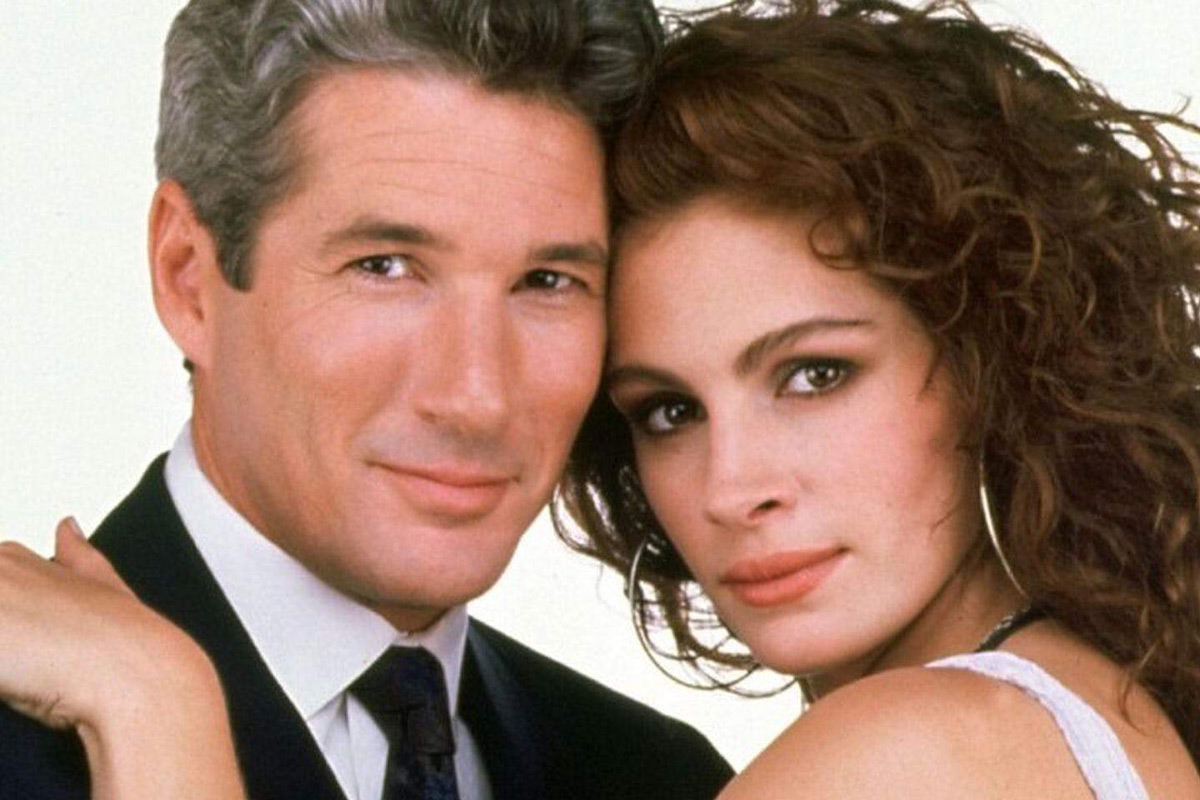
How a Dark Social Drama Became the Most Beloved Fairy Tale
Pretty Woman
Pretty Woman turned thirty-five in 2025, and Julia Roberts smile has not aged a day. But the film that enchanted hundreds of millions of viewers worldwide - and single-handedly revived the romantic comedy as a Hollywood genre - almost never existed in the form we know. The original screenplay was a bleak, unsparing portrait of addiction and survival on the streets of Los Angeles. The ending was tragic. The tone was grim. What became the most beloved modern Cinderella story began as something closer to a cautionary tale - and its transformation into a classic is a story almost as dramatic as the film itself.
From Social Drama to Fairy Tale
Screenwriter Jonathan F. Lawton conceived his story in the late 1980s while living in one of Los Angeles's most troubled neighborhoods. The prostitutes, dealers, addicts, pimps, and homeless he observed daily became material for a script about the birth and collapse of the American dream. The result was a dark, unblinking screenplay titled 3000 - the dollar amount the protagonist charges her wealthy client for a week of her company. The story ended in grief and disillusion.
Lawton pitched the script at the Sundance Film Festival. It attracted the interest of Vestron Pictures, the studio behind Dirty Dancing (1987), and then - more surprisingly - Touchstone Pictures, Disney's adult-oriented division. Even working for a mature audience, the executives found the material too bleak to greenlight.
At the insistence of Jeffrey Katzenberg, then head of Disney's live-action film division, and executive producer Laura Ziskin, the tone began shifting from social drama toward romantic melodrama. The script went through six drafts by multiple writers - Lawton himself produced two additional versions, but the studio felt he had gone either too far or not far enough in lightening the material. The director ultimately hired to find the balance was Garry Marshall, until then known primarily as a television comedy producer. He worked alongside several comedy writers and script doctors to arrive at the final screenplay.
Together they removed the drug addiction, softened the characters - to the point where Vivian's only real flaw is her profession - replaced the bleak ending with a happily-ever-after, and gave the relationship its now-famous fairy-tale architecture: the Cinderella-hooker and the Prince-millionaire. The result was, as one might expect from Disney, very much in the studio's tradition - only considerably more adult.
The Cast That Almost Wasn't
The casting of Pretty Woman was among the most tortured in Hollywood history. For the male lead, Garry Marshall considered Daniel Day-Lewis, Kevin Kline, Christopher Reeve, John Travolta, and Denzel Washington, among others. Sylvester Stallone, Burt Reynolds, and Al Pacino were all offered the role; all three declined. Pacino, who actually came in and read opposite Roberts, later told Larry King: "I could tell Julia Roberts was a great actress. She had never done anything. I said to Garry Marshall - this girl, where did you find her?" But Pacino felt wrong in the role and walked.
Richard Gere refused the project multiple times. He had little interest in romantic comedy and thought the role beneath his range. What eventually intrigued him was Marshall's promise to create a character who carried the nostalgic warmth of 1940s leading men. His final capitulation came only after a screen test with Roberts - at the end of which she passed him a Post-it note reading "please say yes." He said yes.
Roberts herself had been considered for the role even during the Vestron phase, when the darker script was still in play. The bleak version hadn't exactly thrilled her - though she found the character compelling. When the project moved to Touchstone, Marshall auditioned dozens of actresses: established names including Karen Allen, Meg Ryan, Mary Steenburgen, Jennifer Jason Leigh, and Molly Ringwald; rising talents including Winona Ryder and Jennifer Connelly; and a roster of others - Michelle Pfeiffer, Melanie Griffith, Daryl Hannah, Sandra Bullock, Sarah Jessica Parker, Diane Lane, Valeria Golino, and Emily Lloyd - who declined for reasons ranging from scheduling conflicts to finding the role demeaning or the project sexist.
When the part came back to Roberts, producers were uneasy: she wasn't yet a household name. Her biggest role at that point was in the 1988 ensemble comedy Mystic Pizza. Steel Magnolias (1989), which would bring her a Golden Globe and her first Oscar nomination, had not yet been released. But the chemistry between Roberts and Gere on the test was immediate and unmistakable - and in retrospect, the months of agonizing casting were simply the price of finding something genuinely rare: two actors who produced sparks the moment they shared a frame.
One other footnote worth preserving: Richard Gere lobbied hard for Werner Herzog - the German director of Fitzcarraldo and Aguirre, the Wrath of God - to direct the film. Had Gere prevailed, Pretty Woman would certainly have been something else entirely.
Filming: Locations, Improvisation, Costumes
Principal photography began on July 24, 1989, and continued through the autumn - a generous schedule by romantic comedy standards, matched by an equally generous budget of fourteen million dollars. The experience was, by most accounts, unusually pleasant. Garry Marshall ran a relaxed set, and the money allowed the company to work unhurriedly in real locations as well as at Disney's studio in Burbank.
The Beverly Hills street scenes were filmed where they were set, as were scenes at the actual Beverly Wilshire Hotel exterior - though the hotel lobby interiors were recreated at the Ambassador Hotel on Wilshire Boulevard. The restaurant scenes were shot at Rex II Ristorante (now Cicada). The opera box and penthouse rooms, including the famous grand piano, were built as sets at the Burbank studio. The piano piece Edward plays in the lobby of the Beverly Wilshire is Gere's own composition - written and performed by the actor himself, who has played the instrument since childhood.
One of the specific challenges throughout the shoot was maintaining the film's tonal balance. It had started as social drama and was finishing as romantic comedy. The result had to be warm without being saccharine, emotionally real without tipping into the darkness the original screenplay never entirely left behind. For Roberts, the process was physically demanding in ways that did not appear on camera: her anxiety during filming was severe enough to produce hives, which required treatment with medicated ointment during breaks between takes.
The infectious, helpless laughter Roberts displays while watching I Love Lucy reruns in the penthouse floor scene is not her natural laugh at all. To produce it, Marshall crouched below frame and tickled her feet. The love scenes were difficult for different reasons - she had limited acting experience at that point, and a strict Catholic upbringing had made intimacy on screen genuinely uncomfortable. For this reason, body doubles - primarily the model Shelley Michelle - were used in those sequences.
Several of the film's most memorable moments were entirely improvised. The jewelry box scene - in which Gere snaps the lid shut on Roberts' fingers as she reaches for the necklace - was pure Gere, a spontaneous decision to introduce something unexpected into what he felt was a slightly stiff scene. Roberts' startled, delighted laugh was genuine and unscripted. In a separate scene, Roberts invented on the spot the gag of blowing her nose into a cloth napkin in front of the hotel manager - a piece of physical comedy that came from nowhere and stayed in the film.
The costumes were handled by Marilyn Vance, who had dressed The Breakfast Club (1985) and Die Hard (1988). Her mandate was to use clothing to chart Vivian's psychological transformation - each outfit a stage in the character's journey from her Hollywood Boulevard life to something more uncertain. Vance was aiming for the quintessence of 1980s style, but with the vulgarity filtered out: something that read as a working girl's instinctive fashion sense rather than a calculated glamour.
The outfit Roberts wears in the opening scenes - the short white dress she's wearing when she first meets Edward on the boulevard - was literally taken from a passerby. Vance and her team were driving along Hollywood Boulevard searching for inspiration when they saw a woman whose look they immediately understood. The red opera dress required more of a fight: studio executives wanted black. Vance had to conduct formal tests to prove that the emotional impact of red in those scenes - the entrance to the opera house, the moment Edward turns to look at her - was simply more powerful. She won. The dress has since appeared on virtually every list of the greatest movie costumes ever made.
On the subject of cars: Marshall had wanted to give Edward a Porsche or a Ferrari. Both companies declined, unwilling to have their brands associated with a film about prostitution. Lotus Cars stepped in immediately and supplied a silver 1989.5 Esprit SE. Sales of the Lotus Esprit tripled during 1990 and 1991.
Music: Pop-Rock, Opera, and Richard Gere at the Piano
Music is woven through Pretty Woman in an unusually deliberate way. Marshall has been specific in interviews about crediting not only composer James Newton Howard but music supervisor Budd Carr, who assembled the combination of songs that gave the film its emotional pulse - spanning a range from contemporary pop to nineteenth-century opera, genres that would seem to have almost nothing in common and that the film somehow made feel inevitable together.
Roy Orbison's 1964 hit Oh, Pretty Woman gave the film its title, replacing the blunt and transactional 3000 with something that carried romance, longing, and an entire cultural history in four syllables. Orbison died in December 1988, before the film was released, but his voice running over the opening credits became one of the most recognized musical moments in modern Hollywood.
The film's signature ballad, It Must Have Been Love by Swedish pop duo Roxette, reached number one on the Billboard Hot 100 in June 1990, becoming one of the defining songs of that year. The soundtrack as a whole - also including "King of Wishful Thinking" by Go West and "Fallen" by Lauren Wood - was certified triple platinum by the RIAA.
The opera at the center of the film is La Traviata by Giuseppe Verdi - a choice that was not accidental. La Traviata tells the story of a courtesan who falls in love with a wealthy man from respectable society, a parallel so close to the film's own plot that it functions as a mirror held up to the main characters. The aria the film returns to repeatedly - from the third act - is one of Verdi's most emotionally devastating. Edward watches Vivian's face as the music breaks over her for the first time, and what he sees there changes him. That scene, built in a studio in Burbank, remains one of the most quietly moving moments in the film.
And then there is the piano. In the scene set in the Beverly Wilshire lobby, Richard Gere sits down and plays. The music is his own - composed by the actor himself, who is a serious amateur pianist. It was not written for the film. He simply played what he knew.