
Adobe San Francisco office
Technology company offices have long stopped being merely places with desks, computers and meeting rooms. In the best projects, the office becomes part of the brand: it shows how a company thinks, communicates, makes decisions and what kind of culture it wants to create inside. That is why Adobes office in San Francisco is interesting not only as a workplace, but as an example of how a major technology company can bring together the history of a city, contemporary design and the need of creative teams for a flexible environment.
Adobe’s main headquarters are in San Jose, but the company’s presence in San Francisco began after its acquisition of Macromedia in 2005. Through Macromedia, Adobe inherited offices in the South of Market area, including the historic Baker and Hamilton Building at 601 Townsend Street and neighbouring spaces. The Baker and Hamilton Building itself is an important part of San Francisco’s industrial history. Built in the early twentieth century, it survived the 1906 earthquake and was later listed as a historic landmark. For Adobe, this became more than a convenient location. It was almost symbolic: a company creating tools for the digital future found itself inside a building that still carries the industrial past of the city.
Over time, Adobe’s teams in San Francisco needed more space, and the company expanded its presence by leasing space at 410 Townsend Street, only a few blocks from Baker and Hamilton. The office project was designed by Valerio Dewalt Train Associates, an architecture firm that had already worked with Adobe on corporate spaces. The task was not simply to add more desks, but to create a new environment for meetings, presentations, collaboration and focused work.
The office as an extension of the brand
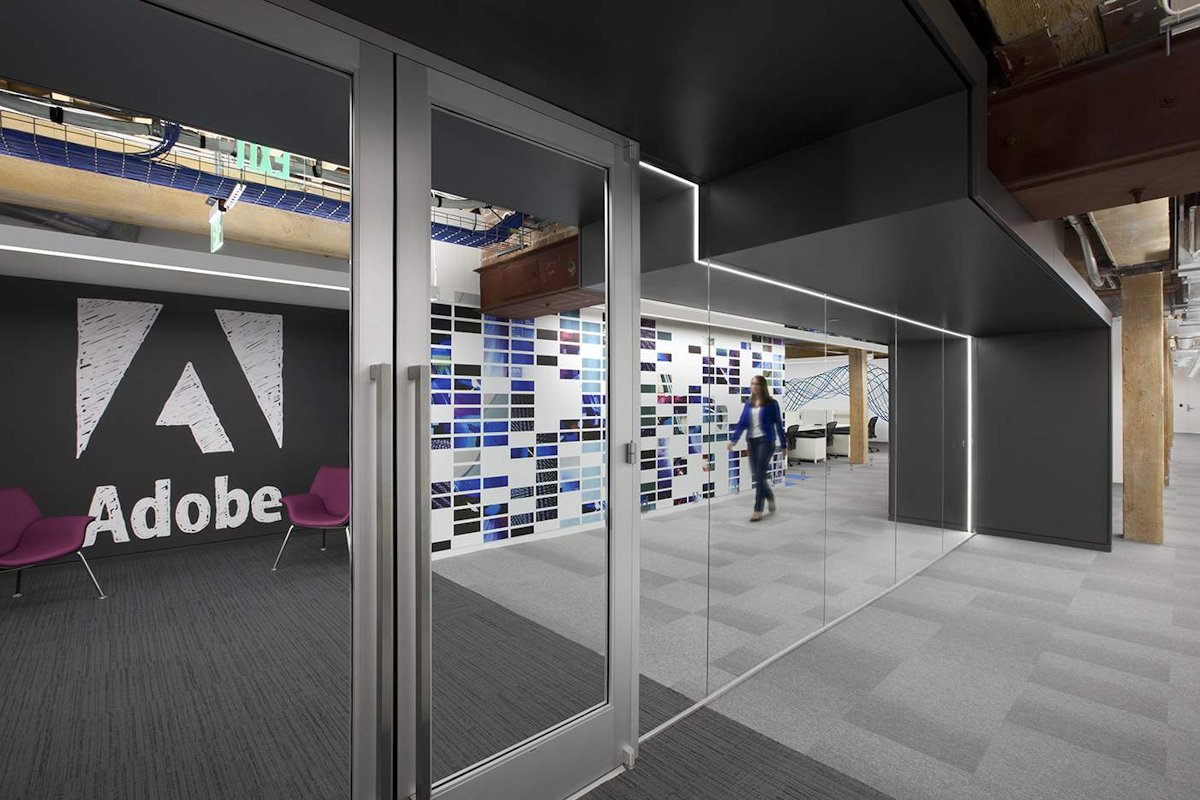
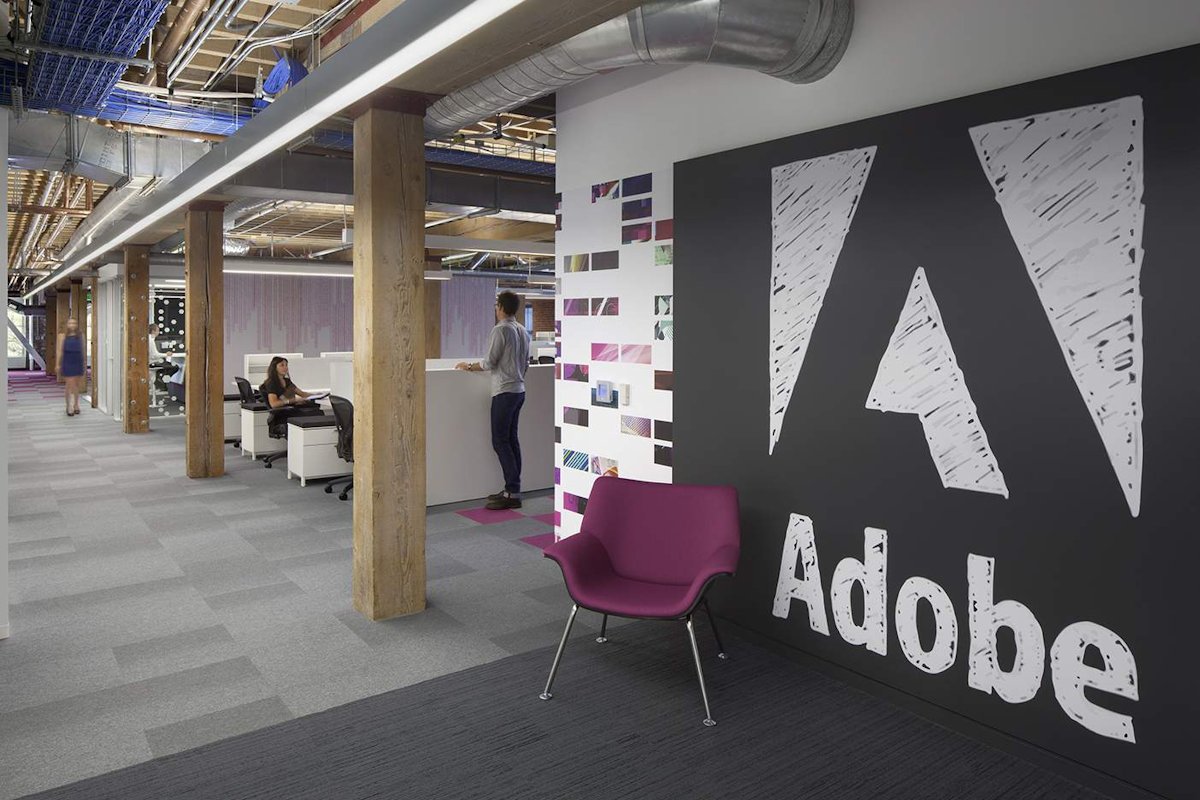
Adobe is a company associated with visual culture, design, digital creativity and communication. Its office, therefore, could not be neutral. The space had to speak the same language as Adobe’s products: flexible, visually expressive, contemporary, but not cold.
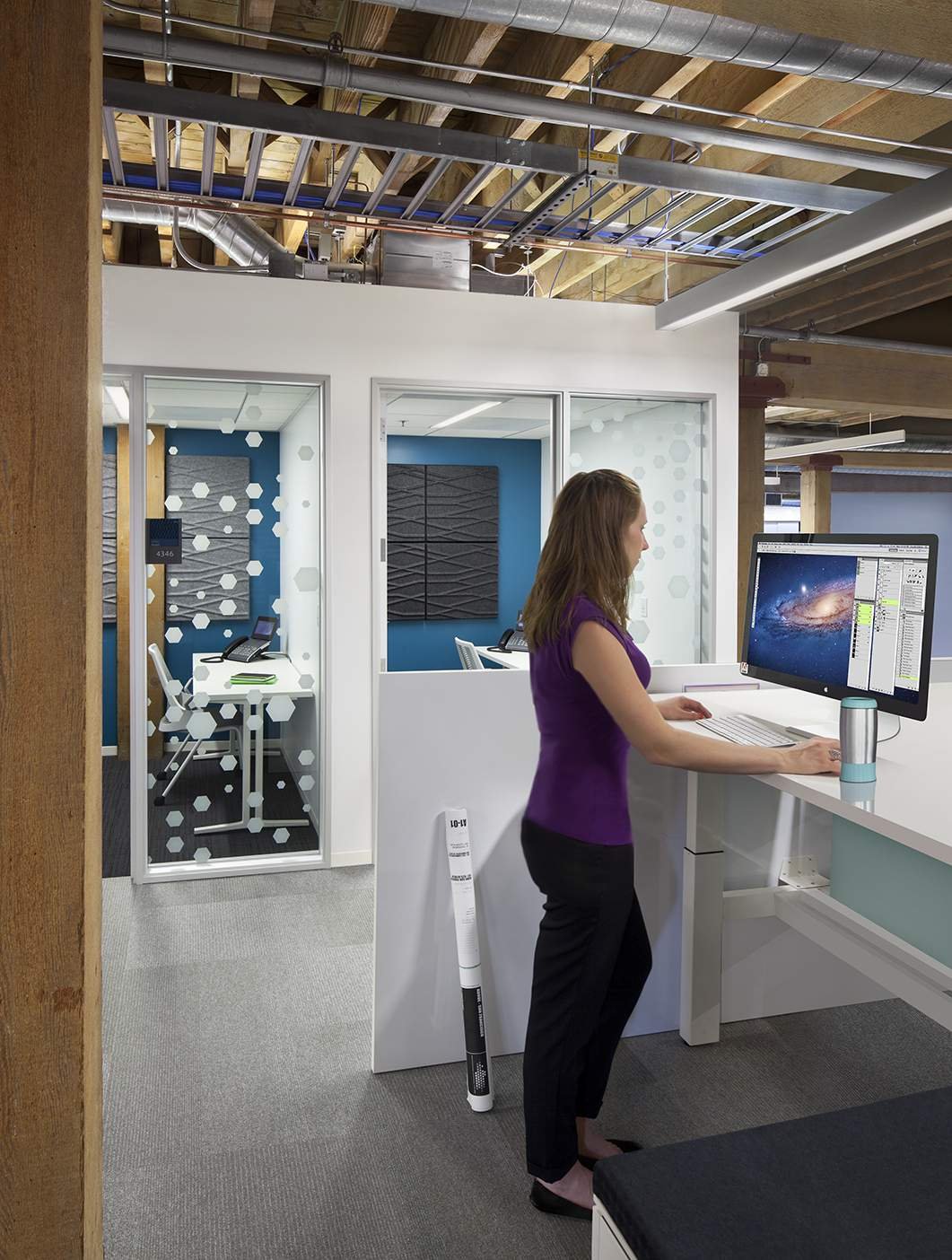
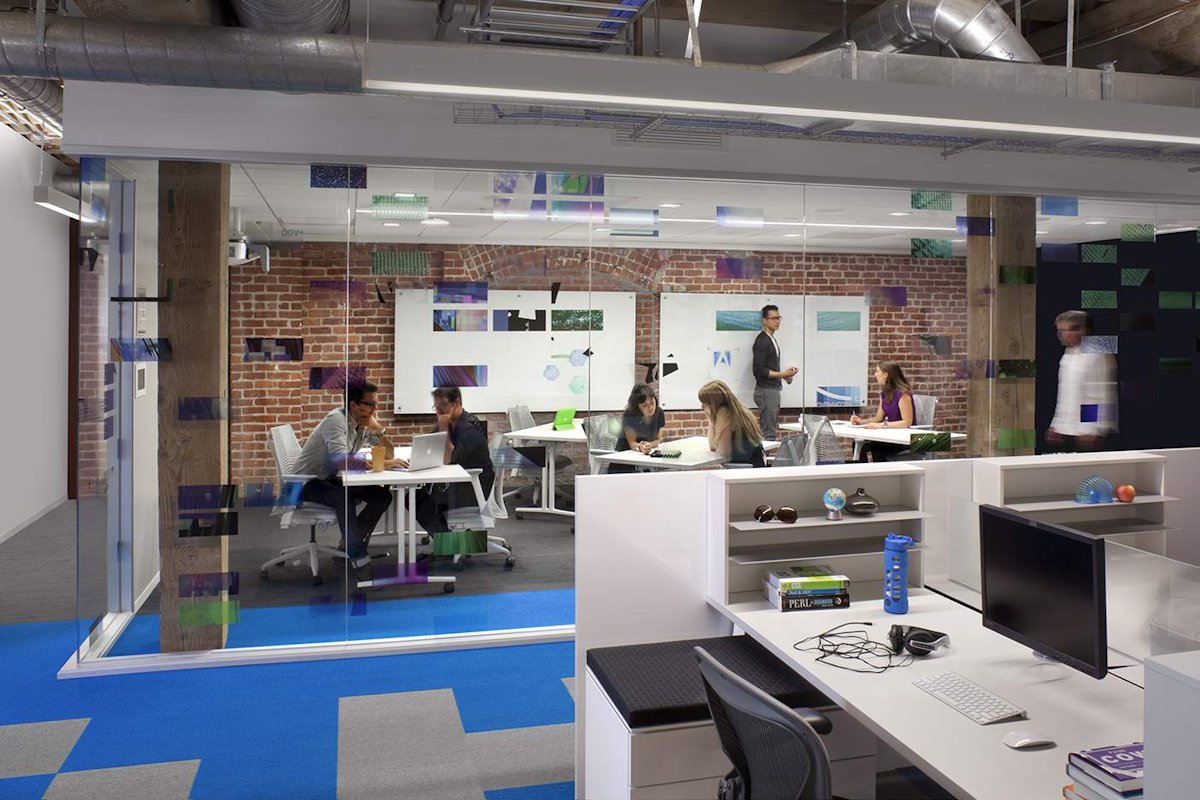
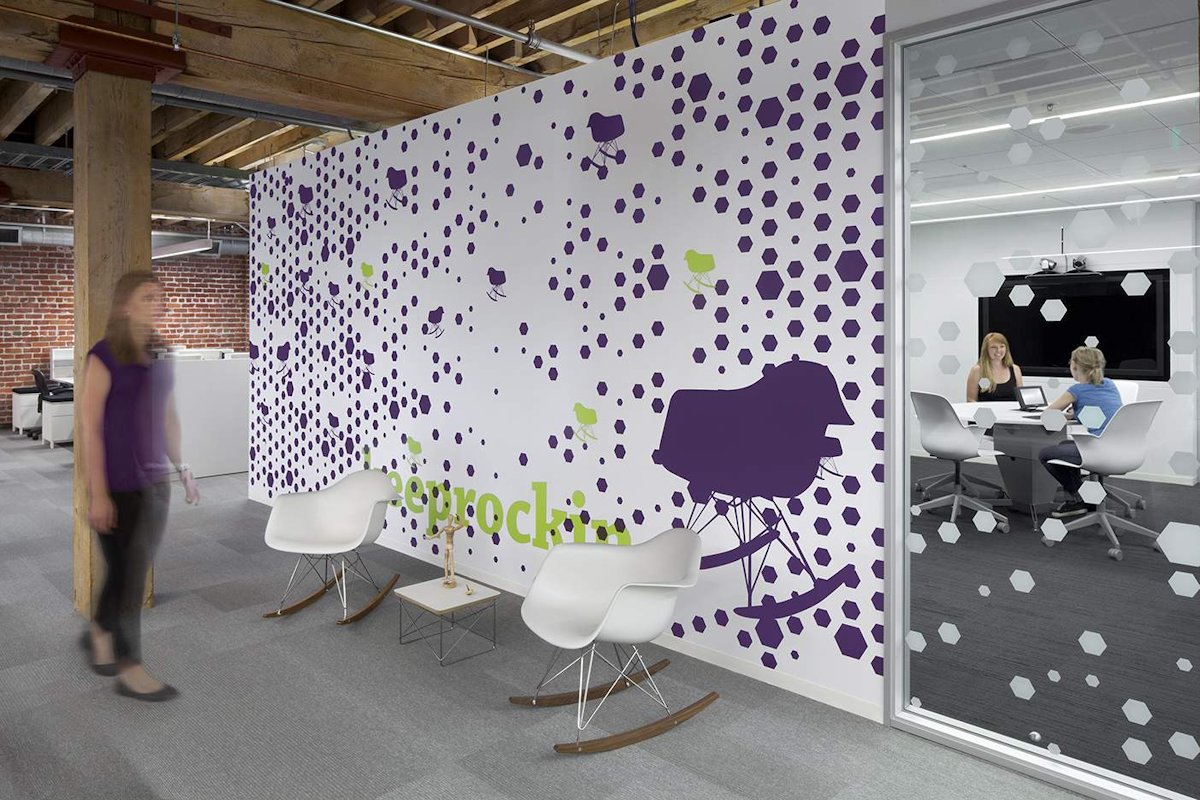
At 410 Townsend, the architects focused on a mix of open work areas, collaborative zones, lounges, meeting rooms and a multifunctional Town Hall space. This reflects the modern office philosophy: people do not work only at their own desk. They discuss ideas, present projects, gather in teams, withdraw for concentration, switch quickly between different modes and need a space that supports all of these scenarios.
The balance between individual and collective work became especially important. In a creative industry, an office cannot be reduced to open space alone: constant noise quickly kills concentration. But closed offices are not suitable for teams that thrive on the exchange of ideas. A good Adobe office therefore had to be not only beautiful, but intelligent - with different types of spaces for different states of the working day.
History they did not try to hide
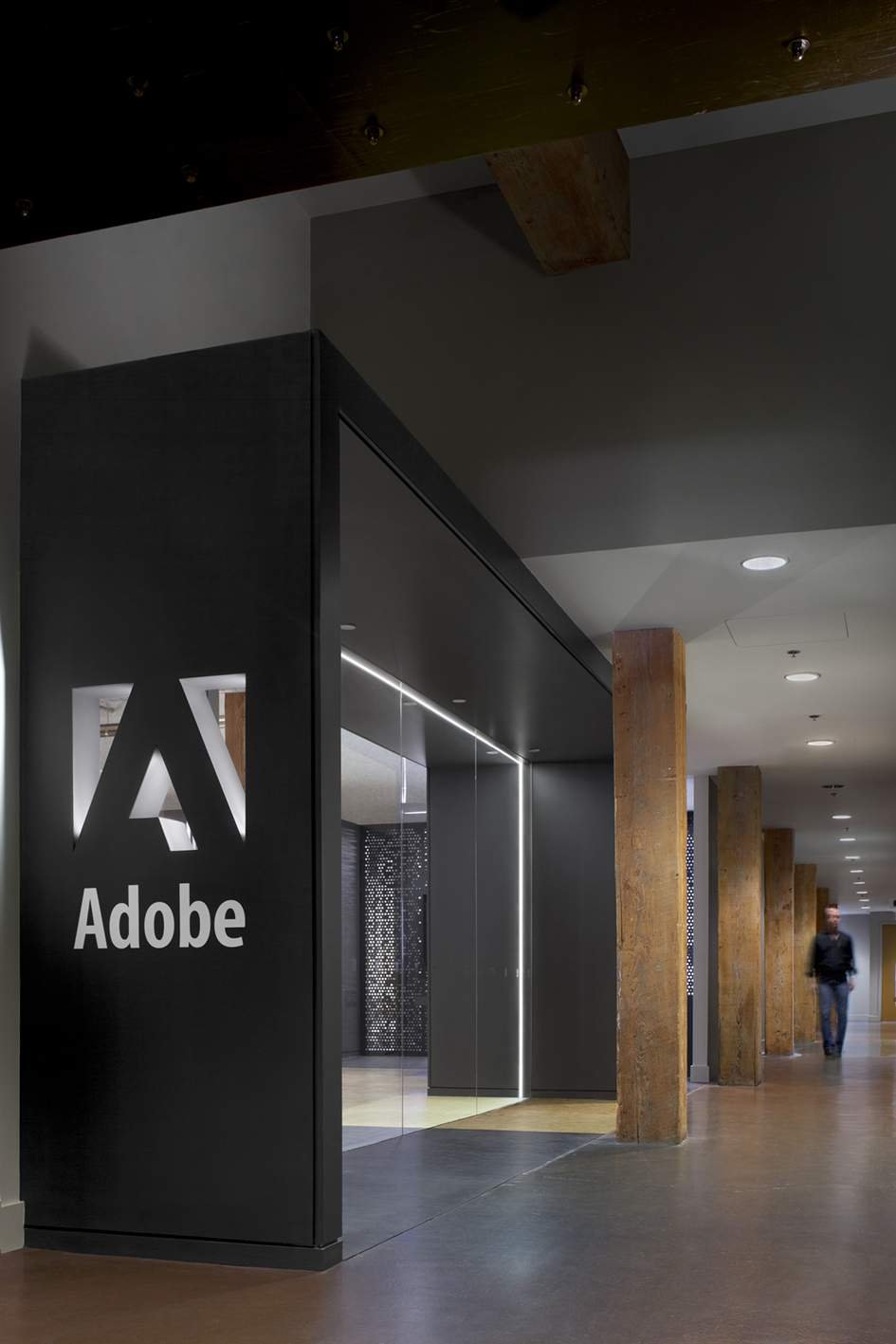
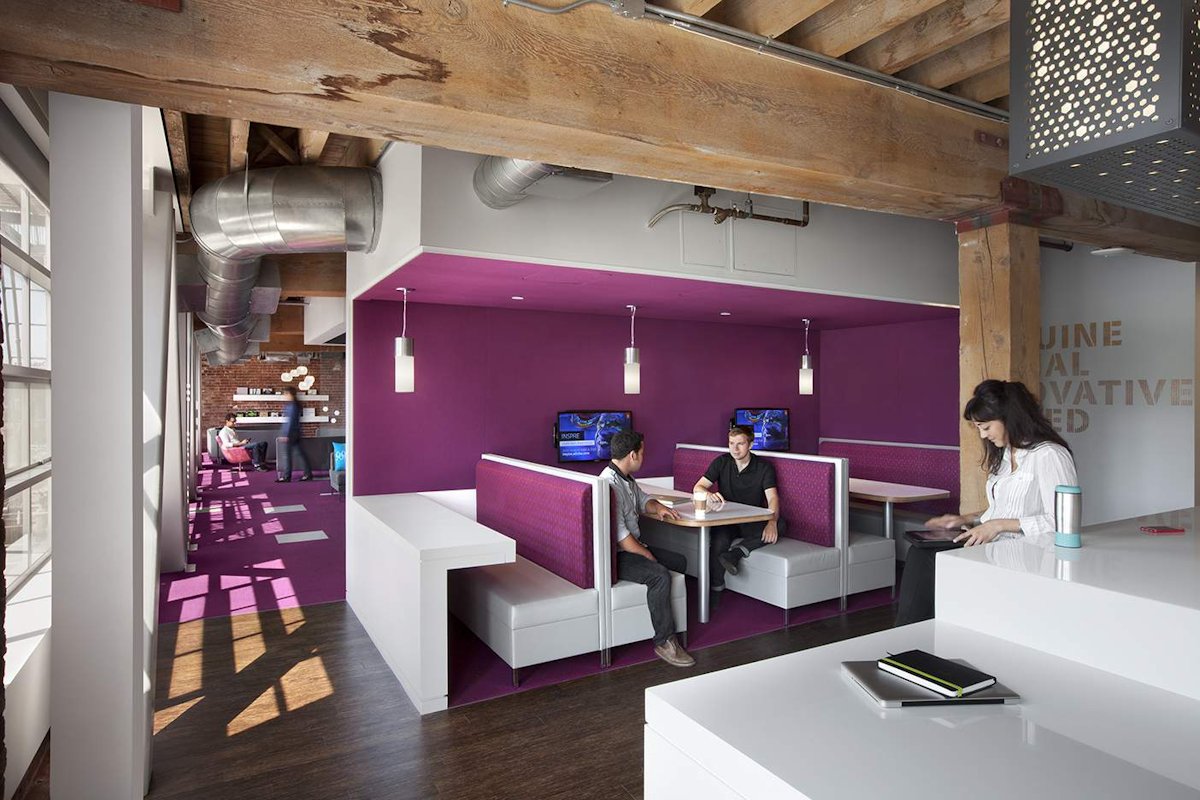
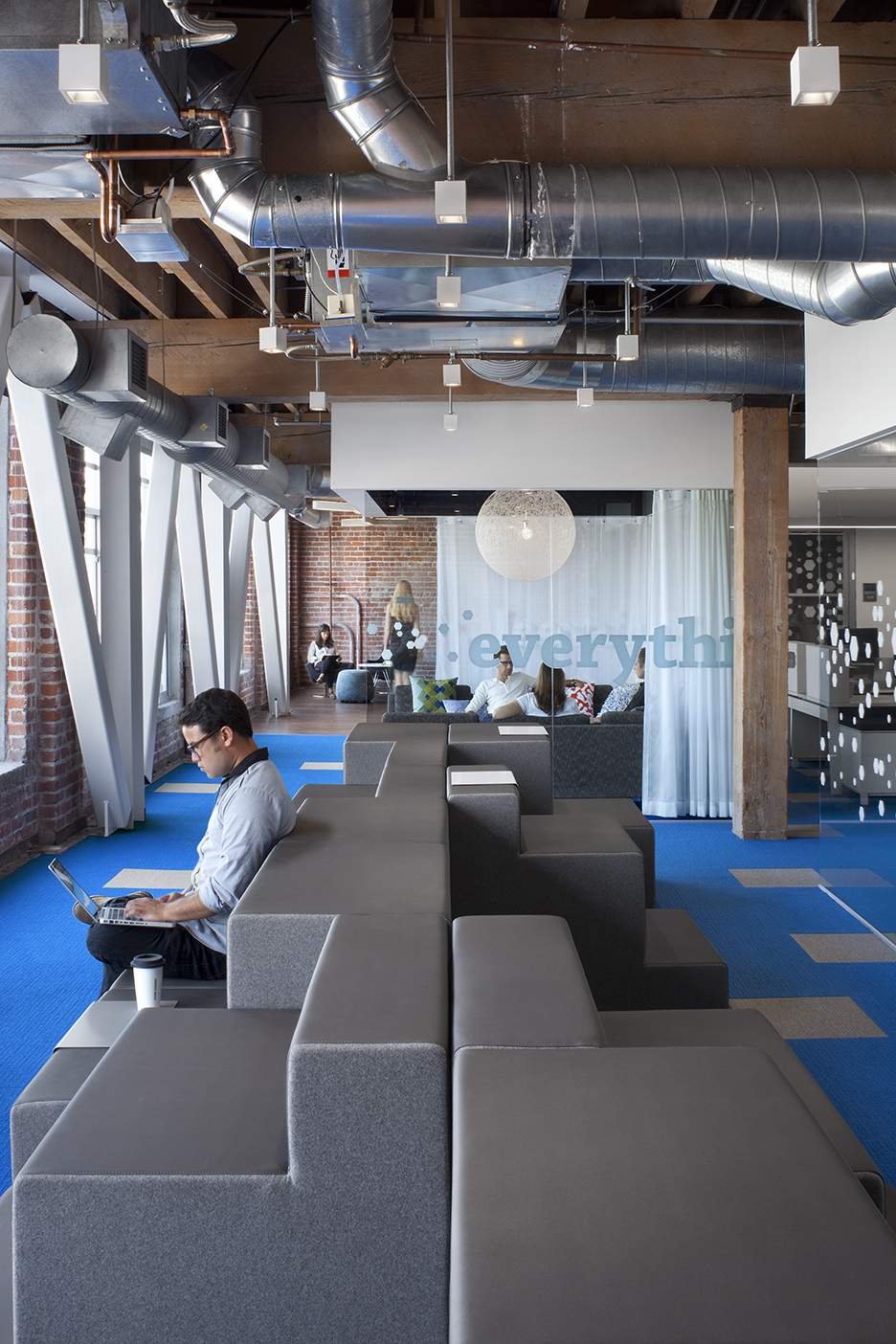
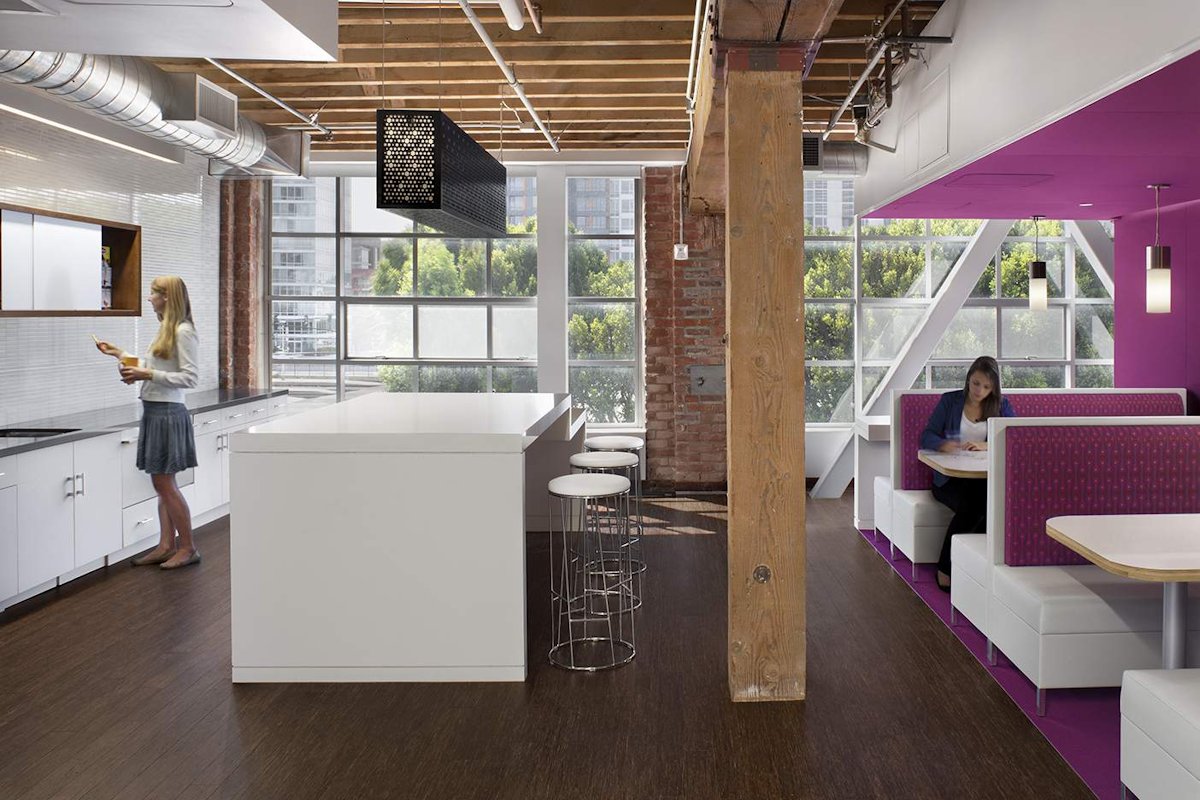
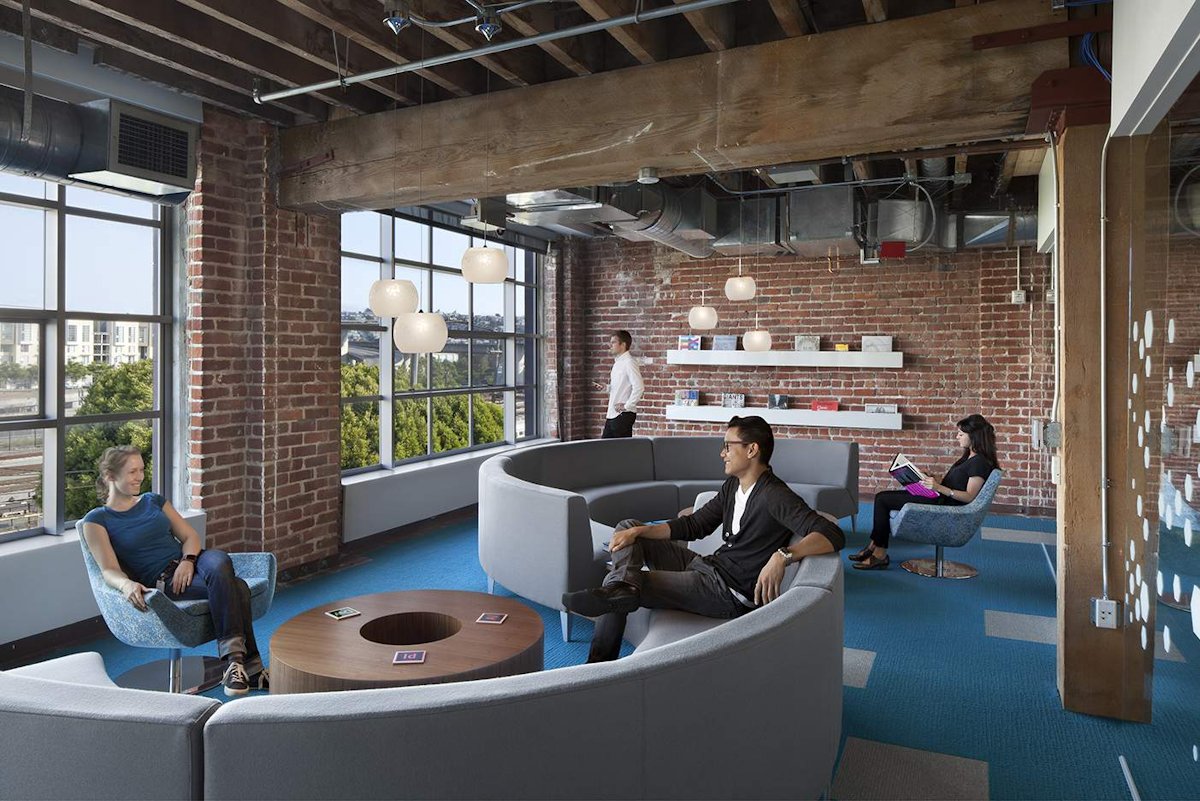
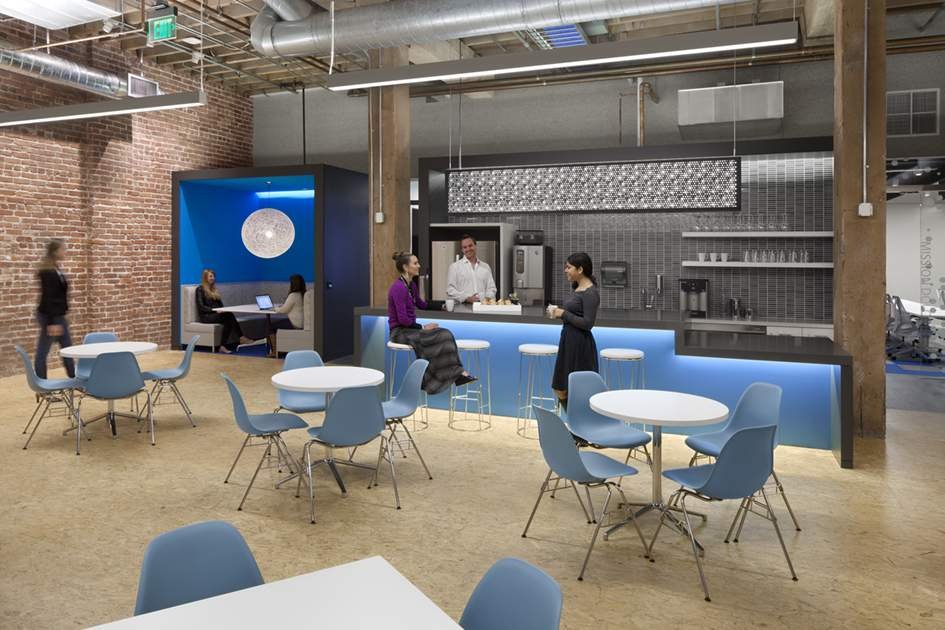
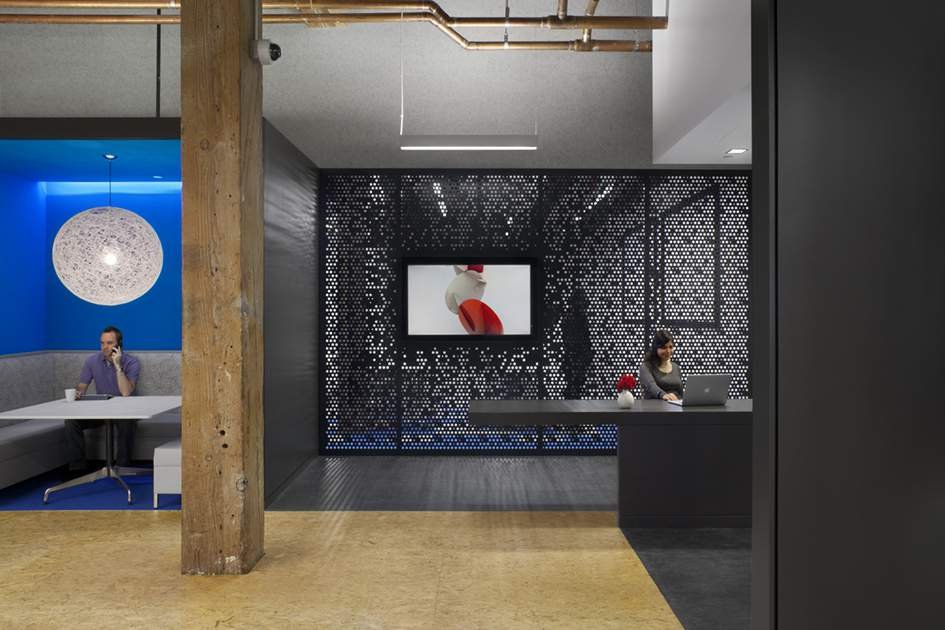
One of the strongest decisions in the project is its respect for San Francisco’s industrial architecture. Instead of hiding old materials behind anonymous contemporary panels, the designers emphasized the character of the building: brick, wood, large structural elements, high ceilings and the feeling of a former industrial space.
Against this background, modern furniture, bright graphic accents, Adobe brand elements and technological infrastructure become especially expressive. An interesting contrast emerges: the old materiality of the city and the digital culture of the company do not conflict with each other, but create a deeper interior. This is not an office that could be anywhere. It clearly belongs to San Francisco.
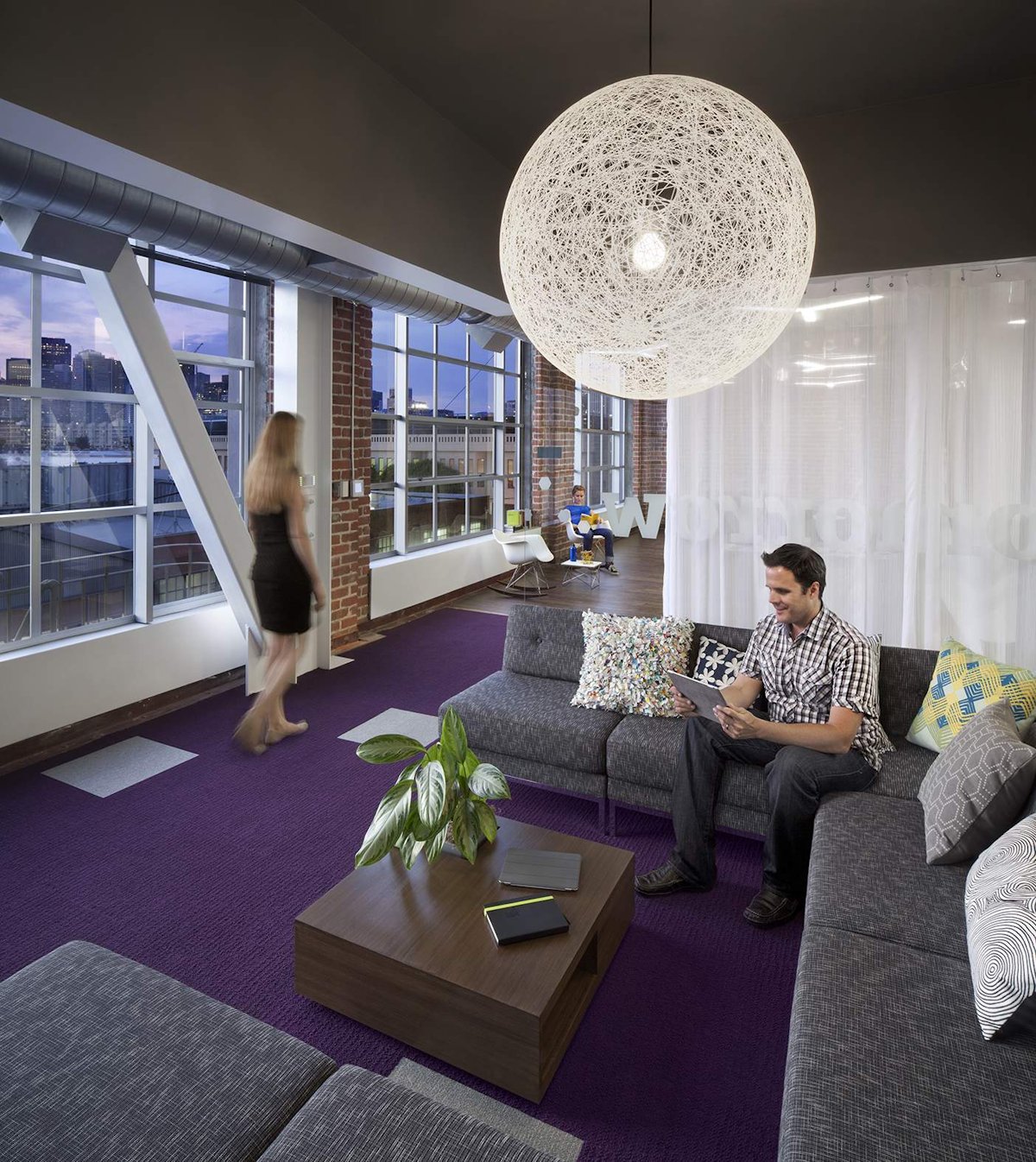
The upper levels of the building also offer beautiful views of the city, strengthening the feeling of connection to place. For an office used for meetings, presentations and team discussions, this is not a small detail. The view becomes part of the impression: employees and guests see not an abstract business district, but a living urban landscape that constantly reminds them where the company is located.
A space for meetings and presentations
410 Townsend was especially important for Adobe as a place for meetings, presentations and internal events. The Town Hall space became a kind of heart of the office - a flexible zone that can be used for all-hands meetings, talks, demonstrations, informal conversations and team events.
Such spaces are particularly important for technology companies today. The more work moves into the digital realm, the more valuable moments of real presence become. A good office must justify the trip to it: it must provide what a video call cannot. Atmosphere, team energy, accidental conversations, quick discussions after a presentation and the sense of a shared rhythm.
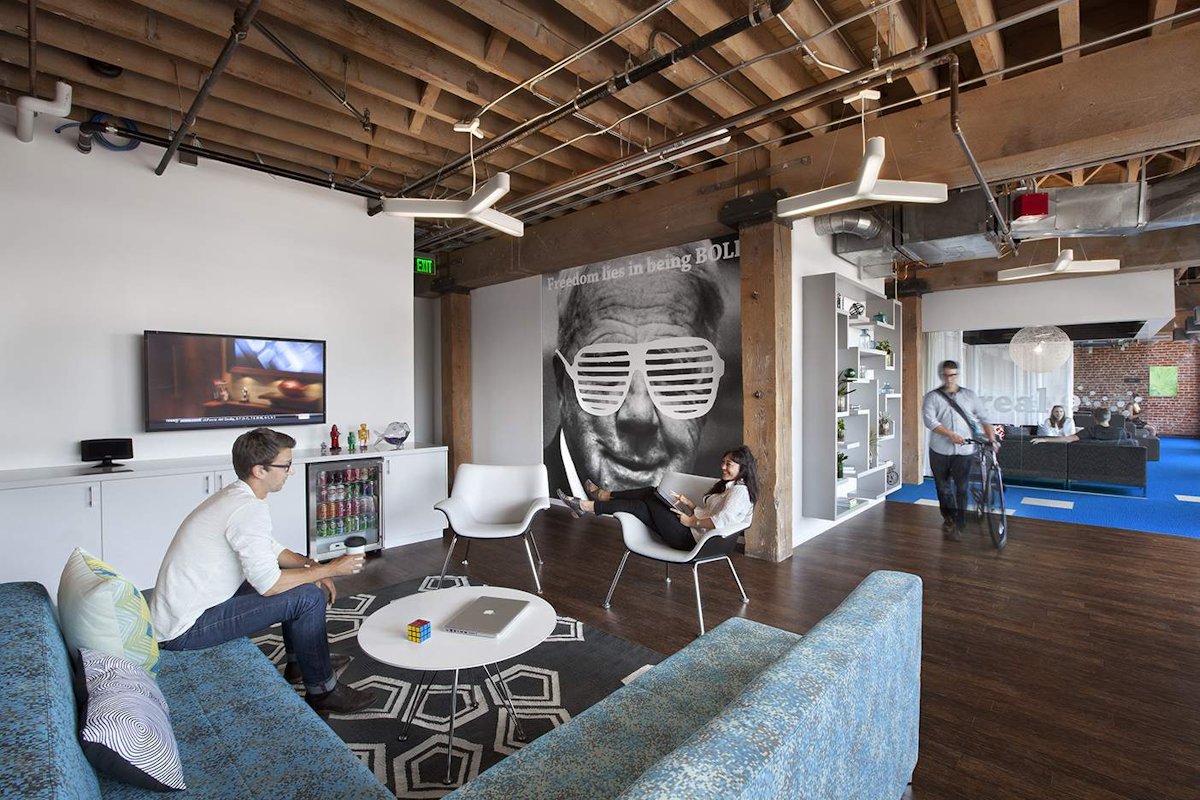
That is why the modern office looks less and less like a collection of desks and more like infrastructure for interaction. Adobe in San Francisco expresses this idea clearly: the workplace here is not only a desk, but also a lounge, a café-like zone, a meeting room, an informal corner and a presentation space.
Design without sterility
Many technology offices suffer from the same problem: they look expensive, but impersonal. Too much glass, too much grey, too much universal corporate minimalism. For Adobe, such an approach would be especially strange, because the brand is connected with creativity, colour and visual individuality.
At 410 Townsend, the interior is built differently. There are bright accents, graphics, different types of furniture, areas for rest and work, but the space does not turn into a chaotic display of design gestures. It remains functional. That is the maturity of the project: it does not try to look “creative” at any cost, but creates an environment in which creativity can genuinely work.
A sustainable approach to design also plays an important role. The 410 Townsend office received LEED Silver CI certification, reflecting attention to materials, energy efficiency and the quality of the indoor environment. For a modern company, this is not a decorative detail, but part of reputation: an office should be not only beautiful, but responsible.
Why this office still matters
The story of Adobe’s San Francisco office has become especially relevant in the era of hybrid work. After the pandemic, many companies have had to ask themselves again: why should people come to the office? The answer can no longer be what it once was. Simply putting an employee at a desk is not enough. The office must give meaning to presence.
A strong corporate space today must be a place of focus, collaboration, culture and impression. It should help new employees feel the brand, teams exchange ideas faster, clients see the company’s level, and people understand that they are not merely connected to a system, but part of a living professional environment.
Adobe’s San Francisco office is precisely about that. It connects the historic fabric of the city with the contemporary needs of a technology company. It shows that a workspace can be not a cold machine of productivity, but a place with character, memory and visual energy.
In this sense, 410 Townsend is not simply another Adobe address in San Francisco. It is an example of how an office can become an extension of a company’s philosophy: respecting the past, serving the present and creating the conditions for future ideas.