Why Hollywood movies do not show American birds
Sometimes cinematic illusion hides in places we do not expect. We easily accept digital dragons, invented cities and imaginary planets, but rarely notice that in a film set in the American desert, the vultures circling above the heroes may not be American at all. In a Western, a frontier drama or a historical film, a bird in the frame may look convincing to an ordinary viewer, but an ornithologist immediately sees the substitution: the wrong species, the wrong silhouette, the wrong voice, the wrong geography. And the reason is not always careless production design or lazy research. Sometimes Hollywood gets birds wrong because the law leaves it very little choice.
Look closely, and these substitutions appear surprisingly often. In films and television shows set in North America, local species may be replaced by African, European, Mexican or Asian birds. Vultures, owls, jays, pigeons, ravens - on screen, they are often not quite what they seem. For the average viewer, this is a tiny detail. For a birdwatcher, it can be a comedy of errors. For the film industry, it is the result of very specific rules.
The main reason is the Migratory Bird Treaty Act, a U.S. federal law passed in 1918 that protects hundreds of wild bird species. The law prohibits, without proper authorization, the capture, possession, transport, sale, purchase, killing or commercial use of protected birds, as well as their parts, nests and eggs. And this applies not only to rare species. Many common birds we are used to seeing in yards, parks, forests and along roads are protected as well.
For cinema, this means something very simple: if a bird is a protected native species, it cannot simply be taken, trained and used as an animal actor in a commercial production. So when a director needs a “typical American bird,” the animal wrangler often has to offer a similar-looking species from another part of the world that is not covered in the same way by the law.
How a bird law changed the movies
For producers, this often comes as a surprise. A production may ask for a blue jay, an American chickadee or a native owl, only to be told by animal specialists that the species cannot be used for commercial filming. Instead, they must find a substitute - perhaps a Mexican jay, a Middle Eastern bulbul, a European owl or an African vulture.
That is how strange little inaccuracies appear, even when most viewers never notice them. The bird sits on a branch, turns its head beautifully and gives the scene the right atmosphere - and the moment works. But from the perspective of nature, it may be geographically impossible. The scene is America, but the bird on the tree is one that does not belong there.
This is especially common with birds of prey and corvids. American hawks, owls, ravens, vultures and many other species are protected by law. For filming, productions often use non-native relatives instead: they serve a similar visual function, but are legally easier to work with. The viewer needs an image: a raptor over the desert, a raven in the snow, an owl in a night forest. The law forces a compromise between screen plausibility and real wildlife protection.
Why the law exists in the first place
At first glance, this level of strictness may seem excessive. Why forbid the use of a bird in a film if it can be kept well and not harmed? But the history of the law explains why American rules became so firm.
In the late nineteenth and early twentieth centuries, birds in North America were slaughtered on a massive scale for fashion, trade and entertainment. Egrets and other beautiful species suffered especially badly because their feathers were used in women’s hats. Millions of birds were killed for decorative plumes, and some populations were pushed to the edge of extinction. Bird protection became one of the first major victories of the conservation movement in the United States.
The Migratory Bird Treaty Act was passed in 1918 and became one of the most important tools for protecting birds. It was not created for cinema, and it was not aimed at filmmakers. Its purpose was far more serious: to stop the commercial exploitation of wild birds and prevent the market from once again turning living nature into raw material.
That is why the law covers not only obvious killing or trade, but possession itself - the holding of a protected bird or its parts without authorization. A feather, an egg, a nest, a mounted specimen, a living bird - all of it can matter. The logic behind the law is simple: if exceptions become too broad, a market appears, and with it pressure on wild populations returns.
Why cinema cannot simply be exempted
From the film industry’s point of view, the argument is understandable: the crew does not intend to destroy birds; it simply needs one trained bird for a short scene. But from a conservation point of view, that loophole could quickly become dangerous. If commercial use became routine, demand would arise for birds that could be captured, kept, trained and rented out.
Even if most specialists behaved responsibly, the market could still encourage illegal trapping, trade in nests, eggs and chicks, and pressure on wild populations. The most charismatic, colourful and recognizable species would be especially vulnerable - precisely the birds most often desired for films, commercials and photo shoots.
So the law is strict by design. It does not try to decide every time who is responsible and who is not. It sets a broad rule: protected birds may not be used commercially without proper authorization. For cinema, this is inconvenient. For nature, it is vital.
The viewer sees a symbol, the ornithologist sees a mistake
What is fascinating is that most moviegoers almost never notice the substitution. We respond not to biological accuracy, but to emotional code. A raven means darkness. An owl means night, mystery, wisdom or unease. A vulture means death, desert and waiting. A dove means peace or urban life. Cinema works with symbols, not field guides.
But for people who know birds, these scenes look different. The wrong jay in an American backyard, the wrong vulture in the desert, the wrong owl in the forest - all of this can be almost as noticeable as a car from the wrong decade in a period film. The error may be small, but it reminds us that cinema creates believability, not always accuracy.
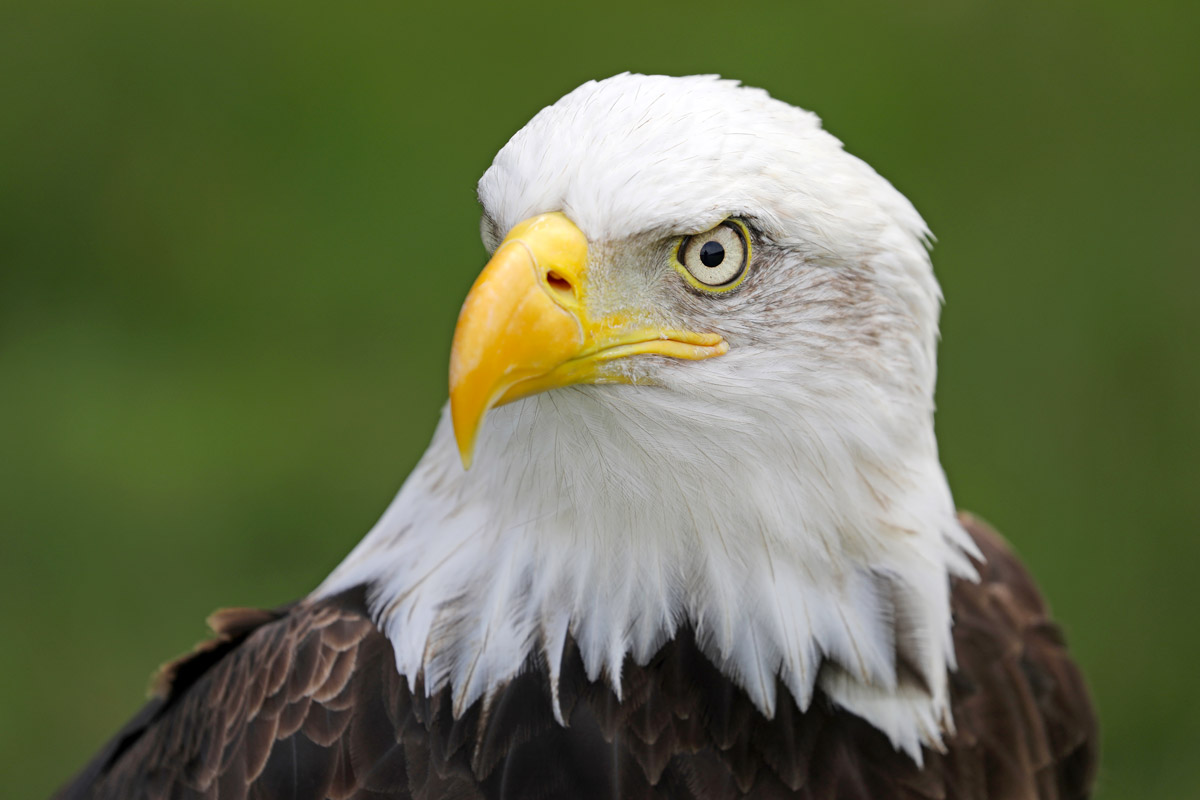
There is also an interesting twist: bird sounds are often used more freely than the birds themselves. Visually, one species may appear on screen while another is heard on the soundtrack. Even more famously, the cry of the red-tailed hawk is often used in American films as the universal “voice of the eagle,” although the real bald eagle sounds far less cinematic. Hollywood has long created not real ornithology, but emotional ornithology.
When law helps art
The paradox is that restrictions can sometimes make cinema more interesting. They force animal trainers, production designers, directors and visual effects artists to find solutions: use similar foreign species, rely on archival footage, create birds with CGI, change the staging of a scene or use sound, silhouette and editing instead.
Scientifically, the result is not always perfect. But the existence of the restriction reminds us of something important: not everything that looks beautiful on camera should be available for commercial use. Sometimes nature’s right to protection matters more than perfect cinematic accuracy.
In an age when digital technology can create almost any creature, the significance of such a law becomes even more interesting. Today, cinema no longer needs to keep a real bird in captivity for the sake of one effective shot. CGI, sound design, documentary footage and intelligent staging can replace a great deal. Perhaps this is the modern compromise between spectacle and responsibility.
Why American birds can still be heard
So yes, in a Hollywood film you may not see a real American bird where you expect one to appear. In its place, the camera may show a relative from Africa, Europe, Mexico or the Middle East. But you may still hear American birds: legally obtained sound recordings are not the same thing as commercial possession of a live protected bird.
There is almost poetic irony in that. An American bird may be prohibited as an actor, but its voice can continue to live in cinema. It may not appear in the frame, but it remains in the atmosphere of a scene - in forest ambience, above a desert, in a cry over a canyon or in the morning chorus outside a character’s window.
So the next time a “local” bird appears above the heroes in an American film, look a little more carefully. It may not be a mistake or laziness, but the result of a strange and important alliance between Hollywood and conservation law. Cinema gets its symbol. Birds get their protection. And the viewer gets one more reason to understand that even a tiny detail in the background can contain an entire story about culture, law and the human relationship with the living world.