
The Island that is not where you think it is
Bermuda
Bermuda: Why the Atlantics most unusual British archipelago feels unlike anywhere else on Earth? Most people think they know where Bermuda is. Somewhere in the warm Caribbean. Between Cuba and Jamaica. Not far from Miami. None of that is actually true.
Bermuda sits in the Atlantic Ocean - not in the Caribbean Sea. Roughly on the same latitude as Charleston, South Carolina. More than 1,000 kilometres from the nearest Bahamian islands. About 1,100 kilometres from New York City. Roughly the same distance from Toronto.
It is the only inhabited landmass in this entire section of the Atlantic. Bermuda exists not because of a continental shelf, but because the peaks of an ancient extinct volcano rose above the ocean surface. It remains one of the most isolated inhabited island groups in the temperate world.
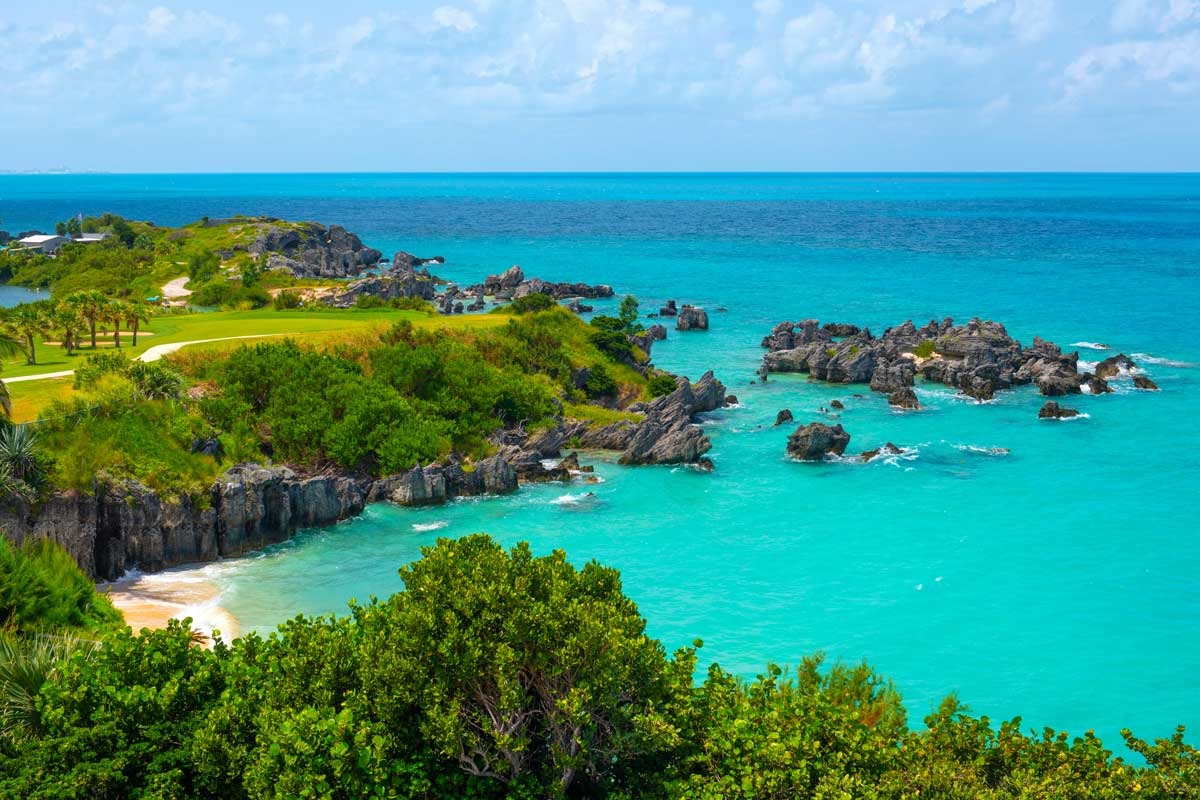
That isolation is exactly what makes Bermuda feel so different. The architecture, the vegetation, the ocean, the wildlife, even the colour of the sand - nothing here feels quite like the Caribbean.
And yet from Toronto, it takes only about two and a half hours on a direct flight to arrive somewhere that feels completely detached from the ordinary map of tropical travel.
The Shipwreck That Inspired Shakespeare
Bermuda remained uninhabited until Europeans arrived in the early 16th century. Spanish sailors discovered the islands but chose not to settle them: too many reefs, dangerous currents and a location far from major trade routes. Sailors called them the “Isle of Devils” because of strange cries heard at night - sounds later identified as seabirds.
Permanent settlement began only in 1610, and it happened because of a disaster.
In 1609, a fleet of nine ships sailed from England to Jamestown, the struggling English colony in North America that was on the verge of collapse from famine and disease. The flagship, Sea Venture, carried food supplies, settlers and colonial officials essential for the colony’s survival.
On July 28, the fleet sailed directly into a violent hurricane.
Eight ships continued on. Sea Venture lost control. As water flooded the hull faster than the crew could remove it, Admiral Sir George Somers made the only decision left: he deliberately drove the ship onto Bermuda’s reefs. All 150 passengers survived.
They spent ten months on the islands, building two new vessels - Patience and Deliverance - from Bermuda cedar and the wreckage of Sea Venture. When they finally reached Jamestown, they found only about sixty starving survivors remaining alive.
Their arrival saved the colony.
Had Sea Venture never wrecked on Bermuda’s reefs, Jamestown might have been abandoned entirely - and the history of English North America could have unfolded very differently.
Letters describing the mysterious islands reached London. One of the readers was William Shakespeare. In 1611 he wrote The Tempest - a play about a shipwreck on a strange island inhabited by spirits and mysterious creatures.
Bermuda’s flag remains the only national flag in the world featuring a sinking ship. That ship is Sea Venture.
Homes Designed to Catch Rain
Bermuda has no rivers. No lakes. No natural freshwater sources.
That is not an exaggeration - it is literal reality. The islands are made largely of porous limestone that cannot retain fresh water. Nearly every drop of drinking water on Bermuda comes from rainfall collected on rooftops.
By law, every building on the islands must have a rainwater collection system. Bermuda’s iconic white stepped roofs were never created for decoration. They are centuries-old engineering systems.
The stepped design slows the flow of water, while the white lime coating helps purify it naturally. Beneath every house sits a large underground cistern. The system worked this way in the 17th century - and still does today.
A typical Bermudian home may store around 80,000 litres of water collected from its own roof.
This same architectural aesthetic later inspired the design of Alys Beach in Florida.
Why the Sand Is Actually Pink
Bermuda’s pink beaches are not a tourism myth and not a photography trick.
Off Bermuda’s coast lives a microscopic marine organism called Homotrema rubrum - a species of foraminifera with a reddish shell. When these organisms die, their remains mix with crushed white coral sand and create Bermuda’s distinctive pink tint.
That is why the beaches often appear softly blushed rather than simply white, especially after rain or during sunrise and sunset.
The most famous pink sand beaches are along the south shore: Horseshoe Bay, Warwick Long Bay and Jobson’s Cove.
The Bird Believed Extinct for Three Hundred Years
In the 17th century, Bermuda was home to a rare nocturnal seabird known locally as the cahow. Its eerie nighttime calls helped create the legends of the “Isle of Devils.”
After colonization, the species nearly vanished. Pigs destroyed eggs, rats invaded nesting grounds, and by the late 1600s the bird was believed extinct.
Then in 1951, ornithologist Robert Cushman Murphy and naturalist Louis Mowbray discovered a surviving colony on a tiny uninhabited islet - only eighteen breeding pairs remained.
Young conservationist David Wingate devoted much of his life to saving the species. He built artificial burrows, removed invasive predators and protected nesting areas.
Today the Bermuda petrel has returned from the edge of extinction and is considered one of the world’s great wildlife recovery stories.
The cahow appears on the Bermudian dollar.
How John Lennon Wrote His Final Album
By the summer of 1980, John Lennon had not written music for nearly five years.
He was living quietly in New York, raising his son Sean and insisting he was content outside the music industry. Many doubted him, but the creative silence was real.
Yoko Ono persuaded him to take a sailing trip. Lennon chartered the schooner Megan Jaye and departed Rhode Island for Bermuda.
During the voyage, the yacht was caught in a severe Atlantic storm. Seasickness incapacitated most of the crew, leaving Lennon and Captain Hank Halsted alone at the helm for hours.
Lennon later described the experience as transformative.
After arriving in Bermuda, he wrote roughly twenty-five songs over the next two months.
While visiting the Bermuda Botanical Gardens, he noticed the name of a flower hybrid: Double Fantasy. It became the title of the album that would ultimately be his final release during his lifetime.
Woman, Watching the Wheels, Beautiful Boy and Starting Over were all written here.
Only months after returning from Bermuda, John Lennon was murdered outside his New York apartment building.
Three Hundred Shipwrecks and the Northernmost Coral Reef in the Atlantic
Bermuda is often called the shipwreck capital of the Atlantic.
More than 300 documented wrecks lie around the islands. The same reefs that saved the passengers of Sea Venture destroyed hundreds of ships over the centuries.
Today wreck diving is one of Bermuda’s most famous underwater experiences.
At the same time, Bermuda is home to the northernmost coral reef system in the Atlantic Ocean. Its survival depends entirely on the Gulf Stream, the warm current flowing past the islands. Without it, there would be no coral reefs, no subtropical vegetation and no pink sand beaches.
The Islands Where Cars Arrived Late
For much of the early 20th century, private automobiles were effectively banned on Bermuda. Authorities feared they would disrupt the quiet rhythm of island life.
Even after cars were eventually permitted, strict limitations remained. Today each household is allowed only one car. Tourists cannot rent vehicles at all - only scooters, electric bikes, bicycles or taxis.
Traffic still moves at an unusually slow pace, and Bermuda’s first traffic lights did not appear until 1978.
The result is a strange and almost surreal atmosphere where modern life feels intentionally slowed down.
The Truth About the Bermuda Triangle
The phrase “Bermuda Triangle” was coined only in 1964 by American writer Vincent Gaddis. He described several disappearances of ships and aircraft between Florida, Puerto Rico and Bermuda and linked them to paranormal theories.
Later investigations - including studies by Lloyd’s of London and other organizations - found no statistical anomaly in the region compared to other heavily travelled maritime routes.
The Bermuda Triangle does not exist as an official geographic zone. It appears on no navigational charts. Insurance rates for vessels travelling through the area are not elevated.
The mythology proved far more powerful than the reality.
Why Bermuda Is Worth Experiencing
Bermuda is not the Caribbean. It is not Florida. And it is not a conventional tropical resort destination.
It is a place shaped by shipwrecks, Shakespeare, Atlantic storms and centuries of isolation. A place where rooftops still function as survival systems, where a bird returned from presumed extinction, where microscopic sea organisms colour entire beaches pink, and where John Lennon rediscovered music after years of silence.
There are no giant Caribbean mega-resorts here and very little mass tourism in the usual sense. Instead, there are about 60,000 residents, narrow winding roads, pastel houses, pink beaches, British formality, Bermuda shorts worn as official business attire and the rare feeling that history here never disappeared - it simply settled comfortably beside the ocean and stayed.