
Milk of the Desert
Inside the Camel Milk Chocolate
Thirteen years before a pregnant engineers craving for knafeh turned into a global TikTok obsession, another product also calling itself Dubai Chocolate was already quietly building an international export business - and it had nothing to do with pistachios, kadayif, or viral crunch sounds. It was built on an animal nobody had ever successfully turned into chocolate before, for reasons that turn out to be genuinely, fascinatingly chemical. This is the story of Al Nassma, and of why making chocolate from camel milk is a far harder problem than it sounds.
A Chocolate Museum Curator's Strange Idea
The idea began, unexpectedly, with a television documentary. Martin van Almsick, a German who had worked at the Cologne Chocolate Museum, watched a program in which a veterinarian discussed the health properties of camel milk, and found himself asking an obvious but oddly unasked question: if this milk was so nutritionally distinctive, why had nobody ever turned it into chocolate? The idea took shape in 2004. Getting from that question to an actual product took four more years of failed batches, reformulation, and outside expertise, because camel milk, it turns out, does not behave in a chocolate factory the way cow's milk does.
Van Almsick brought in two specialists to solve the problem: Patrick Dorais, a French-Canadian who had learned the confectionery trade at Nestlé in Geneva, and Johann Georg Hochleitner, an Austrian chocolatier from Salzburg who had already built expertise making chocolate from sheep's, goat's, and buffalo's milk - unusual dairy sources that turned out to share some of the same technical headaches camel milk would present. The Viennese wafer and confectionery maker Manner took on a significant share of the actual chocolate production. Together, the group launched Al Nassma in Dubai on October 22, 2008 - a name drawn from Arabic for the cool seasonal breeze that offers relief in the desert, and a launch that, notably, happened in the same month the global financial system was in the middle of collapsing.
Why Camel Milk Fights Back Against Being Made Into Chocolate
The technical challenge here is genuinely interesting, not just a marketing footnote. Camel milk's fat exists as smaller globules than cow's milk - roughly 1 to 2 nanometers across - distributed evenly through the liquid rather than separating into a cream layer the way cow's milk does. Its protein structure lacks beta-lactoglobulin, a protein present in cow's milk that's responsible for a meaningful share of cow-milk allergies in humans, and camel milk's casein behaves differently under processing, forming a softer curd that resists the kind of coagulation food scientists typically rely on when turning milk into a stable base for confectionery. Camel milk is also notably more variable in composition than cow's milk - its fat, protein, and lactose content shift meaningfully depending on the animal's diet, hydration, season, and breed, which makes consistent industrial-scale production a genuinely harder engineering problem than working with standardized dairy herds bred for consistency over generations.
Al Nassma's eventual solution was logistical as much as culinary: camel milk is collected fresh and pasteurized locally in Dubai, with a portion freeze-dried and airlifted to Austria, where it's rehydrated and incorporated into the actual chocolate mass under Manner's production expertise, using no soy lecithin, palm oil, or artificial additives in the final formulation. Each 70-gram bar uses roughly 150 milliliters of camel milk - a genuinely substantial proportion of dairy relative to a typical chocolate bar's milk content.
The Farm Behind the Milk
All of that milk originates at Camelicious, a dedicated dairy farm in Umm Al Qwain, outside Dubai, that has grown to house more than 3,000 camels and holds the distinction of being the only EU-approved camel dairy operation in the UAE - a certification that requires meeting the same food-safety and animal-welfare standards European regulators apply to any dairy product entering the EU market. The camels are milked twice daily, together producing several thousand liters of raw milk, some of which is bottled separately for direct sale under the Camelicious name, with the remainder routed into Al Nassma's chocolate supply chain. The farm sits at the center of Al Nassma's broader sustainability pitch, which also extends to its cocoa sourcing: the company has said it pays cocoa farmers roughly double the standard farm-gate price, a deliberate premium intended to support fairer livelihoods and, not incidentally, more consistent bean quality.
What Camel Milk Actually Tastes Like - and Why
Camel milk carries a genuinely distinct sensory profile: noticeably saltier than cow's milk, with a faint mineral note, and a lighter, thinner mouthfeel due to its comparatively lower fat content. That saltiness has a specific physiological cause - it stems partly from the animal's own remarkable adaptation to arid environments, since a dehydrated camel's milk shows measurably higher sodium and chloride concentrations than milk from a well-hydrated animal, a survival mechanism that shows up directly in the finished product's flavor.
The nutritional differences are real and well documented in peer-reviewed research, even if some of the more sweeping wellness claims attached to camel milk over the years outrun the actual evidence. What's genuinely established: camel milk typically contains three to five times more vitamin C than cow's milk, a trait with clear historical logic for desert-dwelling communities with limited access to fresh produce. It generally carries less saturated fat, and because it lacks beta-lactoglobulin, some people with a cow's milk protein allergy tolerate it better, though camel milk is not lactose-free and remains unsuitable for anyone with a true lactose intolerance requiring strict avoidance. Broader claims - that camel milk meaningfully treats diabetes, autism, or hepatitis - circulate widely in both traditional use and online wellness spaces, but rest on a much thinner and more preliminary evidence base than the marketing occasionally implies, and shouldn't be mistaken for established medical fact.
What's Actually in the Box
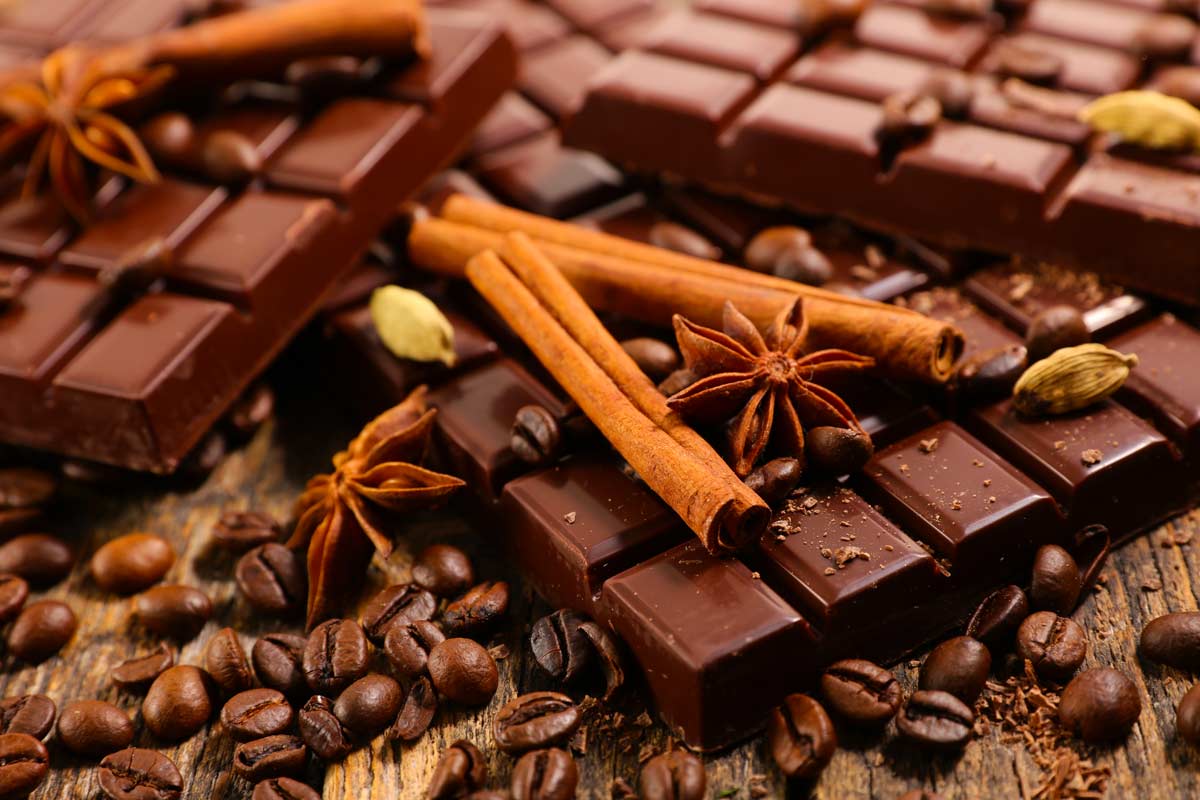
Al Nassma's product range reads as a deliberate exercise in heritage branding rather than trend-chasing. The core lineup includes 70-gram bars in whole milk, 70 percent dark, and an "Arabia" blend built around cardamom and cinnamon, alongside versions incorporating macadamia, orange, pistachio, and dates - ingredients chosen specifically to echo regional Arabian flavor traditions rather than international chocolate norms. Beyond bars, the company produces camel-shaped pralines filled with macadamia and honey cream, hollow chocolate camel figures, and various boxed pralines packaged to resemble camel hide. Every bar comes wrapped in double-printed gold foil - a presentation choice clearly built for the souvenir and gifting market rather than everyday grocery-aisle chocolate.
From Dubai Duty Free to a Genuine Export Business
Unlike the modern viral phenomenon that shares its "Dubai chocolate" name, Al Nassma built its international footprint slowly and deliberately over more than a decade rather than through a single social media moment. The brand began exporting as early as 2009, working through UPS to reach Japan, Hong Kong, Malaysia, the United States, Germany, Switzerland, Austria, the Czech Republic, France, and the UK. It landed placements at recognizable European retail names - Julius Meinl am Graben in Vienna and a Prague location starting in 2013, Selfridges in London from early 2014, and Berlin's KaDeWe - while building a substantial duty-free and hospitality presence across the Gulf, including sales points at the Burj Khalifa, Burj Al Arab, Atlantis The Palm, and a long roster of luxury hotel groups. By its 15th anniversary in 2023, the brand had established a presence in more than 18 airports spanning the Gulf, Morocco, and Europe, working with major travel-retail partners.
Two Products, Two Completely Different Kinds of Dubai Story
Set side by side, Al Nassma and the viral pistachio-and-kadayif bar tell almost opposite stories about how a food product can become identified with a place. One took a genuinely difficult scientific and manufacturing problem - how do you make a stable, commercially viable chocolate out of a dairy source that resists conventional processing - and solved it patiently over four years of development, then built distribution over fifteen more, positioning itself as a luxury heritage souvenir sold through hotels and duty-free counters. The other took a familiar, comparatively simple confectionery concept - chocolate wrapped around a beloved regional pastry filling - and let a single viral video compress what might otherwise have taken years of organic growth into a matter of months, at the cost of scarcity, imitation, and eventually outright fraud following in its wake.
Both are, genuinely, "Dubai chocolate." Neither one is a copy of the other, and neither one tells the whole story of what that phrase actually means. The city, it turns out, has managed to produce two entirely different templates for how a dessert becomes a global export - one built on patient food science and quiet luxury retail, the other built on the peculiar physics of what fifteen seconds of the right video, at the right moment, can do to a chocolate bar nobody outside Dubai had heard of the week before.