
The melting season
Everything You Need to Know About Ice Cream - Except That Its Cold
Some things require no explanation. Ice cream on a hot day is one of them. And yet, this is where the paradox begins: in extreme heat, most people eat ice cream the wrong way. Not technically - humanity has mastered that part quite well. The mistake usually starts with the choice itself: what to buy, when to eat it, how much, and most importantly, what it is actually made of. Because modern ice cream varies so dramatically that many products sold under the same name are, in reality, completely different foods. Understanding the difference is worthwhile at least once - not to ruin the pleasure with analysis, but to enjoy it more consciously.
What the Label Is Really Telling You
Lets begin with an uncomfortable truth.
Much of what is sold in supermarkets under the word “ice cream” is not technically real ice cream at all.
In Canada - as in most countries with strict food regulations - true ice cream must contain at least 10% milk fat. Anything below that threshold is labeled “frozen dairy dessert,” “frozen dessert,” or “soft serve.” It sounds nearly identical and often looks similar, but the difference is significant: more air, more stabilizers, fewer cream ingredients, and far less of the richness that makes ice cream worth eating in the first place.
What deserves your attention first:
Ingredient list. Ingredients are always listed in descending order by quantity. If water, sugar, and vegetable oil appear first, you are not looking at premium cream-based ice cream. Real milk or cream should be near the top.
Number of ingredients. Good artisanal ice cream is often made from only five to seven components: milk, cream, sugar, egg yolks, vanilla, or natural flavorings. If the ingredient list reads like a chemistry manual, it may be worth reconsidering.
Air content. This is rarely stated directly, but weight offers a clue. Pick up two containers of equal size from different brands. The lighter one likely contains significantly more air. In the industry, this is called overrun, and budget brands can reach 100% overrun - meaning nearly half the volume is literally air.
Gelato Is Not Just “Italian Ice Cream”
Or rather, not only that.
Gelato is based on an entirely different production method, and the distinction between it and traditional North American ice cream runs deeper than most people realize.
Gelato generally contains less cream and more milk, resulting in lower fat content - typically 4-8% versus 10-18% in classic ice cream. At the same time, it incorporates far less air, giving it a denser, silkier texture and a more concentrated flavor. Ironically, lower fat often allows flavors to taste more vivid because fat coats the palate less aggressively.
Gelato is also served at a warmer temperature - around -11°C instead of the usual -15°C to -18°C. That is why it feels softer, melts faster, and opens up immediately on the tongue. This is not a flaw; it is part of the design.
Sorbet contains no dairy at all - only fruit, water, and sugar. It may seem like the lighter option, but many quality sorbets contain just as much sugar as premium ice cream.
Frozen yogurt is its own category entirely. While yogurt bases theoretically contain probiotics, deep freezing destroys much of the live culture content. As a result, the actual health benefits depend heavily on the producer. In many frozen yogurt cafés, what you are really eating is first and foremost a dessert with wellness branding attached.
When to Eat Ice Cream So You Dont Regret It Later
This is usually the section where articles become unnecessarily dramatic. Lets avoid that.
Eating ice cream on an empty stomach is rarely ideal. A cold, sugar-heavy dessert can trigger a sharp blood sugar spike and feelings of heaviness or nausea, especially for people with sensitive digestion. A small snack beforehand is not mandatory, but it is often wise.
During the peak of extreme heat - be careful. Ironically, this is when ice cream feels most irresistible. But the sudden contrast between a 35°C summer day and an ice-cold dessert can trigger throat vessel spasms, especially in children or people with vascular sensitivity. There is no need to wait for perfect conditions - simply eat more slowly.
Immediately after intense exercise is also not ideal. A body already overheated from physical activity handles sudden internal cooling less efficiently. Waiting 15-20 minutes and drinking water first is usually the better choice.
Using ice cream as a meal replacement during summer is another common mistake. One standard scoop may contain anywhere from 150 to 280 calories, yet offers very little fiber, vitamins, or meaningful nutritional value. Ice cream is pleasure, not nutrition.
For Those Who Should Be More Careful
No prohibitions here - only useful information.
Diabetes and insulin resistance. Standard ice cream typically contains 15-25 grams of sugar per 100 grams. For people monitoring blood sugar levels, lower-sugar or “no sugar added” versions are often preferable. Still, ingredient labels matter because sugar substitutes vary dramatically. Interestingly, full-fat premium ice cream frequently raises blood sugar more slowly than low-fat fruit sorbet loaded with fructose.
Lactose intolerance. The good news is that rich, high-fat ice cream often contains less lactose than regular milk. Many people with mild lactose sensitivity tolerate one or two scoops comfortably. If sensitivity is stronger, dairy-free coconut-based ice cream or sorbet usually solves the issue completely.
Cardiovascular conditions. Sudden temperature contrast is a real physiological factor. Rapid cooling can trigger vascular spasms. The recommendation is simple: smaller portions, eaten slowly, and not immediately after physical exertion.
Children under three years old. For very young children, extremely cold food can be stressful for the digestive system. Smaller portions and allowing the ice cream to soften slightly before serving are usually the safer approach.
Migraines. Some people experience headaches triggered by cold foods - the familiar “brain freeze.” Technically known as sphenopalatine ganglioneuralgia, it results from rapid blood vessel constriction in the palate. It usually disappears quickly on its own, but for migraine-prone individuals, eating slowly helps significantly.
How to Choose Truly Good Ice Cream
For those who want more than just sugar.
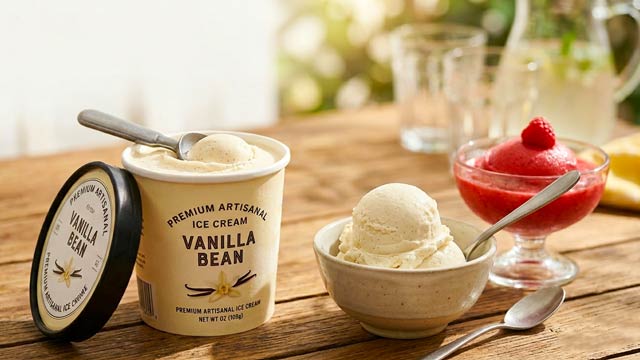
Artisanal versus industrial. In major North American cities, craft ice cream makers have become an important part of modern food culture. They typically use local dairy, fewer stabilizers, and smaller production batches. The result is denser texture, more vivid flavor, and faster melting. And fast melting is actually a good sign: stabilizers are specifically designed to prevent it. If a scoop survives half an hour under direct sun, it is reasonable to ask why.
Color. Real pistachio ice cream is rarely bright green - it is usually grayish beige. Natural strawberry tends to be pale pink, not neon magenta. If the color appears louder than the fruit itself, artificial coloring is likely involved.
Serving temperature. Proper ice cream should never be frozen solid or half melted. If the scoop glides through effortlessly, the serving temperature is probably correct.
Chocolate coating. So-called compound chocolate is essentially vegetable fat mixed with cocoa powder. Real chocolate costs more, cracks differently, and tastes unmistakably better. The difference becomes obvious almost immediately.
A Few Words in Defense of Pleasure
There is plenty more that could be said - about palm oil, glycemic indexes, food dyes, or modern sugar alternatives.
But perhaps it is better not to.
Ice cream remains one of the few things in life that changes very little from childhood. The same texture. The same moment when the cold touches your tongue and, for a second, the world around you matters less.
The purpose of understanding all this is not to eliminate pleasure. It is to choose more consciously and enjoy without hesitation.
One excellent scoop of real ice cream at the right moment will always be better than three mediocre desserts eaten out of boredom or stress.
Summer is short. Enjoy slowly.