
Why MINI Cooper Has Been Synonymous with Driving Pleasure for 60 Years
The Past, Present, and Future of MINI
Why do the name of the legendary British brand MINI and the surname of legendary motorsport engineer John Cooper so often appear in the same breath?
Immediately after the end of the Second World War, John Cooper began building a dazzling career as a racing engineer. To this day, his name is associated with great success in Formula 1 and with sporting versions of the MINI.
Motorsport is, in truth, in the blood of the British. In the postwar years, new racing championships and dedicated tracks began appearing across the country. John Cooper had both the talent and the ambition to make his mark on the world of motor racing. At the age of 23, together with his father Charles, he founded the Cooper Car Company, which set to work right away developing racing cars for Formula 3 and Formula 2.
One of John Cooper's key ideas, and one of the reasons for his success, was the innovative mid-engine layout for Formula 1 cars, which placed the engine behind the driver rather than in front of him. A Cooper race car took its first championship win as early as 1958, and in 1959 and 1960, Jack Brabham became world champion behind the wheel of one.
Among the legendary drivers who raced Cooper-designed cars were Sir Stirling Moss, Bruce McLaren, and Jochen Rindt. From that point on, this revolutionary design became firmly established in Formula 1, and the Cooper team itself competed in the championship until the late 1960s.
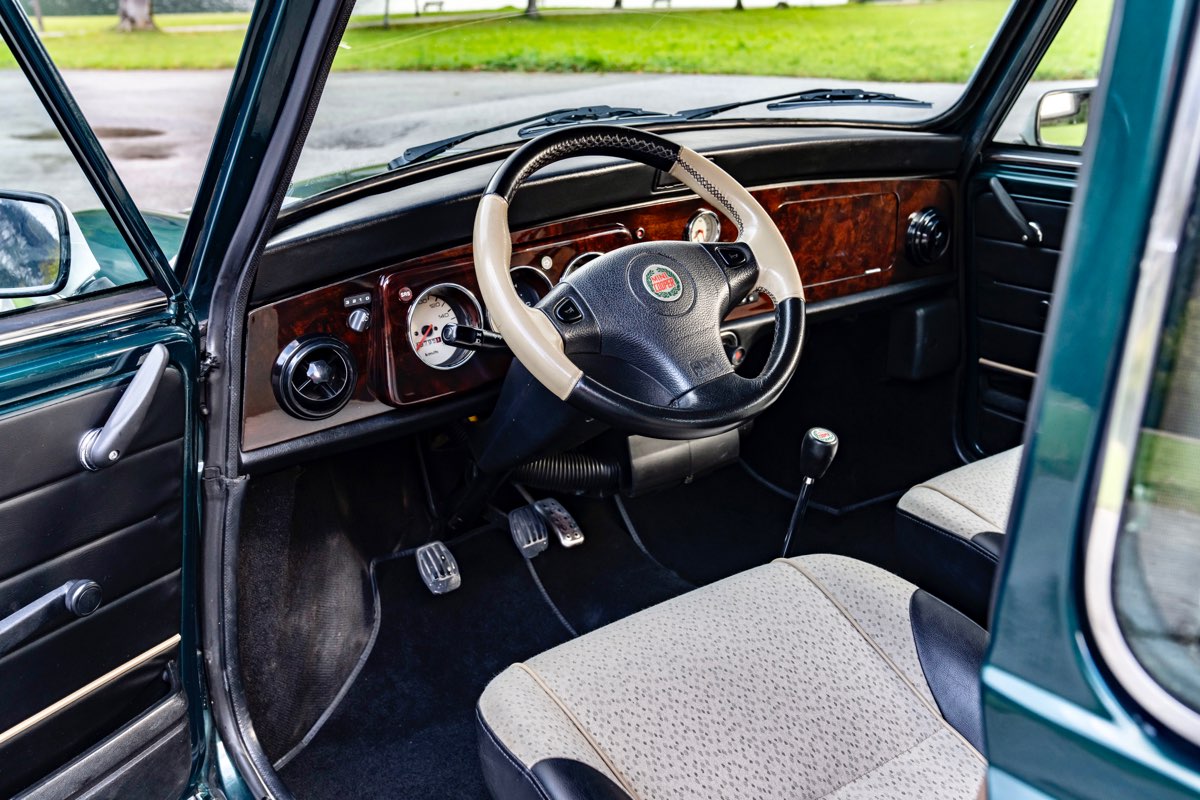
John Cooper left a powerful mark not only on motorsport worldwide, but on the mass-production car industry as well. While Cooper was refining his race cars, the talented engineer Alec Issigonis was designing a compact car for the British Motor Corporation (BMC). The new hatchback, named the Mini, measured just over three metres in length. Yet the interior of this small car was laid out so cleverly that the Mini could comfortably and easily seat four passengers along with their luggage.
A transversely mounted four-cylinder engine, short overhangs, and wheels pushed out to the corners of the body gave the cabin the maximum possible amount of space. The classic front-wheel-drive Mini was the first car to lay the foundation for the compact-car concept that still exists today.
The classic Mini came with a 34-horsepower engine. Thanks to its combination of low weight and front-wheel drive, the model was extraordinarily nimble through corners. And while Issigonis had conceived the Mini first and foremost as a reliable, economical, and affordable car, John Cooper saw enormous sporting potential in it. The two brilliant engineers later became friends and put in every effort to turn the compact hatchback into a motorsport legend.
It all began with a limited series of 1,000 cars that John Cooper built with BMC management's approval. These were fitted with an engine of nearly 1.0 litre displacement producing 55 horsepower, enough for a top speed of 135 km/h. Cooper also fitted a gearbox with revised gear ratios, a modified shift lever, front disc brakes, and wider tires. Visually, the Mini Cooper stood out with its contrasting roof and interior trim. Sales of this special model began in September 1961.
The public greeted the Mini Cooper with enthusiasm, but this was only the beginning. Having confirmed the success of the sporting Mini concept, Cooper and Issigonis increased the engine's displacement to 1,071 cc and its output to 70 horsepower. The Mini Cooper's suspension also received a number of important upgrades: improved constant-velocity joints boosted directional stability, while new dampers delivered sharper steering response. As a result, the Mini gained the legendary handling that would later be compared to that of a racing go-kart.
The Mini Cooper found sporting success right away, both on tarmac and on unpaved surfaces. Its performances in the Monte Carlo Rally brought the car worldwide fame. In 1964, 1965, and 1967, the compact hatchback outpaced far larger and more powerful rivals, earning it universal affection. Only at the end of the 1960s did the classic Mini's rally career come to a close.
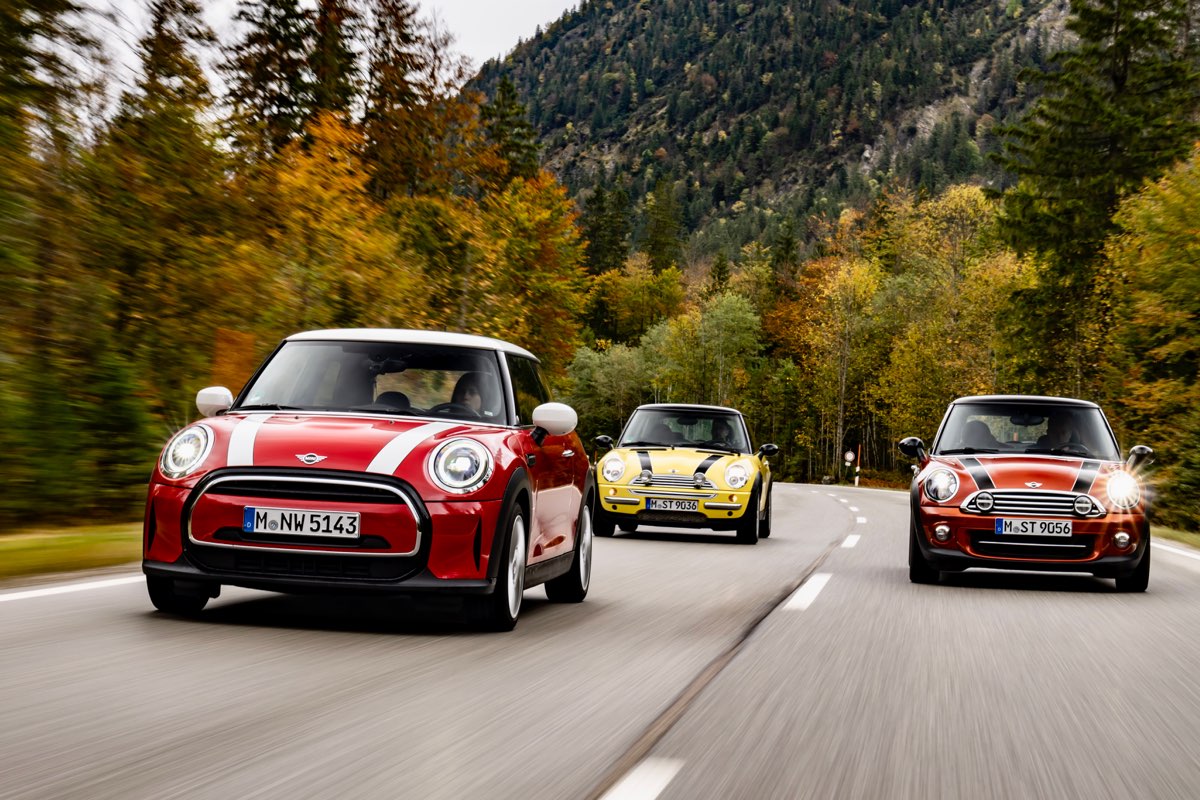
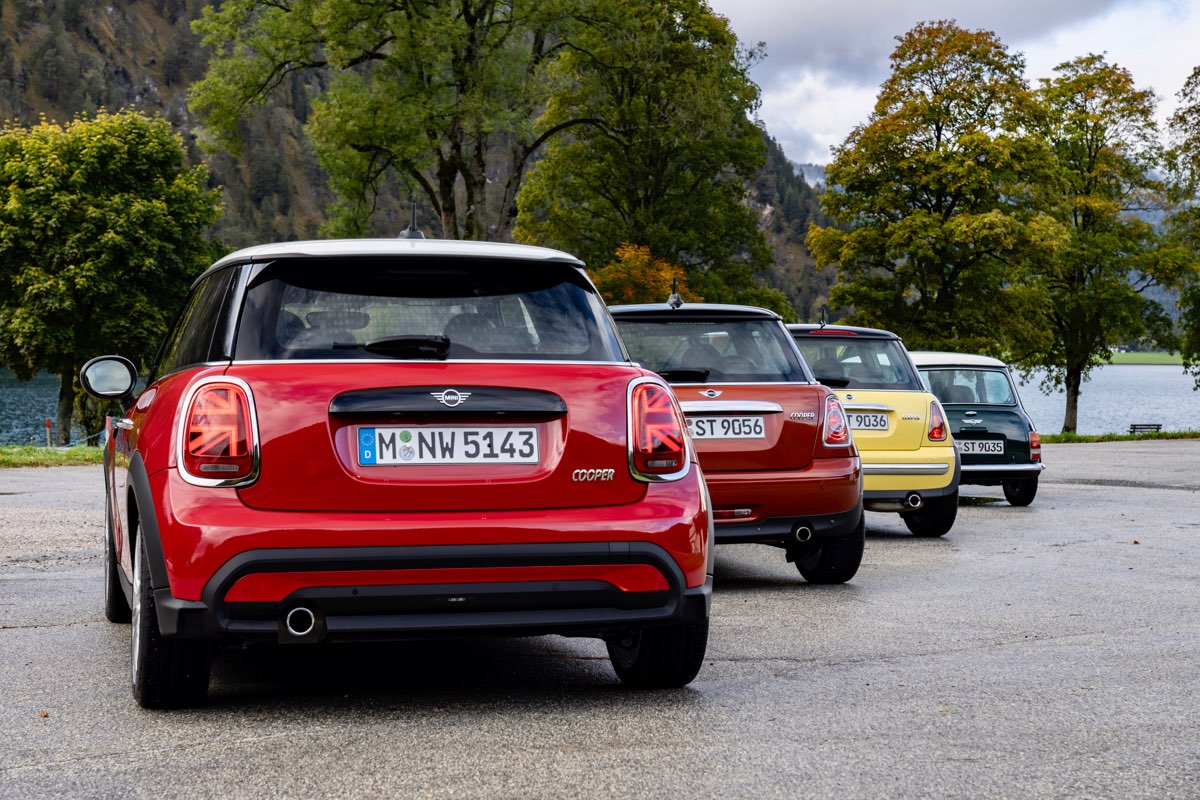
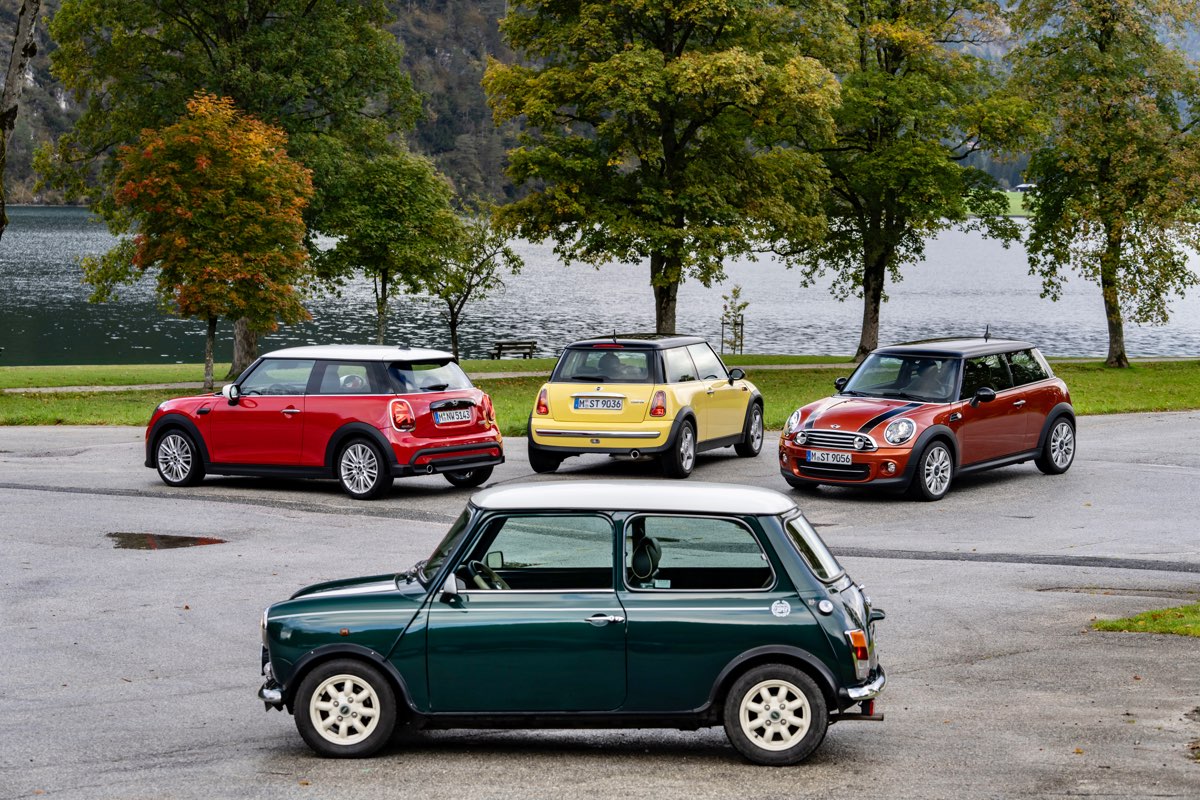
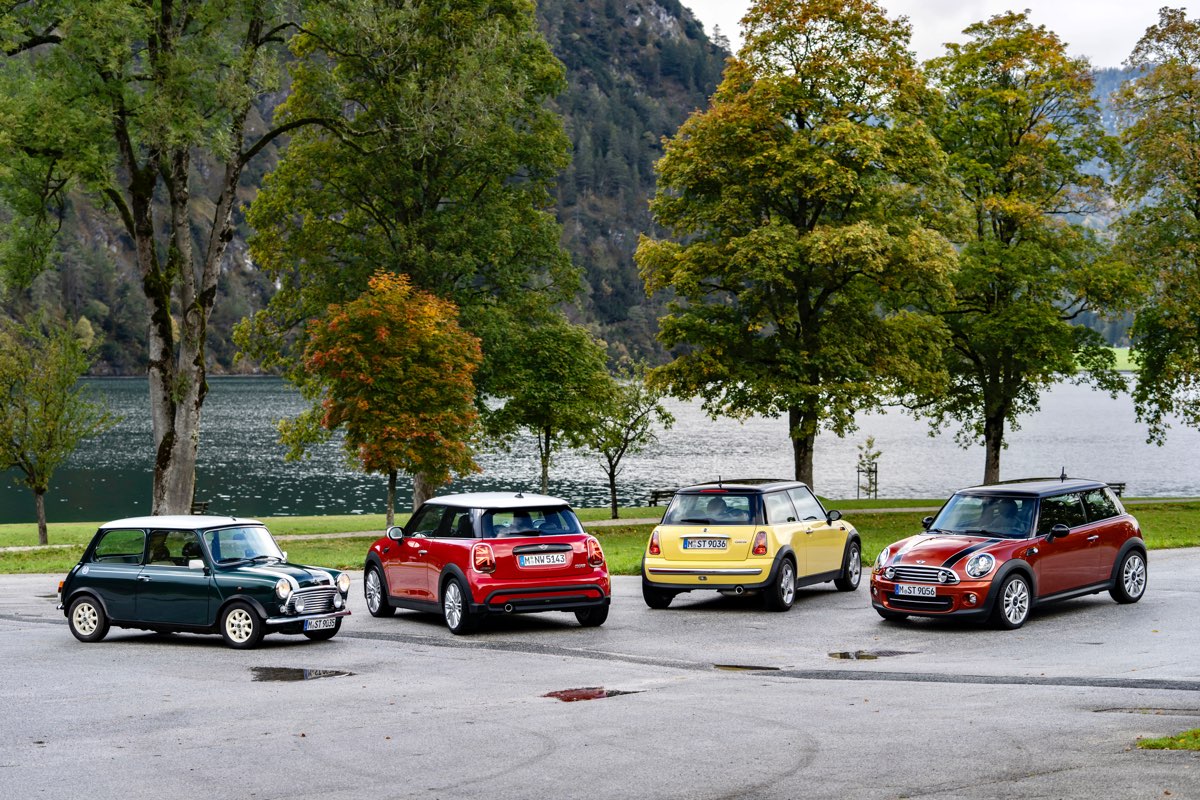
The production Mini Cooper delighted its fans from 1961 to 1971, and over those years the model's name became a genuine synonym for driving pleasure. In the 1970s and 1980s, Cooper tuning kits were in high demand among Mini owners, and in 1990 the Mini Cooper returned to the brand's lineup once again. Under the hood sat a 1.3-litre four-cylinder engine producing between 61 and 63 horsepower. The model was built in this form until the autumn of 2000. By that point, the successor to the legendary model was already ready for its world premiere.
BMW Group's acquisition of the Rover Group in early 1994 opened up new horizons for MINI. The first concept model of the modern-era MINI Cooper was unveiled at the 1997 IAA show in Frankfurt. Finally, in 2001, an entirely new, fully production-ready MINI made its debut.
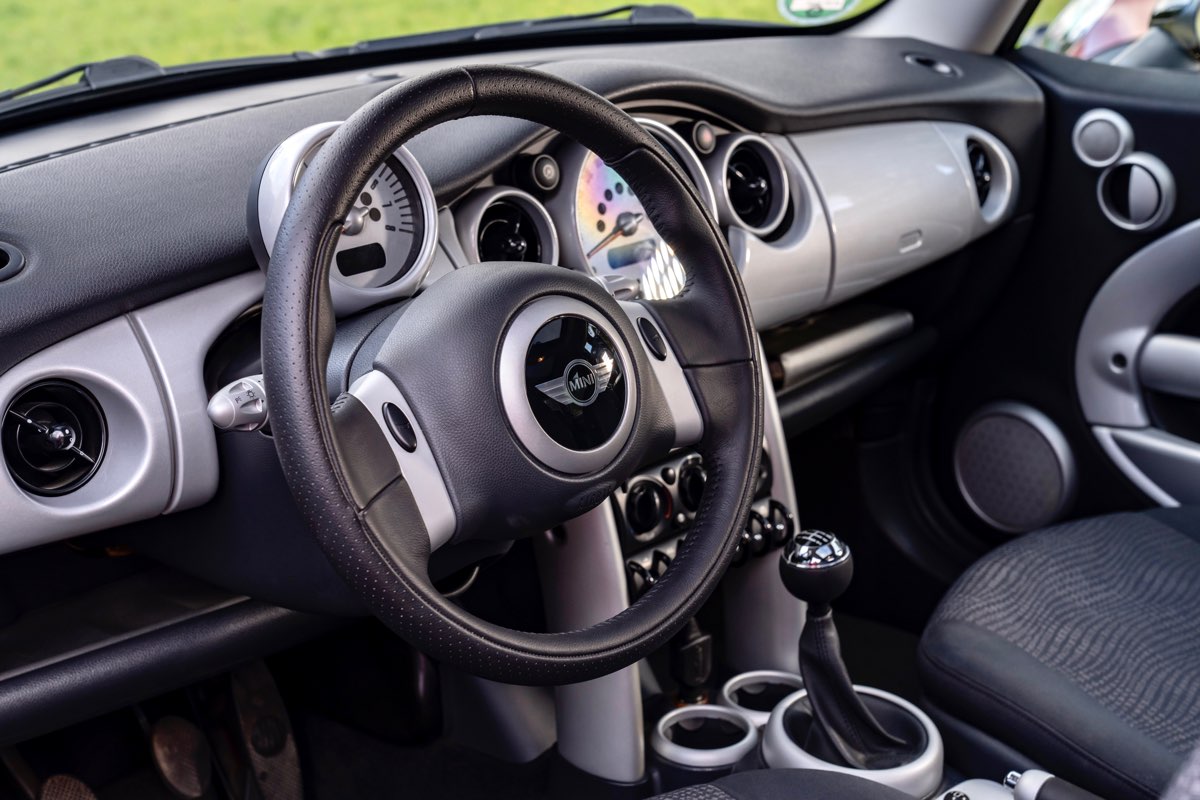
The new MINI turned out larger, more comfortable, and more technically advanced than its predecessor, while preserving the same spirited, precise handling. This car opened up an entirely new segment: premium compact cars. Unlike the classic Mini, the MINI Cooper version was available right from the start of sales. The new 1.6-litre engine produced 115 horsepower. The hatchback accelerated from 0 to 100 km/h in 9.2 seconds, with a top speed of 197 km/h. The chassis featured MacPherson struts up front, a multi-link rear suspension, disc brakes on all four wheels, and Dynamic Stability Control (DSC). The MINI Cooper S version, unveiled in autumn 2001, came with an even more powerful engine, producing 163 horsepower.
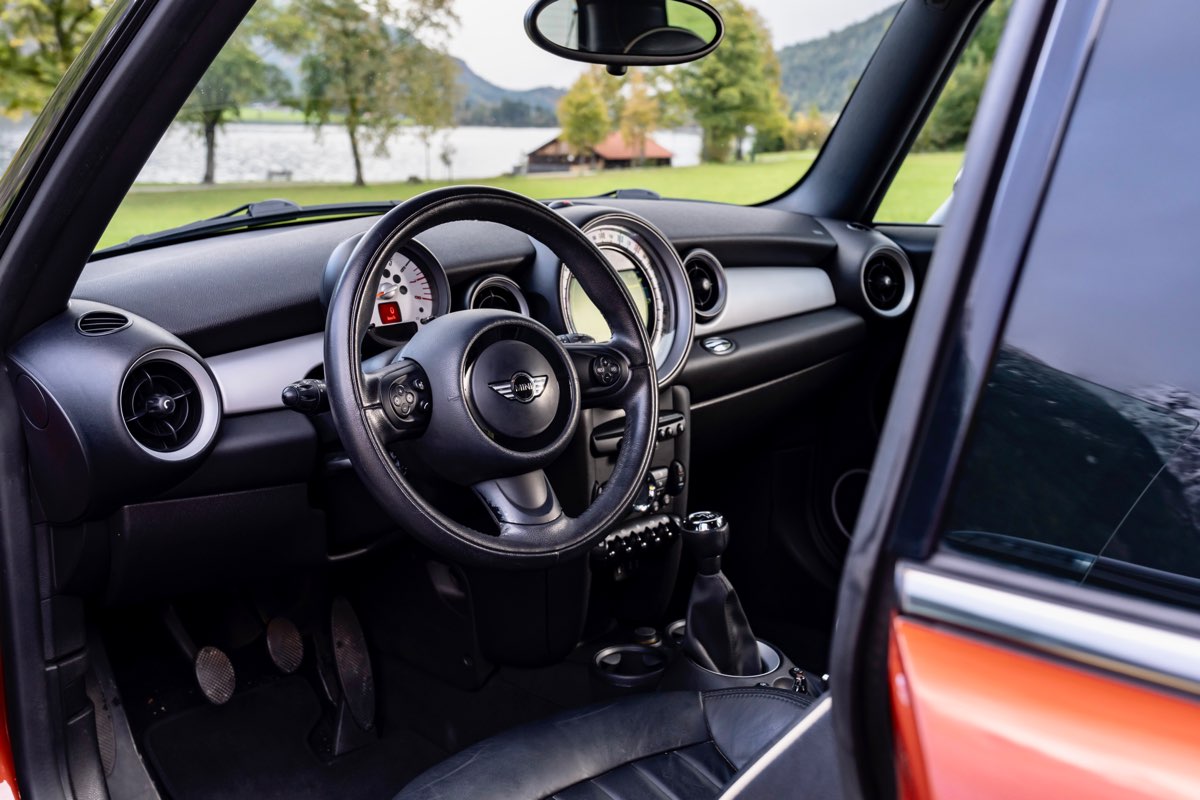
In November 2006, the next generation of MINI hatchbacks made its debut, developed according to a principle of evolutionary design and technology. Output for the MINI Cooper and MINI Cooper S rose to 120 and 175 horsepower respectively, while fuel consumption and harmful emissions dropped significantly. Two years later, fans of the brand got their first chance to experience MINI's signature driving pleasure paired with a diesel engine. The diesel-powered MINI Cooper D produced 110 horsepower, while the MINI Cooper SD produced 170.
Mike Cooper, John Cooper's son, took a direct hand in developing MINI models for the 21st century. Mike became passionate about creating sporting versions of the MINI, and the bond between MINI and the Cooper family only grew stronger. In 2007, BMW Group acquired the rights to the John Cooper Garages brand, and by 2008 the John Cooper Works division had become an integral part of MINI. Since then, the John Cooper Works badge has stood for high output and outstanding dynamics on production MINI models.
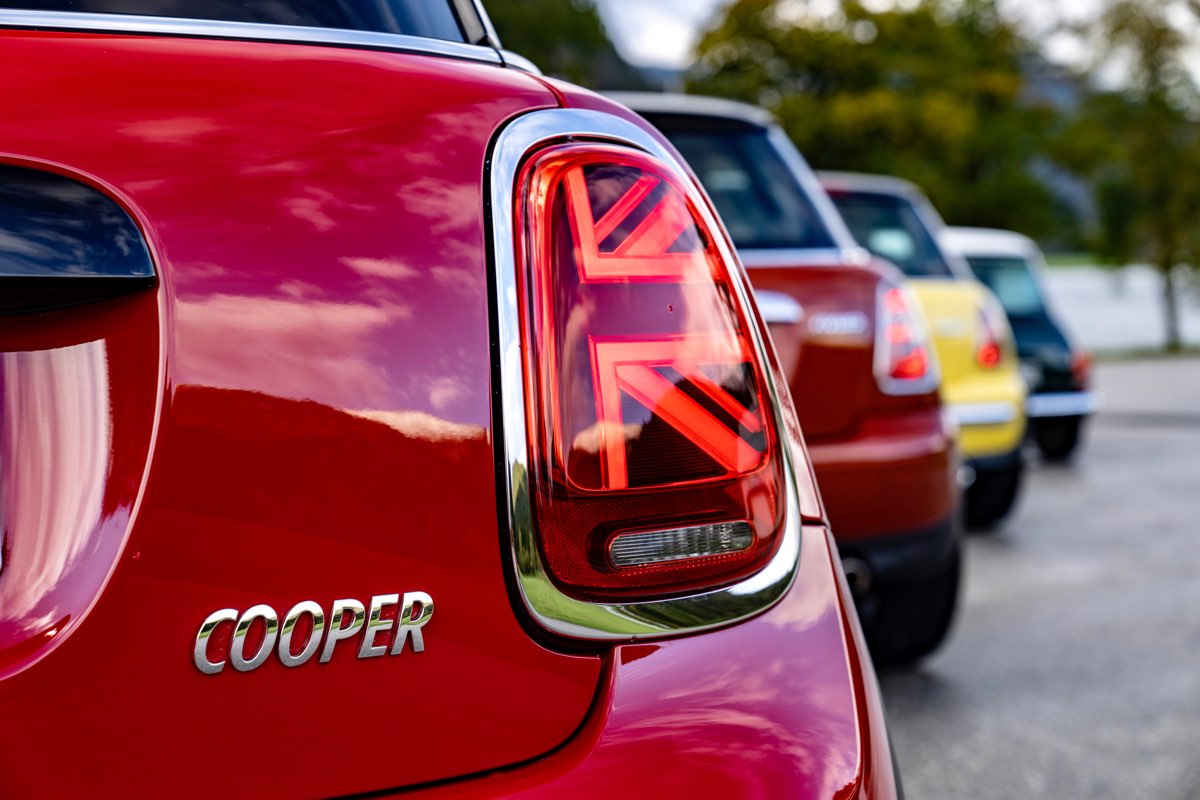
Today, the Cooper name guarantees the driver a genuinely thrilling experience behind the wheel. The legendary surname appears in the name of every MINI model, starting with the MINI Cooper, fitted with a 136-horsepower petrol engine.
The brand's first fully electric model was named the MINI Cooper SE. It comes with a 184-horsepower electric motor and combines environmental responsibility, expressive design, premium quality, and MINI's signature spirited handling. Finally, the MINI lineup includes a truly special model, the MINI John Cooper Works GP, producing 306 horsepower - one of the fastest street-legal MINIs ever built. In this way, every MINI Cooper carries within it the unique spirit of British motor racing, whether it's a combustion-engine hatchback, an electric car built for the city, or an uncompromising sports car built for the track.
The MINI Brand Charts a Course Toward Sustainability, Diversity, Innovation, Success, and Optimism
MINI's traditions rest on positive thinking, viewing the challenges of the times as opportunities for new achievements, and paying close attention to people's real needs. The MINI brand is confidently charting a new course into the future, built on these values. The principles of MINI's new strategy are united under the slogan BIG LOVE. The brand is offering new solutions in the areas of climate and environmental protection, energy conservation, and mobility. What remains unchanged is that new MINI models continue to deliver a driving experience unlike any other.
The classic Mini laid the foundation for the brand's entire philosophy: compact size, generous interior space, and razor-sharp handling, all in one package. Today, the MINI brand is successfully carrying these same ideals into the premium compact car segment.
The future presents MINI with new challenges. The brand is committed to continuously reducing CO2 emissions per vehicle produced, and by the early 2030s, the entire MINI lineup will be fully electric. At the same time, MINI actively supports initiatives around diversity and respect for all members of society, and its URBAN-X project develops innovations for city dwellers. More than 70 startups from around the world have gone through this program, offering practical solutions in infrastructure, construction, energy supply, and healthcare.
As early as 2023, MINI will begin reimagining its lineup with a new generation of fully electric vehicles. BMW Group's plant in Leipzig will produce the successor to the MINI Countryman in both combustion-engine and fully electric versions. Two additional fully electric MINI models will be produced in China. At the same time, MINI's production site in Oxford will remain central to the brand, since the United Kingdom has always been, and remains, MINI's true home.
Big Love for the Planet: MINI's Sustainability Strategy
From the very beginning of its history, MINI has developed intelligent solutions in the area of sustainability - fully in line with BMW Group's own ideals. In 2020, the Group developed its own program, with end goals even more ambitious than the 2015 Paris Climate Agreement. BMW Group has confirmed its readiness to meet the requirements of the EU's Fit for 55 program, which calls for a 55% reduction in CO2 emissions from new vehicle fleets starting in 2030.
The MINI brand, for its part, continues on its path toward full electrification, reducing harmful emissions across the entire production chain. The batteries in MINI's electric vehicles are designed to deliver optimal range in city driving while guaranteeing exemplary agility and a short charging cycle. And once these batteries are no longer suitable for use in vehicles, their working life doesn't end there: they can go on to serve in stationary energy storage systems. More than 90% of the raw materials used in these batteries are also suitable for subsequent recycling.
MINI's Oxford plant runs on 100% clean electricity. The facility is home to one of the largest rooftop solar installations in the country. The energy produced by its 11,500 solar cells prevents roughly 1,500 tonnes of CO2 emissions every year. The plant's logistics operations rely on 18 trucks running on liquefied natural gas.
By 2030, MINI aims to at least halve CO2 emissions per vehicle produced and per kilometre driven, compared to 2019 levels. The first steps toward this goal are already being taken. For example, charging a MINI Cooper SE's battery from a standard electrical grid already reduces overall CO2 emissions by roughly 36% compared to a combustion-engine MINI 3-door. And if the electricity used for charging comes from renewable sources, that figure rises to 70%. Today, the MINI Cooper SE Countryman ALL4 and the MINI Cooper SE together account for 15% of MINI's total global deliveries. By 2027, that share is expected to rise to 50%.
The widespread use of recycled materials helps conserve natural raw material reserves and reduces CO2 emissions at the production stage. The MINI brand holds to this principle at every stage of design, from the body structure to the interior trim.
In future MINI models, recycled materials will be used in the headliner, seat upholstery, floor trim, and floor coverings. In place of natural leather, MINI will use a material made from natural fibre and plastic obtained by recycling bottles. The material used for floor mats will be made by recycling fishing nets.
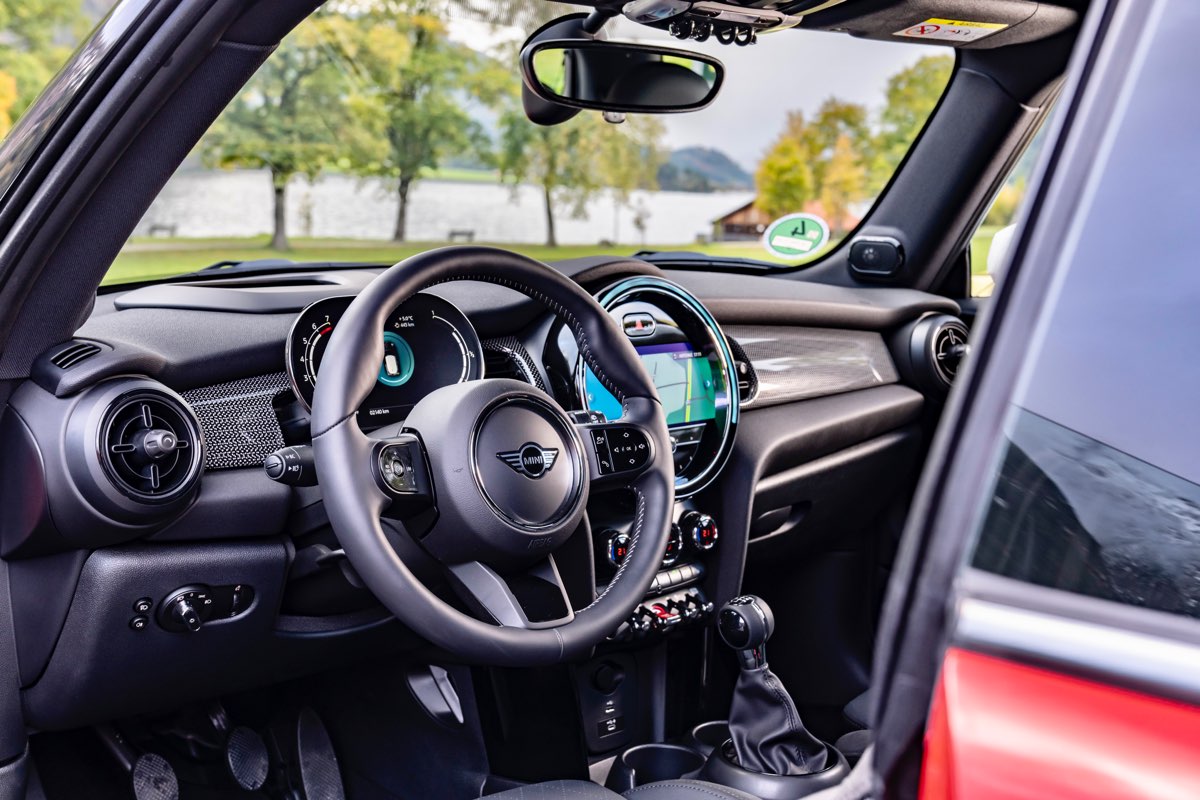
Alongside natural leather, MINI also plans to eliminate the use of chrome trim elements in the cabin. Natural materials such as cork will be used to trim the steering wheel and certain floor areas, along with removable textile seat covers. It's worth emphasizing that regardless of the materials used, MINI's interior design will fully match the premium status of its models and live up to the expectations of the brand's fans.
The MINI STRIP concept, created with designer Paul Smith, vividly demonstrates the possibilities of recycled materials. The car's interior was radically rethought using recycled materials and 3D-printed components, with individual cabin elements designed to be easily removed and returned to the recycling stream once the vehicle reaches the end of its life.