
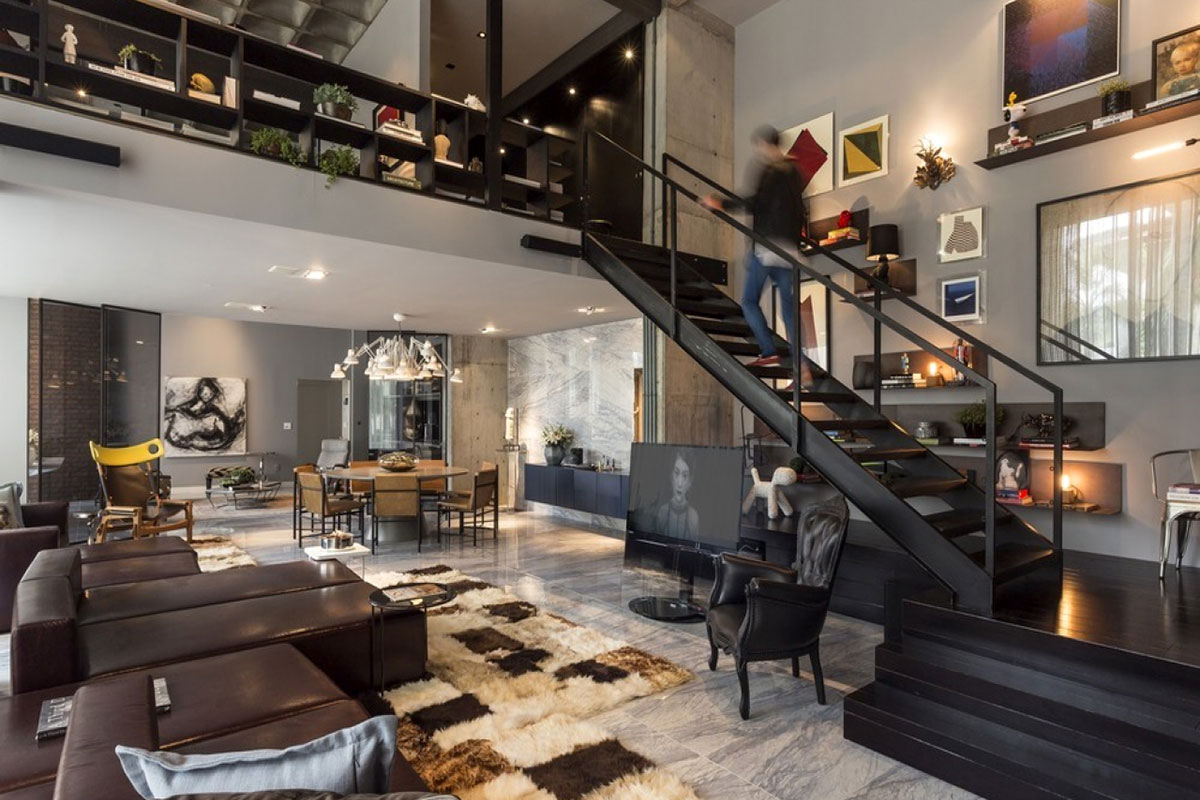
How to create a stylish interior that will not go out of date
A truly expensive-looking interior rarely shouts about its price. It does not try to prove its relevance with the colour of the season, a recognizable sofa from Instagram or a wall made “just like every designer is doing this year.” Its strength lies elsewhere: in proportion, materials, light, texture, comfort and that quiet confidence that does not expire with the next trend. This kind of interior can be changed, refreshed and updated, but it does not need to be rebuilt from scratch every few years.
An interior, like a wardrobe, needs the right foundation. If that foundation is built well, you do not need to buy new things every season, repaint walls or chase fashion. A home remains modern not because it contains everything new, but because it contains nothing random, visually cheap or too closely tied to a brief moment.
Creating an apartment or house in one consistent style does not automatically make the interior timeless. Every style changes over time. Even classic design, often called eternal, looks different today than it did twenty or fifty years ago. Fashionable directions such as industrial loft, Scandinavian minimalism or full modern farmhouse date themselves especially quickly when used too literally.
What works much better is intelligent, grown-up eclecticism. This is not a chaotic mixture of everything, but the ability to connect pieces from different eras and different “stories” through colour, form, material and scale. That kind of interior lives longer: it does not look like a page from a catalogue of one particular year, but feels like a space collected gradually, consciously and personally.
Choose a calm foundation for the walls
If you want a finish you will not want to redo in a couple of years, start with the walls. The best base colours are not limited to white and beige. They may include warm off-white, complex greige, soft grey, milk, sand, muted olive, light taupe or deep solid shades for more intimate rooms.
The main thing is to avoid anything too obviously trendy. A colour of the year, a bright fashionable shade or a dramatic accent wall may look fresh today, but can quickly become tiring. Trend colours are better used where they can easily be changed: in cushions, throws, vases, art, small chairs, tableware or seasonal textiles.
If you love dark interiors, choose not a flat black, but deep and complex tones: inky blue, graphite, chocolate, dark green, burgundy or plum. They give the space depth and nobility, especially when paired with quality wood, stone, brass, wool, linen or good lighting.
Wallpaper can also be timeless if it does not turn into visual noise. Subtle textures, delicate geometry, botanical motifs without aggressive contrast or an almost textile-like surface work best. The calmer the background, the longer it will withstand changes in furniture, art and décor.
Invest in natural materials
Materials are one of the main signs of an interior that ages beautifully. Natural wood, stone, marble, limestone, granite, ceramic, wool, linen, cotton, leather and metal with a living patina do not merely retain dignity over time; they often become more expressive.
Artificial materials are not always bad. Modern engineered stone, quality porcelain, performance fabrics and good composite surfaces can be practical and attractive. But imitation for the sake of imitation almost always looks weaker than real texture. If the budget is limited, it is better to use natural materials selectively but honestly: a wooden cabinet, a stone countertop, ceramic tile, linen curtains, a wool rug.
The secret of longevity is not that everything must be maximally expensive. The secret is that the key surfaces and pieces should feel good to the touch, age well and not look like temporary decoration. An interior with real texture almost always looks deeper than a space assembled only from smooth disposable solutions.
Choose furniture with simple forms
Furniture meant to last for years must be not only beautiful, but functional. Overly dramatic shapes created for a wow effect quickly become tired of themselves. Today they seem bold, tomorrow they look recognizably fashionable, and the day after that they begin to feel like a mistake of a particular period.
For the foundation of an interior, choose furniture with clean lines, good proportions and a clear silhouette. A good sofa, comfortable armchairs, a quality dining table, a bed with a restrained headboard, a chest of drawers without unnecessary decoration - these are the pieces that will survive more than one trend.
Comfort is essential. If beauty requires sacrificing comfort, the decision rarely lasts. A sofa that is impossible to sit on, a chair that looks good only in photographs or a bed chosen solely for its shape will quickly become irritating. True luxury at home is not only visual effect, but daily ease.
Do not follow fashion literally
Design trends change almost as quickly as fashion in clothing. Yesterday everyone wanted a brick wall, today it is arches and fluted glass, tomorrow it will be another wood tone, a new sofa shape or another “essential” material. If trends are treated as instructions, an interior quickly turns into a set of temporary signs.
It is far wiser to use trends as a source of ideas, not as commands. If you like warm minimalism, take the calm palette and natural materials, but do not copy an entire room. If you like European classicism, use symmetry, mouldings or good lighting, but do not turn the house into a set piece. If you like contemporary luxury, borrow the quality of lines and textures, but avoid excessive shine.
The most important quality here is visual literacy. It does not appear instantly. You need to look at good interiors, compare them, notice proportions and analyze why one space looks expensive while another merely looks fashionable. Over time, taste becomes more precise, and you stop asking what is currently trending. You begin to understand what is appropriate for your own home.
Be careful with technology
Technology ages faster than furniture, stone and wood. Televisions, speakers, panels, smart devices and appliances may be necessary, but making them the main decorative centre of an interior is risky. What looks high-tech today may look bulky and outdated in a few years.
The best approach is integration. A television can be worked into a dark wall, a furniture composition or a niche. Audio equipment can be hidden or chosen in the most minimal form possible. Kitchen appliances can be built in. Wires, chargers, routers and small devices should be removed from the visual field. The less an interior depends on the appearance of technology, the longer it remains current.
A modern home can be technological, but it does not have to look like an electronics showroom. Smart lighting, good climate control, quality sound and convenient living scenarios are more valuable than a demonstrative number of screens.
Add vintage and objects with history
An interior without a past often feels flat, even if everything in it is new and expensive. Vintage pieces, antiques, art, books, family objects and things with character give a space depth. They create the impression that the home was not purchased in one order from a catalogue, but collected with attention and taste.
You do not need to buy nineteenth-century furniture or expensive collectible objects. A vintage mirror, a table made from aged wood, a ceramic vase, old graphics, an interesting lamp, a chair with a strong silhouette or a small object that carries a sense of time can be enough. Such things have already survived fashion, which is why they rarely look outdated.
It is important not to turn the home into a museum. One or two strong vintage accents often work better than an overloaded collection. Their task is not to make the interior look old, but to add individuality, layering and that slight imperfection without which an expensive home can feel too sterile.
Leave room for change
Even the most thoughtfully designed interior needs a zone of freedom. Taste changes, life changes, seasons change - and that is normal. A timeless interior does not mean a frozen interior. It simply means a space that can be updated without major renovation.
Textiles, art, decorative cushions, throws, rugs, table lamps, small décor, books, posters, photographs and styled shelving are the easiest places to make changes. New curtains, a different rug, fresh cushion covers, a new painting or a revised composition on a console can completely change the mood of a room without major expense.
Windows and upholstered furniture are especially useful for this kind of update. Fabric changes the perception of a space faster than almost anything else. In winter, you can add denser textures and deeper colours; in summer, linen, light tones and airiness. In this way, the interior remains alive without losing its foundation.
Do not overload the space
One of the biggest mistakes is the desire to fill every corner. But an expensive-looking interior almost always knows how to breathe. It has pauses, empty walls, well-considered circulation and air between objects. This emptiness allows beautiful furniture, art and materials to speak more clearly.
If a room has too much décor, too many small pieces of furniture, random accessories and competing textures, the eye becomes tired. The space begins to look cheaper, even if the individual items were expensive. Less, but more precise, is usually better: one good lamp instead of three random ones, one large rug instead of several small ones, one expressive painting instead of a wall of unrelated posters.
A timeless interior is built not on the number of objects, but on their quality and their relationship to one another. Scale, proportion, repeated materials and a calm rhythm make a home visually stable.
Light matters more than it seems
Even the most beautiful interior can be ruined by poor lighting. A single ceiling light in the centre of a room makes the space feel flat, harsh and uncomfortable. An expensive interior almost always has several lighting scenarios: general, local, decorative and evening light.
Table lamps, sconces, shelf lighting, floor lamps, soft light beside an armchair, warm kitchen lighting and dimmers all create depth. Light should not merely illuminate a room; it should shape its mood. Lighting is often what separates an interior that looks “fine” from one that you want to look at and spend time in.
For longevity, choose not the most fashionable lamps, but models with good proportions and quality materials: metal, glass, ceramic, fabric shades, stone. A light fixture is not a small detail; it is a decoration of the room even when it is turned off.
Create an interior for your life, not for a picture
The most beautiful interiors often fail if they do not match the real life of their owners. A home where it is inconvenient to cook, where there is nowhere to store things, where one is afraid to sit on the sofa or unable to relax will not be lasting, no matter how fashionable it may look.
Before choosing furniture and finishes, answer simple questions honestly: how do you live, how many people use the space, are there children, guests, pets, work-from-home needs, cooking habits, entertaining, storage requirements or a need for quiet? A good interior begins not with Pinterest, but with an understanding of life scenarios.
If a home supports your lifestyle, it stays loved longer. And loved interiors age differently: you do not want to change them abruptly, but gradually improve them.
The main secret of a timeless interior
A stylish interior that will not go out of date is not built on rejecting fashion completely. It is built on the right hierarchy. The foundation should be calm, high-quality and comfortable. Materials should be honest and pleasant. Furniture should be functional and well proportioned. Trends should be used in moderation. Technology should be integrated. Décor should be meaningful. Changes should be easy and reversible.
This kind of home does not try to look current at any cost. It looks composed, confident and alive. It has room for new details, but it is not dependent on them. It can change with you without losing its character. That is the true meaning of a timeless interior: not a frozen picture, but an intelligent, beautiful and layered space in which one wants to live for a long time.