
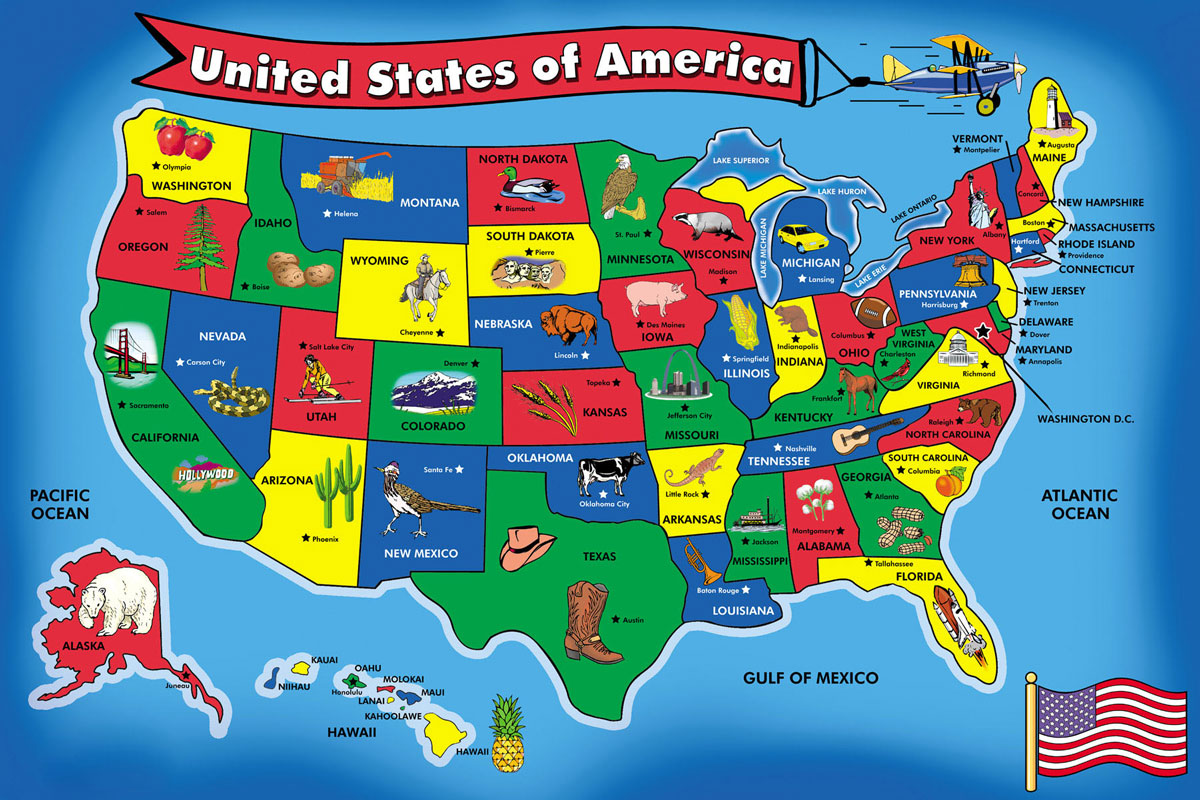
Territories for which America paid with gold
The history of the United States is not only a story of wars, revolutions and political declarations. It is also a story of deals. Sometimes the fate of enormous territories was decided not on the battlefield, but at the negotiating table, where diplomats discussed dollars, debts, strategic risks and future borders. America did, more than once, expand by purchasing land from European powers and neighbouring states. But behind the elegant formula “they bought instead of fighting” lies a much more complicated reality: wars had often already taken place, Indigenous peoples were usually excluded from the negotiations entirely, and the price of a territory almost never reflected its real historical, human or natural value.
Still, these acquisitions helped create the map of modern America. Louisiana doubled the size of the country. Florida settled a critical southeastern question. Alaska turned the United States into a Pacific and Arctic power. The Virgin Islands strengthened its position in the Caribbean. And the deals involving Mexico and Spain showed that, in American history, money often moved alongside military pressure, strategic calculation and very hard geopolitics.
Louisiana. 1803. Purchase price - 15 million dollars
The Louisiana Purchase is one of the most famous and successful deals in world history. In 1803, the United States bought from France a vast territory of about 828,000 square miles for 15 million dollars. For the young American republic, this was an enormous sum, but the result was historic: the country effectively doubled in size and gained control of the space that opened the path to westward expansion.
The main goal of the United States was not the romantic idea of a future continental empire, but the highly practical port of New Orleans. Control of that port and the mouth of the Mississippi River was essential for trade, farmers and the internal economy. But Napoleon Bonaparte, needing money and understanding that France would struggle to defend distant holdings in the event of war with Britain, agreed to sell not only the port, but the entire Louisiana Territory.
The deal caused controversy inside the United States. Thomas Jefferson, a supporter of limited federal power, faced a constitutional dilemma: did the president have the authority to purchase such a territory without explicit permission in the Constitution? But the strategic opportunity was too great. Eventually, the lands of the Louisiana Purchase fully or partly formed many future states, including Louisiana, Arkansas, Missouri, Iowa, Oklahoma, Kansas, Nebraska, South Dakota, North Dakota, Montana, Wyoming, Colorado and Minnesota.
Today, the transaction seems almost unbelievable: roughly four cents an acre. But it should not be viewed only as a brilliant business move. For the Indigenous nations living on those lands, the agreement between the United States and France was not a purchase of their consent. It marked the beginning of a new stage of displacement, removal and conflict.
Florida. 1819. Formal cost - up to 5 million dollars in claims
The transfer of Florida to the United States was formalized by the Adams-Onís Treaty of 1819 between the United States and Spain. Strictly speaking, this was not a classic purchase. The United States did not pay Spain directly for the territory, but agreed to settle claims by American citizens against the Spanish government up to 5 million dollars.
By that time, Florida had become a difficult and poorly controlled territory for Spain. The empire was weakening, its American holdings were in crisis, and the United States was increasingly pressuring its southern borders. Florida had strategic value: it controlled access to the Gulf of Mexico, sat near important trade routes and had become a zone of conflict, escape from slavery, clashes with the Seminole and border instability.
The Adams-Onís Treaty solved several issues at once. The United States received Florida and more clearly defined its boundary with Spanish holdings to the west. Spain, in turn, received a U.S. renunciation of certain claims to Texas, although that issue would later return in a very different political reality.
As a result, Florida became not merely the sunny southern state of the future, but an important element in the American strategy of controlling the southeastern continent and maritime routes.
Treaty of Guadalupe Hidalgo. 1848. Payment - 15 million dollars plus claims
The Treaty of Guadalupe Hidalgo cannot honestly be called an ordinary purchase. It was the peace treaty that ended the Mexican-American War, and it became a classic example of an annexationist peace imposed after one side’s military defeat. Under the treaty, the United States received vast territories including future California, Nevada, Utah, most of Arizona, and parts of New Mexico, Colorado and Wyoming. Mexico also recognized the loss of Texas.
The United States paid Mexico 15 million dollars and assumed claims by American citizens against the Mexican government amounting to more than 3 million dollars. On paper, this looked like financial compensation. In reality, the territory was obtained after a war in which Mexico had been placed in an extremely weak position.
The significance of this treaty is difficult to overstate. It gave the United States the Pacific coast on the scale of future California, and just a year after the treaty was signed, the California Gold Rush radically changed the region’s economic and demographic importance. What had seemed like distant western space very quickly became one of the centres of America’s future.
But this story has another side. Hundreds of thousands of Mexicans found themselves living on land that had suddenly become American. The treaty promised protection of their property and civil rights, but in practice those guarantees were often violated. Guadalupe Hidalgo is therefore not only a story of U.S. expansion, but also a story of loss, shifting borders and a complicated legacy for Mexican American communities.
Gadsden Purchase. 1853-1854. Purchase price - 10 million dollars
A few years after the Treaty of Guadalupe Hidalgo, the United States made another deal with Mexico. The Gadsden Purchase, negotiated in 1853 and finalized in 1854, brought the United States about 29,670 square miles of territory that today form the southern parts of Arizona and New Mexico.
This transaction is sometimes mistakenly associated with Southern California, but that is incorrect. The main purpose of the purchase was different: the United States wanted a practical southern route for a future transcontinental railroad. The railway was expected to pass through terrain and climate more favourable than the northern alternatives.
The deal is named after James Gadsden, the American minister to Mexico, who negotiated with the government of Antonio López de Santa Anna. For Mexico, it was a painful concession after the recent war, but the country needed money and its political situation remained unstable.
The Gadsden Purchase became the last major territorial acquisition that shaped the continental borders of the United States in their current form. On the map, it looks relatively small next to the Louisiana Purchase or the Mexican Cession, but its strategic importance was significant: it completed the southern outline of America’s future transportation system.
Alaska. 1867. Purchase price - 7.2 million dollars
The purchase of Alaska from the Russian Empire is the best-known example of an American territorial acquisition made with money. In 1867, the United States paid Russia 7.2 million dollars. Per acre, the price looked astonishingly low, but at the time many in the United States mocked the deal. They called it Seward’s Folly and Seward’s Icebox, after Secretary of State William Seward, who strongly promoted the purchase.
For Russia, selling Alaska was a pragmatic decision. The territory was distant, thinly settled by Russians, difficult to defend, and in a future war with Britain it might have been lost without compensation. After the Crimean War, Russian officials understood the vulnerability of their North American holdings. Selling them to the United States, then a relatively friendly power, seemed more sensible than risking their loss to the British Empire.
For the United States, the purchase of Alaska was a step toward becoming a Pacific power. Later, the region’s importance only grew: gold rushes, natural resources, fisheries, oil, strategic Arctic position and proximity to Asia made Alaska one of the most important acquisitions in American history.
At the time of the deal, many saw only ice, distance and emptiness. History proved that Seward had looked further ahead than his critics.
Danish West Indies. 1917. Purchase price - 25 million dollars in gold
In 1917, the United States purchased the Danish West Indies from Denmark - the islands of St. Thomas, St. John and St. Croix, today known as the U.S. Virgin Islands. The purchase price was 25 million dollars in gold. At first glance, it may seem strange that these small Caribbean islands cost more than Alaska or Florida. But such sums cannot be compared directly across eras: money had different purchasing power, and the strategic value of the islands in the early twentieth century was extremely high.
The United States had been interested in the islands since the nineteenth century, but the deal took a long time to complete. During World War I, the issue became urgent. Washington feared that Germany might gain a foothold in the Caribbean and use the islands as a naval base near the Panama Canal and critical sea routes.
For Denmark, maintaining a distant colony no longer had the same meaning. Before the sale, political debates and votes took place both in Denmark and in the Danish West Indies, after which the transaction was completed. For the United States, this was not merely the purchase of tropical islands, but a strengthening of control over the Caribbean basin and maritime security.
The Philippines. 1898. Payment - 20 million dollars to Spain
The history of the Philippines reveals the most controversial side of American territorial deals. In 1898, after the Spanish-American War, the Treaty of Paris transferred the Philippines, Puerto Rico and Guam to the United States. For the Philippines, the United States paid Spain 20 million dollars. Formally, this was an agreement between two powers. But the Filipinos themselves, who had already been fighting for independence from Spain, did not receive the outcome they expected.
In 1896, an uprising against Spanish rule began in the Philippines. When the United States entered the war against Spain, many Filipino leaders hoped the Americans would support independence. In 1898, the Philippine Republic was proclaimed. But the United States did not recognize it as an independent state and instead established its own control over the islands.
This led to the Philippine-American War, which began in 1899. The war was difficult, bloody and destructive. It cost the United States far more than the payment made to Spain, while for the Filipino population it brought enormous losses and a traumatic colonial experience.
That is why the Philippines cannot be placed in the same category as Alaska or Louisiana as a simple “land purchase.” It was an imperial transaction followed by resistance, war and a long debate over whether a country born out of an anti-colonial revolution could itself become a colonial power.
What these deals reveal
The American map was not created in one way. Sometimes diplomacy worked, sometimes money, sometimes war, sometimes pressure, and most often a complicated combination of all of them. The Louisiana Purchase and Alaska Purchase do look like impressive examples of acquiring enormous territories by payment. Florida was structured as a cession with compensation for claims. Guadalupe Hidalgo and the Philippines were consequences of wars. The Gadsden Purchase solved a railroad and border problem. The Virgin Islands became part of Caribbean defence strategy.
The main lesson is not that the United States “bought instead of fighting.” That version is too simple. The reality is more interesting and harsher: America expanded wherever it saw strategic opportunity, using every available tool - negotiation, money, legal formulas, military force and political pressure.
These deals changed the fate of the continent. They created new states, opened roads to the oceans, strengthened U.S. military and commercial power, and also left a complicated legacy for Indigenous peoples, Mexican communities, Caribbean territories and the Philippines. The history of U.S. territorial acquisitions is therefore not merely a collection of successful purchases. It is a story of how money, power and geography together created a country that became one of the world’s major powers.