The birds never left
Parrot Jungle
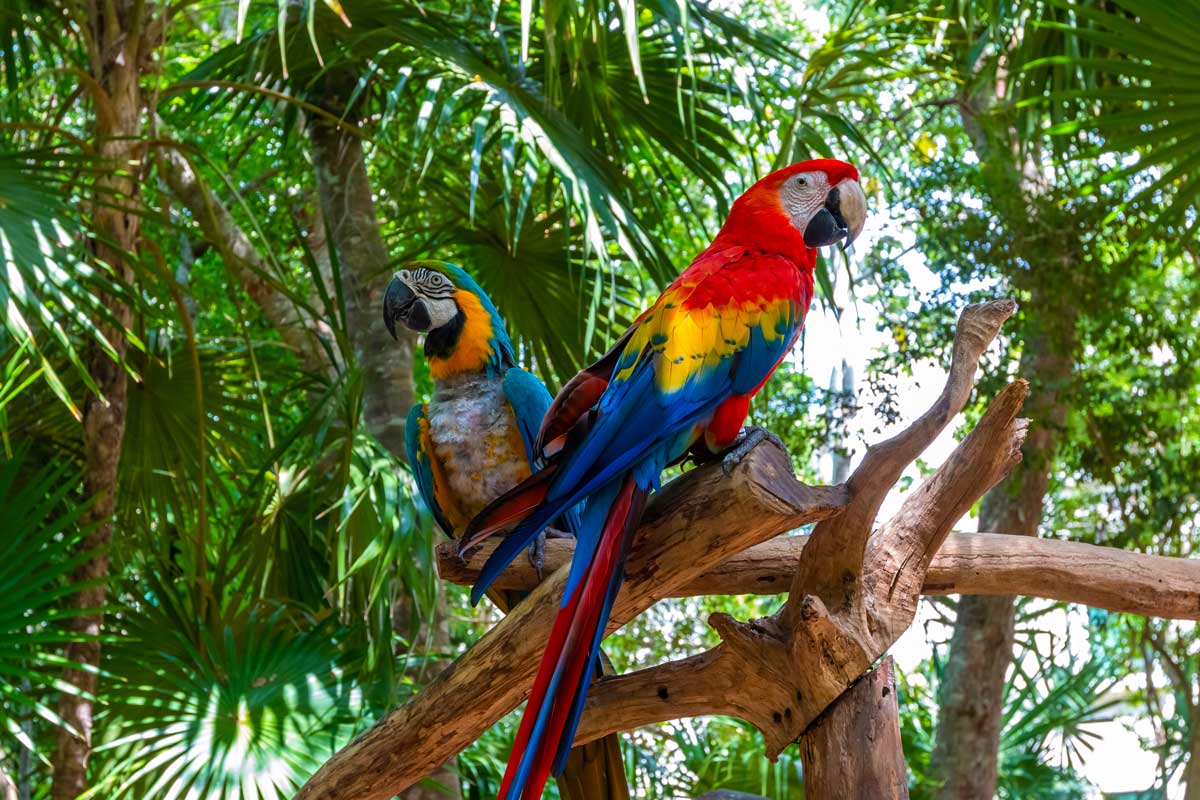
Parrot Jungle - the most unusual attraction in Miami that everyone once believed would fail. In December 1936, Austrian immigrant Franz Scherr opened a bird park on twenty leased acres of tropical forest south of Miami. He built no cages. Not a single one. Everyone who heard his idea - parrots perched freely in trees, wandering pathways beside visitors, landing on guests shoulders - reacted the same way: They will fly away. Every last one of them. Scherr ignored them.
On opening day, one hundred visitors paid twenty-five cents each to walk through a tropical forest filled with free-flying birds. Nearly ninety years later, that improbable idea would become one of the most fascinating and overlooked stories in Miami history - a place that survived the Great Depression, World War II, devastating hurricanes, tourism booms, and the complete transformation of South Florida around it.
Winston Churchill visited. Future U.S. presidents visited. Hollywood stars and world-famous musicians visited. The first captive-bred Lear’s macaw in history was born here. And the park’s flamingos eventually became one of the defining visual symbols of Miami for millions of television viewers around the world.
The Austrian immigrant who imagined the impossible
Franz Scherr arrived in America from Austria and settled in Homestead, a small agricultural town south of Miami, during the 1920s. There, he opened a feed and farm supply store.
Several parrots lived inside the shop.
Scherr noticed how naturally the birds interacted with people. Children stopped at the storefront for long stretches just to watch them. Around the same time, his friend Joe DuMond opened Monkey Jungle nearby - an experimental park where monkeys roamed freely. The two men often discussed what a cage-free animal park could look like.
In 1936, Scherr leased twenty acres of tropical hardwood hammock forest - one of South Florida’s rare native ecosystems - for just twenty-five dollars per month. Winding pathways were carved through coral rock without cutting down the mature trees. A tiny ticket booth appeared along Red Road.
On December 20, 1936, Parrot Jungle officially opened. Twenty-five colorful macaws greeted visitors at the entrance.
By the 1960s, the park was home to more than 1,200 birds representing over 300 species from around the world.
The cage-free concept that changed everything
What Scherr created was far more than a tourist attraction.
At the time, cages were considered the only acceptable way to display animals in zoos. Scherr imagined the opposite: not animals inside cages, but humans entering the animals’ environment.
Parrot Jungle was not an exhibit. It was a living tropical ecosystem shared by birds and people alike.
Critics expected disaster. If the birds did not escape on their own, they would be stolen. If they stayed, they would hide from visitors. If none of that happened, the business would still collapse financially.
None of it happened.
The birds adapted so comfortably to human presence that they landed on strangers’ shoulders and posed willingly for photographs. That atmosphere - birds without fear, visitors without barriers - became the essence of Parrot Jungle.
In 1940, Scherr purchased the land for five thousand dollars.
Churchill, turkeys, and VIP guests
In 1946, Winston Churchill traveled across North America shortly after leaving office as Prime Minister of Great Britain. During that same journey, he delivered his famous “Iron Curtain” speech in Fulton, Missouri.
While visiting Texas, Churchill was presented with two live turkeys as gifts.
Taking them back to London was impractical, but abandoning them felt wrong.
During a stop in Miami, Churchill toured Parrot Jungle, where Franz Scherr personally guided him through the park. At the end of the visit, Churchill donated both turkeys to the attraction “for care and exhibition.”
The birds lived at Parrot Jungle for several more years.
Churchill signed the park’s guest book, where his signature remained for decades.
Other confirmed visitors over the years included President Jimmy Carter, filmmaker Steven Spielberg, television icon Jackie Gleason, and several Miss America winners.
Pinky - one of the most photographed birds of the twentieth century
During the 1940s, trainers at the park taught a Moluccan cockatoo named Pinky to ride a miniature bicycle across a tightrope suspended high above visitors. The act became the park’s signature attraction for nearly two decades.
In 1964, Pinky appeared at the New York World’s Fair as part of Florida’s official exhibition. Thousands of visitors photographed the bird daily, and historians later described Pinky as “one of the most photographed birds of the twentieth century.”
The flamingos that became a symbol of Miami
In 1947, the park introduced Flamingo Lake - a lagoon filled with bright pink flamingos.
The Scherr family loved the setting so much that two of Franz Scherr’s children held their weddings there.
Decades later, the lake achieved global recognition.
In 1984, producer Michael Mann used footage of Parrot Jungle flamingos for the opening sequence of Miami Vice.
Those pink birds flying across blue water became one of the defining visual images of 1980s Miami and an enduring piece of American pop culture.
A historic first
In 1982, Parrot Jungle made international headlines again.
The park became the first place in history to successfully breed a Lear’s macaw in captivity.
The Lear’s macaw is among the rarest parrots on Earth. By the 1980s, only a few dozen remained in the wild in a remote region of Brazil’s Bahia state.
The birth of the chick in Miami became a landmark moment in both ornithology and wildlife conservation.
Jimmy Buffett and pop culture
In 1985, musician Jimmy Buffett released his album Last Mango in Paris. Two parrots from Parrot Jungle appeared on the album cover. It was one of many moments when the park crossed into mainstream American culture.
What happened next
Franz Scherr family continued operating the park until the late 1980s, when new ownership took over.Hurricane Andrew caused major damage in 1992, accelerating plans to relocate the attraction. In 2003, the park moved to Watson Island in Biscayne Bay between Downtown Miami and South Beach. A few years later, it was renamed Jungle Island.
The original Parrot Jungle property in Pinecrest was added to the U.S. National Register of Historic Places in 2011. Today, the site operates as the public botanical park Pinecrest Gardens.
Why this story still matters
Parrot Jungle was born during the Great Depression - at a time when the American economy was collapsing and most people struggled simply to survive.
Yet an Austrian immigrant believed people would still pay twenty-five cents to walk among free-flying parrots.
He was right.
For nearly seventy years, the park operated without a single cage. It survived war, hurricanes, tourism revolutions, and the rise of massive corporate theme parks that erased most of old Florida’s independent roadside attractions.
Parrot Jungle remains a reminder of an era when extraordinary ideas did not emerge from corporations, but from stubborn individuals with imagination and conviction.
Franz Scherr began with a few parrots inside a small feed store.
The result became Churchill’s signature in a guest book, flamingos immortalized in Miami Vice, one of the most photographed birds of its era, and the world’s first captive-bred Lear’s macaw.
All of it started with one simple belief: the birds would not fly away. And they never did.