
When the classic become the future
New Mercedes-Benz C-Class Electric
In a market crowded with electric vehicles that look like they arrived from another decade, Mercedes-Benz is making a different bet: evolution, not revolution. The new Mercedes-Benz C-Class Electric doesn't try to shock with its shape - it works more quietly, preserving the DNA of one of the most successful sedans in automotive history and carrying it into the electric era. That is precisely what makes its arrival significant. The C-Class has been the foundation of the Mercedes brand for decades, and this is the first time it has been built as a fully electric car from the ground up - setting a new standard for the entire segment in the process.
A Familiar Silhouette with a New Meaning
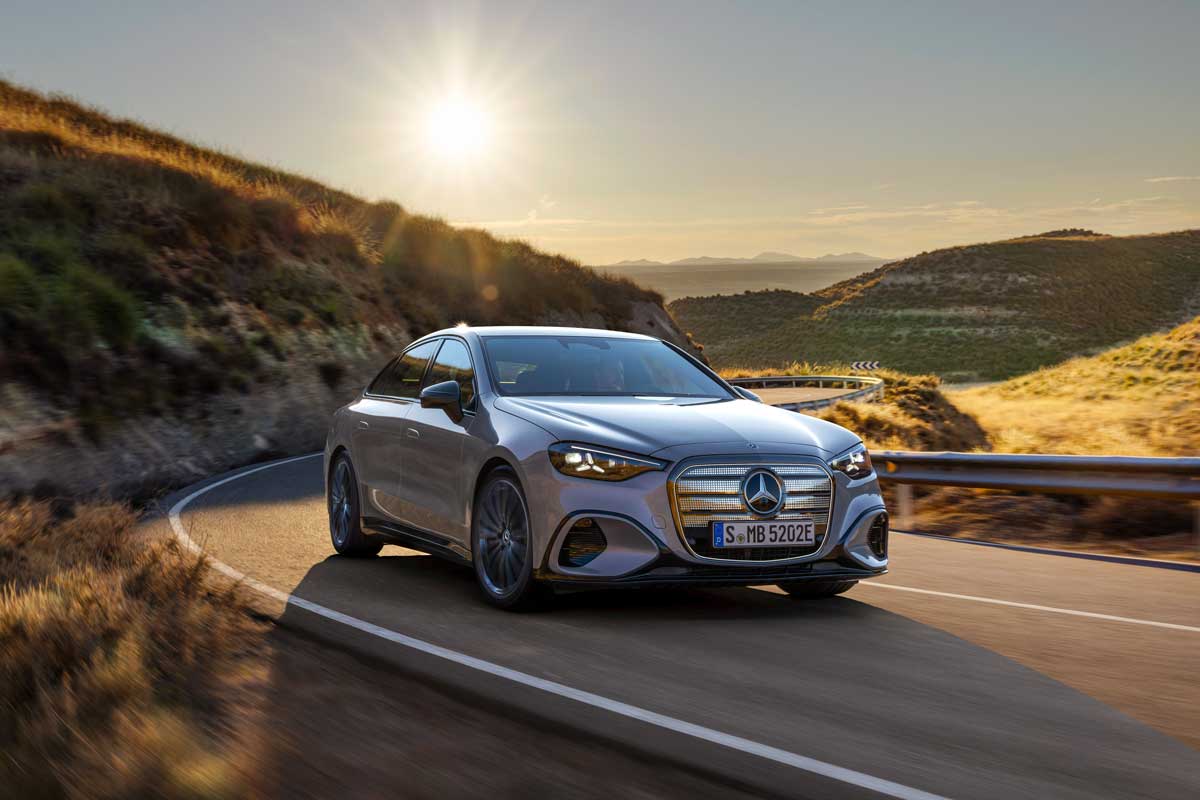
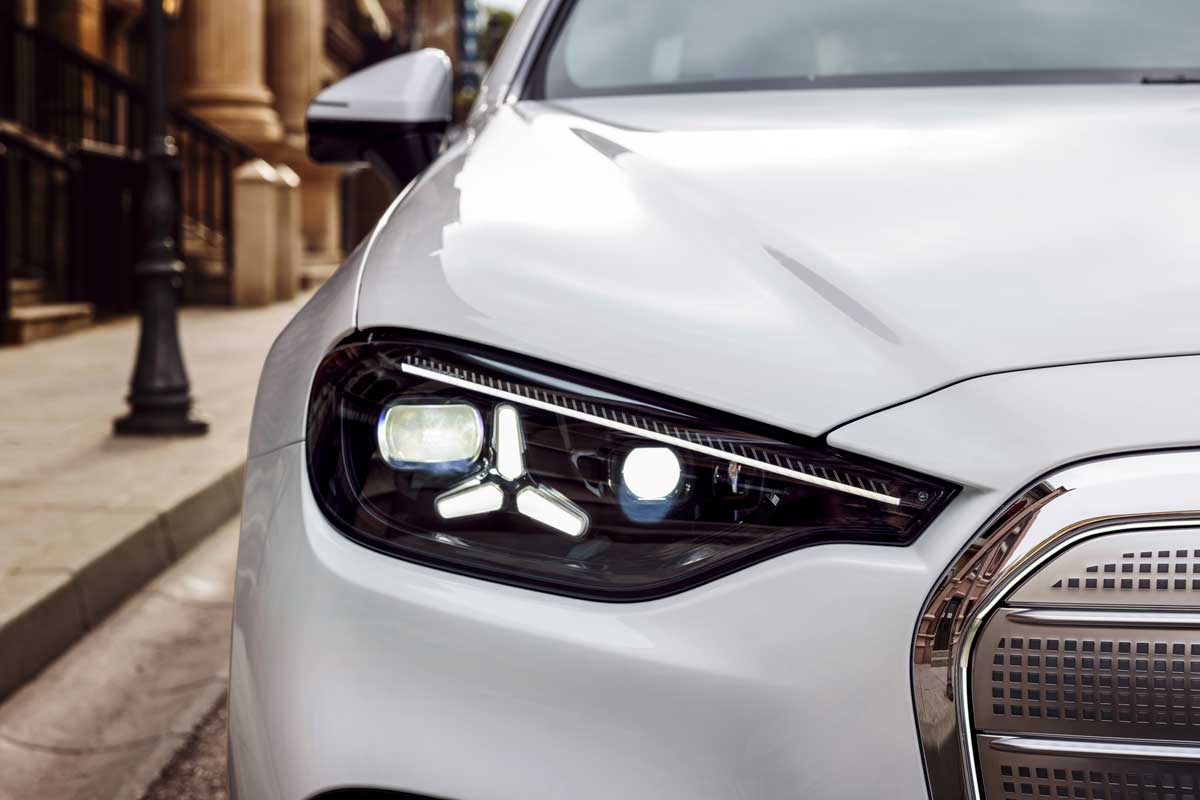
At first glance, it is unmistakably a C-Class. Look closer, and the details signal a new era. The front end features the brand's signature illuminated grille with more than 1,050 individually controllable LED elements - a statement that reads as pure design, especially after dark. The light signature is no longer merely a functional element; it is part of the car's visual identity.
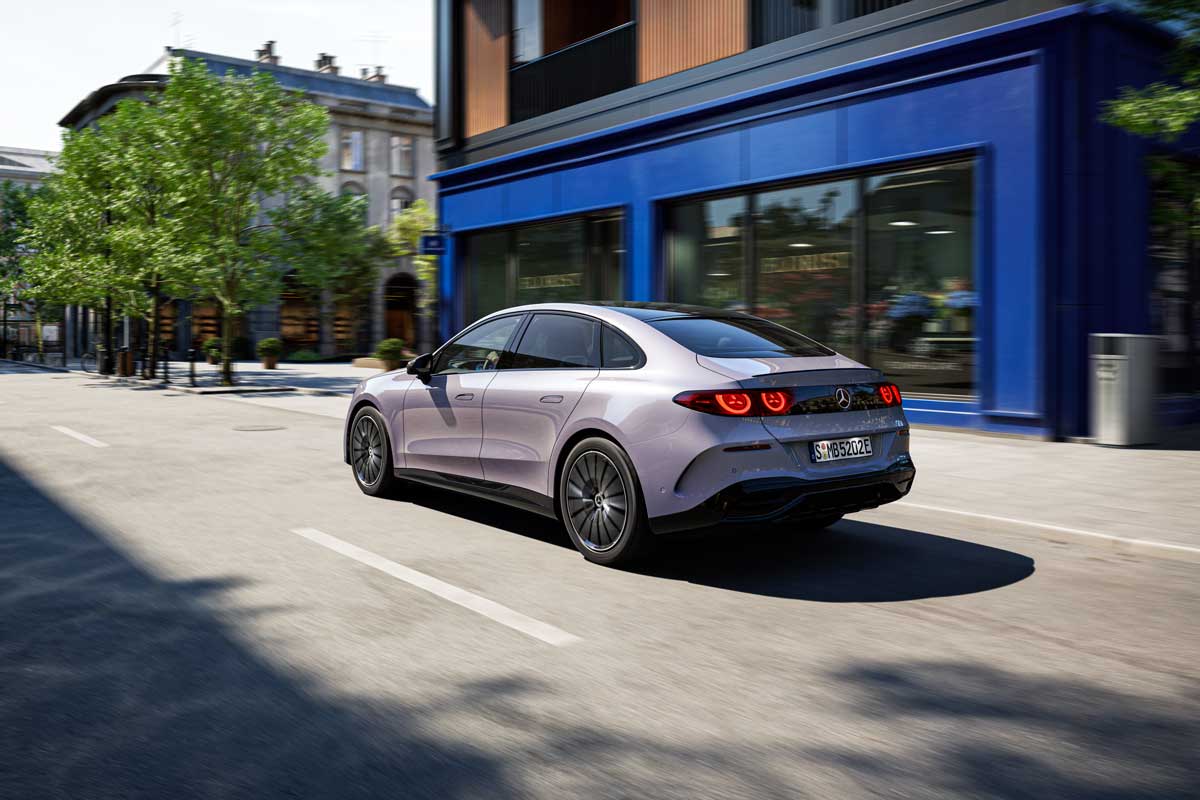
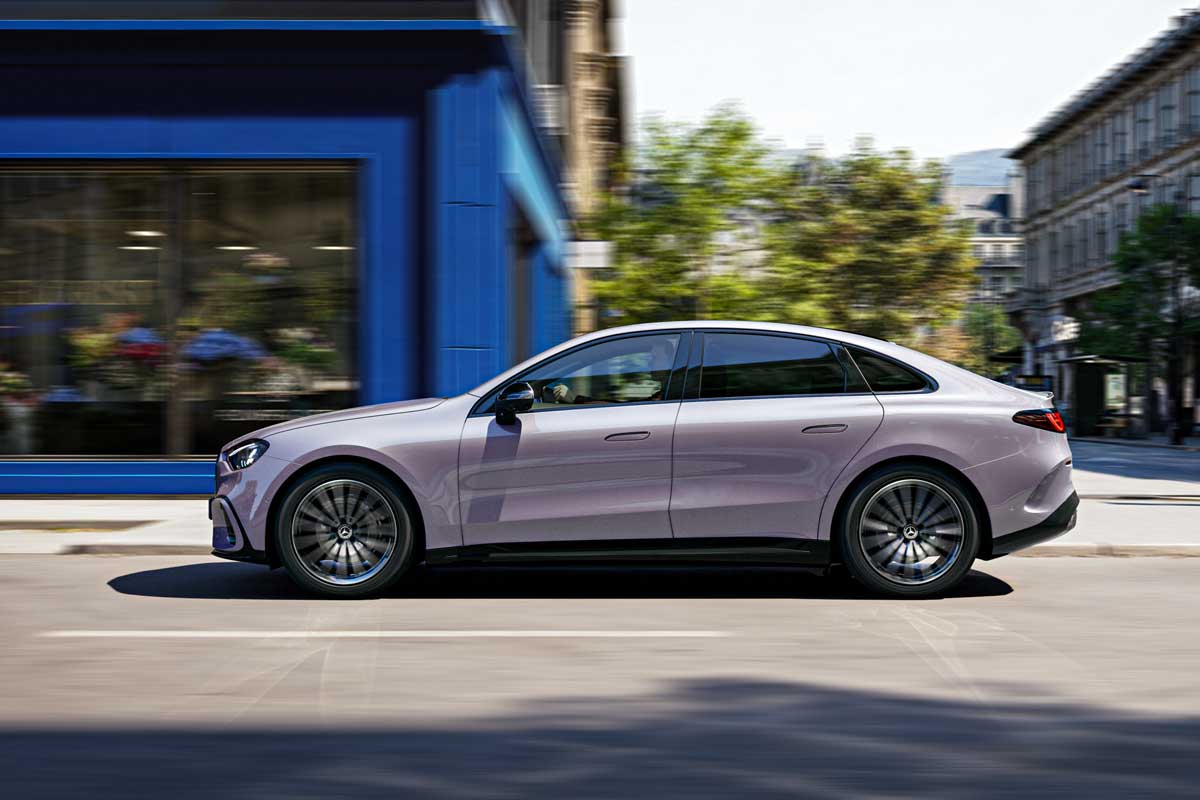
The silhouette is coupe-like, with a gently sloping roofline and a pronounced fastback rear. This is no longer a conventional three-box sedan - it is something closer to a GT, with aerodynamics at the center of its purpose. The drag coefficient of 0.22 is among the best in the segment, helping deliver the extraordinary range figures. The car is longer, wider, and taller than its combustion-engine counterpart, with a wheelbase stretched by nearly four inches - gains that translate directly into more interior space.
An Interior That Feels Like a Personal Space
If the exterior is evolution, the interior is a full step forward.
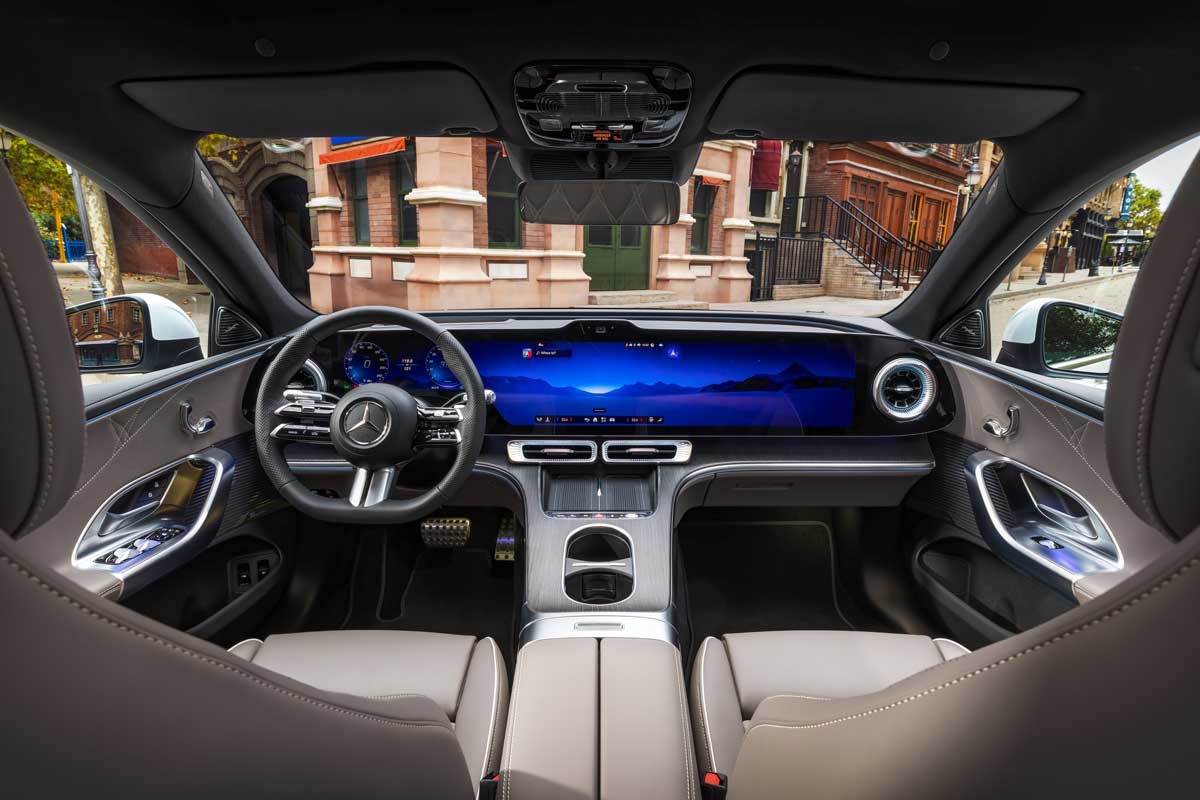
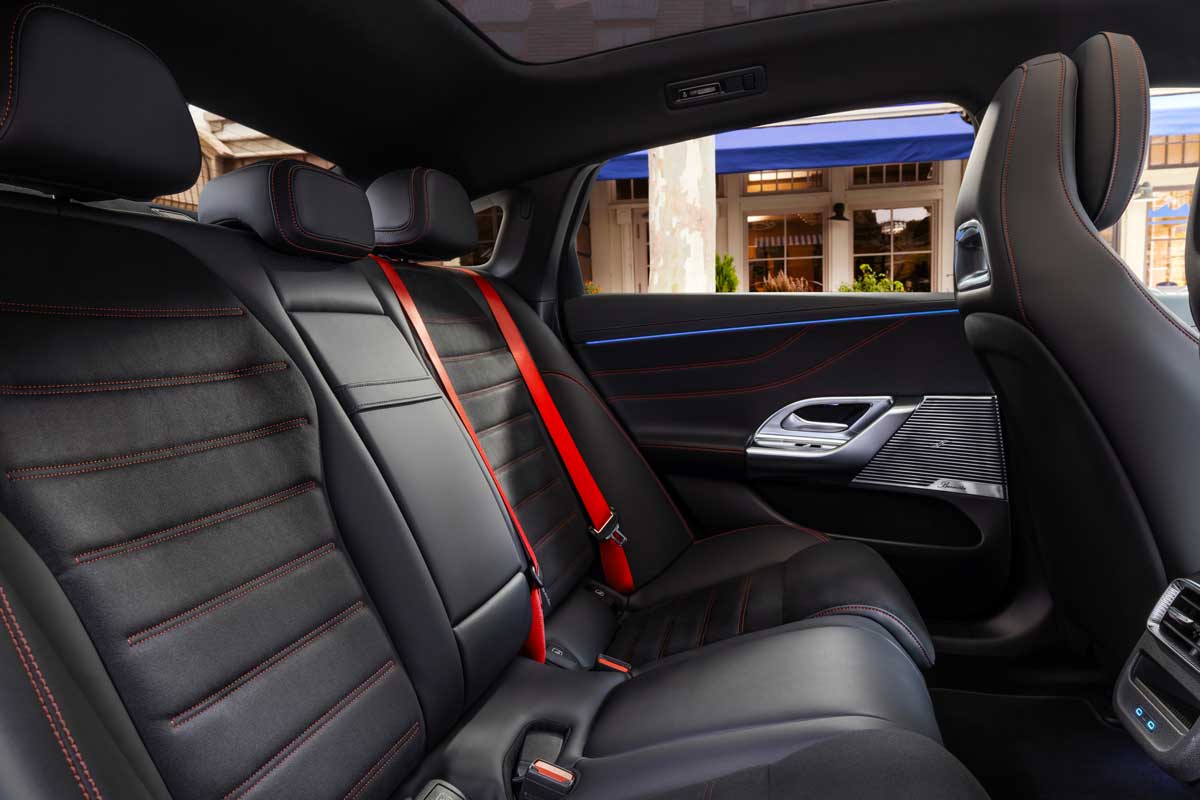
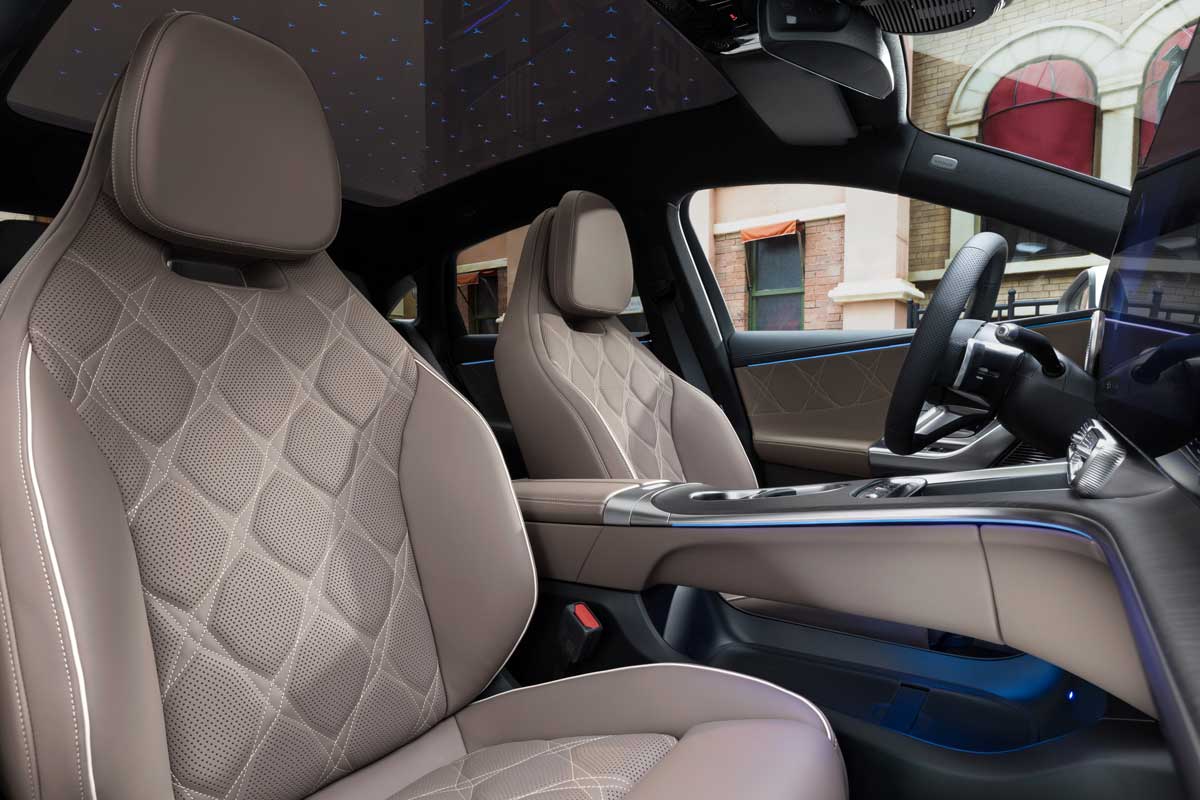
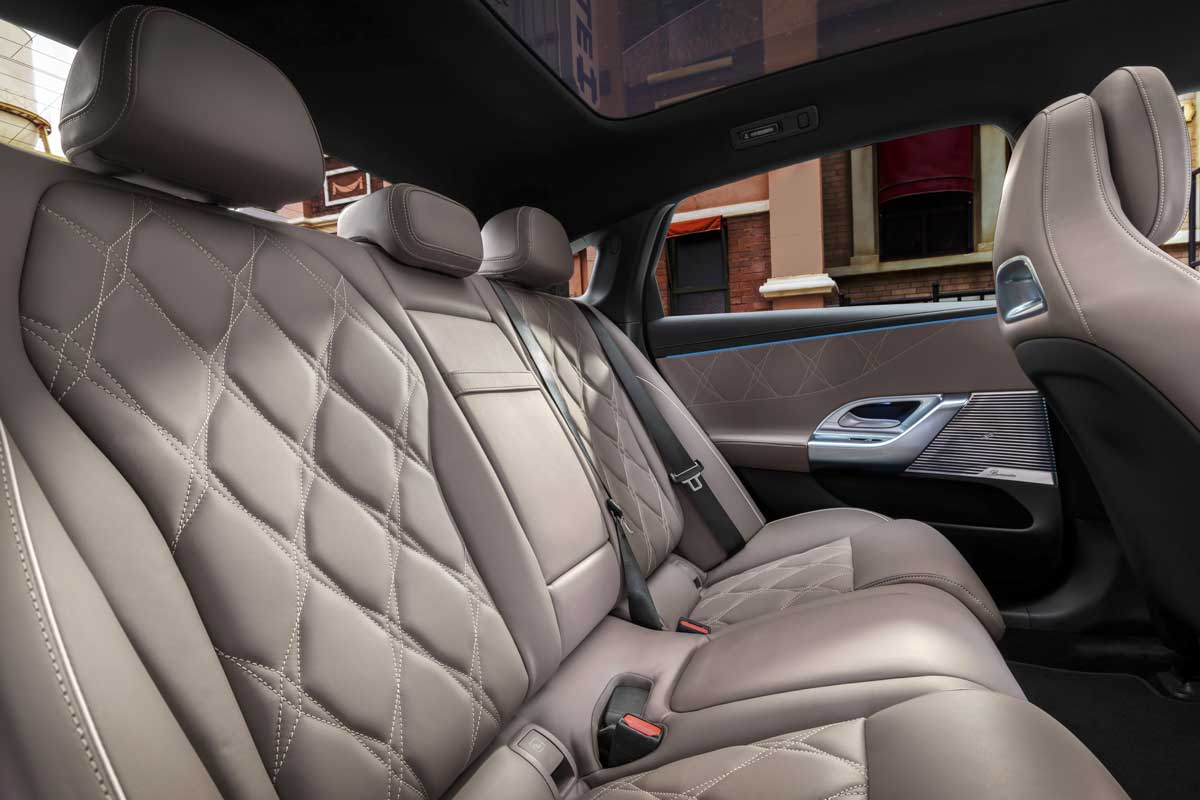
Mercedes has long described its cabins as a place to feel at home, and in the electric C-Class that philosophy is taken further than ever. Materials are notably more refined than in many platform-sharing models, with soft surfaces, considered details, and an optional fully certified vegan interior for buyers who want it.
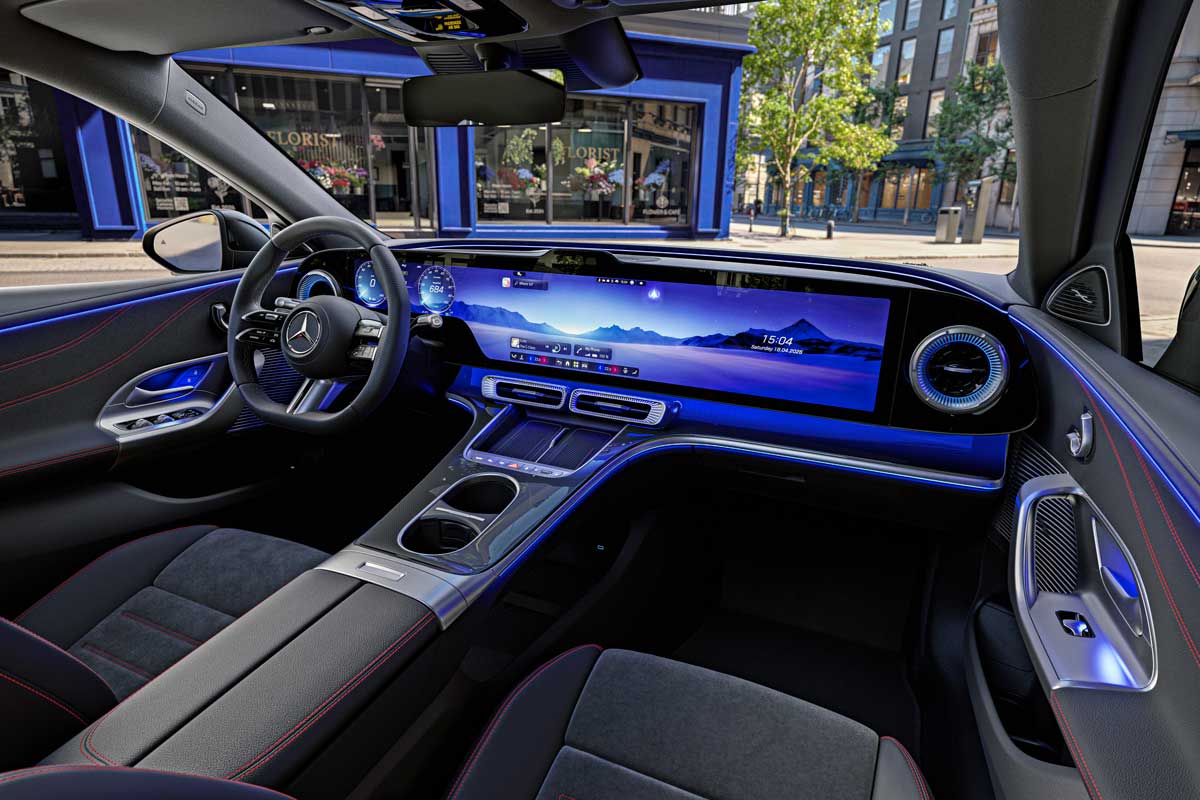
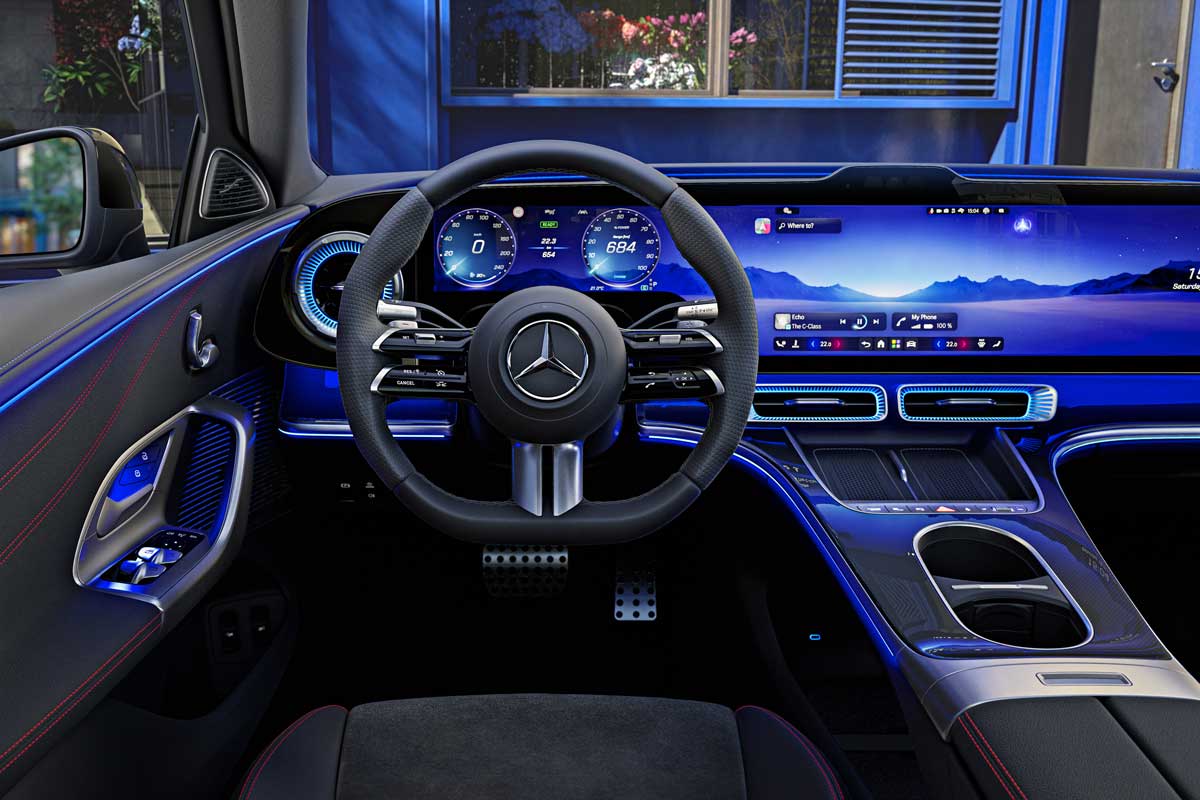
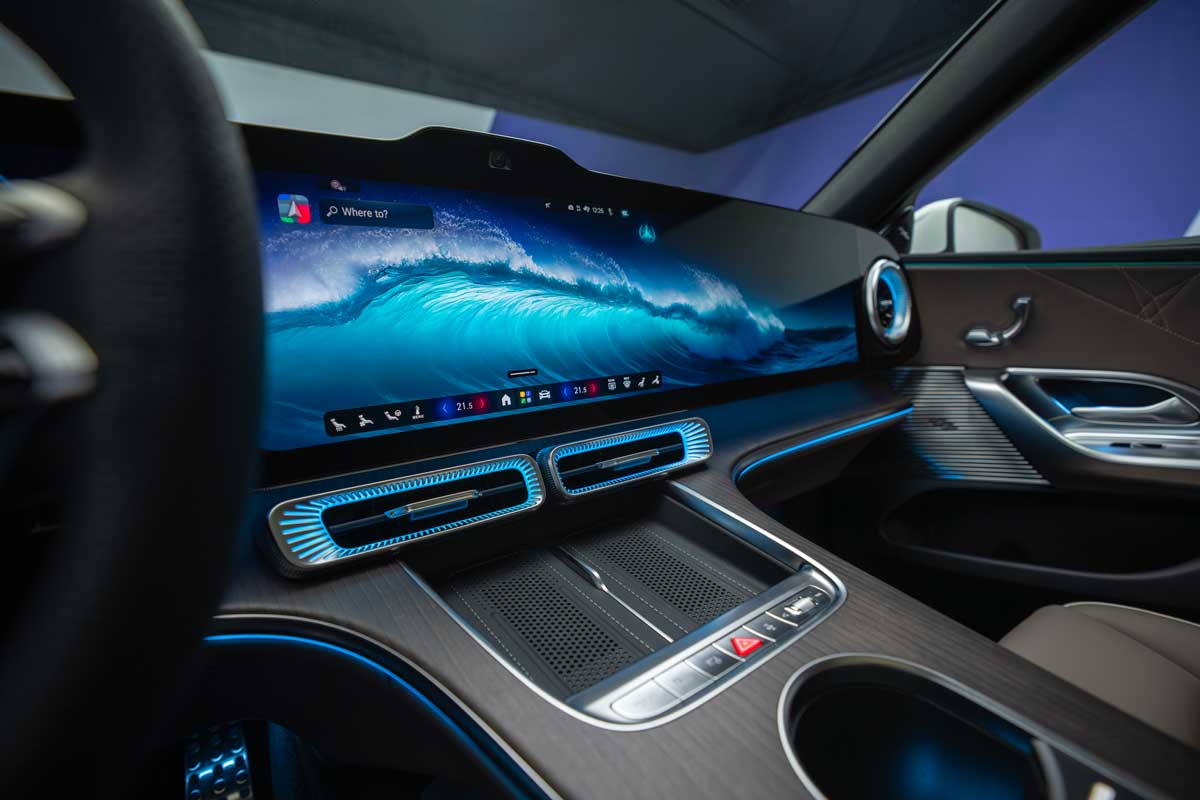
The centerpiece is the optional 39.1-inch MBUX Hyperscreen - a single glass surface spanning the full width of the dashboard, integrating driver display and infotainment into one continuous panel. Underneath runs the new MB.OS operating system, acting as the car's digital nervous system.
The most genuinely new dimension is the AI integration. The fourth-generation MBUX Virtual Assistant is the first in-car system to combine ChatGPT-4o, Google Gemini, and Microsoft Bing in a multi-agent approach - the system selects whichever model is best suited to each request. In practice, this means a conversation that feels like talking to an assistant rather than issuing commands to a machine.
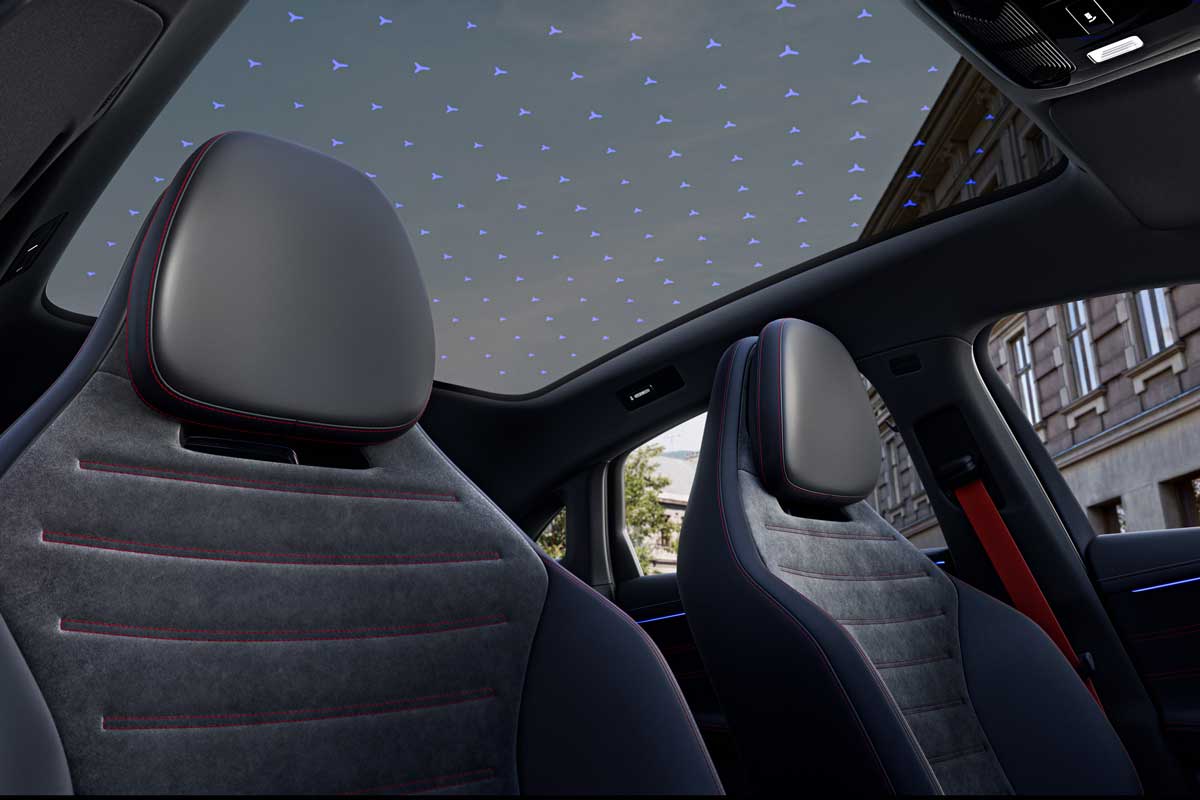
The atmosphere is completed by the details: ambient lighting, a Burmester audio system with 4D sound delivered through transducers in the seatbacks, massage seats, and a panoramic Sky Control roof with 162 individually illuminated stars. This is not simply a cabin - it is a space designed for comfort on any journey.
An EV That Takes Winter Seriously
One of the most practical innovations in the new C-Class is thermal management. The new heating system warms the cabin twice as quickly as in combustion-engine models, even at temperatures around -7°C, while consuming approximately half the energy to do so - a meaningful advantage for Canadian winters and northern climates generally.
Acoustic refinement is equally thorough: a strengthened body structure, acoustic glass, and redesigned electric motors combine to make the cabin noticeably quieter than most competitors.
Range That Removes the Question
With a 94 kWh battery, the C 400 4MATIC delivers up to 762 km on the WLTP cycle. The rear-wheel-drive variant arriving in 2027 is expected to push that figure toward 800 km WLTP. EPA-rated figures for North America are typically 10 to 15 percent lower than WLTP; the C400 4MATIC is expected to land around 400 miles on the EPA cycle, with the RWD variant potentially exceeding that - figures at which range anxiety becomes practically irrelevant.
Fast charging reinforces the point: the 800-volt architecture supports up to 330 kW of DC charging, adding approximately 325 km of WLTP-rated range in 10 minutes. A full 10-to-80 percent charge takes around 22 minutes. The car also supports bidirectional charging - Vehicle-to-Load and Vehicle-to-Home - so the battery can serve as a power source for devices or, with the right equipment, for the house itself.
Dynamics Without Compromise
Mercedes has called the electric C-Class the sportiest C-Class ever built, and the engineering supports the claim.
The C 400 4MATIC produces 360 kW - approximately 489 horsepower - and reaches 100 km/h in 4.0 seconds. But the more interesting engineering story is the two-speed transmission on the rear motor: first gear provides a short 11:1 ratio for explosive acceleration and towing capability up to 1.8 tonnes; at highway speeds, the system shifts to a longer 5:1 ratio to maximize efficiency. The front motor physically disconnects under light loads, eliminating parasitic drag entirely. Recuperation reaches up to 300 kW - meaning that in most driving situations, the car slows down without engaging the conventional brakes at all.
Handling Above Its Class
Mercedes has gone well beyond straight-line performance. The optional rear-axle steering turns the rear wheels up to 4.5 degrees, reducing the turning circle to 11.2 meters - the agility of a compact car in a mid-size body. At speeds above 70 km/h, the rear wheels steer up to 2.5 degrees in the same direction as the fronts, improving high-speed stability and confidence.
The optional AIRMATIC air suspension goes further still: its predictive damping system draws on real-time Google Maps data and Car-to-X vehicle communication to anticipate road conditions before the car reaches them. The suspension adjusts before you feel the imperfection, not in response to it. The car lowers automatically in Sport mode and maintains its low ride height intelligently - knowing, for instance, that a brief slowdown for a tunnel does not mean it should raise itself as a conventional system would.
The result is a sedan that genuinely delivers two opposing characters: the agility of a sports car in tight conditions, and the composure of an S-Class on the open road.
Practicality Without Sacrifice
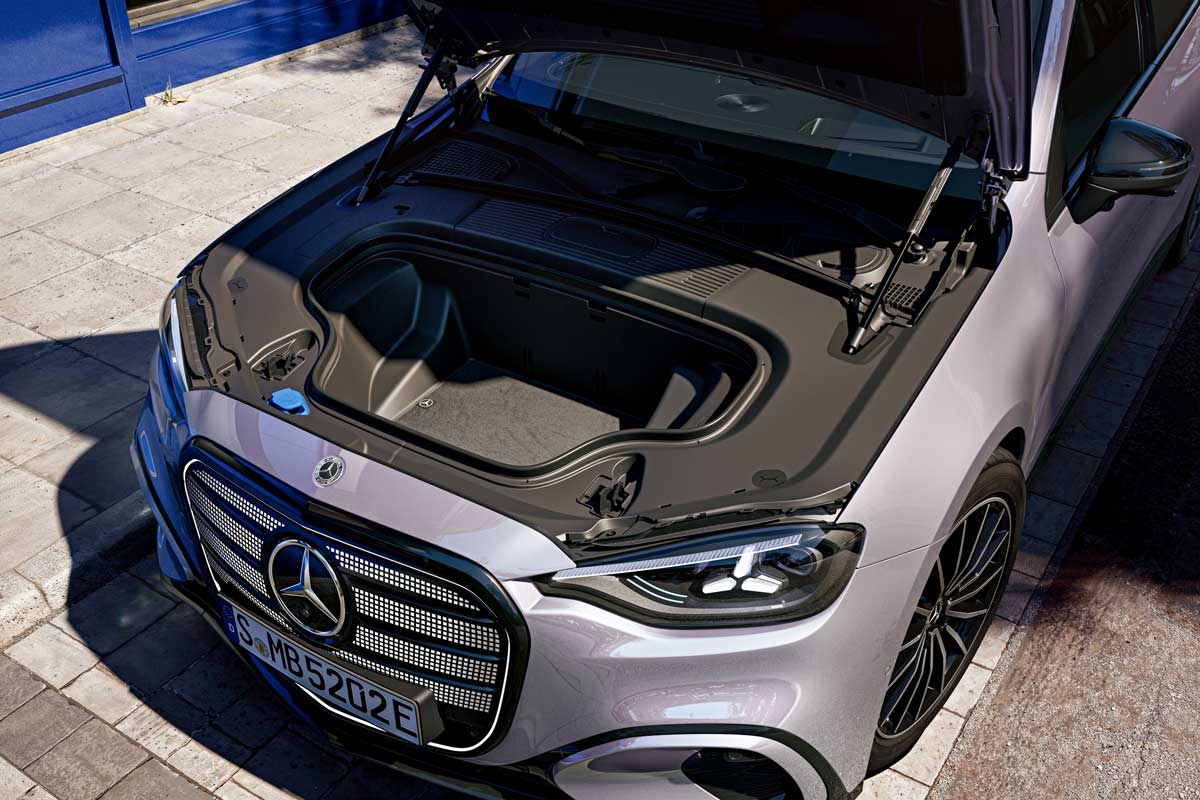
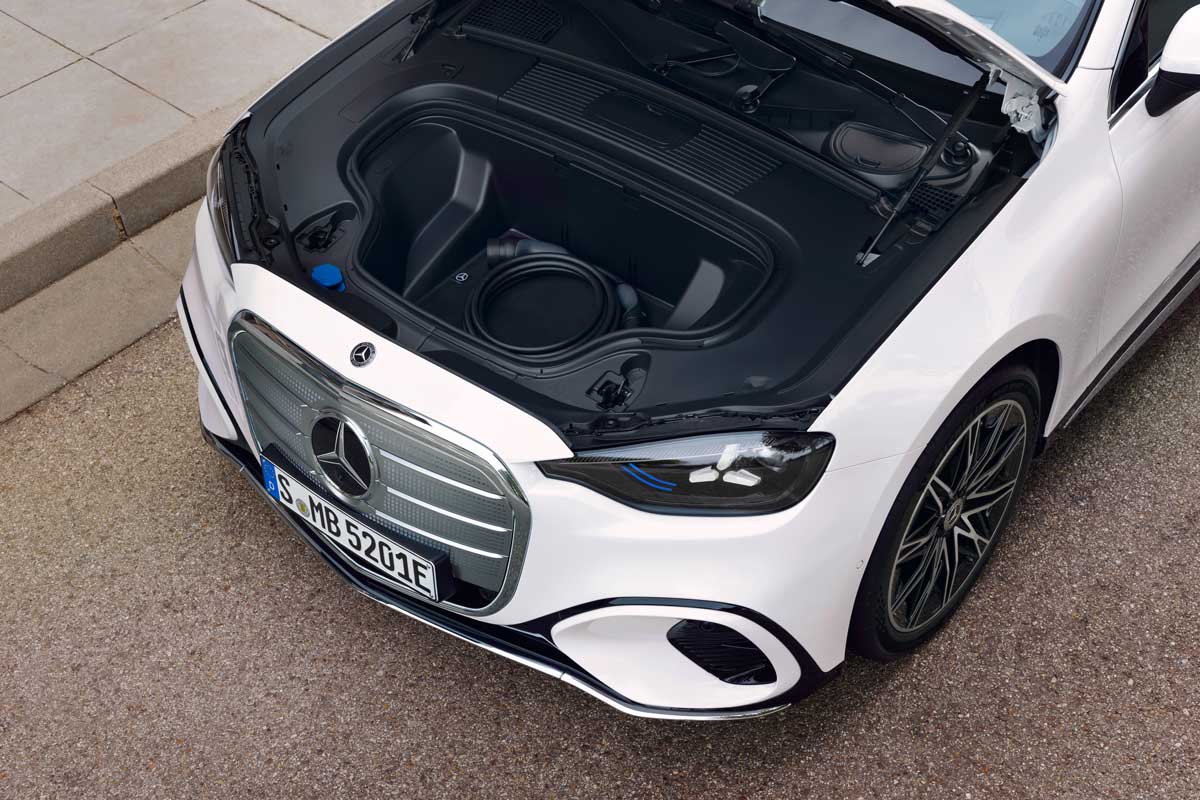
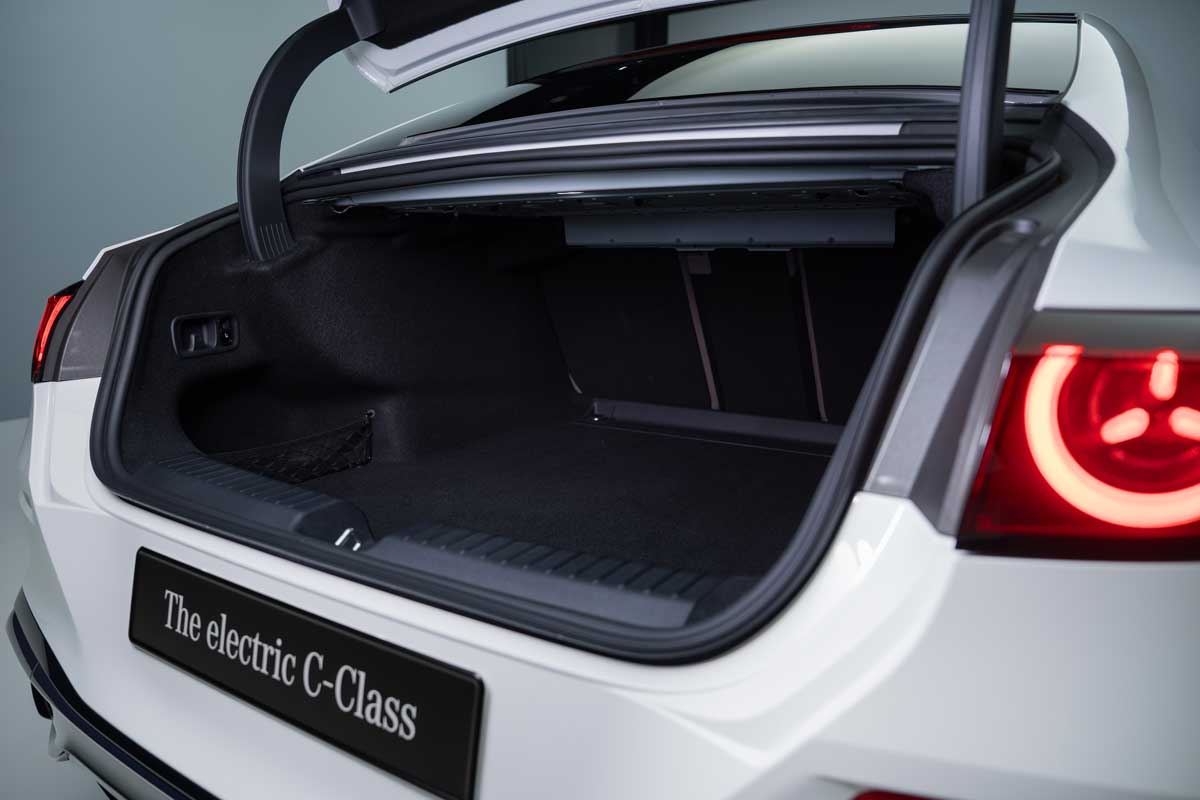
Despite its technological ambition, the electric C-Class remains a usable car. The 470-liter trunk is competitive for the class, and a full 101-liter frunk opens simply by pressing the Mercedes star on the hood - a thoughtful detail that makes the space genuinely practical rather than a marketing footnote. The car can tow up to 1.8 tonnes, a capability rare in electric sedans of any price.
The new Mercedes-Benz C-Class Electric is not simply another EV. It is a strategic statement.
Mercedes is not trying to invent a new category, as some competitors are. Instead, it has taken one of the most recognized nameplates in the world and made it as current as any car on the market - without losing the qualities that made it matter in the first place. That is its strength.
For North American buyers - in Ontario and across the continent - this means something specific: a car that balances comfort and technology, status and practicality, in its most mature form yet. The C 400 4MATIC is expected at U.S. dealerships in the first half of 2027.
For decades, electric vehicles asked buyers to make compromises. The new C-Class Electric suggests that era is ending. This is what a premium sedan looks like when the electric drivetrain is not the story - it is simply the foundation.