




Chevrolet Bolt 2027: the return of the most affordable electric car
The Chevrolet Bolt is returning at exactly the moment when the electric vehicle market needs not another expensive technology flagship, but a simple, understandable and affordable car for real life. After several years in which many EVs became larger, more expensive and more complicated, the new Bolt once again focuses on what mass electric mobility should have been built around from the beginning: a reasonable price, sufficient range, fast charging, a practical body and very little unnecessary drama.
General Motors has officially revealed details of the 2027 model-year Chevrolet Bolt. This is not simply the return of a discontinued nameplate, but a serious technical update to a familiar formula. The new Bolt will start in the United States at $28,995 including destination for the more affordable version arriving later in the model year, while the initial Launch Edition / LT version starts at $29,990. That puts the Bolt back in contention as one of the most affordable new electric vehicles on the American market.
Price: the Bolt’s strongest argument
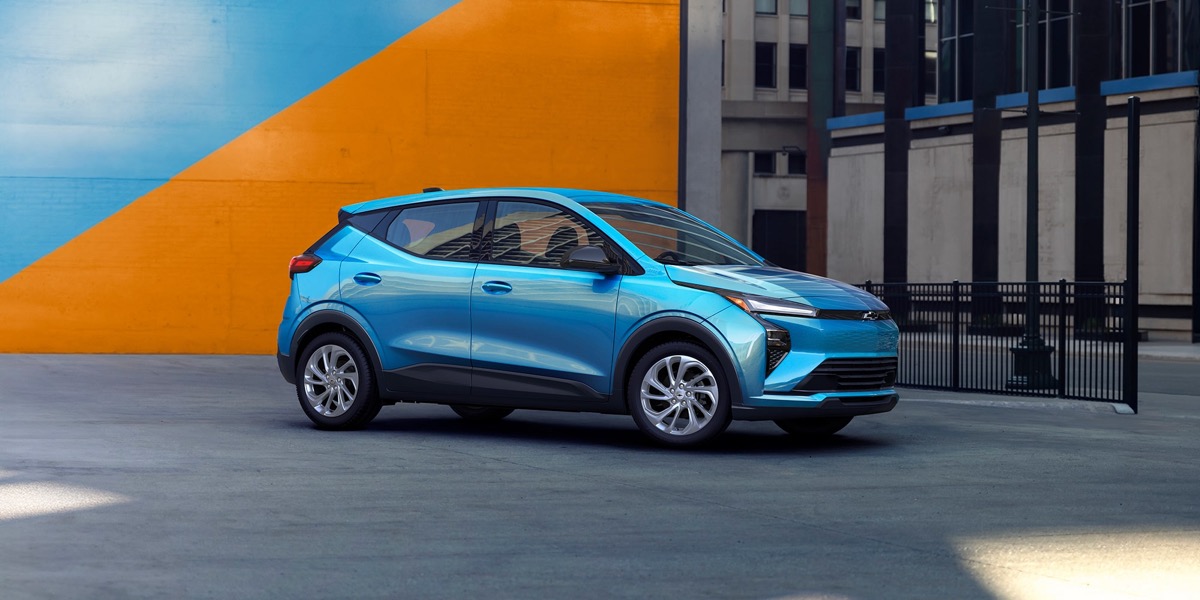
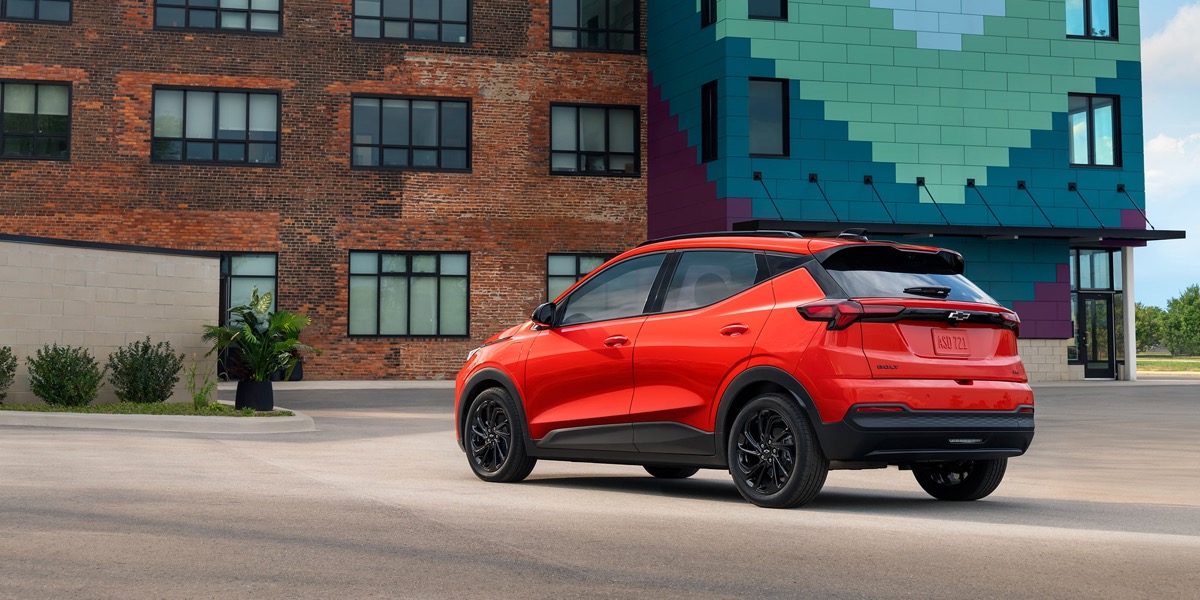
At launch, Chevrolet will offer a well-equipped Bolt LT priced at $29,990 including destination charge. Later, an even more affordable LT version is expected with a price of $28,995 including delivery. The lineup will also include a sportier RS version, adding more expressive design details and a different visual character.
Price is the new Bolt’s main weapon. Many buyers today are willing to consider an electric vehicle, but they do not want to pay premium SUV money for one. The Bolt tries to bring back an honest mass-market formula: an EV that can be purchased not only for image or experimentation, but as a rational replacement for a gasoline compact crossover or city hatchback.
Against a market filled with EVs priced at $40,000, $50,000 and beyond, the new Bolt feels almost rare. It does not promise luxury, but it offers what matters: real range, access to modern charging infrastructure, a sensible size, a proper interior and a price below the psychologically important $30,000 mark.
Technical specifications: improvement where it matters
The new Bolt is estimated to deliver around 255 miles of EPA range. That is only slightly more than the previous Bolt EUV, but the key improvement is not the range number itself. It is charging speed. The old Bolt was often criticized for slow DC fast charging, peaking at around 55 kW. The new Bolt supports fast charging at more than 150 kW and can charge from 10% to 80% in about 25-26 minutes under suitable conditions.
This changes the practical character of the car. The old Bolt was an excellent city EV, but on longer trips its slow charging became a weakness. The new Bolt is much better suited to mixed real-world use: city driving, suburban commuting, work trips, weekends away and occasional road trips.
The charging port is now the NACS standard, compatible with the Tesla Supercharger network without an adapter. For North America, that is a major advantage: access to a larger and more convenient charging network significantly increases the appeal of an affordable EV.
The new Bolt uses a 65 kWh lithium-iron-phosphate, or LFP, battery. This chemistry helps reduce cost, generally tolerates frequent charging cycles well and fits the pragmatic mission of a mass-market EV. The battery pack uses a cell-to-pack approach, removing part of the traditional module structure and allowing space to be used more efficiently.
The X76 electric drive unit, related to the system used in the larger Chevrolet Equinox EV, produces around 210 hp and drives the front wheels. This is not a sports EV, but for everyday use it offers more than enough power. The point here is not record-breaking acceleration, but easy response, instant torque and efficient operation.
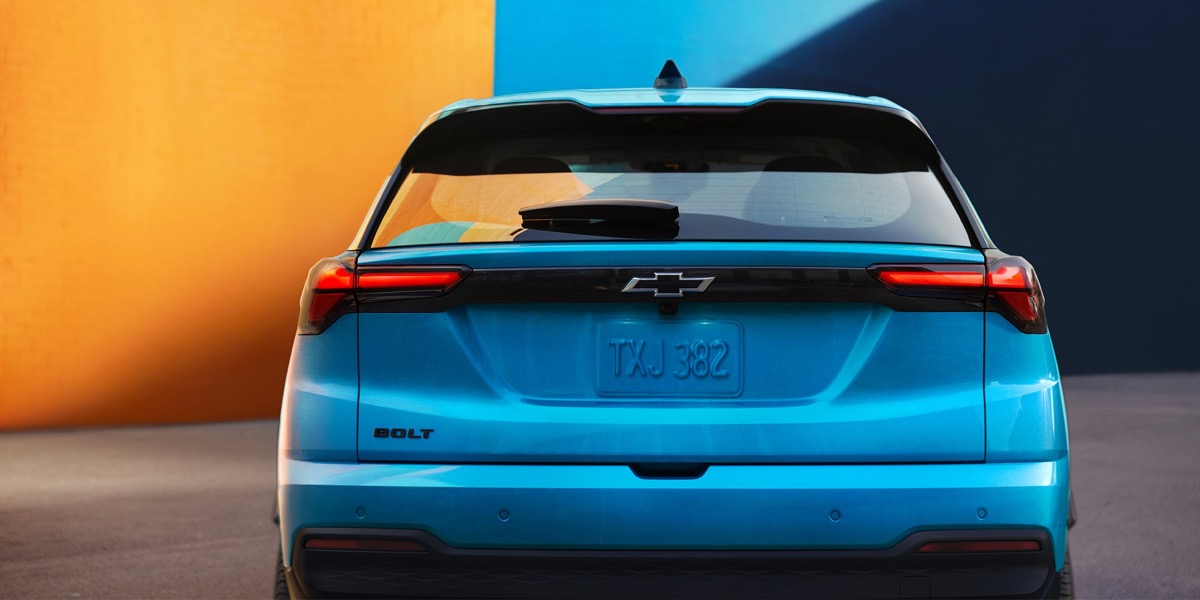
Visually, the new Bolt keeps the general proportions of the previous Bolt EUV, which was discontinued in 2023. But more than half of the components are new or upgraded: the battery, electrical architecture, charging system, drive unit, brake components, interior and electronic systems. Calling it a simple facelift would be misleading. It is a familiar idea built on a more modern technical foundation.
Interior and technology
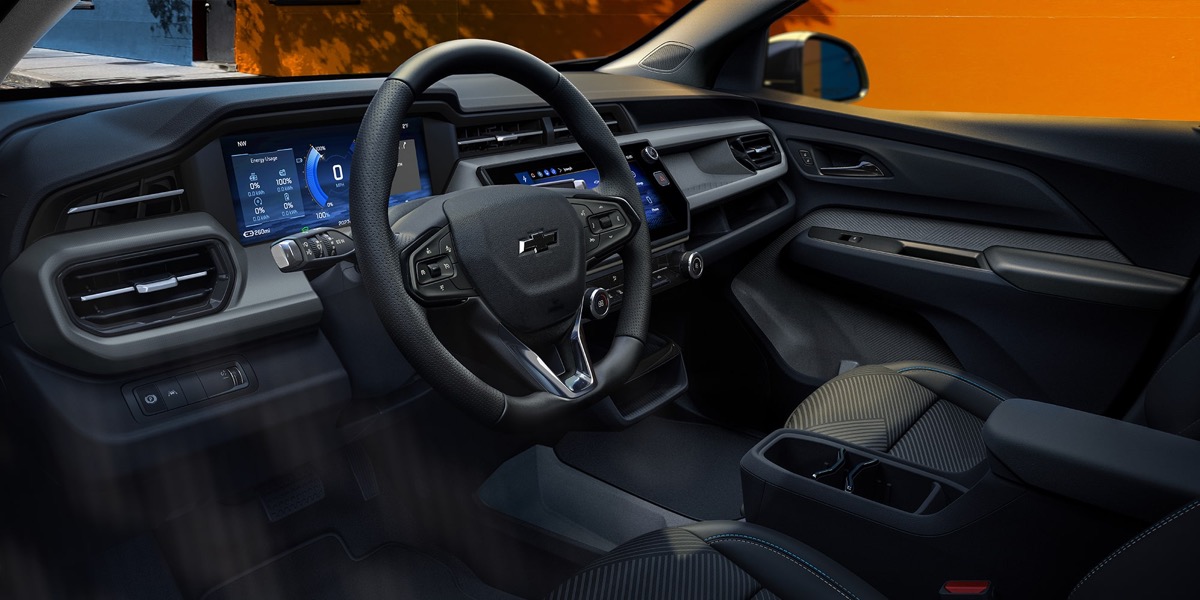
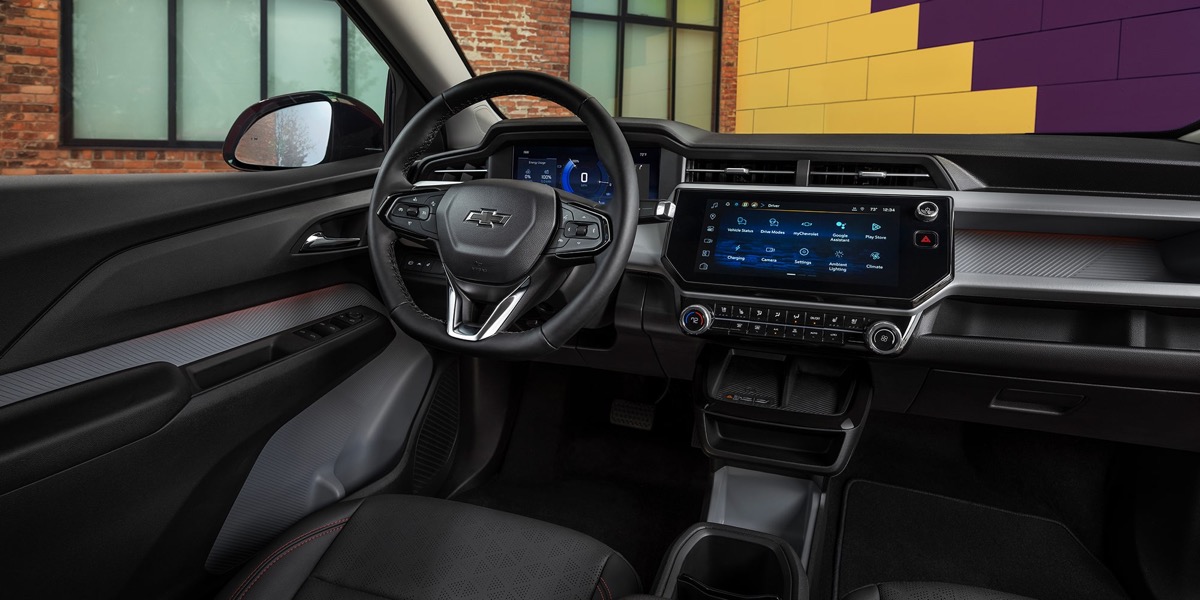
The cabin has been fully updated. Inside are an 11-inch digital driver display and an 11.3-inch central infotainment screen with Google Built-In. As in GM’s newer electric vehicles, Apple CarPlay and Android Auto are not included, which will almost certainly be controversial for some buyers. GM is betting on the built-in Google ecosystem: Google Maps, Google Assistant, Play Store and apps available directly through the car’s system.
From a navigation point of view, this makes sense. Google Maps can plan routes around charging stations, battery status and charging needs. For an electric vehicle, that is more important than simply mirroring a phone map on the screen. But the lack of CarPlay and Android Auto remains a risk: many buyers are used to their smartphones and do not want to change digital habits because of a car’s interface.
Super Cruise, GM’s hands-free driving technology for compatible roads, will be available as an option. For a vehicle priced under $30,000, this is a serious technology offering, especially considering that such features were once associated mainly with more expensive models.
Another important new feature is Vehicle-to-Home capability. With compatible GM Energy equipment, the Bolt’s battery can be used to power a home during an outage. This is not a free out-of-the-box feature; it requires specific charging and home equipment. But the fact that V2H is appearing in an affordable EV shows that the electric car is gradually becoming not only transportation, but part of the home energy system.
A second life
The first-generation Bolt EV and Bolt EUV were among the most successful non-Tesla EV models in the United States. They were not perfect: slow charging, the plain interior of early versions and the battery recall damaged the model’s reputation. But the Bolt offered a rare combination of price, range and practicality, which helped it build a very loyal audience.
When GM decided to discontinue the Bolt, the reaction from buyers was strong enough that the company soon announced the model would return. That was revealing: the market really does need an affordable electric vehicle, not only expensive SUVs and pickup trucks.
Today, price has become the decisive question in whether EVs can truly become mainstream. Buyers are willing to consider electric vehicles if they do not break the family budget, do not require constant compromise and do not charge a premium merely for being electric.
Tesla, which once promised a truly inexpensive mass-market EV, has effectively shifted focus to the more expensive Model 3 and Model Y, while recent “Standard” versions remain simplified versions of existing models rather than a new $25,000 car. Nissan is updating the Leaf, Ford is working on more affordable electric models, and startups are trying to find their own path toward a budget EV. But with the new Bolt, Chevrolet may be closest to a clear formula for a people’s electric car.
Meanwhile, the Chevrolet Equinox EV has already become an important model in GM’s electric lineup, and the Bolt is expected to sit below it as the more affordable, compact and pragmatic choice. If GM can provide sufficient production volume and consistent quality, the new Bolt has every chance to become one of America’s most important electric vehicles again.
The Bolt’s return is not merely a marketing gesture. It is a signal that electric mobility does not have to be only a premium story. While some brands compete over power, giant screens and expensive packages, Chevrolet is betting on a simpler and perhaps more important idea: affordability, practicality and trust.
The new Bolt reminds the market that technology does not have to be expensive to serve the future. Sometimes the most important electric car is not the fastest or the most luxurious, but the one an ordinary buyer can actually afford.