
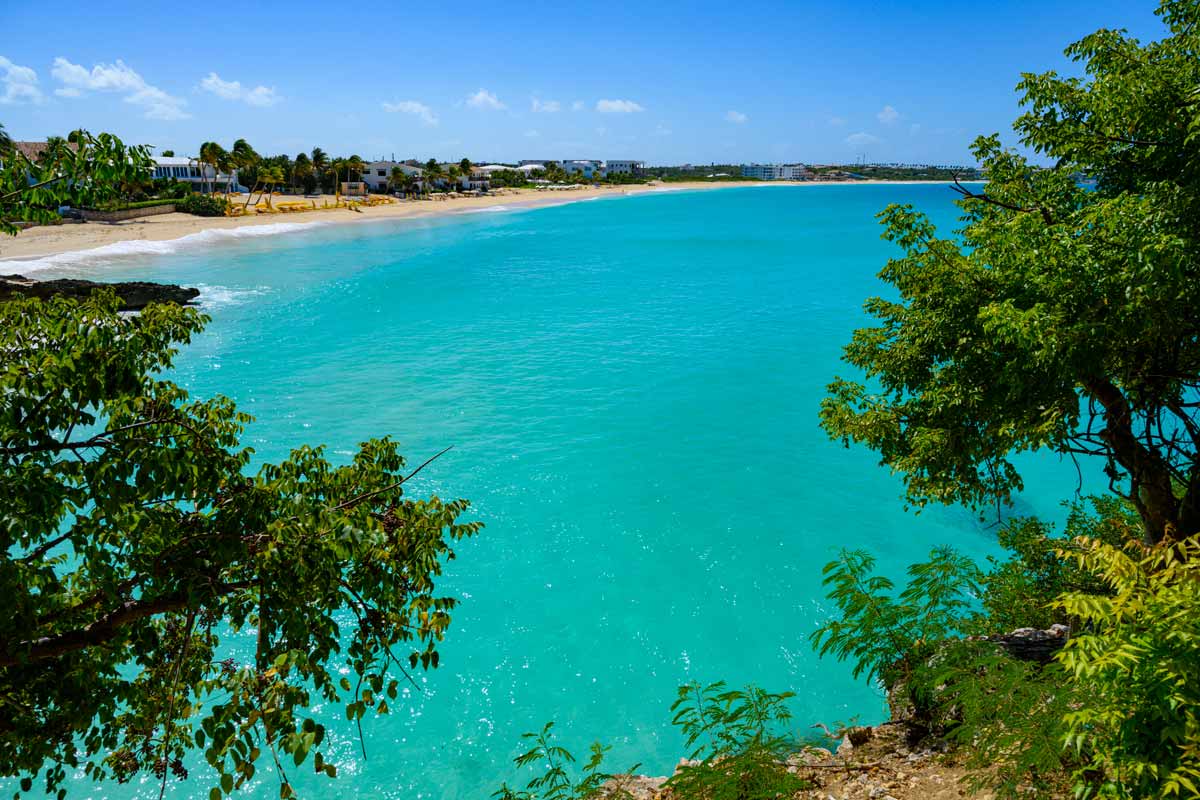
Meads Bay: the Caribbeans most famous beach
Some beaches become famous loudly: through parties, yachts, crowds, endless photographs and names that appear in every guidebook. Others belong to a different category - beaches that travel magazines have praised for decades, that regularly appear on lists of the best in the Caribbean, and yet still remain almost secret to the wider public. Meads Bay on the island of Anguilla is exactly that kind of beach. It is known by connoisseurs, repeat guests, food lovers, villa owners and travellers who are not looking for a noisy Caribbean image, but for a rare form of quiet.
Anguilla is a small, slender island in the eastern Caribbean, so thin and understated on the map that it is easy to miss. Its name is connected to the word “eel,” because from above the island truly resembles a long, narrow line in the water. But this land had an older name. The Arawak people called it Malliouhana - “arrow-shaped sea serpent.” There is more poetry than geography in that name, as if it immediately explains why the island feels not simply like a vacation place, but something older, more aquatic and more mysterious.
That same name is now carried by one of the most influential resorts in Anguilla’s history: Malliouhana. It sits above Meads Bay and helps explain why this beach became a legend not of mass tourism, but of quiet Caribbean luxury.
A Quiet Luxury
Meads Bay does not try to impress in the first second with noise or spectacle. Its power lies elsewhere. It is a long band of soft pale sand, clear water, a calm horizon and a sense of space that does not have to be shared with a crowd. There is none of the frantic resort energy that often accompanies famous beaches. Even with hotels and restaurants along the shore, Meads Bay preserves a strange and beautiful restraint.
The water shifts from pale turquoise near the sand to deeper blue farther offshore. In the morning, it can look almost glass-clear. On calm days, the visibility is so good that the sea seems less like something concealing the bottom than something lightly covering it with light. This is not a beach for checking off a list. It is a beach for slowing down.
That is the particular luxury of Anguilla. The island does not compete with Saint-Barth for theatrical glamour, and it does not try to be a universal resort for everyone. Anguilla chooses a different mood: less noise, more quality; less display, more space; fewer crowds, more taste.
Malliouhana: the resort that changed the island
The story of Meads Bay cannot be separated from Malliouhana. In the early 1980s, English entrepreneur Leon Roydon, who had grown up in London’s East End as the son of Eastern European immigrants, was vacationing in Saint Martin and took a day trip to Anguilla. He saw an empty cliff above turquoise water and first promised his wife Annette that he would build her a villa there. Then he changed his mind - and built a resort instead.
Malliouhana opened on November 1, 1984. According to the resort’s own lore, the first villa guest after Annette herself was Giorgio Armani. Soon the resort began welcoming guests of an entirely different level of public visibility and influence, including Jackie Kennedy Onassis. In the hotel’s lobby, the famous photograph of Leon Roydon playing backgammon with her in the pool remains part of the mythology of the place.
But Malliouhana’s importance was not only in its guest list. The resort set a new standard for Anguilla. It showed that Caribbean luxury did not have to be large, loud or obvious. It could be intimate, gastronomic, intelligent and almost private. At a time when many islands were developing mass tourism infrastructure, Malliouhana chose long stays, serious cuisine, exceptional service and an audience that could afford to disappear from ordinary life not for three days, but for two weeks.
Over time, Anguilla came to be called the culinary capital of the Caribbean. That reputation did not come from nowhere. Malliouhana and Meads Bay became part of a story in which food, wine, service and beachside quiet came together to create a new kind of Caribbean luxury.
Luxury you almost do not see
What makes Meads Bay interesting is that luxury here is not always obvious. It does not necessarily express itself through loud architecture or a dramatic scene at the water’s edge. It is more a matter of proportion: how many people are on the beach, how much silence exists between conversations, how close the restaurant is to the sand, how the light falls on the water, how easy it is to walk barefoot along the shore in the morning without encountering anything unnecessary.
In that sense, Meads Bay feels closer to a private club than to a mass resort. You can spend a day here almost invisibly: swimming, reading, having lunch by the water, watching the sunset, walking barefoot on the sand and realizing that the absence of excess is exactly what makes the place feel expensive. True luxury here does not say, “look at me.” It simply removes everything that gets in the way of rest.
For a North American traveller, this is especially valuable. After crowded airports, tight schedules, noisy resorts and endless digital anxiety, Meads Bay offers an increasingly rare product: a place where nothing demands an immediate reaction. This is a beach that does not try to entertain you every minute. It trusts the water, the light and the quiet.
The sea, the reef and the turtles
In front of Malliouhana, the water stretches toward coral reef before dropping into deeper blue. In calm weather, the sea here can be astonishingly clear. Snorkeling, swimming and boat trips reveal another side of Meads Bay: not only a beautiful shoreline, but a living Caribbean ecosystem.
Just east of Meads Bay, hidden between cliffs, is a small strip of white sand known as Turtle Cove. The name may sound almost too perfect, but it is not accidental. Sea turtles still come ashore on Anguilla’s beaches to lay their eggs in the sand, continuing an ancient cycle that existed long before resorts, hotels and the first European maps.
That detail changes the way the place feels. Meads Bay is not just a beautiful beach beside expensive hotels. It is part of an older story, where the shape of the island, the ancient name Malliouhana and the turtles in the coves join into something almost mythological. The eel, the sea serpent, the turtles - three creatures of water around one small island.
Why Anguilla remains special
Anguilla is not like many better-known Caribbean destinations. There are no major cruise crowds, no overly aggressive nightlife, no feeling that the island is constantly selling itself to the visitor. Its strength lies in quiet, beaches, restaurants, small coves and a remarkable confidence that not all luxury has to be loud.
Meads Bay is the best example of that character. It is beautiful enough to appear for decades on lists of the Caribbean’s best beaches, but restrained enough not to lose itself. Here it becomes easy to understand why some travellers choose Anguilla over more famous islands. They do not need a carnival every night. They need light, water, a good dinner, soft sand, privacy and the feeling that time is moving more slowly.
A beach that holds its reputation
Many famous beaches eventually become victims of their own fame. They accumulate crowds, commerce, loud music and the sense that nature itself has become a backdrop for other people’s content. Meads Bay has so far held a different balance. It is known, but not overexposed in the mass imagination. It is prestigious, but not hysterical. It is beautiful, but it does not try to be spectacular at any cost.
That is why its quiet fame has lasted. Meads Bay does not need one great attraction. Its attraction is the condition of the place itself: smooth water, pale sand, a long shoreline, reef, a restaurant by the sea, sunset, a morning without haste. It is a rare beach that requires no explanation once you are there, and is almost impossible to fully explain if you have not yet been.
Perhaps that is the secret of Anguilla. The island is hard to find on a map, but those who find it properly often return. Meads Bay is not the loudest beach in the Caribbean. But perhaps that is exactly why, decade after decade, it remains one of the most desired.