
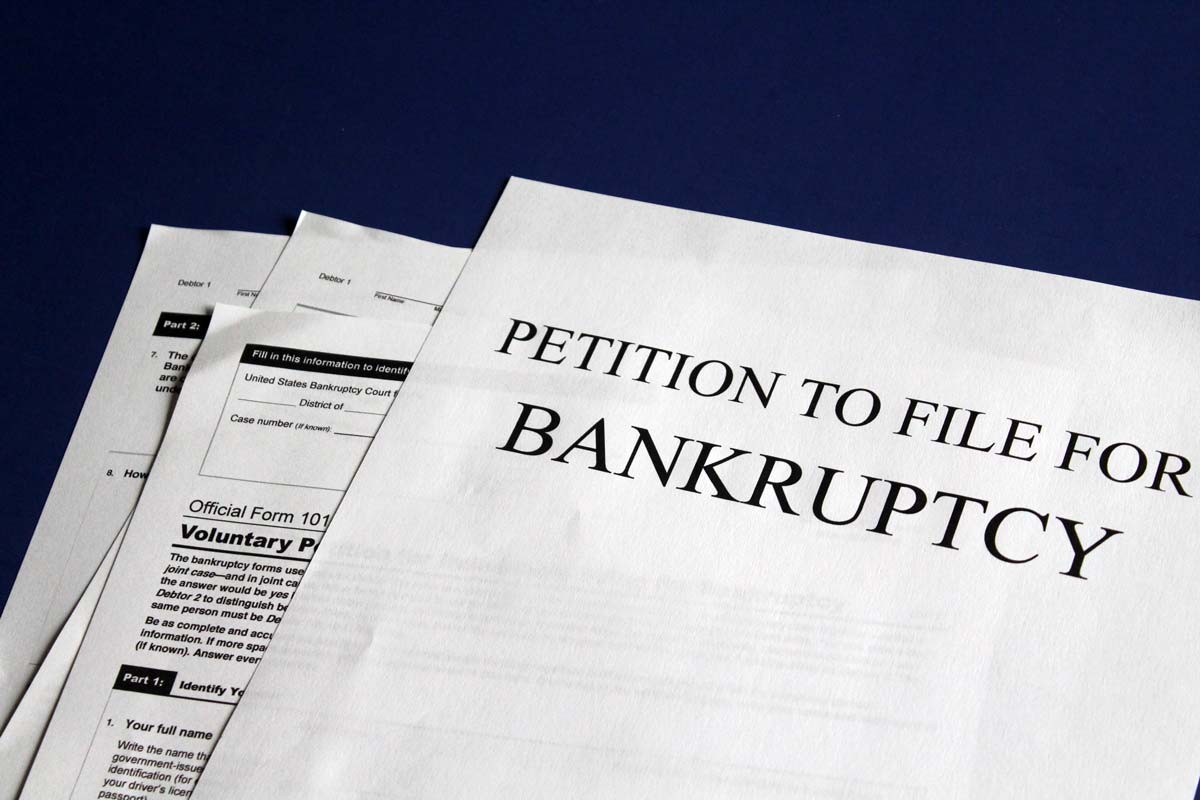
Bankruptcy or Consumer Proposal: which is better?
When debt becomes heavier than a person can reasonably carry, the main question is no longer theoretical. It becomes deeply personal: how can you get out of the situation with the least possible damage and avoid losing what can still be protected? In Canada, there are two powerful legal tools for this: Bankruptcy and Consumer Proposal. Both can stop creditor pressure and help eliminate a significant portion of debt. But they are not the same. The difference is not only in the size of the payment, but in the level of control, treatment of assets, impact on credit history and the future of your financial life.
In previous articles, we discussed Bankruptcy and Consumer Proposal as real ways to deal with debt. But one question comes up more often than any other: which is better - Bankruptcy or partial repayment through a Consumer Proposal?
The correct answer depends on your situation. The most important factor is whether you can consistently make the minimum monthly payment that creditors are prepared to accept. If you can, a Consumer Proposal is often the more reasonable and controlled solution. If you cannot, Bankruptcy may become the last legal way to be released from unmanageable debt. But between these two extremes, there are many nuances, and those nuances often determine the outcome.
Why a Consumer Proposal is often preferable
A Consumer Proposal is a formal offer to creditors to repay a portion of unsecured debts through a Licensed Insolvency Trustee. If creditors accept the proposal, you receive one fixed payment, interest on the included debts stops, and most creditor actions are halted. At the same time, you retain more control over the process than in Bankruptcy.
The main advantage of a Consumer Proposal is predictability. You know the amount, the term and the conditions in advance. A proposal can usually be paid over up to five years, but it may be paid off earlier if you are able and choose to do so. For many people, this is more comfortable than living through Bankruptcy, where payments can depend on income, assets, surplus income and additional questions from the trustee or creditors.
A Consumer Proposal is also often easier psychologically. A person does not declare bankruptcy, but offers creditors a real compromise: they receive part of the money, and the debtor receives a chance to recover. This is not an “easy way out” and not a formality. It is a serious legal procedure, but it often allows people to preserve assets, professional reputation and a sense of control.
Bankruptcy operates differently. A Licensed Insolvency Trustee must administer the bankrupt person’s estate and determine which assets, income or equity may be used for the benefit of creditors. If a person has no significant assets, no surplus income and no questionable transactions, the process may be relatively simple. But if there is a home, equity, a vehicle, a business, recent asset transfers, tax refunds, RRSP contributions, high income or unclear movement of money, Bankruptcy can become much more complicated.
That is why a Consumer Proposal is often chosen by people who have something to preserve: real estate, a vehicle, a professional licence, reputation, the ability to sponsor relatives, mortgage plans or a business. This does not mean a proposal is always better. It means that it often provides more room to manoeuvre.
When Bankruptcy may be the right solution
The main advantage of Bankruptcy is the possibility of being released from debt relatively quickly if the situation is straightforward and the person fulfils all duties. For a first-time bankrupt with no surplus income, automatic discharge is usually possible after 9 months. If there is surplus income, the period may increase to 21 months. For a second bankruptcy, the timelines are usually much longer.
Bankruptcy may be a reasonable choice if a person has no meaningful assets, cannot afford even a minimum proposal payment, has no equity in real estate, does not operate a business with valuable assets and does not face professional restrictions connected with bankruptcy. In such a situation, prolonging the agony may make no sense: the legal process can stop the pressure and create a path to a fresh start.
But it is important to understand that Bankruptcy is not simply “9 months and everything is forgotten.” The trustee and creditors may examine assets, income, recent transactions, sale of property, money transferred to relatives, tax refunds, RRSP contributions and other circumstances. If questions arise, discharge may be delayed, opposed or granted with conditions.
Bankruptcy can also affect more than credit history. In some professions, it may matter for licensing, security clearance, financial positions, directorships, sponsorship and other life circumstances. Choosing Bankruptcy only because the monthly payment appears lower is a mistake. The full picture must be considered.
Home, vehicle and secured debts
One of the most common fears is whether the home or vehicle will be taken away. The answer depends not simply on filing a Consumer Proposal or Bankruptcy, but on whether there is equity, how secured debts are structured and whether you can continue making regular payments.
A mortgage, car loan, car lease and other secured debts are generally not eliminated through Bankruptcy or a Consumer Proposal if you want to keep the related asset. As long as you continue paying the mortgage, property tax, insurance, condo fees, car payments and comply with the agreement, the secured creditor is usually not interested in taking the asset back.
The key question is equity. If there is no significant equity in the home, the risk is usually lower. If equity exists, it becomes an important part of the calculation. In a Consumer Proposal, equity affects the amount that must be offered to creditors: the proposal must be better for them than the Bankruptcy scenario. In Bankruptcy, equity may become an asset that must be compensated if you want to keep the property.
With the wrong approach, a person may suddenly face an unpleasant choice: sell the property, urgently find money or pay out the equity through the process. With proper preparation, it is often possible to choose a safer strategy in advance: a Consumer Proposal, refinancing, family support, a structured settlement or another option.
Credit history: what really happens
There are many myths about credit history after Bankruptcy and Consumer Proposal. Some people believe that after Bankruptcy “no one will ever lend again.” Others believe that a Consumer Proposal barely affects a mortgage. The truth, as usual, is in the middle: both options seriously affect credit history, but recovery is possible.
After filing Bankruptcy or a Consumer Proposal, the information is reported to the credit bureaus. A Consumer Proposal is usually reported as R7, while Bankruptcy is reported as R9. These are negative ratings, and for a while it will be difficult to qualify for ordinary credit on normal terms.
According to the Office of the Superintendent of Bankruptcy, Equifax removes a Consumer Proposal from a credit report 3 years after the proposal is fully completed; TransUnion removes it 3 years after completion or 6 years after the proposal is signed, whichever comes sooner. A first-time Bankruptcy is generally reported for 6 or 7 years after discharge, depending on the province; a second or subsequent Bankruptcy may remain on the report for up to 14 years after discharge.
Rebuilding credit does not depend only on the formal reporting period. Income, job stability, debt-to-income ratio, on-time bill payment, responsible use of a secured credit card, low utilization and discipline all matter. With the right strategy, many people gradually rebuild creditworthiness, but it requires time and consistency.
Case from practice: Igor, owner-operator
Igor, a truck driver and owner-operator, was making financing payments on his truck. He no longer drove to the United States and worked only in Toronto and the surrounding areas, and his situation was stable. Then trouble came: the truck was stolen from a parking lot. Police later found it, but the vehicle was no longer in working condition - the engine had been damaged.
What followed was a long and exhausting ordeal. The insurance company sent the truck from one garage to another, appointed different appraisers, and Igor had to pay for towing, storage, monthly financing payments and insurance. For some time, he was not working and hoped the insurer would pay for the repairs, especially since he did not have much left to pay before becoming the full owner of the truck. But the insurance process dragged on, even after Igor hired a lawyer.
During that time, debts accumulated: around $50,000 in credit cards, credit lines and loans. Igor had to go back to working for hire and return to long-haul driving. At this stage, he came to us.
After a detailed review of his situation, we compared Bankruptcy and Consumer Proposal for him. Bankruptcy was undesirable because of sponsorship plans, equity in real estate and his personal unwillingness to carry the status of bankrupt. In the end, Igor chose a Consumer Proposal: a monthly payment of $220 for 5 years, for a total of $13,200.
The truck issue remained unresolved. Igor no longer needed the dismantled, non-working vehicle, so he returned the keys to the financing company. We were able to minimize the consequences of the early return, adding about $50 to the monthly proposal payment. Igor is now paying $270 per month, his unsecured debts are being dealt with, and the situation with the truck and potential insurance payment continues to be monitored. If possible, he hopes to pay off the proposal early.
Case from practice: Victor, truck driver
Victor, a truck driver, had a long run of bad luck with employers, even though he worked conscientiously. First, one employer filed bankruptcy and did not pay him for four months of work. Then Victor joined a trucking company that issued NSF cheques. His wife was not working, the family had a small child, expenses were rising, and Victor gradually used every credit card to the limit.
When he came to us, he was in complete despair. Creditors and collection agencies gave him no peace day or night, threatened court action and demanded payments he simply did not have. In his situation, Bankruptcy was the only realistic option: he had no ability to pay the debts, no significant assets and, in practical terms, nothing left to lose.
Once the process was filed, creditor pressure stopped, and life gradually began to return to normal. Victor found stable work with a good company, is completing the process and, with our help, is beginning to rebuild his credit history. For him, Bankruptcy was not a defeat, but a way to stop the damage and start again.
How to choose correctly
A Consumer Proposal is usually better suited to someone who can pay a reasonable amount, wants to preserve assets, avoid bankrupt status, control the process and return to financial stability sooner. Bankruptcy is usually more appropriate for someone who has no ability to pay, no significant assets and debt pressure that has become completely unmanageable.
But there is no universal answer. The same $50,000 debt can lead to different solutions for different people. Everything depends on income, family situation, real estate, vehicle, profession, tax debts, status in Canada, mortgage plans, credit history and psychological readiness to go through the process.
If your debt situation is causing concern, do not postpone the conversation. Call A Debt Doctor for a confidential consultation. We will help you understand what is better for your situation: Consumer Proposal, Bankruptcy or another path toward financial recovery.
Stay healthy, stay calm and live free from debt.