
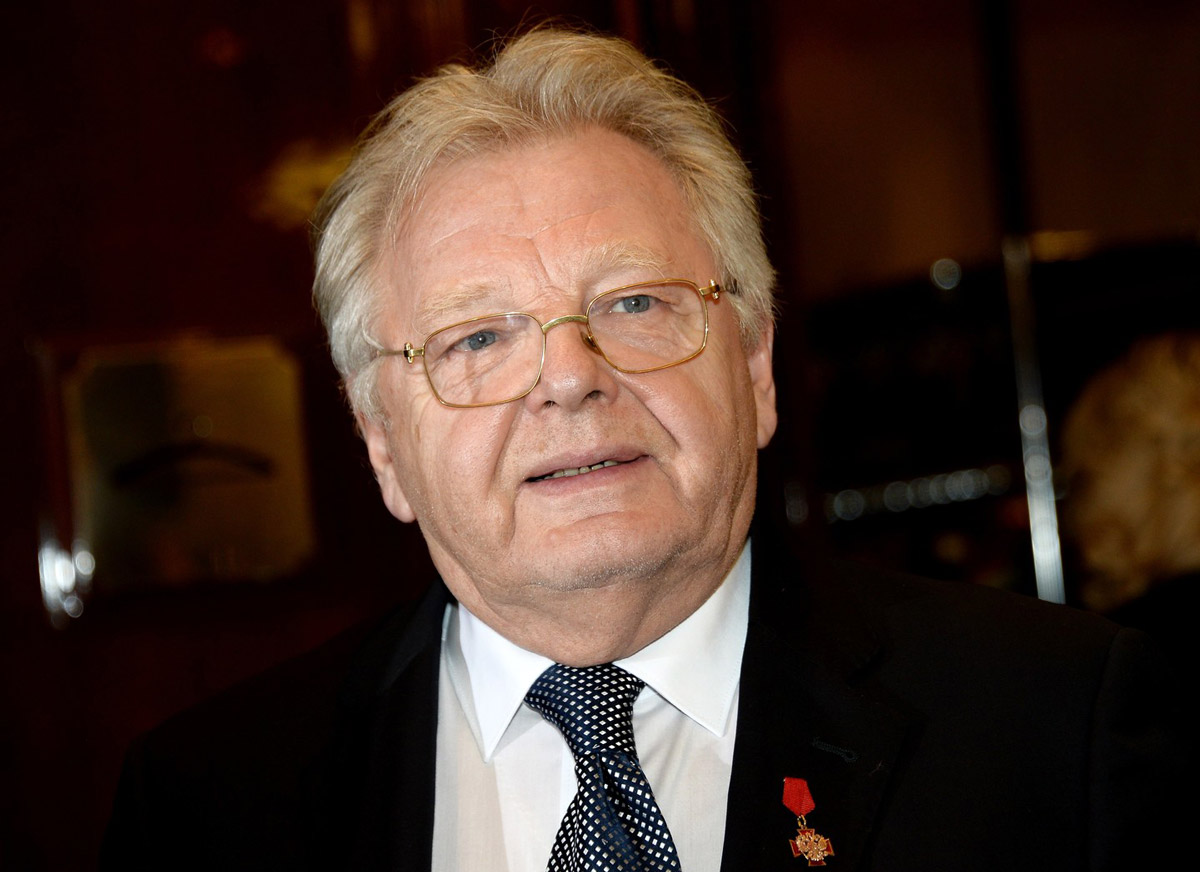
Pop Punk: the life and adventures of Yuri Antonov
Yuri Antonov is a rare case in Soviet and post-Soviet popular music: an artist who cannot be reduced to the formula of “a singer of nostalgic hits.” Behind the soft melodies still known by heart by several generations lies a biography of almost adventurous scale: enormous popularity, conflicts with party authorities, political episodes in the 1990s, a principled battle against piracy, a sharp temper, a deep love of animals and an almost solitary war for the author’s right to control his own music.
He was one of the great Soviet hitmakers, a man whose songs could be heard from every window, yet he always remained an inconvenient figure. Too independent for the system, too stubborn for show business, too direct for public diplomacy. In him, a romantic pop composer and a man of conflict were strangely united: the author of love songs, and an artist capable of entering open battle with officials, pirates, the press or his own circumstances.
Antonov is not only “A Dream Comes True,” “The Roof of Your House” and “The Mirror.” He is an entire era in which Soviet pop music collided with late-Soviet bureaucracy, the post-Soviet market, pirate stalls, political temptation and a new understanding of copyright. His biography resembles not a smooth career ladder, but a long road with sharp turns, grievances, scandals and an unexpected inner logic.
Trouble on the Volga
In the second half of the 1980s, Yuri Antonov was at the height of his popularity. His songs became hits, concerts filled sports palaces, and tours in one city could last several days in a row. For a Soviet artist, this was almost absolute success: mass affection, recognition, high income and the status of a man without whom the pop scene of the time was impossible to imagine.
But in 1987, an incident occurred that nearly cost him his career. During a performance in Togliatti, Antonov, according to the widely repeated version, made an ironic remark about the front rows, where local party officials and honoured guests were seated after receiving tickets without standing in line at the box office. The phrase was not crude, more sarcastic than offensive, but in the late-Soviet system even such public irony toward local officials could be perceived as a challenge.
Soon after, at a concert in Kuibyshev, now Samara, the situation escalated. According to Antonov himself, insulting shouts came from the hall, and the artist left the stage, demanding that the troublemakers be removed. The concert was effectively disrupted. The next day, another performance was cancelled, and an unpleasant story began around the singer, combining local power, the press, administrative pressure and the late-Soviet habit of punishing an artist not only financially, but through public humiliation.
Critical articles appeared in the central press. Antonov was accused of arrogance, prima donna behaviour, disrespect toward older audience members, excessive demands while touring and tactless statements from the stage. For an artist whose career was built on direct contact with a broad public, this was especially painful. His image was being turned against him: from a beloved popular composer into a spoiled star.
Antonov later believed the incident was not accidental, but part of a campaign organized against him. It is difficult to prove this definitively, but the context of the era makes the version plausible. Local party authorities still had enormous leverage, and an artist’s public independence could be seen as a violation of the unwritten order. The story ended only after Antonov appealed to higher authorities in writing. The press campaign gradually faded, but the bitterness remained for a long time.
Antonov’s relationship with Samara, formerly Kuibyshev, remained complicated for years. In the 1990s, he long refused to perform there, and later concerts were also surrounded by tension, cancellations or rumours of conflict. Thus, the singer’s biography gained an almost mythological chapter - a Volga curse in which personal grievance, local memory and artistic temperament merged into one legend.
The political episode
After the late-Soviet scandals, politics did not disappear from Antonov’s life. In the 1990s, as the country changed rapidly, many well-known performers tried on public and political roles. It was a time when stage popularity was easily converted into political capital, and parties were eager to find recognizable faces.
In the mid-1990s, Antonov was offered the chance to run for the State Duma. In different recollections, this episode is described almost as a political adventure: negotiations, meetings, a proposal to run from a region, debates, illness, backstage agreements and sharp disappointment. In the end, he did not become a deputy, but the very fact of his participation reveals an important feature of his character: Antonov was not an artist who preferred to stand silently aside.
Later, he tried to enter the political process again, this time with the Russian Conservative Party of Entrepreneurs. There was a certain logic to that choice. Antonov often spoke about authors’ rights, the difficult situation of the entertainment industry and the idea that music was also a business in need of protection. He even wrote an anthem for the party. But that attempt also came to nothing: the party encountered registration problems, and the artist ultimately cooled toward practical politics.
After that, Antonov repeatedly said that politics left him with an unpleasant impression. Yet he still spoke on public and political issues, sometimes sharply, sometimes contradictorily, often in the spirit of a man who saw too much chaos in modern life and too little respect for order, authorship and personal responsibility. His political episodes matter not because he might have become an influential deputy, but because they reveal the same quality as the rest of his career: an unwillingness to be merely part of the scenery.
Karaoke must die
In the post-Soviet years, Yuri Antonov became one of the most principled fighters against music piracy. For many artists, the 1990s and early 2000s were a period of losing control over their own catalogues. Pirate discs were sold everywhere, copyright was poorly enforced, and the internet gradually created new ways of distributing music without permission.
Antonov saw this not as inevitability, but as a personal insult and direct theft. His position was severe: if albums were going to be stolen anyway, then they should not be released in the usual way. As a result, a significant part of his catalogue remained difficult to access legally for a long time, and new recordings never became a full public discography, even though the composer repeatedly said he continued to write music.
His battle against pirate discs became especially revealing. According to recollections and press reports, Antonov could personally visit markets and check whether his recordings were being sold. If he found pirate copies, his reaction was emotional and forceful. There was something almost quixotic in it: an old-school artist trying to wage a physical war against a new economy in which music was already ceasing to be an object one could hold in one’s hands.
Karaoke became another source of irritation. For the listener, karaoke is innocent entertainment, a chance to sing a favourite song with friends. For an author, especially one as principled as Antonov, it was another form of commercial use of his music without proper respect for rights. One can see stubbornness in this position, but one can also see foresight. Today, when the conversation about copyright, streaming, licensing and the use of creative work has again become extremely sharp, many of Antonov’s old complaints no longer seem so strange.
He simply understood earlier than many others that in a world where a work can be easily copied, the central question becomes not only popularity, but control. Who owns the song? Who earns from it? Who has the right to perform it, cover it, sell it, upload it and turn someone else’s melody into part of their own business? For an artist who created dozens of national hits, these were not abstract legal questions. They were questions of professional dignity.
Character as its own genre
Yuri Antonov is often discussed not only as a composer, but also as a man of difficult character. The press regularly reported stories of conflicts, sharp remarks, road incidents, arguments with colleagues or clashes with strangers. Some of these stories were exaggerated, others were retold in conflicting versions, and some became part of the tabloid folklore surrounding the artist.
The best-known episode of this kind was his conflict with a motorcyclist in 2011. The two sides described the incident differently: each blamed the other, each spoke of provocation, aggression and self-defence. In legal and everyday terms, such stories quickly lose clarity. But culturally, they add an important stroke to Antonov’s image: he was never a soft public figure designed to be convenient for everyone.
His character can be criticized, but it is impossible to deny that this inner toughness helped him preserve his position. Antonov did not dissolve into the system, did not become a good-natured performer of someone else’s will and did not turn his music into an endless retro conveyor belt. He argued, took offence, resisted, restricted access, made claims and refused to play by rules he did not accept. At times it looked difficult, sometimes excessive, but that was how he remained himself.
A golden staircase without people
And yet the most unexpected part of Yuri Antonov’s image is not the scandals, not politics and not the fight against pirates. It is his relationship with animals. For many years he has lived outside the city, surrounded by something like a small private universe: cats, dogs, birds and other animals, many of them rescued, taken in or adopted out of compassion.
Different publications have named different numbers: dozens of cats, many dogs, birds, peacocks, ducks, geese, squirrels, dwarf chickens and even a boar named Borka. The exact count seems less important than the meaning. For Antonov, animals became not a rich man’s whim, but a form of inner support. He has said more than once that he finds animals simpler and more honest than people.
There is an almost cinematic contrast in this. A man who wrote songs that united millions of listeners has often preferred, in private life, not the company of people, but the world of animals. Perhaps that is exactly why his figure remains so interesting. There is no smooth pop-star benevolence in him. There is mistrust, grievance, principle, solitude, tenderness, temper and an astonishing capacity for care.
Antonov’s music sounds soft, but his biography is written in much harder lines. He lived through late-Soviet bans, post-Soviet chaos, political failures, the pirate era, conflicts with the public sphere and his own fame, which could have turned him into a museum symbol. But he remained alive, inconvenient, sharp, stubborn - not so much a monument of popular music as one of its most paradoxical heroes.
And perhaps that is why Antonov’s songs continue to live. They have long since separated from the author and entered the memory of generations, family celebrations, radio playlists, old cassettes, accidental choruses and private recollections. But behind them still stands a man who spent his life defending the right to be not convenient, but real.