
The new Audi Q7
Perfection in the details, confidence in everything
The Audi Q7 has always been more than just a large family SUV. With this model, Audi has tried to combine three qualities that rarely coexist without compromise: the space of a true seven-seat vehicle, the calmness of a long-distance cruiser and the technological precision for which the brand is known. The updated 2020 Audi Q7 became exactly that kind of vehicle - more mature, more digital, more expressive and noticeably closer in spirit to the flagship Audi Q8, but with the practicality that makes the Q7 so appealing in the first place.
This is not a revolution for the sake of drama. It is a carefully measured update: a stronger front end, a new lighting identity, a digital cabin architecture, mild hybrid technology, quattro all-wheel drive, improved handling and a suspension capable of shifting the character of the vehicle from comfortable road cruiser to composed large SUV for active driving. In a world where premium crossovers increasingly try to look sportier than they really are, the Audi Q7 takes a different path: restrained strength, engineering precision and the feeling of expensive functionality.
Design: a large SUV with a sharper character
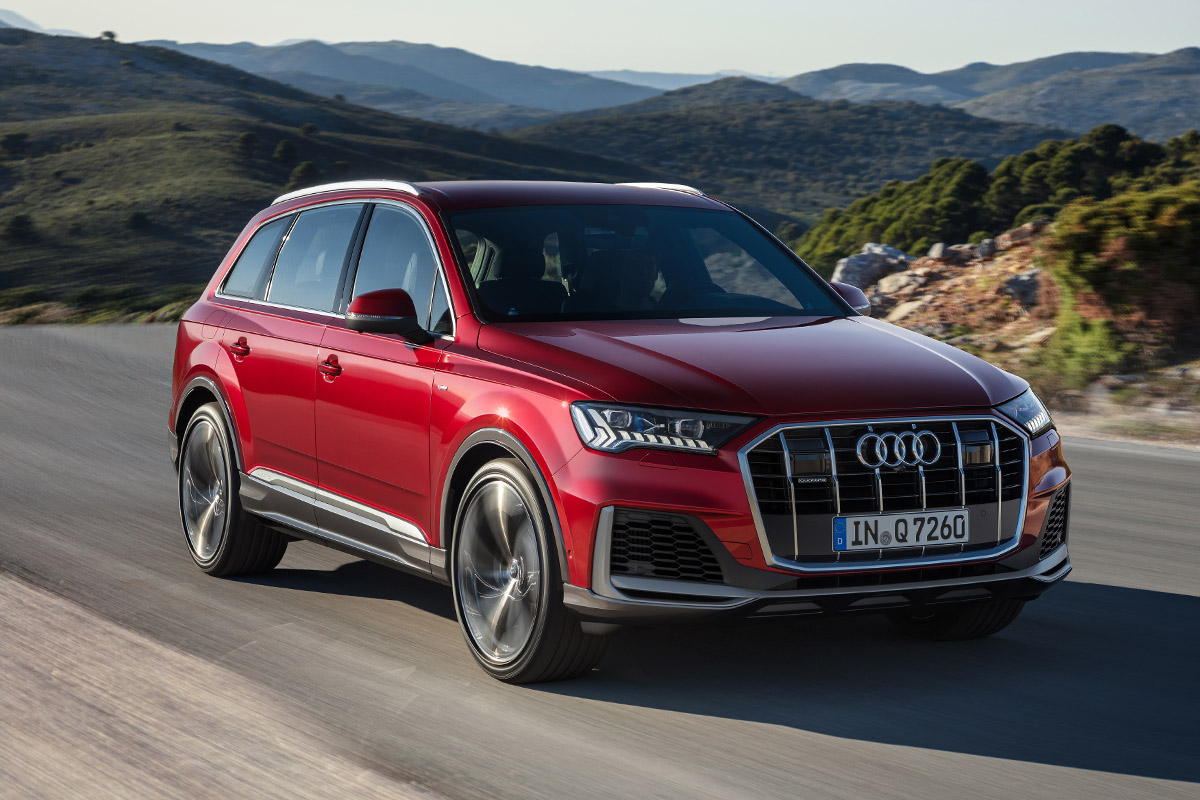
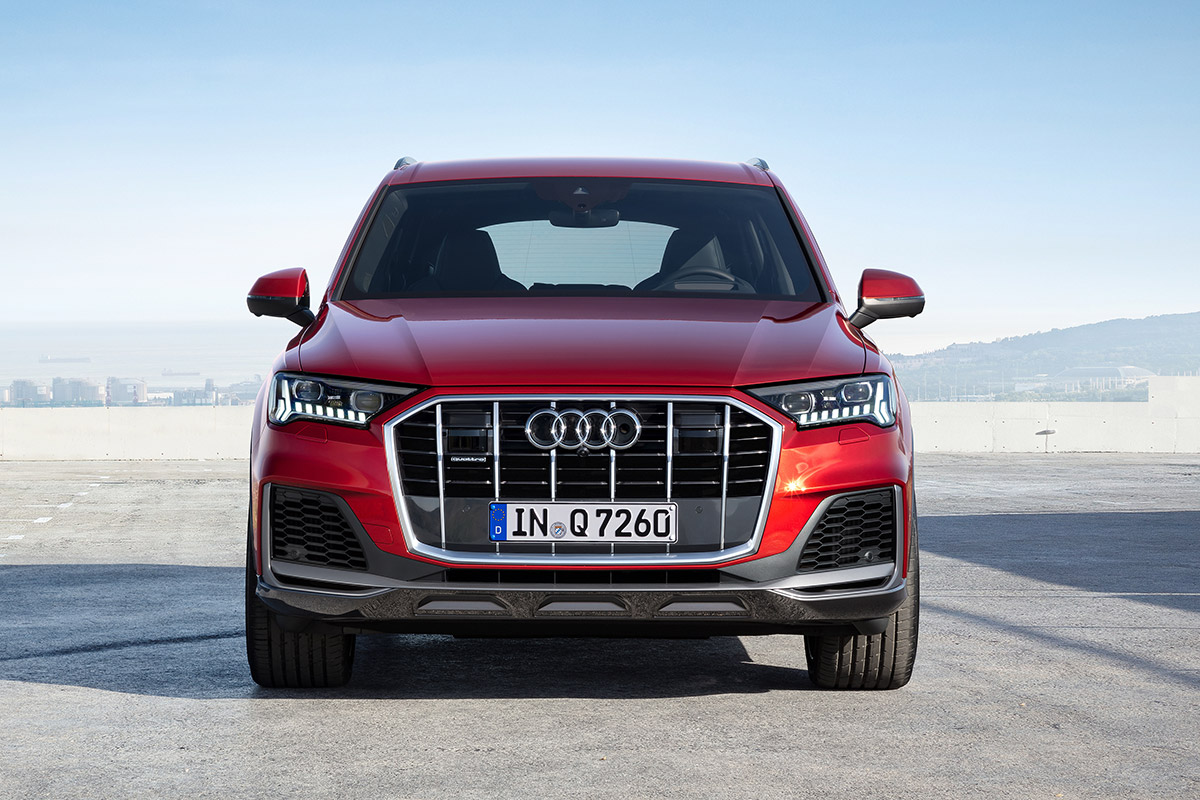
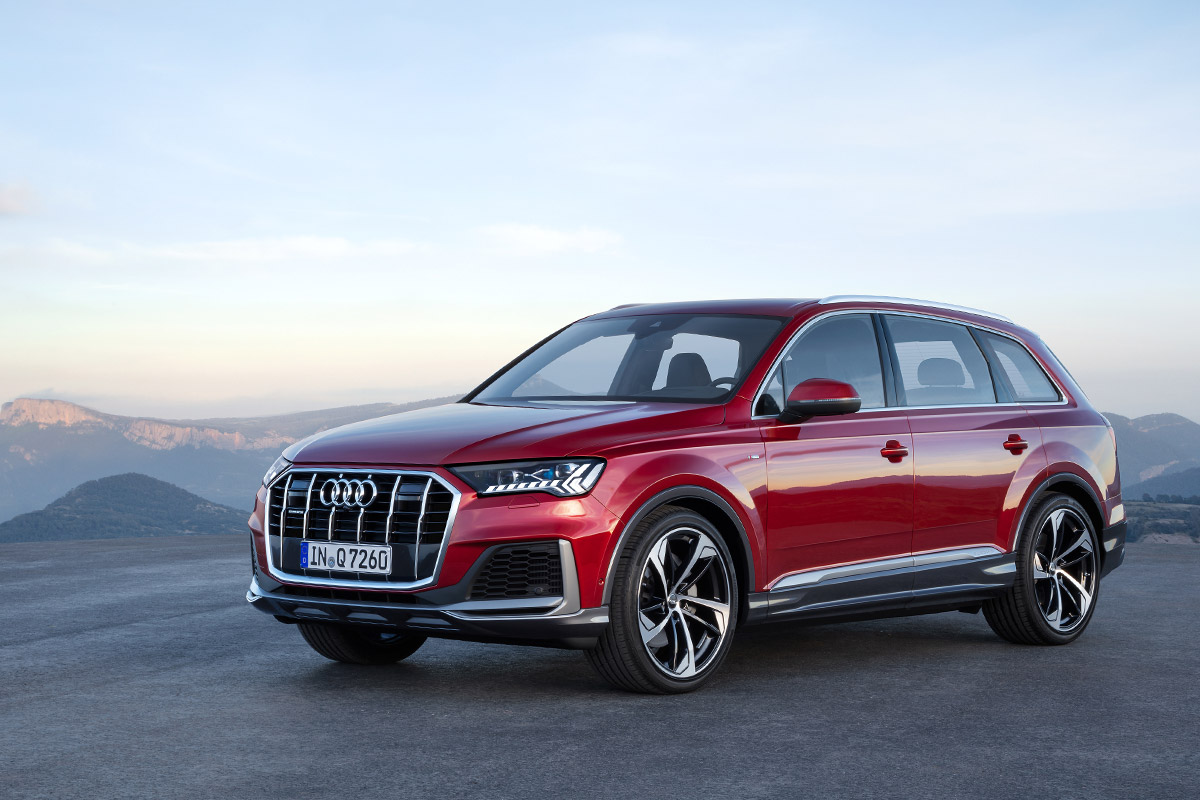
The updated Audi Q7 brings together the key elements of Audi’s modern design language for the Q family. The front end is dominated by a large octagonal Singleframe grille with six vertical slats. It makes the vehicle look wider, more substantial and more confident. The side air inlets are more expressive, while the sill area emphasizes the ground clearance and off-road potential of the large SUV.
The headlights receive a more contemporary light signature. Depending on market and trim, the Q7 is available with Matrix LED or HD Matrix LED headlights with Audi laser light. This technology not only strengthens the visual identity of the vehicle, but also improves road illumination at higher speeds. For a large family SUV often used on long journeys, lighting quality is not a decorative detail, but a real element of safety and comfort.
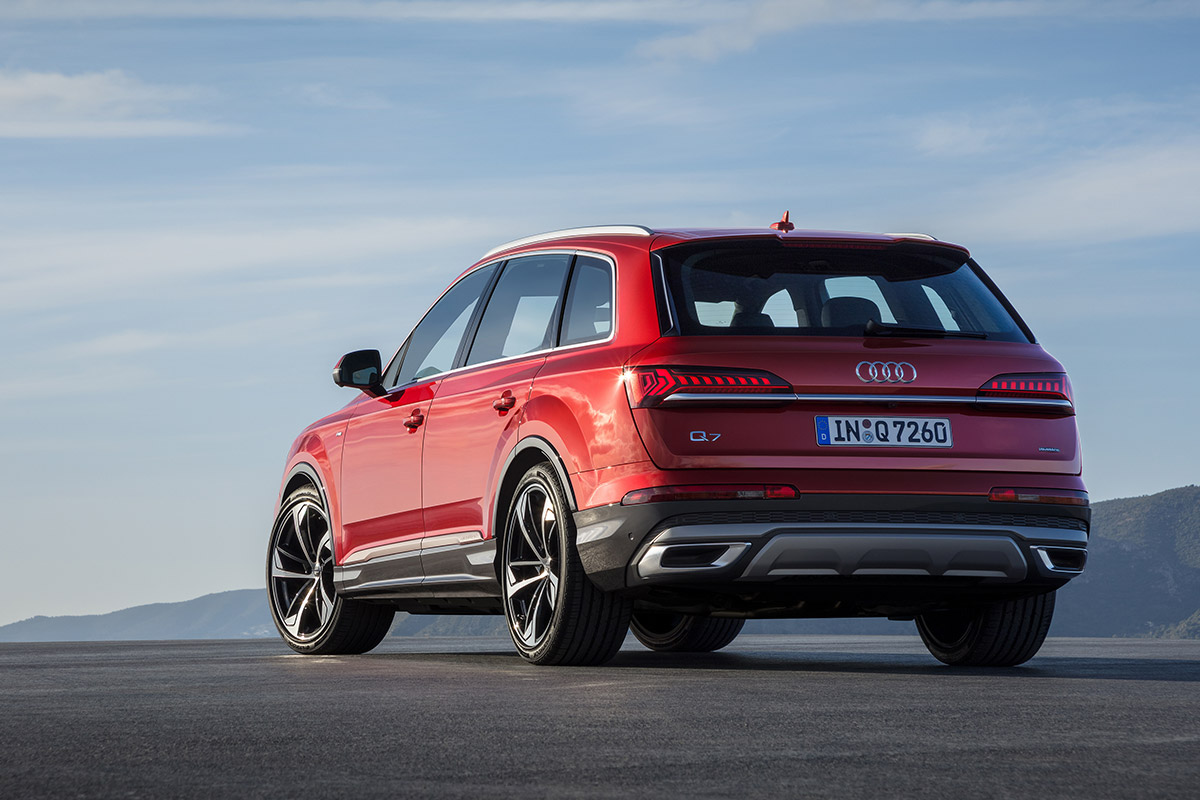
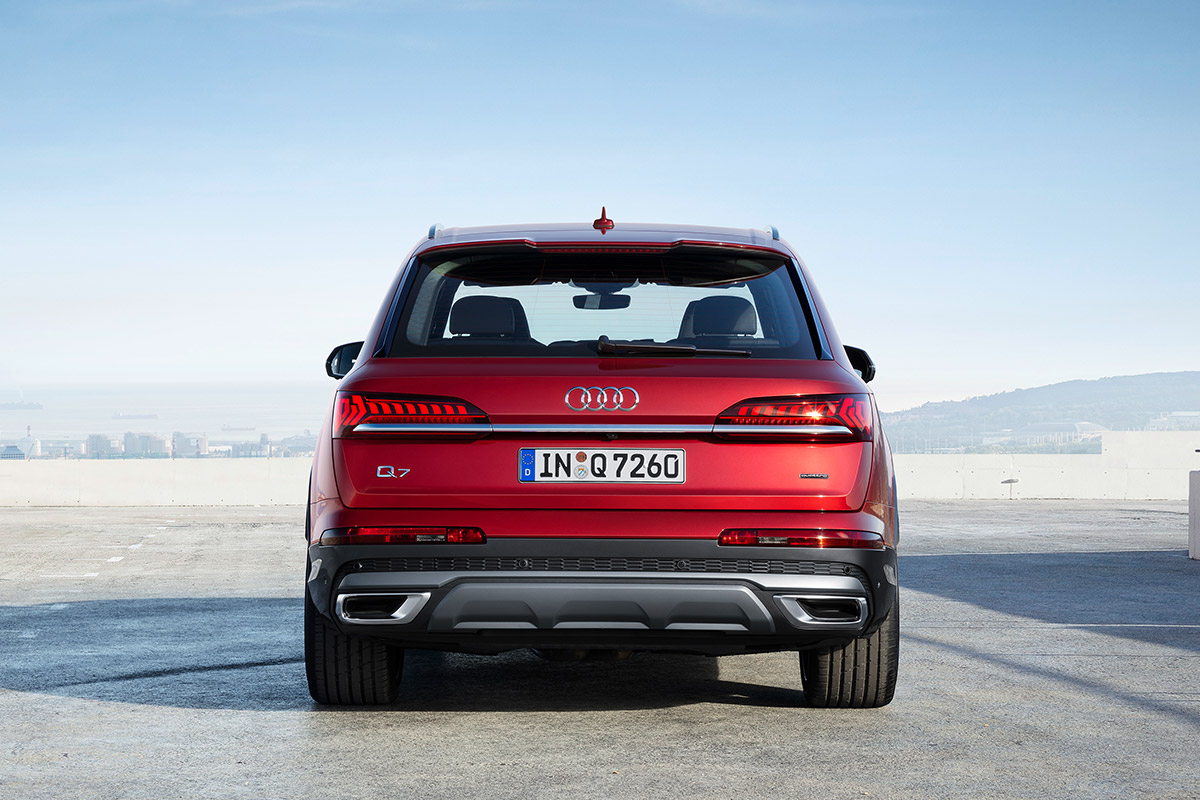
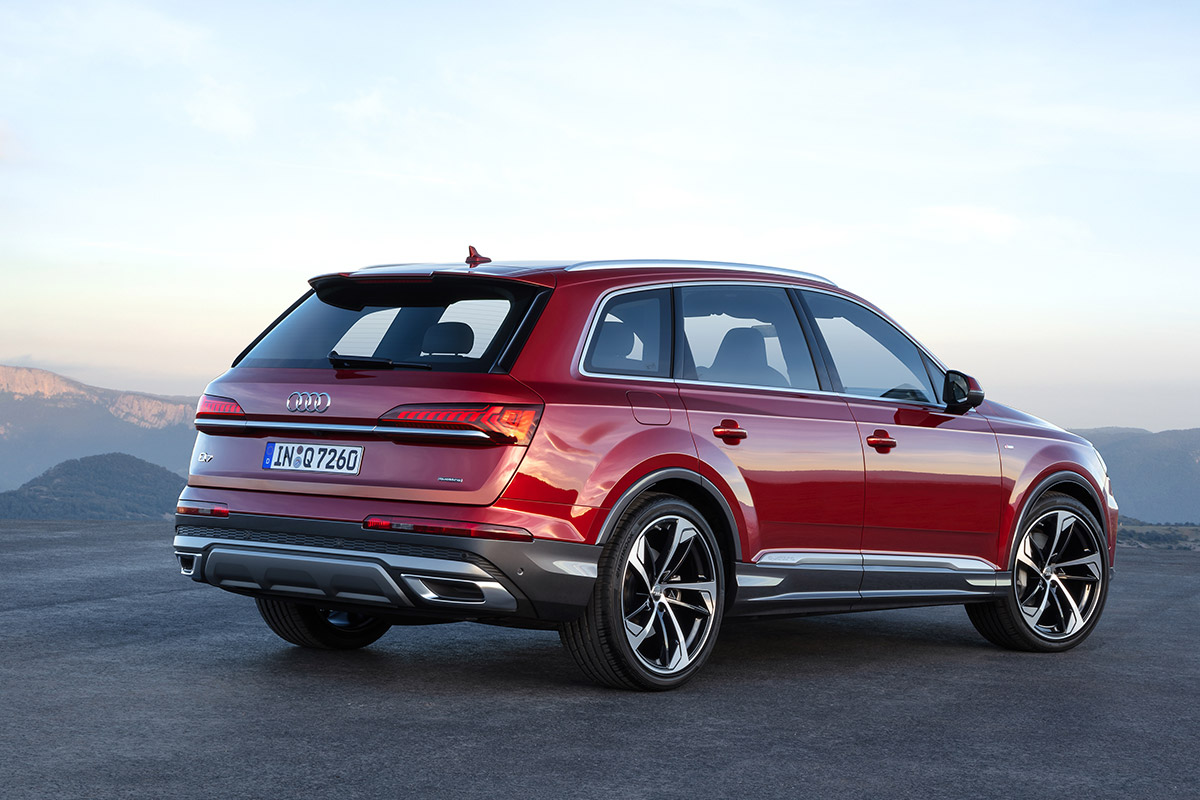
The rear has become cleaner and more modern. A chrome strip visually connects the slim taillights and reinforces the horizontal architecture of the body. The taut surfaces around the license plate area make the rear look more composed and more premium. The optional S line exterior package gives the vehicle greater sporting expression: redesigned bumper elements, more pronounced lower body details and larger wheels create a more dynamic appearance without sacrificing dignity.
Interior: digital architecture and premium practicality
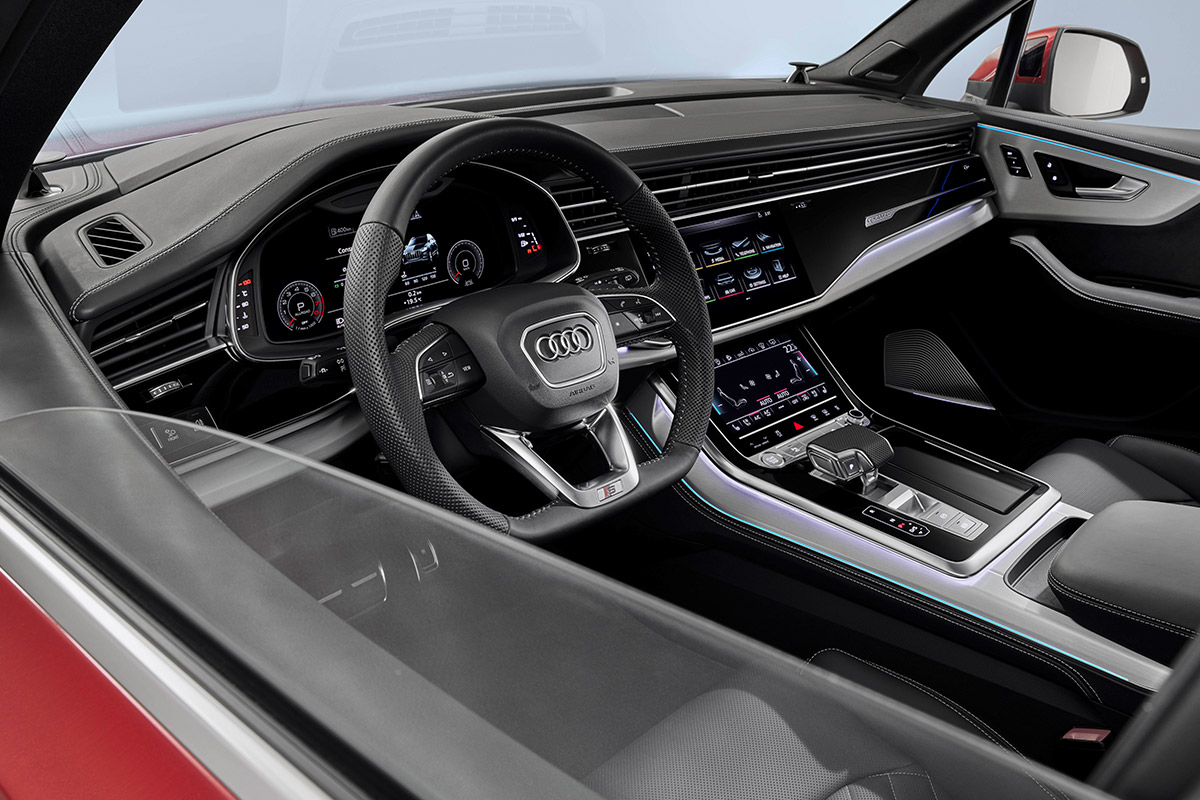
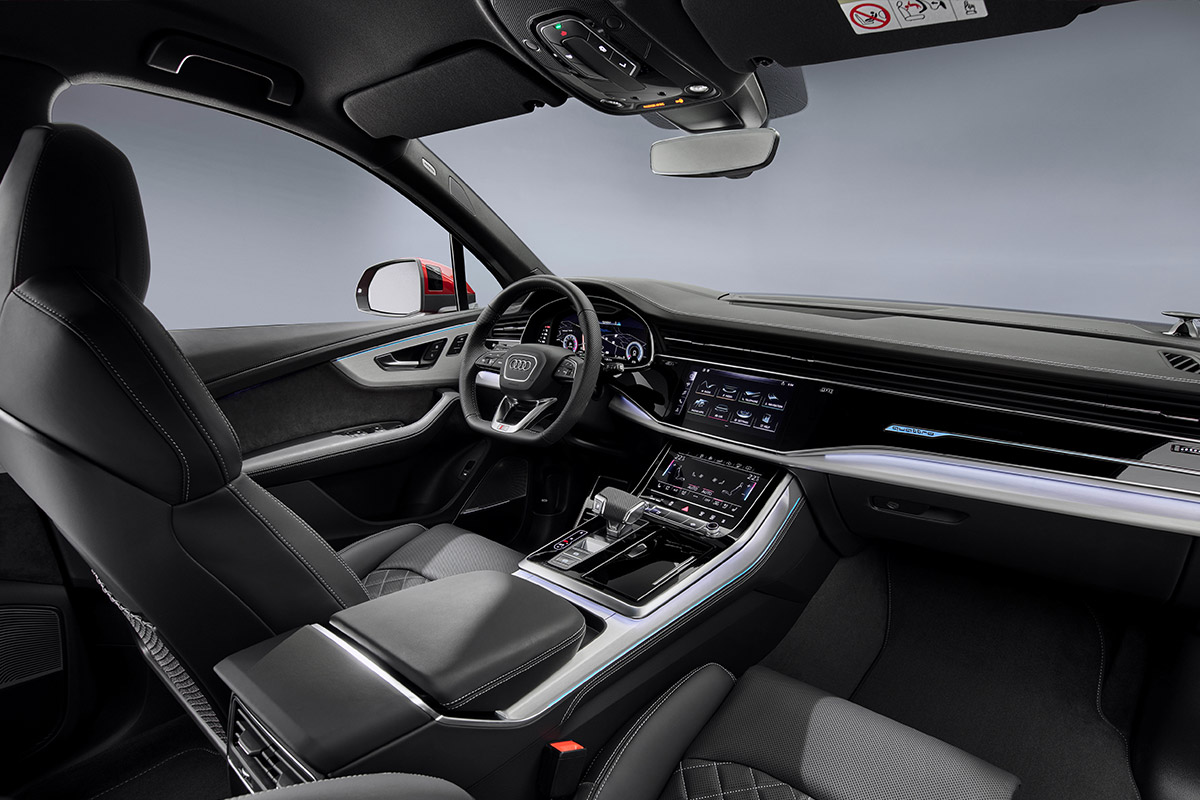
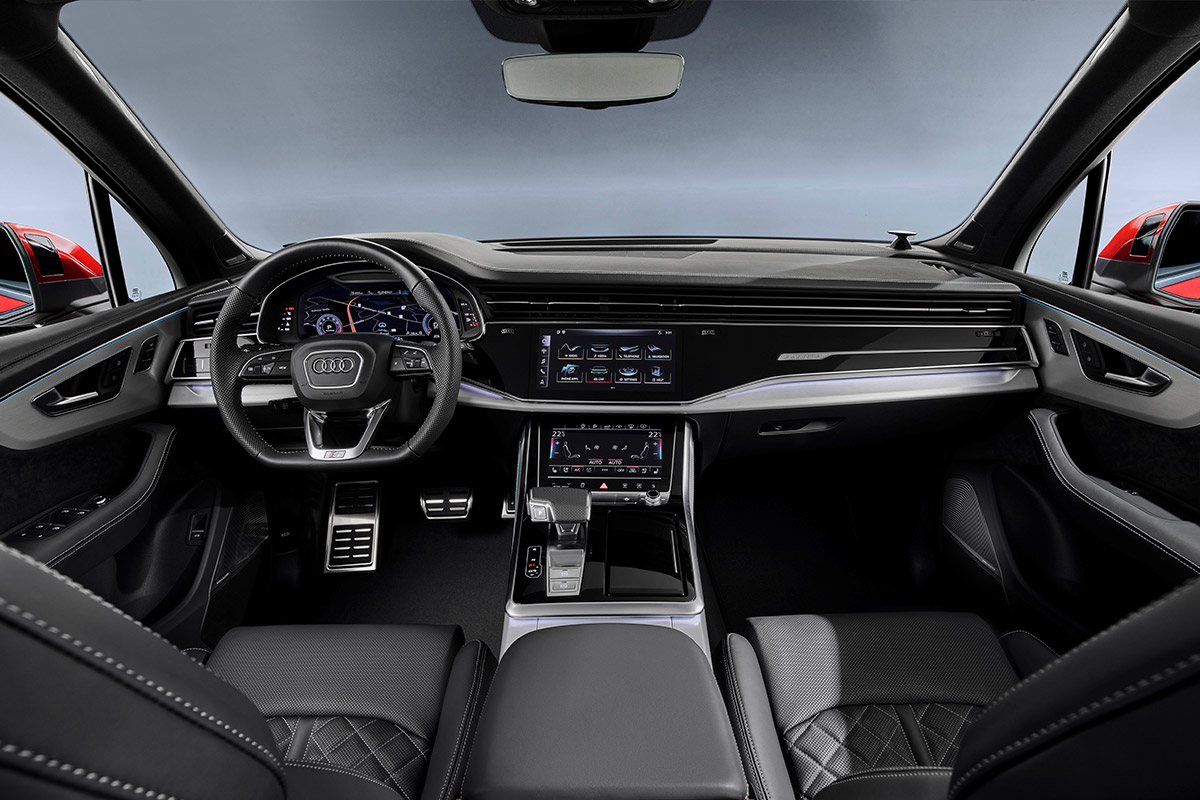
The biggest change inside is the move to a new digital control logic familiar from Audi’s larger models. The cabin is closer to the architecture of the Audi Q8: a wide horizontal dashboard, black glass-like elements, large touchscreens and a feeling of technological clarity. Instead of a large number of physical buttons, there is MMI touch response with acoustic and haptic feedback.
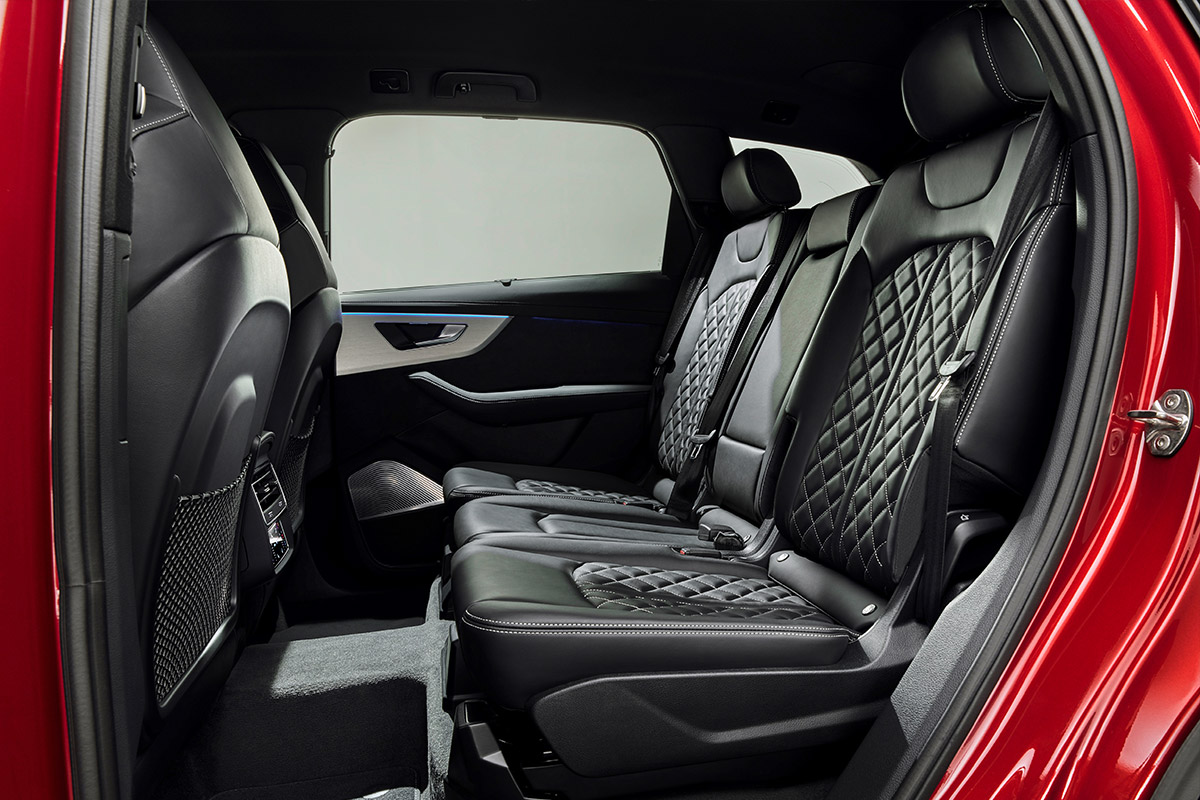
This interior feels modern, but it also asks for a different habit. Audi is betting on digital clarity: functions are grouped into screens, the graphics are clean, the interface response is carefully considered, and the cabin feels like one unified technological space. For passengers, the Q7 remains what it has always been good at: a spacious, quiet and practical vehicle for family life, travel, luggage, child seats and long routes.
Practicality is what separates the Q7 from many more fashionable SUV-coupés. Here, form and status are not the only priorities. Everyday usability matters: a large cabin, available seven-seat configuration, high-quality materials, strong sound insulation and a seating position that allows people to spend hours in the vehicle without fatigue.
Chassis: big-car comfort with unexpected manoeuvrability
Audi substantially improved the dynamic qualities of the Q7. Depending on trim and market, the vehicle is available with all-wheel steering and electromechanical active roll stabilization. These systems are especially important in a large SUV because they help disguise size and weight in everyday driving.
At low speeds, the all-wheel steering system turns the rear wheels in the opposite direction to the front wheels, reducing the turning circle and making the Q7 easier to manage in the city, in parking lots and on narrow streets. At higher speeds, the rear wheels turn slightly in the same direction, increasing stability. As a result, the large SUV feels less bulky and more composed.
Active roll stabilization helps reduce body roll in corners while preserving comfort on uneven roads. During relaxed driving, the system allows the body to absorb road imperfections more comfortably; during dynamic driving, it controls lean more firmly. It is the kind of technology that may not sound dramatic on paper, but is clearly felt behind the wheel.
On the highway, the Q7 behaves like a premium grand touring SUV: calm, stable and very comfortable. This is especially true with the adaptive air suspension, which can adjust ride height and ride character. Through Audi drive select, the driver can choose different driving modes, including Offroad. Combined with quattro all-wheel drive, this makes the Q7 not an old-school off-roader, but a versatile premium SUV that feels confident on snow, gravel, cottage roads and rough surfaces.
Mild hybrid and quattro: efficiency without losing character
For the updated Q7, Audi introduced engines with mild hybrid technology, helping improve efficiency and make the powertrain feel smoother. The system is based on a 48-volt electrical architecture with a belt alternator starter and a compact lithium-ion battery. During braking, the system can recover energy, and under certain conditions the vehicle can coast with the engine switched off.
This does not turn the Q7 into an electric vehicle and does not change its essence, but it helps reduce fuel consumption and make the large SUV feel more modern. The engines are paired with a Tiptronic automatic transmission and permanent quattro all-wheel drive, which remains one of the key reasons the Q7 feels so secure in North American climates.
For Canada and the northern United States, this matters especially. A large SUV is purchased not only for status, but also for confidence in winter, on wet roads, during long drives, on cottage routes and in family travel. This is where quattro works not as a marketing term, but as part of real everyday comfort.
Lighting, safety and technology
The updated Q7 offers a wide range of driver assistance and safety systems. Depending on market and trim, adaptive cruise control, lane assistance, parking assistance, surround-view cameras, emergency assist and other functions are available. The point is not that the vehicle “drives itself,” but that it reduces fatigue and increases the margin of safety in difficult situations.
The lighting deserves particular attention. HD Matrix LED with Audi laser light is one of those technologies that fits the Q7 philosophy perfectly. It is not flashy luxury, but functional luxury: seeing the road better at night, noticing obstacles earlier, feeling more confident on the highway and still giving the vehicle a modern visual identity.
The infotainment system became far more modern. The Q7 received the new MMI touch response system, Audi virtual cockpit, online services, navigation, smartphone integration and a more developed connectivity architecture. For a family SUV, this is no longer merely a pleasant extra. Today, a vehicle must be an extension of digital life: navigation, music, calls, routes, children in the second row, charging devices, trips and schedules are all part of daily use.
Why the Q7 still matters
The 2020 Audi Q7 is interesting because it does not try to be the loudest vehicle in its class. It does not shout with design, pretend to be a sports car or build its appeal solely on size. Its strength lies in composure. This is an SUV for people who want a large premium vehicle, but do not want it to feel crude or heavy-handed.
It is substantial enough for a business image, spacious enough for family life, technological enough for the modern driver and comfortable enough for long-distance travel. At the same time, with the right options, the Q7 can feel unexpectedly manoeuvrable and precise, which is especially valuable in a vehicle of this size.
With the updated Q7, Audi did what it does best: it did not destroy the character of the model, but brought it to a more contemporary level. The exterior became more expressive, the interior more digital, the chassis smarter and the technology more current. This is not simply a facelift for a fresher picture. It is a mature modernization of a large premium SUV that remains one of the most balanced vehicles in its class.