
Muskoka instead of Mexico
Mortgage alphabet
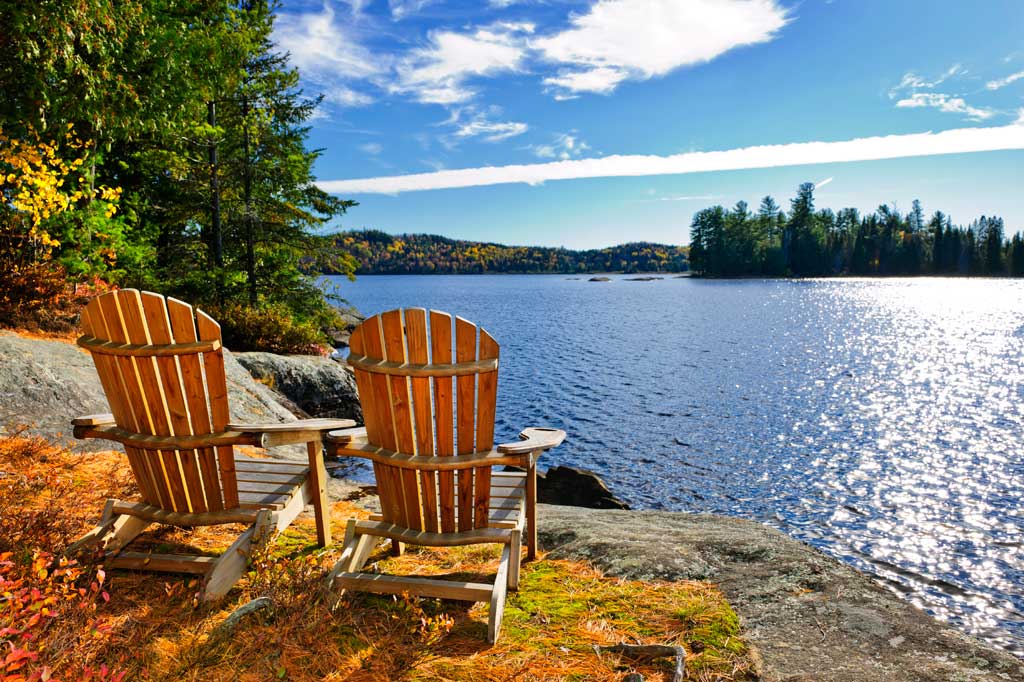
The Canadian dream of owning a cottage has not disappeared. If anything, it has become stronger in recent years. After long winters, crowded cities, expensive air travel and growing fatigue from constant noise, more people are once again drawn to the lake, the quiet, the forest and a dock of their own. For many Canadians, cottage life is not simply a type of vacation. It is part of the national character: leaving for a long weekend, opening the door to the deck, hearing the water, lighting the barbecue and, for a few days, recovering a sense of simplicity and freedom.
Interest in recreational property in Canada has long been supported not only by emotion, but also by market research. Earlier RE/MAX recreational property reports noted that a majority of Canadians would prefer a long weekend at a cottage or cabin to a getaway in a big city. And while the specific numbers from older surveys belong to previous years, the underlying trend has not disappeared: cottages, lake houses and small homes in the woods remain desirable assets for families, retirees, investors and anyone who wants a personal place to rest without planning every vacation from scratch.
This desire is especially strong in Ontario, where Muskoka, Kawartha Lakes, Georgian Bay, Prince Edward County and other cottage regions have long symbolized the summer lifestyle. In British Columbia, a similar role is played by Whistler, Tofino, the Okanagan and island destinations. In Eastern Canada, buyers are drawn to Nova Scotia, New Brunswick and Prince Edward Island. The logic is similar everywhere: people are not simply looking for real estate, but for a place to return to nature.
Why Canadians are willing to sacrifice for a cottage
For many buyers, a cottage is not a replacement for city housing, but an emotional extension of home. The city provides work, schools, services and infrastructure. The cottage provides air, space, water, family memories and the feeling that life is not only about commuting, mortgage payments and schedules.
That is why some buyers are willing to rethink financial priorities in order to own recreational property. Some give up expensive foreign vacations. Some choose a more modest principal residence. Some use part of the home equity accumulated as urban real estate values increased over time. For retirees, a cottage often becomes part of a lifestyle planning strategy: sell a large home, reduce expenses, move closer to nature or buy a place where children and grandchildren can gather in the summer.
For families with young children, a cottage has a special appeal. It is a safer space outside the pace of the city, where children can spend summers, learn to swim, paddle a canoe, walk in the forest and build family traditions. In this sense, buying cottage property is not only a financial decision, but an investment in a way of life.
A cottage as an investment: opportunity and clear thinking
Demand for recreational property has increased not only because of romance. Many buyers see a cottage as an asset that can be used partly for personal vacation time and partly as a rental. In popular regions, short-term rentals can indeed help cover expenses: mortgage, property tax, insurance, utilities, maintenance, dock repairs, snow removal and property management.
But it is important not to deceive yourself. A cottage is not a purely passive investment. It requires maintenance, seasonal preparation, repairs, insurance, renter control and attention to local rules. In some municipalities, short-term rentals are subject to restrictions, licensing requirements, parking rules, septic requirements, noise limits and guest limits. Before buying, it is essential to check local by-laws and real rental data rather than relying only on attractive online listings.
Not every cottage is equally liquid, either. The strongest properties are usually those with year-round access, a proper road, good water, winterized construction, a clear heating system, a functioning septic system, reliable internet and a reasonable distance from a major city. A romantic cabin with poor access may look charming in July, but become a serious problem in November.
Financing a cottage: what matters
Financing a cottage is often different from financing a principal residence. Terms depend on the type of property, whether it is seasonal or year-round, access, condition, water source, septic system, heating, zoning and suitability for year-round occupancy. A fully winterized property with year-round access is usually viewed much more favourably by lenders than a seasonal cottage without a proper road or basic infrastructure.
In some cases, purchasing recreational property may be possible with a relatively small down payment if the property meets the requirements of the lender and mortgage insurer. But there is no universal rule that any cottage can be purchased with only 5% down. The more seasonal, remote or unusual the property, the more likely a lender will require a larger down payment, stricter appraisal and additional conditions.
That is why it is better to speak with a mortgage broker before falling in love with a lake house. You need to understand what type of property you can finance, what down payment will be required, how rental income will be treated, which expenses will count in debt service ratios and whether your budget can handle not only the purchase, but ownership.
Affordability and pressure on buyers
The other side of Canadian real estate is affordability. Even if the market has cooled in some cities after peak years, homeownership remains a heavy financial burden. According to recent RBC reports, national housing affordability improved for several consecutive quarters after the extreme levels of 2023, but it remains strained: by late 2025, ownership costs for a typical home still consumed more than half of a median household’s pre-tax income. That means that even with some improvement, the market remains difficult for many buyers.
Against this background, proposals to ease mortgage rules, extend amortization and support first-time buyers continue to appear. The federal government has already taken steps in this direction: certain first-time buyers and buyers of new builds have gained expanded access to 30-year insured amortizations. The goal is to reduce monthly payments and make market entry easier, especially for younger buyers.
But such solutions have a downside. A longer amortization reduces the monthly payment, but increases the total interest paid over the life of the loan. In addition, if demand is stimulated without enough new supply, prices may receive additional support. Housing affordability cannot be solved by mortgage rules alone. It requires new homes, infrastructure, faster approvals, tax predictability and a real expansion of housing supply.
Builders and the market: what they want to change
Canadian building associations have long argued for reducing certain regulatory burdens, lowering the tax load on construction, speeding up approvals and making new homes more affordable. Their logic is understandable: the more expensive it is to build and the longer projects take to approve, the higher the final price for the buyer.
But both sides must be considered. On one hand, cutting unnecessary bureaucracy, accelerating permits and reducing excessive costs can help the market. On the other hand, overly loose credit conditions without growth in supply may simply increase demand and support prices. A sensible policy must therefore address both supply and affordability, not merely allow buyers to borrow more money.
For an ordinary buyer, the main conclusion is simple: do not make decisions based only on headlines about easier rules or temporary market improvement. Look at your own income, job stability, long-term mortgage affordability, carrying costs, taxes, insurance, maintenance and possible rate changes at renewal.
A dream cottage should be a joy, not a financial trap
A cottage can become one of the best decisions a family ever makes: a place to rest, a summer base, a source of memories and even part of an investment portfolio. But only if the purchase is made with clear thinking. A beautiful lake view does not replace a septic inspection. A dock does not replace insurance. Rental potential does not cancel municipal rules. And a low down payment does not change the fact that owning a second property is expensive.
If you are thinking about buying a cottage, recreational property or a fully winterized home with year-round access, it is better to start not with beautiful photos, but with a financial consultation. We offer different financing options and can help assess what type of property truly suits you, what down payment may be required and what mortgage would be safe for your situation.
Canadians love cottage life for good reason. But the real dream by the lake should bring peace, not become a new source of financial stress. Proper financing, a realistic budget and a careful property review are the three things that should begin your path toward owning a cottage.