
When the Soundtrack Was Not Just the Soundtrack
Two Albums That Made Their Films
A film's soundtrack is usually thought of as decoration - something layered on after the story is already finished, meant to support a scene rather than define it. Two films from very different decades prove how wrong that assumption can be. In one case, a producer built an entire cross-marketing machine around five songs written over a single weekend, turning an album into the best-selling soundtrack in recording history at the time. In the other, a director wrote the songs directly into the screenplay before a single scene was filmed, using music as a genuine plot device rather than a marketing afterthought - a move nearly every studio executive would have called reckless.
Five Songs, One Weekend, and a Fired Director
Before Saturday Night Fever became one of the defining cultural artifacts of the 1970s, it was a modestly budgeted film about the Brooklyn disco scene, based on a New York Magazine article, with a script the Bee Gees hadn't even bothered to open when producer Robert Stigwood first approached them. Stigwood, who managed the group and ran RSO Records, called the brothers while they were mixing a live album in France and asked, in fairly loose terms, for songs about a young man who blows his paycheck dancing on Saturday nights. The band, mid-comeback after a rough commercial stretch, dropped what they were working on and wrote the material that weekend - melodies built for the disco floor with genuine craft behind them, produced with real urgency once Stigwood pushed them toward a specific mood for each track.
The songs didn't arrive without cost to the production. The film's original director, John Avildsen, fresh off directing Rocky, was let go less than three weeks before shooting began, reportedly in part over resistance to using the Bee Gees' music at all - a genuinely remarkable fact given how central that music became to the finished film. During filming itself, choreography for one key rehearsal scene had already been built around a Boz Scaggs song, but Scaggs's label refused to clear the rights, forcing composer David Shire to write an entirely new piece of music on short notice to match dance steps the actors had already learned.
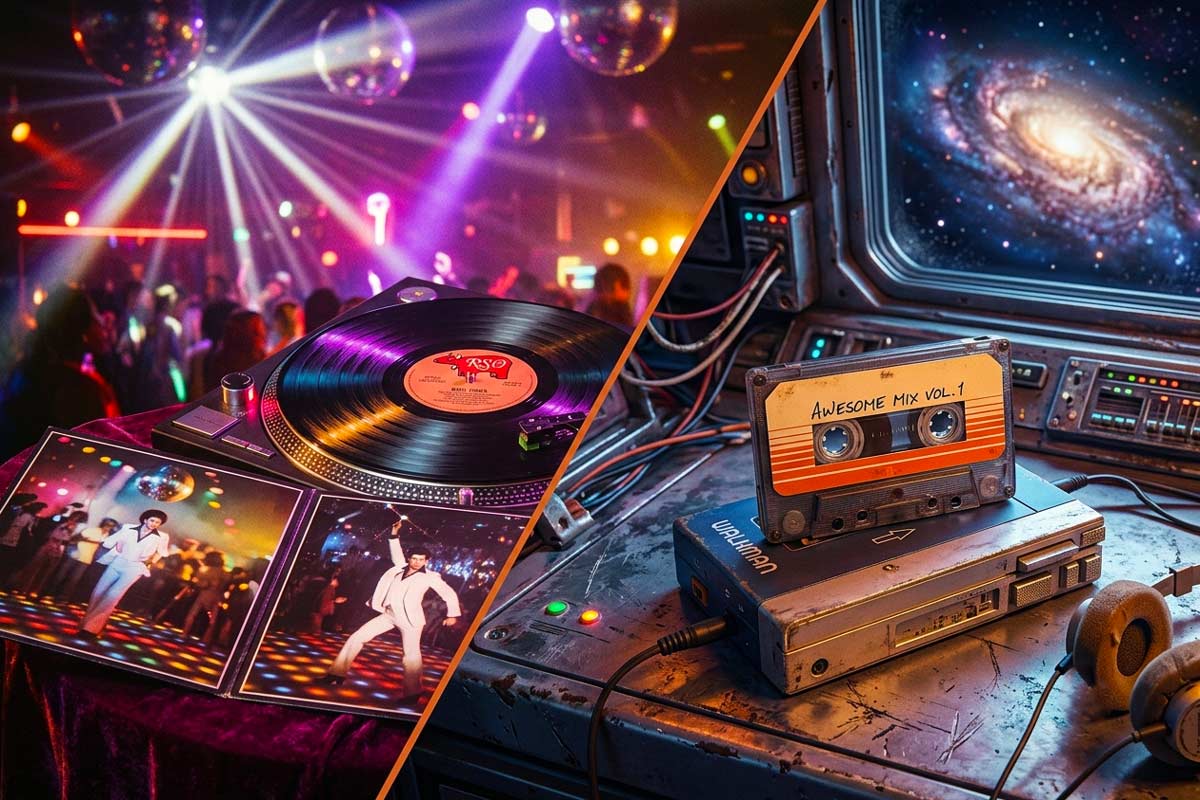
What made the soundtrack a genuine business phenomenon rather than simply a good collection of songs was Stigwood's packaging strategy. Rather than releasing a modest single-disc soundtrack, he pushed for a double gatefold album stacked with additional hits from other disco-era artists, engineered so the record functioned as a complete party in a box whether or not a listener had actually seen the film. It worked spectacularly: the album spent 24 consecutive weeks at number one on the Billboard 200, sold somewhere between 25 and 40 million copies depending on the count, and won the Grammy for Album of the Year - one of only three soundtrack albums in history to receive that honor, and the only one from the disco genre. The film and the album fed each other in a feedback loop that became the template for modern movie cross-marketing: the soundtrack sold the movie, the movie's success sold the soundtrack, and the cycle kept compounding.
The Mixtape That Became the Plot
Nearly four decades later, a very different film used music in a very different way. When director James Gunn wrote Guardians of the Galaxy, an obscure Marvel property most audiences had never heard of, he built the soundtrack directly into his first draft of the screenplay - an almost unheard-of approach in studio filmmaking, given how difficult and expensive it can be to actually clear the rights to specific songs written into a script months or years before production. According to Marvel's own producer Kevin Feige, the songs that appeared in Gunn's earliest draft were, remarkably, the very same ones that made it into the finished film - a rare outcome in an industry where music rights fall through constantly and scripts are written without any specific song attached at all.
The reason Gunn took that risk was structural rather than decorative: the mixtape at the center of the film, a cassette tape called Awesome Mix Vol. 1, isn't simply music playing over scenes. It's a physical object the protagonist, Peter Quill, was given by his mother before her death, and it functions in the story as his one remaining tether to a childhood and a parent he lost - his motivation for protecting it becomes a genuine plot point, and the songs on it double as emotional shorthand for a character who otherwise presents as a wisecracking space rogue. Gunn has described the mixtape as functioning almost as its own character in the film, carrying the emotional weight that would otherwise require considerably more dialogue to establish.
The commercial results validated the risk in a genuinely unprecedented way: Awesome Mix Vol. 1 became the first soundtrack album made up entirely of previously released songs to reach number one on the Billboard 200 - a chart position no compilation built purely from decades-old catalog music had ever achieved before. The film itself, a financially risky bet on a character most moviegoers had never encountered, went on to gross more than $770 million worldwide and became the second-highest-grossing film of its year, spending five consecutive weekends atop the North American box office, a record for Marvel Studios at the time. The approach worked well enough that Gunn repeated it for two sequels, drawing from a personal master list of more than 500 songs from the 1970s that reportedly reflected his own mother's musical taste - turning a single successful gamble into a defining, decade-spanning signature of the entire franchise.
Two Different Ways Music Can Make a Film
Set side by side, these two stories reveal two genuinely different mechanisms by which a soundtrack can determine a film's fate. Saturday Night Fever succeeded through calculated commercial engineering - matching genuine songwriting talent to a specific cultural moment, then packaging the result so effectively that owning the album became almost a separate cultural event from seeing the movie itself. Guardians of the Galaxy succeeded through structural risk - treating music not as an accompaniment bolted onto a finished story, but as load-bearing narrative architecture woven into the script from the very first draft, in a way that made the songs inseparable from the emotional core of the character built around them. Different decades, different genres, different reasons entirely - but both films demonstrate the same underlying truth: sometimes the music isn't supporting the story. Sometimes it is the story, wearing a different name.