
Two Grams of Hope
How Microbiome Science Turned into a Hundreds-of-Millions-Dollar Industry
In March 2024, San Francisco resident Kristin Cobbs bought several cans of Poppi soda. The can said: "For a healthy gut." The brand's slogan was even more emphatic: "Be Gut Happy. Be Gut Healthy." Then she read the ingredients. Two grams of fibre per can.
Two months later, Cobbs filed suit in the US District Court for the Northern District of California. The complaint wasn't that there were no prebiotics in the product - there are. The complaint was arithmetic: to get any meaningful effect of the kind described in the scientific literature, you'd need to drink more than four cans a day. Every day. For at least three weeks running. And on that regimen, the sugar from those four cans would consume most of the benefit the whole exercise was meant to deliver.
In May 2025, the company agreed to pay $8.9 million without admitting fault. Final court approval came in April 2026. Purchasers are entitled to 75 cents per can.
A few weeks before settlement negotiations began, PepsiCo announced it was buying Poppi for $1.95 billion.
Both things happened simultaneously, and both are true. That's the entire story of prebiotics: real science, a real industry, and a steadily widening gap between them.
What This Actually Is
The term first appeared in 1995. Glenn Gibson, then at the Institute of Food Research, and Marcel Roberfroid of the Catholic University of Louvain proposed a definition: a non-digestible food ingredient that selectively stimulates the growth or activity of one or more species of bacteria in the colon, thereby improving host health.
In 2016, the international scientific association ISAPP convened an expert panel - chaired by Gibson himself - and in 2017 the definition was updated. The new formulation is shorter and stricter: a substrate that is selectively utilized by host microorganisms conferring a health benefit.
Three things matter in this updated definition.
The substance has to survive the stomach and small intestine without being broken down. It has to be fermented by the microbiota. And - critically - the health benefit has to be documented, not assumed.
From this follows a distinction worth remembering, because it appears nowhere on any packaging: all prebiotics are dietary fibre, but not all dietary fibre is prebiotic. The cellulose in bran is excellent fibre that works mechanically, but it's barely fermented and therefore isn't considered a prebiotic.
While we're at it, let's clarify the rest of the vocabulary, which by 2026 has become thoroughly muddled.
Probiotics - live bacteria. Yogurt, kefir, sauerkraut, capsules containing lactobacilli.
Prebiotics - food for those bacteria. Not alive themselves.
Synbiotics - a combination of the first and second in a single product.
Postbiotics - what bacteria produce in the course of their work: short-chain fatty acids, enzymes, peptides, cell wall fragments. The newest term and the most promising for marketing, because almost nobody understands it.
The best-studied prebiotics are inulin and fructooligosaccharides (chicory root, Jerusalem artichoke, onion, garlic), galactooligosaccharides (present in breast milk, which is why they were the first to make it into infant formula), and resistant starch.
Why Scientists Are Genuinely Working on This
There is real science here, and it's more interesting than the advertising.
When colon bacteria ferment prebiotic fibre, they produce short-chain fatty acids - primarily butyrate, propionate, and acetate.
Butyrate deserves separate mention. The cells lining the colon - colonocytes - derive most of their energy from it. Not from the bloodstream, as almost every other cell in the body does, but directly from the waste product of bacteria living next door.
It's a genuinely remarkable arrangement: part of your body feeds on what's produced by organisms that aren't your body.
Everything else follows from this. Well-fed colonocytes maintain a better barrier between the contents of the intestine and the bloodstream. The products of bacterial fermentation participate in regulating the immune response - and a significant portion of the body's immune tissue is associated with the gut. Propionate and acetate enter the bloodstream and participate in metabolism.
All of this is established. Beyond that begins the zone where the mechanism is understood but clinical evidence is uneven: effects on weight, on insulin sensitivity, on inflammation, on mood.
And this is where marketing laps science by roughly a full circuit.
The Error Everyone Repeats
There's one fact that appears in nearly every article about gut health, every advertisement, and every nutritionist's post.
"Up to 95% of serotonin is produced in the gut. Serotonin is the happiness hormone. Therefore your mood depends on your microbiome."
The first part is true. Roughly 90-95% of the body's serotonin genuinely is produced in the gut, by specialized enterochromaffin cells.
The second part is also true: serotonin does participate in mood regulation.
The conclusion, however, is wrong.
Serotonin produced in the gut does not cross the blood-brain barrier. It physically cannot reach the brain. These are two separate pools that don't communicate directly.
Gut serotonin is occupied with other things: it regulates peristalsis, secretion, and intestinal wall sensitivity, and participates in blood clotting via platelets. It functions as a hormone, not as a mood neurotransmitter.
The serotonin responsible for how you feel is produced by the brain itself. And that accounts for roughly one to two percent of the body's total.
This doesn't mean there's no connection between gut and brain. There is one, it's real, and it's being studied seriously - it's simply more complicated and more interesting than the advertising formula. The gut talks to the brain through the vagus nerve, through immune signalling, through hormones, and through metabolites bacteria produce. The microbiota influences how the body handles tryptophan - the amino acid the brain uses to synthesize its own serotonin, and tryptophan does cross the barrier.
So the pathway exists. It's just not the one depicted on the can.
The next time someone cites "95% of serotonin is in the gut" as an argument for buying something, you'll now know that person either hasn't read the source or is counting on the fact that you haven't.
How Much You Actually Need
This is the most practical section of this piece, and also the most inconvenient one for the industry.
In the studies the entire category cites, specific doses are what work.
Gibson's own classic study: 15 grams of fructooligosaccharides a day, split across three servings, raised the proportion of bifidobacteria in the microbiota of healthy adults from 6% to roughly 22% over two weeks.
Later reviews converge on the view that for a healthy person on an ordinary diet, the optimal inulin dose is around 10 grams a day: enough for a measurable effect, and usually tolerated without significant discomfort. Twenty grams works too, but causes bloating and pain substantially more often.
Below five grams a day, the literature generally shows no reliable effect.
Now let's look at the shelf.
The Poppi can at the centre of the lawsuit: two grams.
Coca-Cola's Simply Pop, launched in February 2025: six grams. That's more honest - at the lower boundary of the working range.
The spread across other brands runs roughly from two to nine grams per serving.
One detail from the court filings deserves separate mention, and it's rarely quoted. The plaintiffs cited a 2022 study in which 7.5 grams of agave inulin daily over three weeks failed to produce a significant prebiotic effect. Meaning that even a dose falling within the theoretically working range doesn't guarantee a result: the specific fibre source, its structure, and the particular microbiota of the individual person all matter.
And that's the main thing to take away from this section. The word "prebiotic" on a package tells you nothing about dose, source, or whether it works for you.
The Industry: The Numbers
The category grew fast, but its actual scale is worth understanding correctly, because it regularly gets inflated in retellings.
According to Euromonitor, the US market for "digestive health" sodas grew from $197 million in 2020 to roughly $440 million in 2024. By a broader estimate from Citi analysts, it's around $820 million in retail sales.
That's roughly two percent of the US non-alcoholic beverage market, valued at $42.4 billion.
Now, the players.
Olipop, launched in 2018, became profitable in 2024 with sales of roughly $400 million - double the previous year. In February 2025, the company raised $50 million at a $1.85 billion valuation. For comparison: in 2022 it was valued at $200 million.
Poppi - the two-gram brand - sold more than $500 million worth of drinks in 2024 and bought Super Bowl advertising two years running, spending up to eight million dollars for thirty seconds of airtime. In March 2025, PepsiCo announced the $1.95 billion acquisition; the deal closed in May.
Coca-Cola had tried to buy Poppi back in early 2024, couldn't reach terms, and launched its own brand instead.
A correction is worth making here to a figure circulating in Russian-language retellings: the claim that prebiotic soda has overtaken Coca-Cola and Pepsi in sales is a misunderstanding. It referred to leading a narrow "soda" category on Amazon. Coca-Cola's 2024 revenue was $47 billion. The entire prebiotic soda market is smaller than what the company earns in roughly a week.
Why This Is a North American Story
There's a structural reason this category exploded specifically here.
The European Union maintains a strict register of permitted health claims: to print a specific claim on packaging, you have to take it through EFSA's approval process. Most formulations along the lines of "for a healthy gut" don't survive that process.
As a result, American brands entering the European market are forced to rewrite their packaging in neutral terms: "dietary fibre," "digestive support." Same product, different promise.
In North America, the bar is lower, and the difference is visible on the shelf.
That's precisely why what happened with Poppi was possible here: a product that formally didn't lie about a single number in its ingredient list, but built a promise around those numbers that they couldn't support. And that's precisely why the outcome wasn't a product recall but a class action and a requirement to adjust the language in its advertising.
What Works Without a Can
The practical part, which is why this piece was written.
Prebiotic fibre is found in perfectly ordinary food, in doses no soda can deliver.
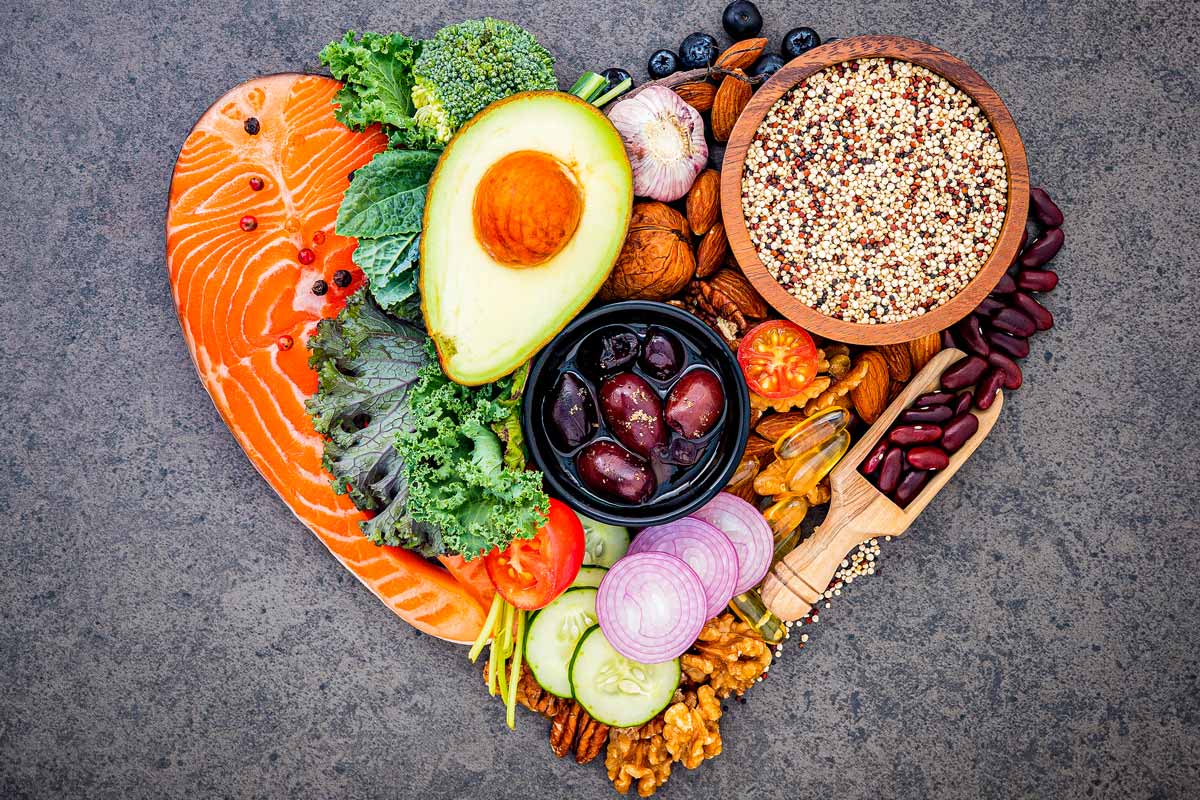
Chicory root is the most concentrated natural source of inulin, and it's what commercial inulin is made from. Jerusalem artichoke. Garlic and onions - including leeks and shallots. Asparagus. Green bananas. Oats and barley. Legumes of every kind. Apples, via pectin.
Resistant starch deserves separate mention. Potatoes, rice, and pasta that have been cooked and then cooled undergo a change in starch structure such that part of it stops being digested in the small intestine and reaches the colon - meaning it functions as a prebiotic. Reheating largely preserves the effect.
In other words, yesterday's cold potatoes in a salad are better for your microbiota than today's hot mashed potatoes. That isn't nutritional folklore but a measurable property of starch.
But the most important thing isn't any individual food - it's variety.
The largest microbiome studies of recent years point fairly consistently to one thing: the main predictor of a rich, resilient microbiota is the number of different plant foods in the diet over a week, not the number of grams of fibre. Different bacteria ferment different substrates. Thirty plant foods a week is a figure that frequently comes up as a benchmark, and it includes everything: vegetables, fruits, grains, legumes, nuts, seeds, spices, herbs.
A single isolated inulin added to a beverage feeds a narrow group of bacteria. A varied diet feeds an ecosystem.
Who Should Avoid This - and This Is Serious
Here begins the part advertising doesn't discuss at all, and it applies to a great many people.
Inulin and fructooligosaccharides fall into the FODMAP category - fermentable carbohydrates that cause pronounced symptoms in some people. With irritable bowel syndrome, which affects roughly one in ten adults, prebiotics in isolated form often make things worse: bloating, pain, gas, disrupted bowel movements.
With small intestinal bacterial overgrowth (SIBO), the situation is even clearer. The essence of that condition is that bacteria have ended up where they shouldn't be. Additional fuel feeds precisely those bacteria. Prebiotics in this case can noticeably worsen how a person feels, and recovery afterward takes time.
The sad irony is that "gut health" marketing lands squarely on the audience most likely to belong to these groups. A person with chronic bloating sees the word "gut" on a can and buys exactly that one.
A practical rule for everyone else: start small. An abrupt jump from an ordinary diet to ten grams of inulin a day will almost certainly produce a couple of unpleasant days. The body and the microbiota need two to three weeks to adapt. Introduce gradually, watch the response.
And separately: prebiotics can affect the absorption of certain medications. If you take something on an ongoing basis, that's a question for a doctor or pharmacist.
How to Read the Shelf
A few practical criteria that work in any store, from Whole Foods to Costco.
Look at the grams, not the word. "With prebiotics" isn't information. Information is the amount of fibre per serving and its source in the ingredient list. Under five grams is more label decoration than anything else.
Look at the sugar. A product with eight grams of inulin and twenty-five grams of sugar is a dessert with an additive.
Check the source. Chicory inulin, FOS, GOS, resistant starch - specific substances with research behind them. A "prebiotic blend" with no breakdown is a marketing formulation.
Don't pay for postbiotics. This is the youngest category, the evidence base for it is the thinnest, and the markup has already been established.
Remember the orders of magnitude. A serving of lentils, a bowl of oatmeal, or a head of roasted garlic delivers more prebiotic fibre than a three-dollar can.
Microbiome science is one of the most interesting fields in medicine over the past twenty years, and that's not an exaggeration. We have genuinely discovered that part of human physiology is delegated to organisms that don't belong to us, and that the composition of this population is linked to immunity, metabolism, and, it appears, brain function.
The problem isn't that prebiotics are a scam. They aren't a scam.
The problem is that between "butyrate feeds intestinal epithelial cells" and "drink this can and you'll be happy" lies a very large commercial space, and it's already been built out.
Kristin Cobbs will get her seventy-five cents per can.
PepsiCo got a brand for $1.95 billion.
And the bacteria this was all supposedly about still need roughly the same things they needed a thousand years ago: varied plant food, regularly and in sufficient quantity.
They, unlike us, don't read.