
Plot inconsistencies in cult movies
Why did not Marty know about Doc Browns time machine? How did John McClane realize that the man in front of him was not a frightened hostage, but Hans Gruber? And why did not Nebula warn Natasha and Hawkeye about the terrible price of the Soul Stone? Cult films have a special privilege: audiences love them so much that they spend years examining every scene, every line and every inconsistency. Sometimes these questions remain fan theories. Sometimes, years later, the writers and directors themselves step out of the shadows and explain what was really meant.
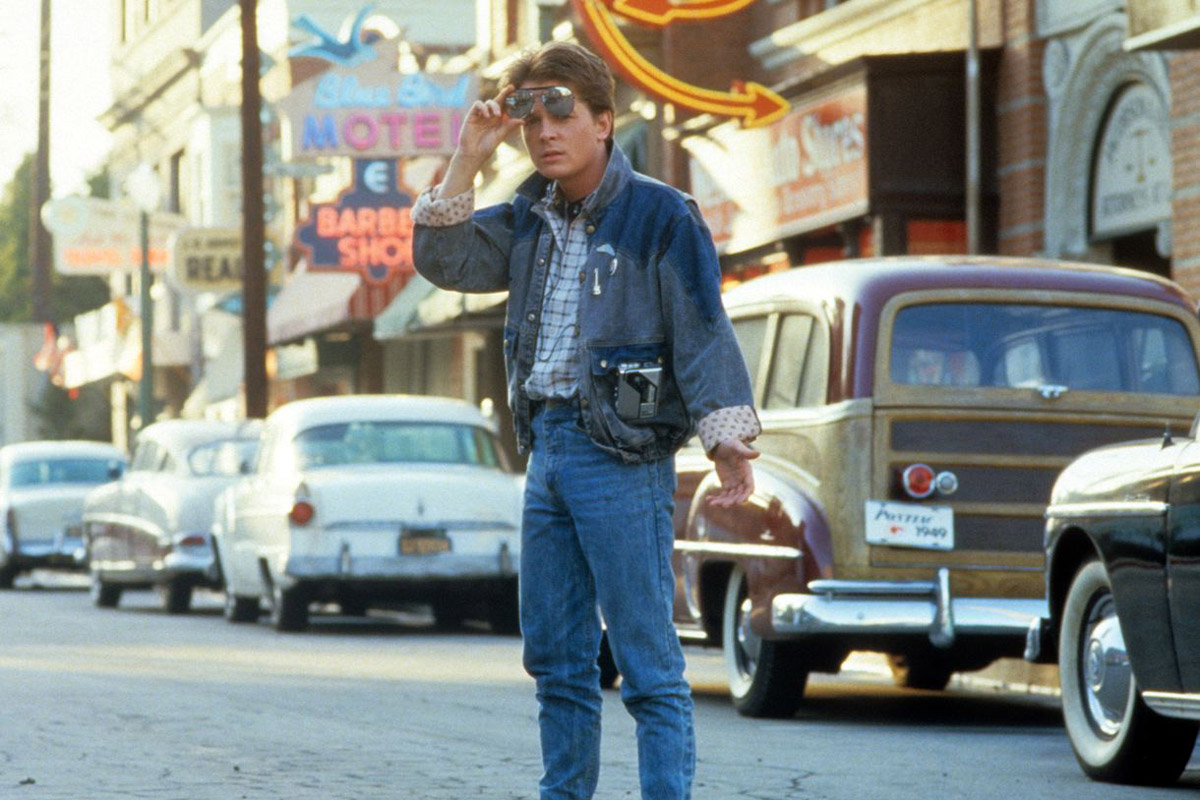
One such question was raised by Guardians of the Galaxy director James Gunn, who revived an old fan complaint about the Back to the Future trilogy: why didn’t Marty McFly’s parents notice that their son looked almost exactly like Calvin Klein, the strange boy who helped bring them together in 1955?
Chris Pratt, who played Star-Lord in Guardians of the Galaxy, came to the trilogy’s defense. He argued that Marty’s parents were not required to remember the face of a teenager they had seen only a few times, and many years earlier.
That version was later confirmed by the trilogy’s screenwriter, Bob Gale. He pointed out that George and Lorraine, of course, remembered Calvin as a person, but they had known him for only a few days when they were 17. Over the course of decades, the face of a brief acquaintance from youth could easily fade from memory or turn into a blurred impression.
This is a perfect reason to remember other moments when the creators of famous films and series explained, years later, the plot holes, loose ends and oddities that had been bothering attentive viewers.
Forgetful Marty McFly and the mystery of Doc Brown
Marty’s parents’ selective memory is not the only complaint fans have made about Back to the Future. According to the expanded canon, Marty had known Doc Brown for quite some time and had been visiting his laboratory since his teenage years. Yet at the beginning of the first film, when Doc asks his young assistant to meet him at night near Twin Pines Mall, Marty clearly sees the time machine for the first time. If McFly had been visiting Doc regularly, how had he never noticed the most important invention of Brown’s career?
Once again, Bob Gale provided an answer - this time in comic-book form. In 2015, IDW launched a monthly Back to the Future comic series, with Gale serving as one of the co-writers. The stories explored events before the trilogy, between the films and around familiar moments from the movies.
In the Continuum Conundrum storyline, Jennifer asks Marty the very same question. Marty quickly realizes that Doc must have had a second secret laboratory, one whose existence he had kept hidden even from his loyal young assistant. The explanation feels perfectly in character for Brown: if you are building a time machine, naturally you would not do it in the one garage where a curious teenager keeps dropping by.
The case of the watches
In 1988, the first Die Hard, starring Bruce Willis, arrived in theatres. Today the film is considered a classic of the genre, but one moment bothered fans for years. When John McClane first meets terrorist leader Hans Gruber, Gruber pretends to be an escaped hostage. McClane appears to believe him and even gives him a gun. But when Hans tries to shoot the stubborn cop, it turns out the magazine is empty. So John understood - or at least suspected - from the start that the man in front of him was a terrorist. But how?
The answer came from the first film’s screenwriter, Steven E. de Souza. It turned out that the clue had been built into the script, but became almost invisible in the final cut.
It was all about the watches. In the original version, when the terrorists arrived at Nakatomi Plaza, Hans told them to synchronize their watches. The camera showed that all members of the group were wearing the same model. Later, as McClane searched the bodies of the terrorists he killed, he was meant to gradually notice this detail. So when Gruber pretended to be a hostage named Bill Clay, John saw the same watch on his wrist and understood that he belonged to the same group.
In the final version of the film, that logic almost disappeared. The watch-synchronizing scene was cut, and the related moments remained only as faint visual hints. That is why the scene with Gruber feels to the viewer less like the result of a concrete observation and more like a burst of McClane’s brilliant instinct.
Why was the important scene removed? According to de Souza, the idea that the terrorists planned to escape in an ambulance was added later. But in the already-shot scene of the truck arriving, there was no ambulance inside. To prevent viewers from noticing the inconsistency, director John McTiernan had to shorten the scene. Along with it disappeared the clue about the matching watches.
One edit solved one problem, but created another - and gave Die Hard fans a mystery that lasted for decades.
Would you like pizza?
At the very beginning of Home Alone, a tree branch falls on power lines near the McCallister house and knocks out the electricity. The phones also appear to be down: Kevin’s father, calling from Paris, tries to reach almost everyone except his own home.
Yet a few scenes later, Kevin calmly orders pizza. How could he do that if the phones were not working? And if they had been repaired, why were his parents still unable to reach him?
The filmmakers never offered a detailed official explanation, but fans have proposed a fairly plausible one. The tree may have damaged not all phone service, but only the line or equipment responsible for long-distance and international calls. In that case, local calls - including a pizza order - could still have worked, while calls from Paris would fail.
For the early 1990s, with its analog telephone infrastructure and separate logic for local and long-distance service, this scenario is entirely possible. So the issue is less a glaring mistake than a detail the film simply chose not to explain aloud.
How to enter the Matrix
The first Matrix makes it clear that entering the Matrix is a team operation. An operator connects you to the system, monitors your movements and brings you back to the real world. Improper disconnection can kill a person - that is exactly how the traitor Cypher kills Apoc and Switch.
But then comes the question: how did Cypher secretly meet Agent Smith inside the Matrix? He could hardly ask an operator to connect him for a private negotiation with the enemy.
The Wachowskis themselves provided the explanation. In one scene, Neo interrupts Cypher while he is working at a computer on some kind of script. It turns out this was not a random technical detail. Cypher was setting up an automated system that would allow him to enter and leave the Matrix by himself, without the help of an operator.
The film does not explain this directly, but the answer is embedded in the scene. It is one of those cases where the solution really is on the screen, but the viewer is given it not as dialogue, but as a nearly hidden detail of character behaviour.
Where did the Infinity Gauntlet come from?
In the post-credit scene of Avengers: Age of Ultron, Thanos puts on the Infinity Gauntlet and says, “Fine. I’ll do it myself,” implying that he will personally begin hunting for the Infinity Stones.
But in Avengers: Infinity War, we learn that the Gauntlet was forged by Eitri, king of the dwarves of Nidavellir. Thor, Groot and Rocket see the aftermath of the Mad Titan’s visit: the dwarves are dead, and Eitri has been cruelly punished. At first glance, the question is obvious: when exactly did Thanos get the Gauntlet, and why did Asgard not notice?
Joe Russo, one of the directors of Infinity War, explained it this way: the Gauntlet was indeed created by Eitri, and by the time of Age of Ultron, Thanos already had it. According to Russo, the Asgardians had not visited Eitri and his people for a long time.
The explanation answers part of the question, but not all of it. If Nidavellir was under Asgard’s protection, why did Thor know nothing about the disaster? Why did Heimdall, who could see so much across the universe, not raise the alarm? One possible answer is that by then Asgard was already being ruled by Loki disguised as Odin, Heimdall had been pushed aside, and the protection system of the Nine Realms was effectively falling apart. In that sense, the old Asgardian excuse works again: blame Loki.
But there is another detail. In the first Thor, the Infinity Gauntlet can briefly be seen in Odin’s vault, complete with all the Stones. Later, in Thor: Ragnarok, Hela casually dismisses the item as fake. On one hand, this is an elegant way to remove an old inconsistency. On the other hand, it raises new questions. Where did Odin get the replica? Why does it look so much like Thanos’s future Gauntlet? And how does Hela, freshly released from centuries of imprisonment, immediately know it is a fake?
In the end, the history of the Infinity Gauntlet is a rare case where official explanations help somewhat, but do not completely solve the fan puzzle. Sometimes even Marvel has to do less logical repair and more gentle negotiation with the audience: yes, it was a fake; let us move on.
The price of a soul
In Infinity War, Nebula sees Thanos go to Vormir with Gamora and return with the Soul Stone alone. But in Endgame, when Nebula sends Hawkeye and Natasha to Vormir, she does not warn them that obtaining the Stone may require someone’s death. Is she really that heartless?
In the commentary for the home release of Avengers: Endgame, screenwriter Stephen McFeely explained that this is a classic case of the audience knowing more than the characters. We, the viewers, know that Vormir requires a sacrifice. But the heroes do not necessarily know everything we know.
Nebula understands that Gamora did not come back. But she was never on Vormir, never met the Red Skull and never heard the rule of “a soul for a soul.” She could have assumed that Thanos simply killed Gamora when he no longer needed her, or that something happened between them that he never told anyone about.
From this point of view, Nebula did not knowingly send Natasha and Clint to certain death. She knew that Vormir was connected with her sister’s death, but she did not know the mechanism required to obtain the Soul Stone. The explanation does not make the scene any less tragic, but it removes the accusation of cold cruelty from Nebula.
That is why audiences both love and torment cult films. A good story continues to live after the final credits: people dissect it, argue over it, find cracks in it and try to seal them. Sometimes the answer was in the script, but disappeared in the edit. Sometimes it is hidden in comics, commentaries or interviews. And sometimes the honest conclusion is simpler: yes, it is cinema, and even great franchises sometimes stand not on perfect logic, but on charisma, momentum and our willingness to believe.