
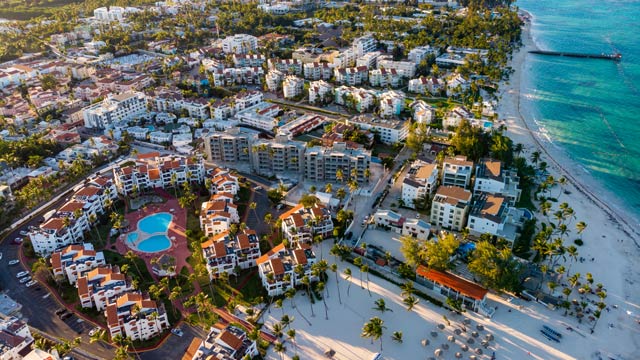
How to Turn a Vacation Into an Investment
Оust ten years ago, owning an oceanfront apartment seemed out of reach - a dream reserved exclusively for the very wealthy. Today, that reality is changing rapidly. More and more families from Canada, the United States, and Europe are discovering a model in which real estate in a warm-climate country is no longer a luxury, but a financially smart decision. In many cases, such a purchase can not only pay for itself, but also generate stable long-term income.
There is an interesting pattern that many people rarely think about. A huge number of people dream of spending winters in the sun, relaxing by the ocean, and having a place where they can travel with family at any time of year. Yet at the same time, most are convinced that this kind of lifestyle is “not for them.” The reason is simple: many believe that owning property in a resort destination requires enormous savings, constant expenses, and is available only to the wealthy. In reality, that is often not the case.
The Cost of Vacation: What Does the Traditional Scenario Really Cost?
For most families, vacations represent a major annual expense. Flights, quality hotels, dining, and entertainment can easily cost $5,000-$10,000 per trip for a family - and often much more. Over 10-15 years, those expenses can exceed hundreds of thousands of dollars.
Of course, vacations are an important part of life. They create memories, emotions, and valuable time with loved ones. But from a purely financial perspective, what ultimately remains are photographs and experiences.
Now imagine a different scenario. You vacation the same way - or even better - but instead of simply spending money, you gradually build an asset that begins working for you over time. In many ways, this mirrors the difference between owning a home and renting one. People who purchased property 15-20 years ago and those who rented during that same period are often in completely different financial positions today. Some accumulated wealth; others did not. Resort real estate works in much the same way.
The Dominican Republic: Luxury Real Estate at Surprisingly Accessible Prices
Many people are surprised when they discover current real estate prices in the Dominican Republic. For example, a spacious two-bedroom apartment of approximately 100 square meters (about 1,100 square feet) in a modern Punta Cana development can still be purchased for under US$200,000. In some projects, a small three-bedroom villa starts at approximately US$250,000.
At this point, most people naturally ask: “That sounds great - but where do I get the money?”
Most developer projects offer convenient installment structures. Typically, a buyer makes an initial deposit of around 20%, another 40% is paid gradually during construction - which usually takes about two years - and the remaining 40% is due upon completion. This approach significantly reduces financial pressure and makes ownership far more accessible.
Using Existing Equity: A Strategy More Buyers Are Embracing
This is where a strategy increasingly used by Canadian and American buyers comes into play.
Most oceanfront buyers already own a primary residence. Many have accumulated significant equity in their homes over the years. That equity can often be accessed through a line of credit or mortgage refinancing.
In other words, instead of “taking money out of pocket,” people leverage an asset that has already appreciated in value. Yes, borrowed money comes with interest costs. But the economics of the overall transaction matter.
Once construction is completed, the property begins generating income. High-quality developments in the Dominican Republic’s tourist areas - especially those with professional property management - are currently delivering very attractive results in the short-term rental market.
In many cases, owners use the property personally for several weeks or months per year, while the rest of the time it is professionally managed and rented out. Rental income can often cover financing costs and gradually pay down the debt itself.
Today, quality investment properties in the Dominican Republic often reach full payback in approximately ten years. In practical terms, this means that if the purchase was financed using equity from your primary residence, the debt could eventually be fully repaid while you retain ownership of an oceanfront property capable of generating annual net income and continuing to appreciate in value.
Why More Investors Are Looking Toward the Dominican Republic
The growing interest in Dominican real estate is no coincidence. For years, the country has remained one of the Caribbean’s fastest-growing tourism destinations. Expanding airports, major infrastructure investments, rising international tourism, and continuous development of premium projects continue to strengthen demand for real estate.
As a result, the Dominican Republic offers both strong long-term appreciation potential and an exceptionally active short-term rental market. For many buyers, this creates several attractive future scenarios at once.
Three Possible Scenarios Ten Years After Purchase
Scenario One - Selling the Property and Capturing the Appreciation.
Over the years, the family enjoys vacations in their own property, saves on hotels, benefits from personal use, and later sells the asset while realizing accumulated equity growth.
Scenario Two - An Oceanfront Retirement Home.
Many owners plan to spend several months each year in a warm climate after retirement while continuing to generate rental income during the remainder of the year.
Scenario Three - An Additional Source of Passive Income.
The property remains part of the family portfolio and continues functioning as an investment asset, producing regular cash flow and potentially becoming part of a long-term family legacy.
The Real Question Is Not “Can I?” But “Do I Want To?”
Perhaps the most important conclusion is that for many people, this is no longer purely a financial question. More often, it is about whether someone is ready to rethink the traditional model of vacation spending - and begin viewing travel not simply as an expense, but as part of a long-term investment strategy.
Of course, resort real estate requires careful analysis, the right project selection, the right location, and a sound financial structure. But one fact remains clear: for a growing number of people, owning property by the ocean is no longer just a dream - it is becoming a thoughtful financial decision. That is precisely why tens of thousands of Canadians and Americans have already invested in real estate in the Dominican Republic.
You can schedule an in-office or online consultation through our website or by phone.