
What is Guam Island?
Guam is often mentioned in the news as an American territory in the western Pacific, relatively close to East Asia and strategically important to the United States. But behind the familiar phrase American Island lies a far more complicated story. Guam is a place where the ancient CHamoru culture, Spanish colonial history, American military power, Asian tourism, and unresolved questions of political rights exist side by side — sometimes harmoniously, sometimes painfully. It could even be called an American island that democracy has never fully embraced.
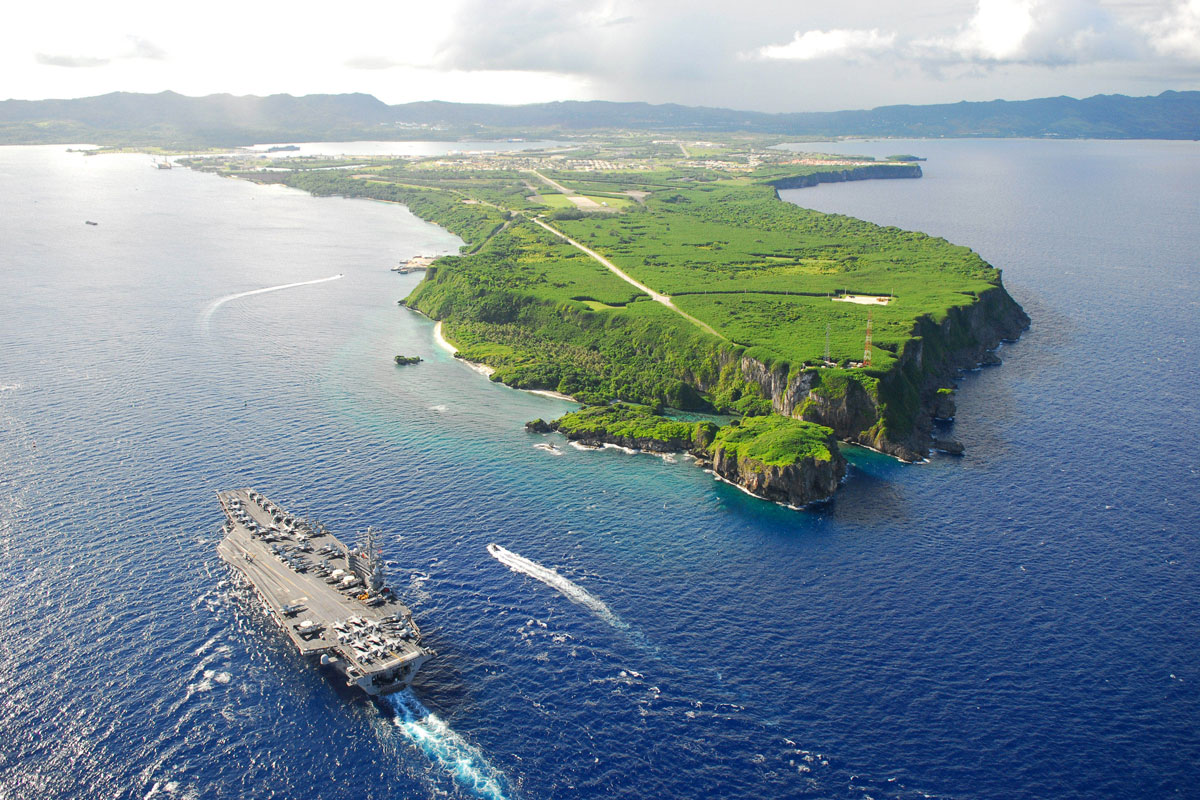
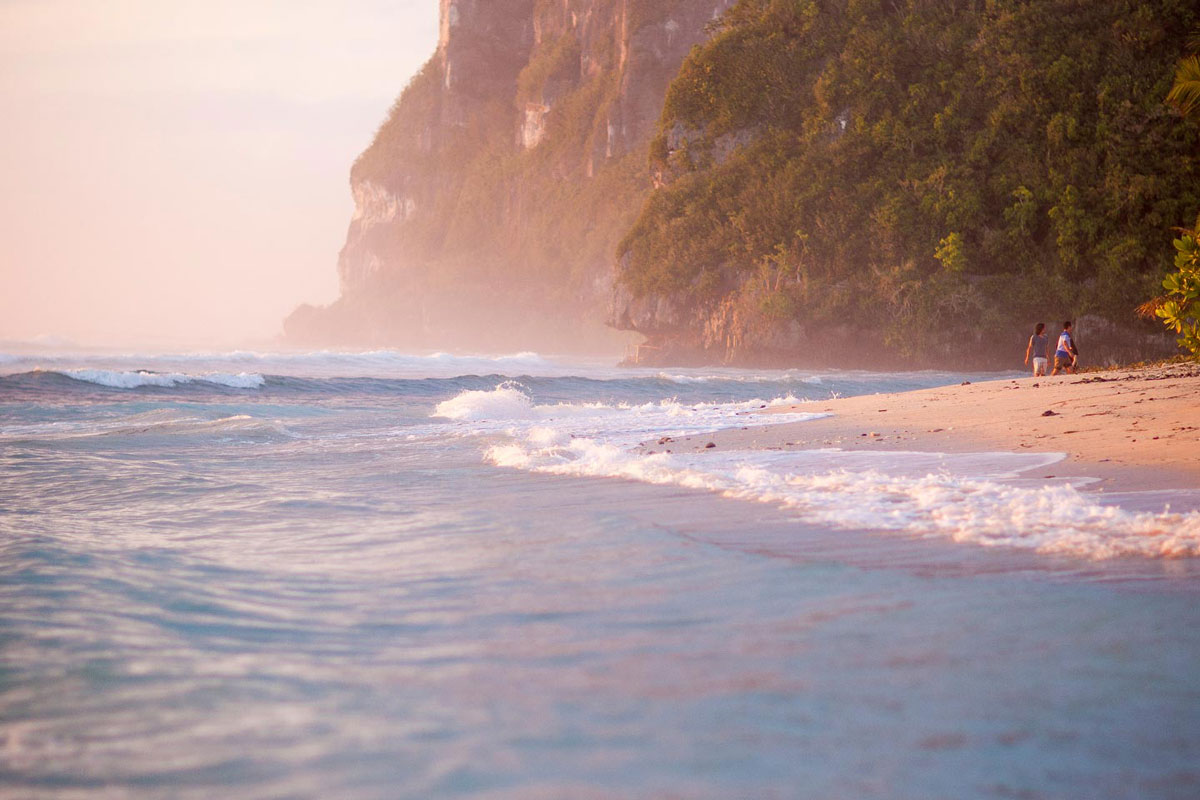
Guam is the largest and southernmost island of the Mariana archipelago in the western Pacific Ocean. It lies about 1,440 kilometres north of the equator and not far from the Mariana Trench, the deepest known point in the world’s oceans. This is a region of typhoons, humid tropical weather, coral reefs, and dramatic natural contrasts. Geologically, the island combines a volcanic foundation with coral limestone, and its landscape includes rocky shores, beaches, jungle, waterfalls, and picturesque bays. Guam shares its geography, climate, history, culture, and traditions with the other islands of the Mariana archipelago.
The island was settled by the ancestors of the CHamoru people about 3,500 years ago. The first European to reach Guam was Ferdinand Magellan, who stopped here in 1521 during his voyage around the world. The encounter was dramatic. The CHamoru shared water and provisions with the sailors, but, guided by their own ideas of exchange and property, also took items from the ships that seemed useful to them. The Europeans interpreted this as theft. In response, Magellan’s crew burned several villages, and the archipelago received the insulting Spanish name Islas de los Ladrones — the Islands of Thieves.
In 1565, Guam and the neighbouring islands were claimed as possessions of Spain. In the seventeenth century, Catholic missionaries arrived, and the active Christianization of the local population began. The archipelago was later renamed the Mariana Islands in honour of the Spanish queen Mariana of Austria, widow of Philip IV. However, conversion to the new faith and incorporation into the Spanish colonial system came with violence, epidemics, forced resettlement, and CHamoru resistance. After the killing of the missionary Diego Luis de San Vitores, the Spanish-CHamoru Wars began, causing a severe decline in the Indigenous population.
For several decades, the CHamoru rose in rebellion against the Spanish, but these uprisings were brutally suppressed. The male population was especially devastated. As a result, the surviving CHamoru gradually mixed with Spaniards, Mexicans, Filipinos, and other peoples of the Spanish colonial empire. Today, CHamoru culture is alive and remains a central part of Guam’s identity, but speaking of “pure-blooded” CHamoru in a historical sense would be both inaccurate and crude. The modern identity of the people was formed through survival, intermarriage, and the preservation of language, memory, family traditions, and local culture.
For a long time, Guam served as an important stopover for Spanish ships travelling between Mexico and the Philippines. The Manila galleons connected Acapulco, Manila, and the islands of the Pacific, and Guam became one of the key points on this route. This encouraged further settlement by Spaniards, Mexicans, and Filipinos, as well as the cultural blending that is still visible today in the island’s language, cuisine, religion, and family customs.
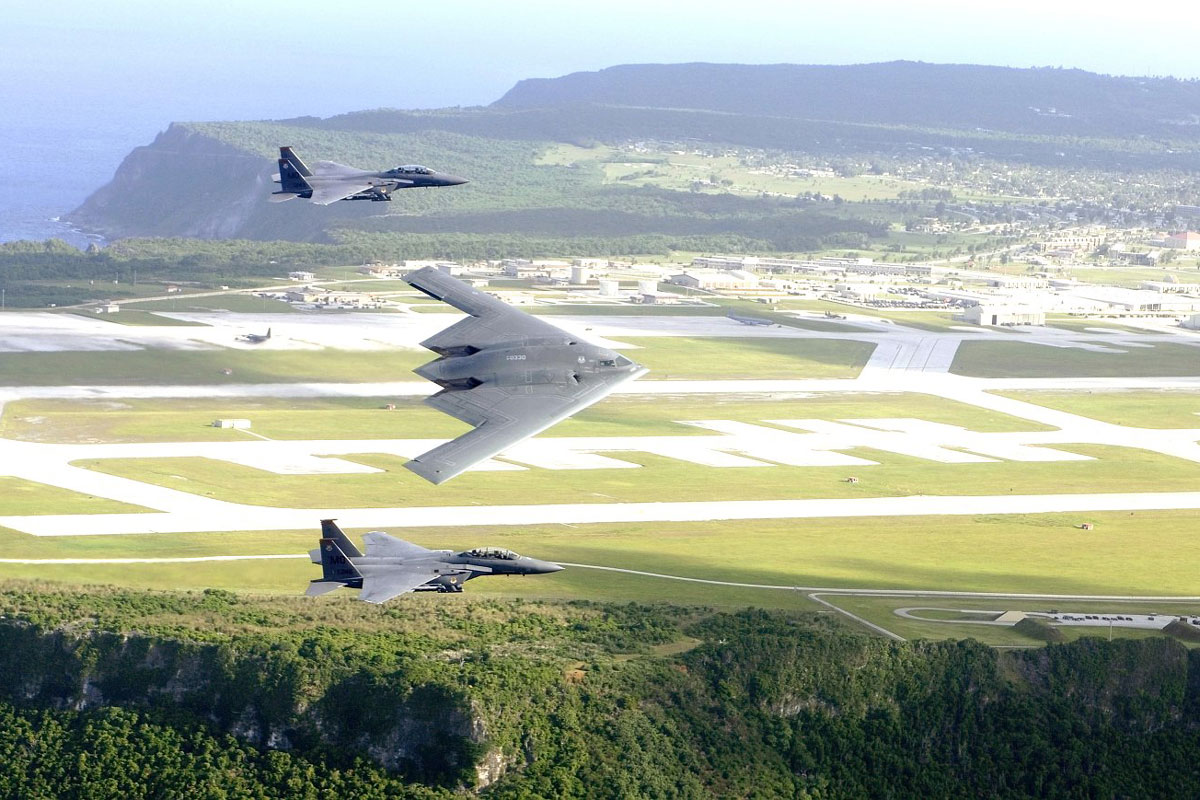
In 1898, after Spain’s defeat in the Spanish-American War, Guam came under the control of the United States. During the Second World War, in December 1941, the island was seized by Japan. The occupation became a harsh trial for the local population. American forces liberated Guam on July 21, 1944 — a date still commemorated on the island as Liberation Day. Today, Guam remains one of the most important American military positions in the Pacific, with major U.S. Navy and Air Force installations.
Guam today
According to the 2020 census, Guam had a population of about 154,000. The largest ethnic groups remain CHamoru and Filipino; the White population represents a relatively small share. The island is also home to people from other parts of Micronesia, Asia, and the continental United States. Guam is not merely a military base and not merely a resort. It is a multicultural society with its own identity, complex history, and strong local consciousness.
One of the most unusual ecological facts about Guam is connected with the brown tree snake. This invasive species was probably introduced accidentally after the Second World War, in the late 1940s or early 1950s. The snake caused enormous damage to the local ecosystem and contributed to the disappearance or sharp decline of many native birds, lizards, and other animals. Today, controlling the brown tree snake population remains a serious environmental challenge.
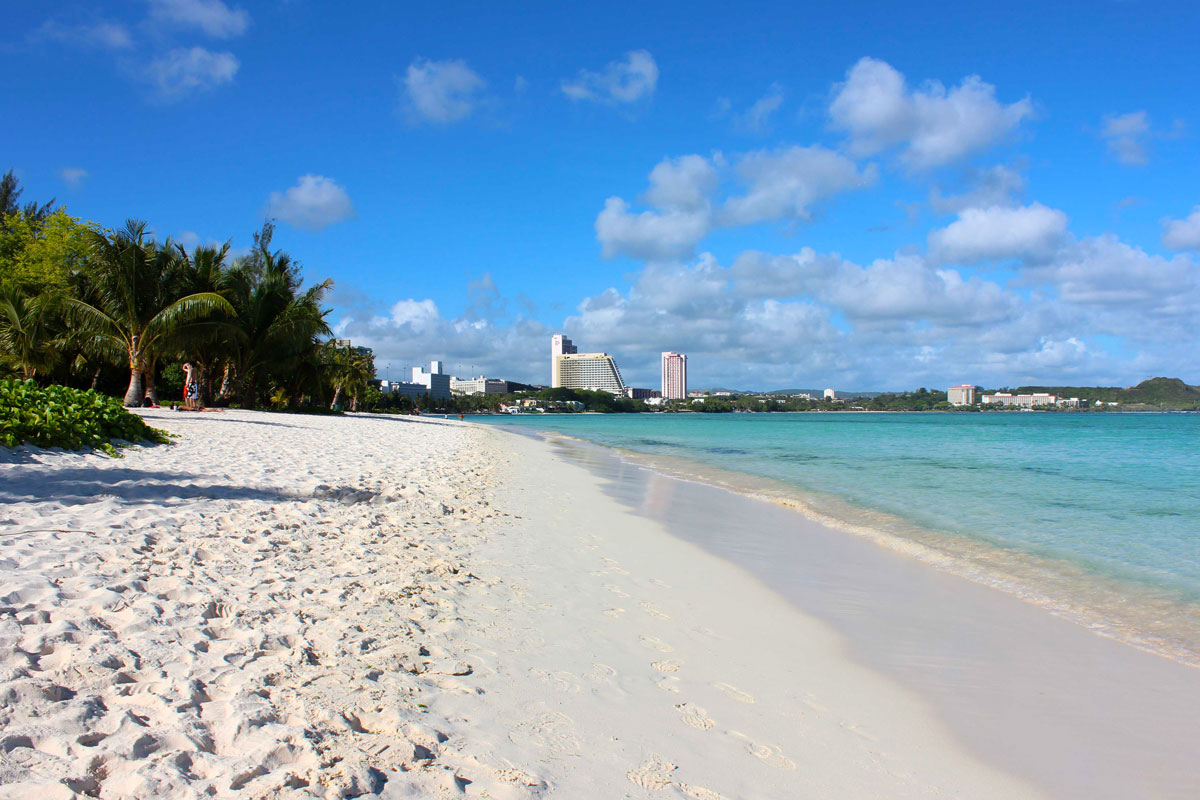
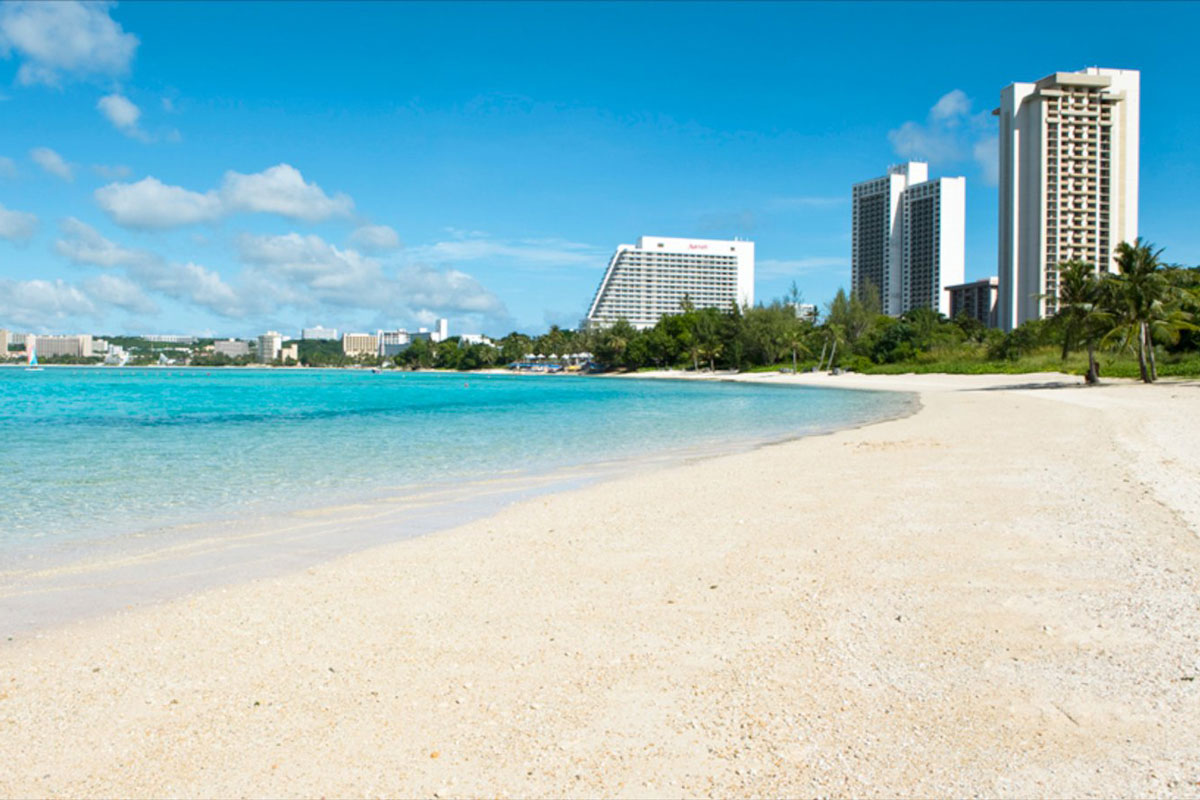
Tourism plays an exceptionally important role in Guam’s economy. Before the pandemic, the island welcomed large numbers of visitors from Japan, South Korea, and other parts of Asia. Today, the tourism market is gradually recovering, with South Korea and Japan remaining the main sources of inbound visitors. Guam attracts travellers with tropical beaches, warm ocean waters, waterfalls, historic sites, museums, shopping districts, and opportunities for active recreation.
On the island, visitors can see ancient latte stones — stone pillars on which traditional CHamoru houses were built. They have become one of the symbols of local culture. Spanish ruins, Catholic churches, military memorials, and Second World War museums recall different eras of the island’s history. For lovers of the underwater world, Guam offers coral reefs, snorkelling, diving, and wreck sites. Visitors can also enjoy windsurfing, fishing, parasailing, golf, kayaking, or simply swimming in a warm lagoon.
For nature lovers, Guam has trails leading to waterfalls, caves, secluded beaches, and Second World War sites. These hikes reveal another side of the island — not only resort-like, but wild, green, sometimes difficult to reach, and exceptionally scenic.
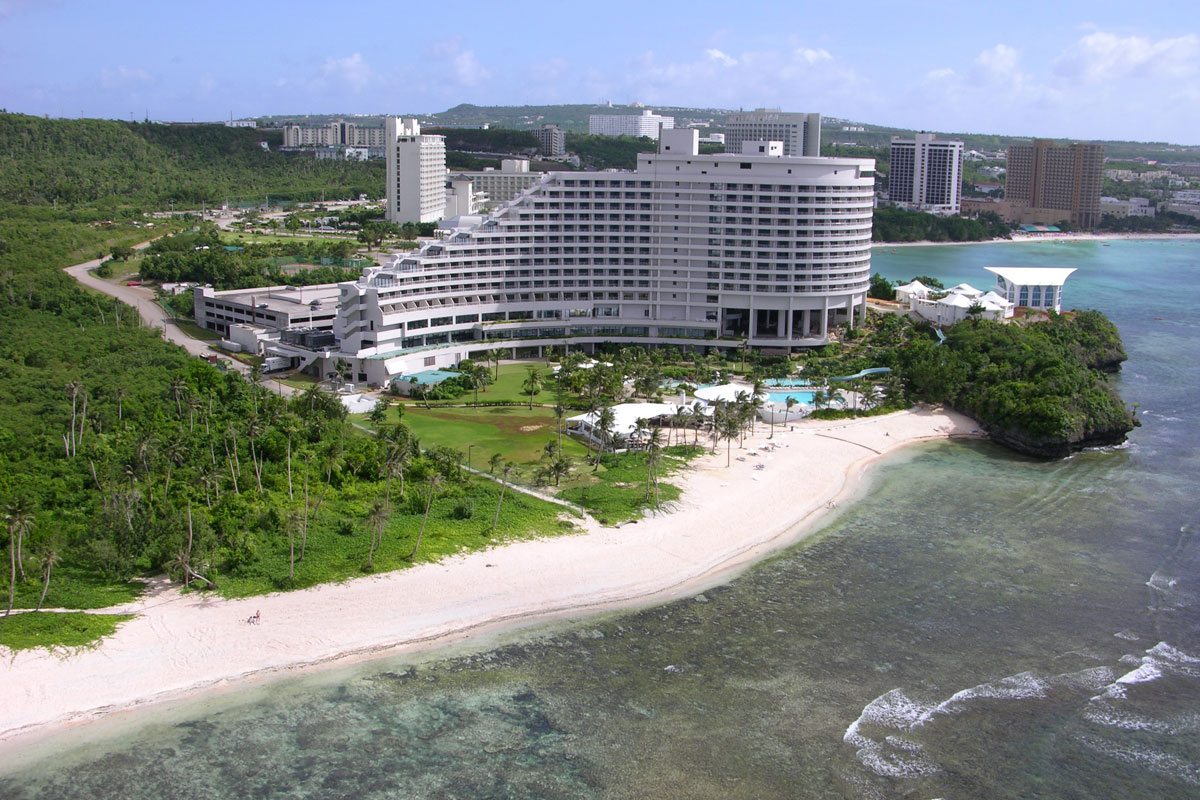
Guam’s tourist infrastructure is well developed. The island has many hotels, resort complexes, restaurants, golf clubs, and shopping centres. Hiking routes lead to waterfalls, caves, and natural springs. Some areas are suitable for walking, cycling, jogging, rollerblading, or skateboarding.
Popular activities include archery, skydiving, parasailing, scuba diving, snorkelling, fishing, jet skiing, kayaking, outrigger canoeing, boat tours, excursions along the Talofofo River, visits to Chamorro Village with demonstrations of local crafts, and golf. Guam’s golf courses were designed with the involvement of well-known professionals, so they appeal not only to casual tourists but also to demanding players.
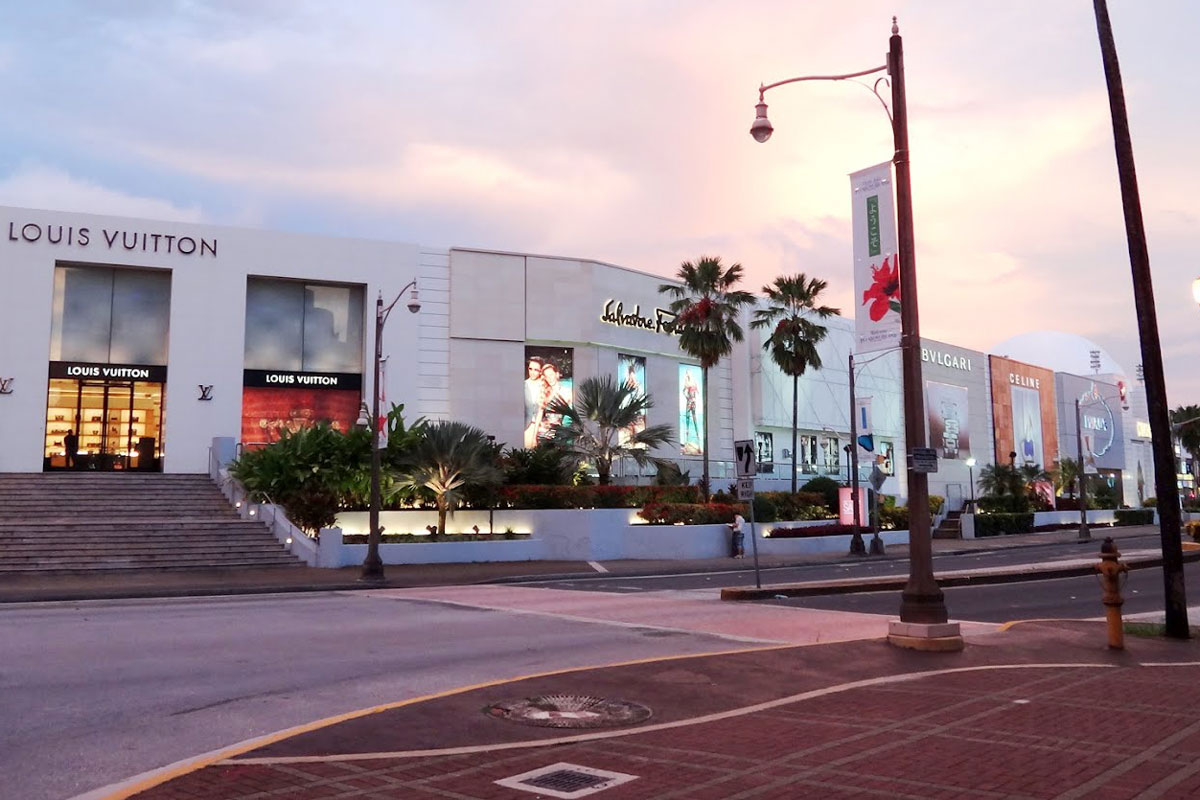
Guam is also known as a shopping destination. The island has boutiques, duty-free shops, outlets, and American-style shopping centres. Visitors can find clothing, leather goods, jewellery, accessories, cosmetics, perfume, and souvenirs. Its duty-free shopping status makes many items attractive to guests from Asia, although prices on expensive brands should still be compared before purchase.
One of the island’s best-known shopping destinations has long been DFS Galleria in Tumon, offering luxury brands and products aimed at visitors. Guam Premier Outlets specializes in discounted merchandise, including shoes, bags, clothing, and souvenirs. Other options include American-style malls, open-air shops, and Chamorro Village in Hagåtña, where local handmade goods, tropical clothing, jewellery, and Micronesian souvenirs are sold. The evening markets are especially interesting, offering local food and a more living, less museum-like encounter with island culture.
If you can get up at sunrise after an evening out, the flea market along Marine Corps Drive is a special weekend experience. Early in the morning, local vendors set up stalls with fresh greens, vegetables, fruit, fish, home-cooked food, and all kinds of goods. It is not just a market, but a chance to feel the island’s everyday life and see the cultural diversity of the people for whom Guam has become home.
Local transportation is largely oriented toward tourist areas. Shuttles, including tourist buses, run between hotels, shopping centres, and popular districts. However, if you want to explore the island beyond the main resort routes, renting a car is the easiest option. Although taxis and hotel transfers are available, having your own transportation gives you far more freedom and allows you to see not only Tumon, but also the southern villages, beaches, viewpoints, and natural trails.
U.S. customs and agricultural rules apply when entering Guam. Weapons, drugs, certain food products, fresh fruits, vegetables, meat and meat products, plants, seeds, and goods that violate U.S. copyright or intellectual property laws are prohibited or strictly restricted. Before travelling, it is always worth checking the current import rules, because the list of restrictions can change.
And finally, the central political paradox of Guam. The island is under U.S. sovereignty and has the status of an organized unincorporated territory. Residents of Guam are U.S. citizens, have their own local government, and elect a delegate to the U.S. House of Representatives. But that delegate does not vote on the final passage of legislation, and island residents do not participate in presidential elections through the Electoral College. In other words, Guam has American passports, American military bases, and American federal laws, but not the full political voice enjoyed by residents of U.S. states. That is why any conversation about Guam is not only a conversation about beaches, diving, and tropical shopping. It is also a conversation about the limits of American democracy.