
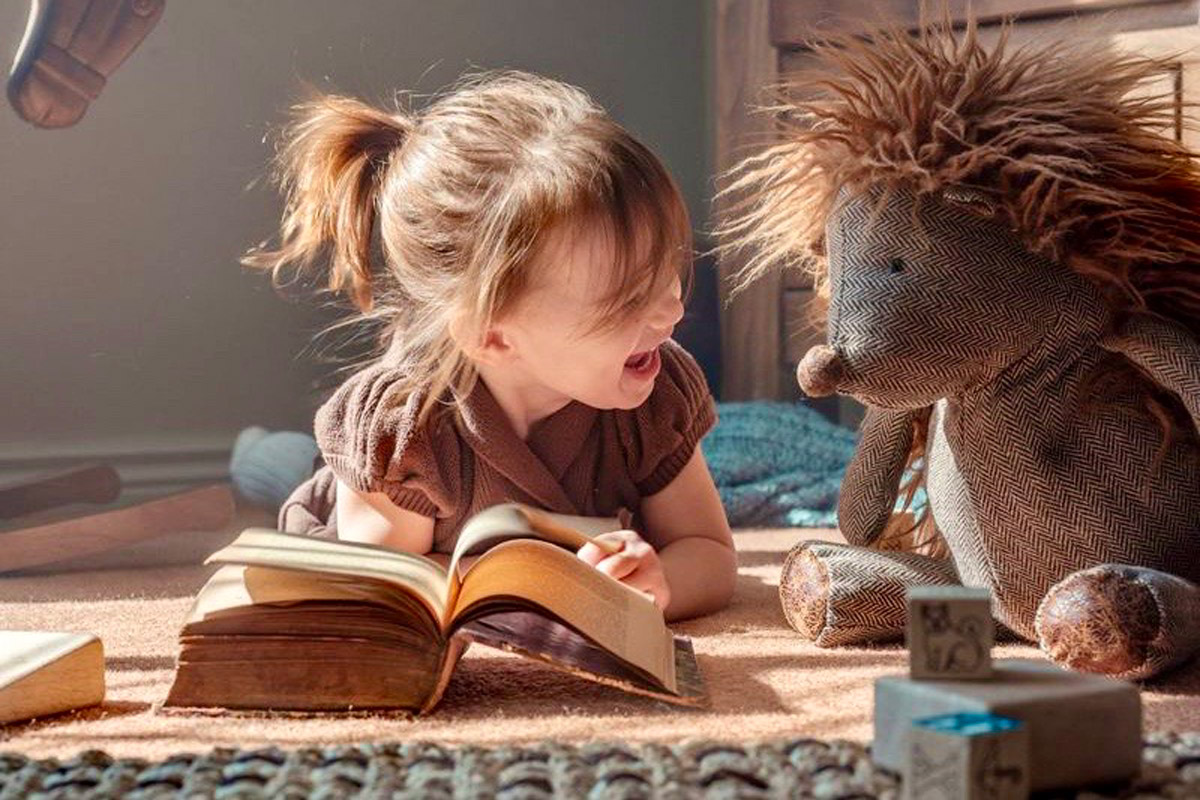
How to teach a child to play on their own
A child discovers the world through play. To an adult, it may look like simply moving blocks around, talking to a toy or endlessly building a house out of cushions. But for a young child, play is serious inner work: it develops speech, imagination, social skills, the ability to invent, choose, try and make mistakes. That is why independent play is not just a convenience for parents. It is an important stage of growing up.
Some children play easily on their own and can stay absorbed in their own activities for a long time. Others find it difficult to spend even a few minutes without mom or dad. They follow their parents around the house, demand constant participation, call an adult into every game and do not understand what to do with freedom if no one is there to suggest the next step. Parents in this situation often become exhausted and are ready to buy any toy just to drink tea in peace, answer a message or take a shower. But a love of independent play does not always appear by itself. Often, it is a skill that a child must be gently and gradually taught.
Why a child needs independence
For some children, independent play really does come more naturally. Others need more time, support and patience from adults. But in every case, independence is an important quality that a child will need in school and later in life.
A child needs to learn how to choose an activity that is interesting to them: to read, draw, build, invent a story, assemble blocks or create something without constant adult prompting. This forms an inner foundation: I can do it myself, I can choose, I can finish what I started, I can be interested in my own company.
Later, this ability helps support self-esteem, creativity, patience, concentration and the capacity to take satisfaction in one’s own work. Independent play is not about loneliness and not about trying to “get rid of” the child. It is about the gradual development of emotional and psychological maturity.
First, give the child attention
Paradoxically, it is easier for a child to play independently not when they are immediately left alone, but when they first receive enough parental attention. Stay nearby. Read, play, talk, look at what they have built, enter their world for a while. When a child is emotionally filled by contact with mom or dad, it becomes easier for them to let the adult step away for at least a few minutes.
If, however, the child constantly feels a lack of attention, they will cling to the adult even more. In that state, independent play feels not like freedom, but like loss of connection.
Start the game together
Prepare everything for the game and begin it together. For example, build the beginning of a road, seat dolls at a table, open an imaginary shop or create the first scene. Then invite the child to decide what happens next. Show interest, listen carefully, sit nearby while the child continues the story, and then briefly turn to your own task while remaining within sight.
After a few minutes, come back and ask in detail what happened while you were away. Be pleased, surprised and appreciative of the child’s idea. Then play together a little more and, when the right moment comes, step away again. Gradually, the child learns that the adult does not disappear, the game does not end and the child’s own ideas have value.
Children copy their parents’ behaviour
It is easier for a child to do something independently if they see adults calmly doing their own things as well. Sit down with a book and invite the child to sit nearby with their own picture book, colouring book or sketchpad. Let them see that reading, drawing and focusing on something quietly are normal parts of life, not a punishment.
You can also offer a game in the kitchen. Give the child beans, unbreakable cups, spoons, plastic containers and wooden spatulas - let them “cook dinner” for their toys while you prepare the real meal. They will be near you, but playing independently. Be sure to notice it: say that they helped a lot, invented an interesting game and are already able to do many things on their own.
Create a safe environment
A child feels calmer when they are sure that adults are nearby and can protect them from danger. That is why many children are afraid to play in another room. If you suggest this, the space must truly be safe: no small dangerous objects, sharp corners, cords, heavy items that can fall, or anything that makes you anxious.
At the same time, it is important not to turn independent play into constant inspection. If you enter the room every two minutes with a worried face, the child will quickly sense that there must be something to fear. If you feel more comfortable, let the child first play in the same room where you are, but without your direct participation. This is still independent play if the child leads the story and does not require constant prompting.
Develop imagination
Ask the child to create a story with their favourite toys and give them a few minutes to do it. You can show how the clock hand moves or use an hourglass. Then come over and listen to the story. You can write it down in a notebook and read it to the whole family later in the evening.
Small tasks like this develop imagination, speech and the ability to hold a storyline. Over time, a child may begin inventing entire series of stories, creating their own characters and building a large imaginary world around them.
Do not sneak away
Many parents, trying not to interrupt play, leave the room without the child noticing. But when the child discovers that the adult has disappeared, they may become frightened, cry and later begin constantly checking where mom or dad is. This creates anxious monitoring: the child is no longer playing freely, but continually making sure the adult has not gone.
It is better to be honest: “I am going to the kitchen for a few minutes, and then I will come back.” And then actually come back. If the child trusts you, it will become easier for them to stay alone first for a short time and then for longer. Independence is built not on a parent’s sudden disappearance, but on predictability and trust.
Independence and loneliness are not the same thing
It is important not to confuse independent play with emotional isolation. The skill of independence develops not instead of communication, but after meaningful communication with other people. Shared play with parents, conversations, reading, walks and games with other children all fill the child’s inner world with material that they later use in independent play.
The child repeats dialogues, talks to toys, acts out situations seen in the family or on the playground, and learns patience, imagination and the ability to be with themselves. The parents’ task is not to remove themselves from the child’s life, but to gradually teach the child how to use the experience they receive in the company of adults.
Do not interrupt good play
If the child is busy with something, do not rush to interfere and suggest another activity that seems more useful or interesting to you. Sometimes it may look to an adult as if the child is simply sitting and doing nothing, when in fact they are inventing a story, observing, practising a skill, examining details or internally preparing the next step.
It is better to watch calmly and not break the child’s concentration. If everything is safe, let the child continue. When they need help or attention, they will turn to you. The ability not to interrupt a child’s focus is one of the most underestimated parenting skills.
Use learning moments
Learning can happen anywhere: in the kitchen, at the store, in the car, on a walk, during cleaning or during play. Ask the child what they learned, what they discovered, what worked, what they invented. Let them show, tell and explain. Children enjoy feeling big and capable, and they need to see that adults notice their progress.
Praise not only the result, but also the effort: “You thought of that yourself,” “You built for a long time and did not give up,” “You found a solution,” “You looked very carefully.” This kind of praise strengthens not dependence on approval, but confidence in one’s own abilities.
And one more important point: time spent watching cartoons or using a tablet does not count as independent play in the full sense. A screen can keep a child occupied, but it does not replace play that involves the body, imagination, speech, fine motor skills, emotions and personal choice. For development, a child needs not just occupation, but real, living play.