
One of Worlds largest Google offices
When the workplace becomes architecture of experience
When people talk about Google offices, they usually mention bright sofas, free cafés, game rooms and the famous corporate culture in which work seems to continue the spirit of a university campus. But the most interesting Google offices have long moved beyond the simple idea of an “office with perks.” They have become laboratories of a new kind of work environment - places where architecture, design, technology, food, rest and informal communication merge into one system. One of the strongest examples of this approach is in Dublin.
Google Dublin campus is located in Grand Canal Dock, a modern part of the city often called Silicon Docks. Here, beside the water, theatres, restaurants, residential buildings and technology headquarters, one of Ireland’s main business clusters has taken shape. For Google, this is not simply an office in Europe. It is one of the company’s key centres outside the United States and an important part of its presence across Europe, the Middle East and Africa.
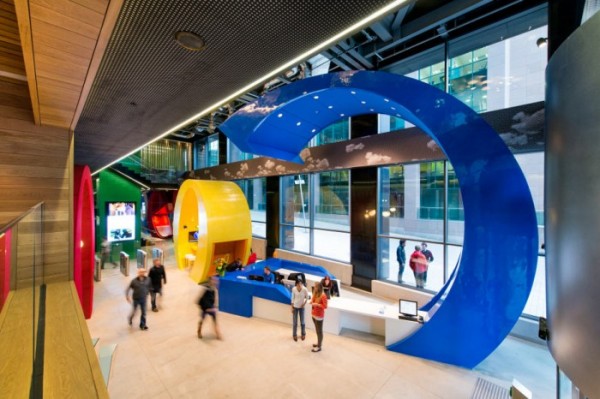
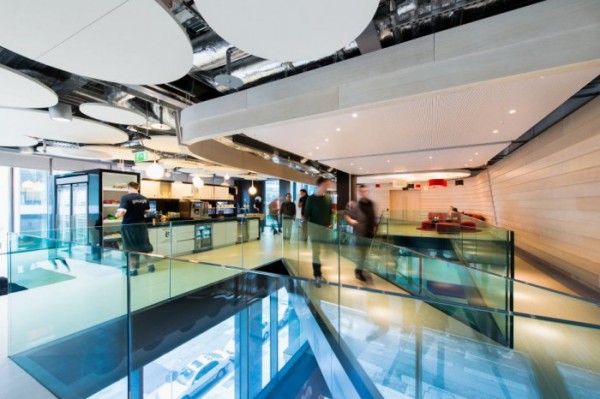
The Google campus in Dublin brings together several buildings, including Google Docks, Gordon House, Gasworks House and other office spaces around Barrow Street. The project became known not only for its scale, but for the way it reimagined the idea of a corporate office. Instead of one monolithic building, it offers a city within a city. Instead of identical floors, it offers different scenarios for working, meeting and restoring energy. Instead of strict office anonymity, it creates an environment that constantly reminds people: you are not simply at a workplace, but in a space designed for movement, ideas and encounters.
An office as a campus, not a box
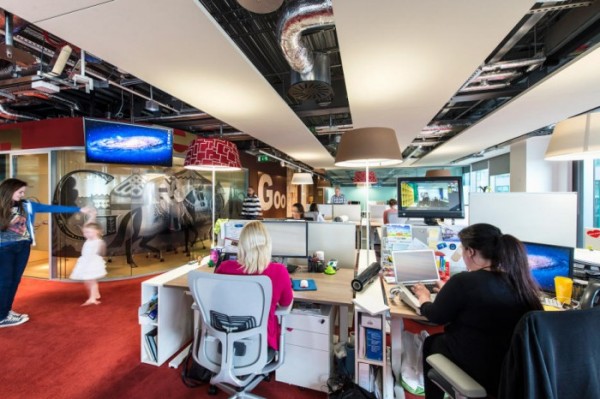
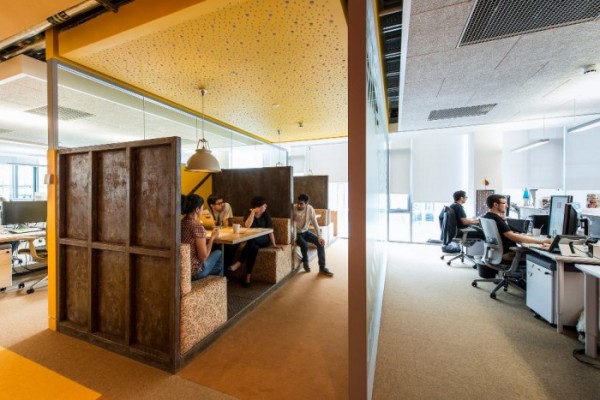
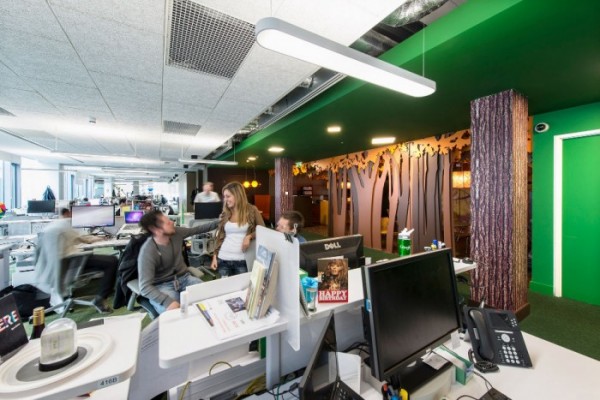
The main feature of Google’s Dublin office is its campus logic. It does not resemble a traditional office where a person enters a building in the morning, sits at a desk and spends the day inside the same functional cell. Here, the space works like a small city: there are work zones, meeting rooms, cafés, informal gathering points, rest areas, fitness spaces, play zones, terraces and routes connecting different buildings.
This approach did not appear by accident. Google has always treated the office not only as a place where employees complete tasks, but also as a tool of culture. A chance meeting at a coffee station, a conversation after a workout, an idea born in a corridor or on a terrace - all of this is considered part of the work ecosystem. Design here functions not as decoration, but as soft infrastructure for communication and creativity.
In this sense, Google Dublin became an example of how twenty-first-century offices began competing not only through square footage, but through the quality of experience. A good office no longer has to look severe and neutral. It can be colourful, emotional, flexible, almost theatrical - if that helps people feel freer, interact more often and work more productively.
Design that works with emotion
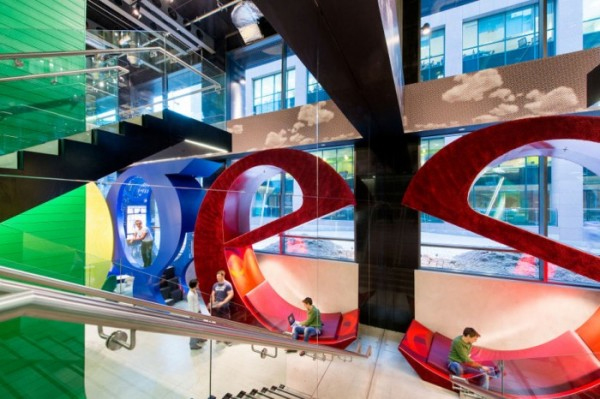
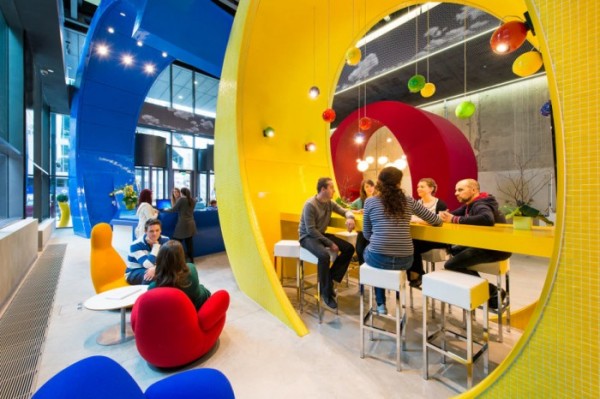
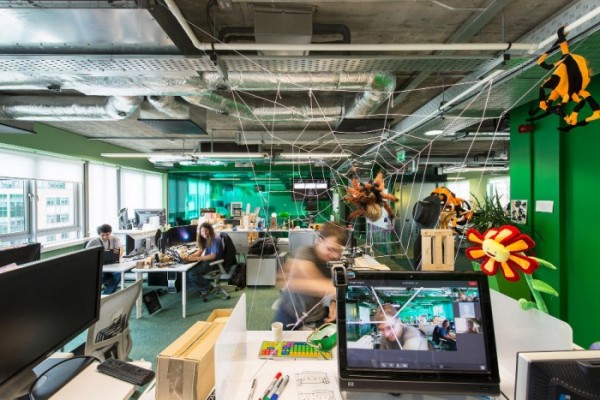
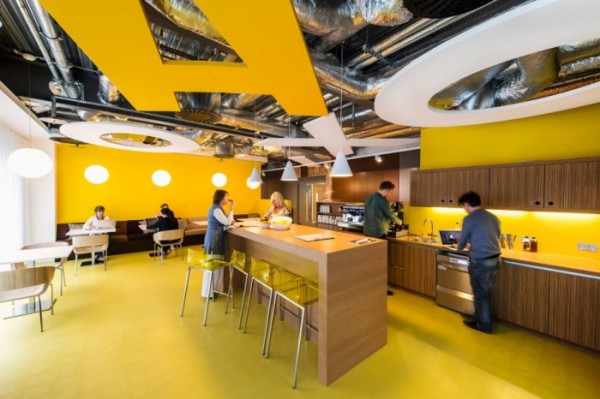
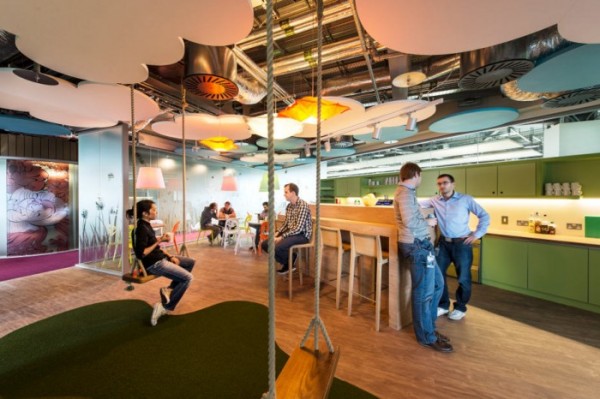
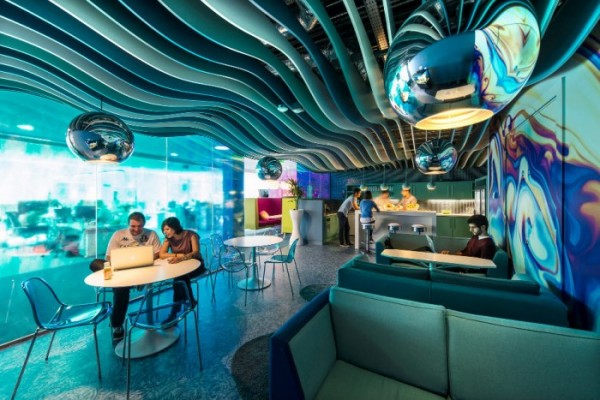
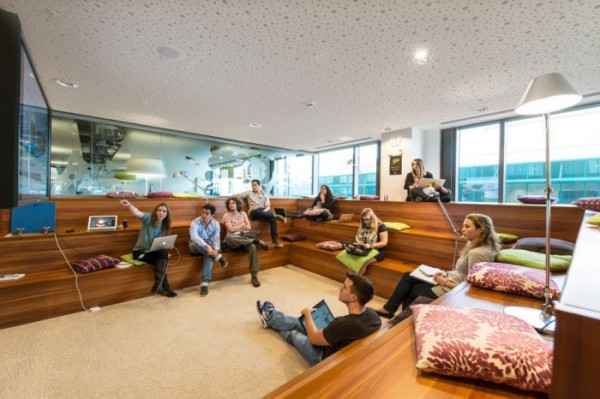
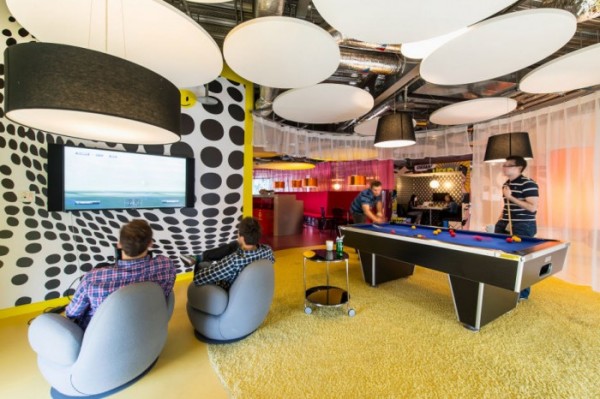
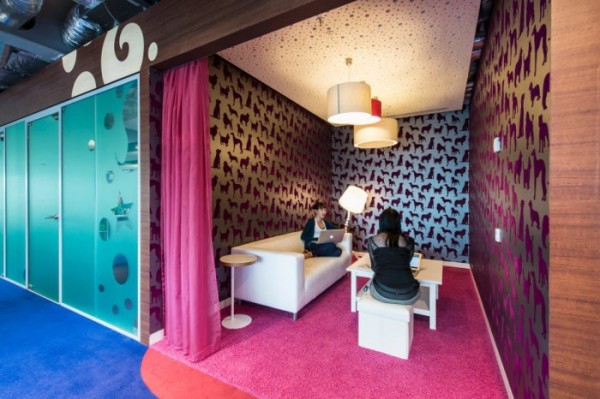
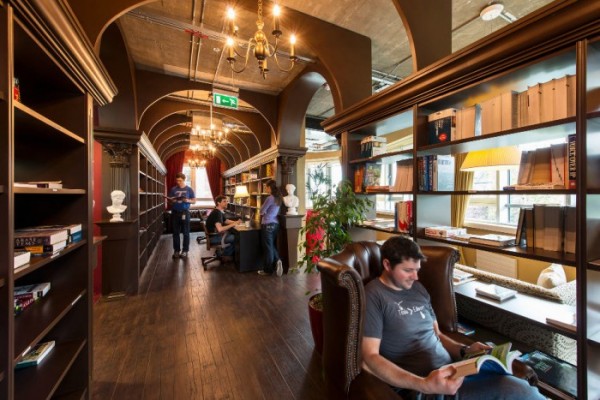
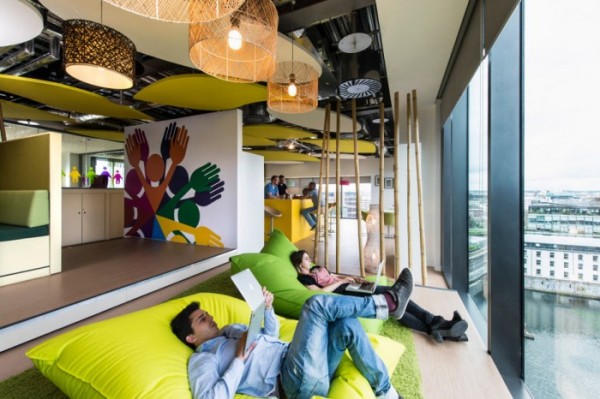
The interiors of Google in Dublin are often described as bright, layered and highly visual. There are saturated colours, unusual furniture, graphics, themed areas, playful elements and details that may at first seem almost unserious. But this is precisely the logic: the space is designed to remove some of the heaviness of office life and create the feeling of a living environment.
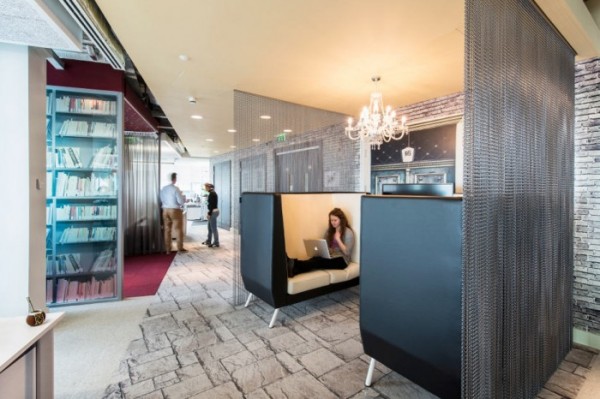
In different areas, one can see motifs connected with Ireland, urban culture, technology, travel and nature. Some spaces are designed for concentration, others for quick conversations, others for teamwork, and others for recovery. A modern office is no longer built around one universal model of a workplace. It recognizes that throughout the day a person needs different states: focus, exchange of ideas, pause, movement, privacy and social connection.
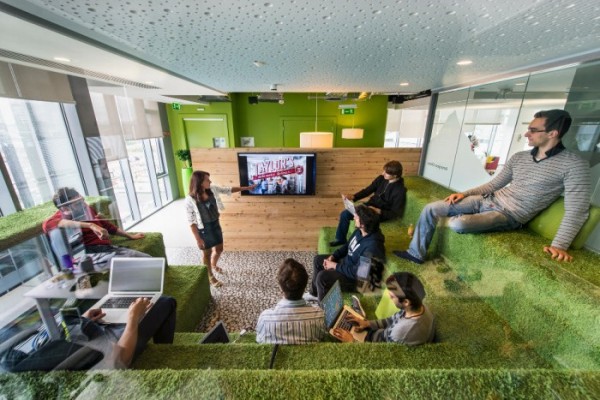
This is what makes Google’s design interesting even to people outside the technology industry. It shows that interiors can shape behaviour. If you create only rows of desks, people will behave as if they are in rows of desks. If you create many different scenarios, people begin to change the format of work and interaction more freely.
Perks as part of a system, not just entertainment
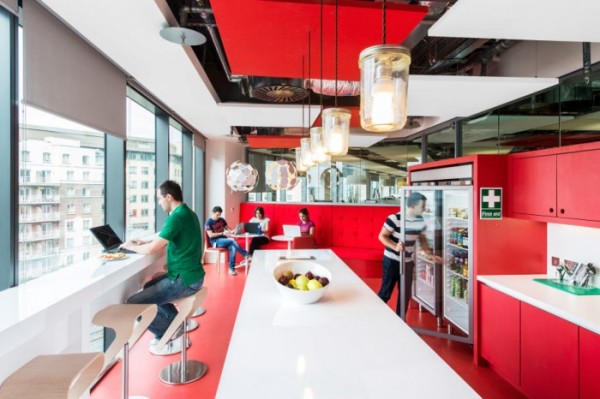
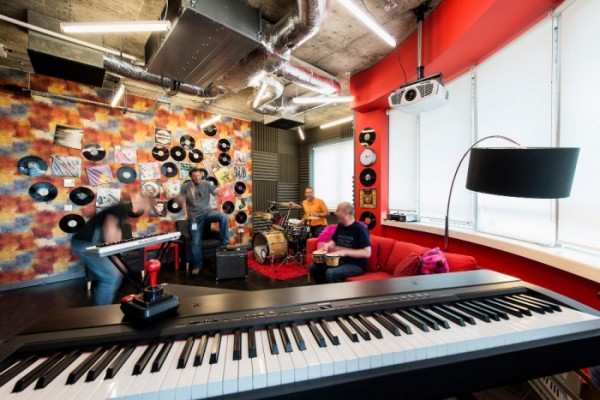
Google offices are famous for employee perks: cafés, micro-kitchens, gyms, rest areas, game rooms, pool tables, informal lounges, terraces and rooftop gardens. In the Dublin campus, this philosophy is also clearly visible. But it would be too superficial to see these elements only as “toys” or a way to impress visitors.
In a well-designed corporate environment, such perks perform a practical function. Cafés and micro-kitchens simplify daily life and create points of contact between teams. Fitness and rest areas help release tension. Game and lounge spaces make communication less formal. Terraces and green areas provide air and pause. Together, these elements support not only comfort, but also the internal speed of the organization.
Of course, this approach has its critics. An office that contains everything can quietly blur the boundary between work and personal life. The more comfortable a person feels inside the corporate environment, the more time they may potentially spend within it. That is why the office of the future must be not only beautiful and generous, but also honest: it should help people work better without turning life into an endless stay at work.
Dublin as a European technology stage
The choice of Dublin for such a large office was not accidental. Ireland has become one of the major European centres for international technology companies thanks to the English language, access to the European market, an educated workforce and a business environment attractive to global companies. Google has been present in Ireland since the early 2000s, and over time its Dublin offices have become an important part of the city’s identity.
Grand Canal Dock changed along with the arrival of technology companies. Former industrial and dockland areas gradually became a district of offices, homes, restaurants, cultural venues and modern urban life. This process has two sides. On one hand, it brought jobs, investment and new energy to the city. On the other, it intensified questions about housing costs, gentrification and the balance between global corporations and the local urban fabric.
This is why Google’s Dublin office is interesting not only as an interior design project. It shows how large technology companies change cities. They create new workplaces, attract international professionals, shape districts and influence how a city imagines its own future.
A multilingual environment and the culture of scale
Google’s Dublin offices bring together employees from many countries who speak dozens of languages. This international character is not just an attractive statistic, but part of the functional logic of the company. A European office must serve different markets, cultures, advertisers, users and business divisions. Its work environment therefore inevitably becomes multilingual and multicultural.
For design, this is also a challenge. The space must be universal enough to be understood by people from different cultures, yet distinctive enough not to become a faceless international airport. A good global company office must create a sense of belonging without forced uniformity: a person from Spain, Poland, France, Ukraine, Canada or India should feel not like a guest in someone else’s style, but like a participant in a shared environment.
Google addresses this through flexibility, visual energy and a variety of scenarios. There is no single mandatory aesthetic for every situation. The campus works more like a collection of different moods, where each person can find the right format: a quiet zone, an open area, a meeting room, a café, a terrace or an informal place for conversation.
What this office says about the future of work
After the pandemic, many companies began reconsidering the meaning of the office. If a person can work from home, why come into a corporate building? The answer can no longer be formal. The office must offer what home often cannot: live interaction, team energy, rapid exchange of ideas, access to shared culture, a sense of scale and belonging.
Google’s Dublin campus illustrates this new role of the office well. It is not simply a place for a computer and a chair. It is the company’s social and cultural infrastructure. What matters is not only where an employee sits, but where they meet others, where they accidentally hear a new idea, where they switch modes, where they recover and where they feel their work is part of something larger.
At the same time, the future of the office will probably not be about endlessly adding entertainment. People need more than cafés and game areas. They need good light, acoustics, the ability to concentrate, privacy, a healthy rhythm, respect for personal time and a space that does not overload the nervous system. The most mature offices of the future will not be the loudest, but the smartest.
Why Google Dublin remains an important example
Google’s Dublin office became one of the symbols of an era in which the workplace stopped being a neutral background and became part of brand, culture and urban identity. It shows that office design can be a strategy: attracting talent, accelerating communication, creating emotional connection with the company and turning work into a richer experience.
But it also raises an important question: what should an office be in order to serve the human being, not only productivity? The answer is not one pool table, one free café or bright furniture. The answer lies in whether the space can support different sides of human work: concentration and communication, discipline and freedom, efficiency and recovery, global scale and local character.
That is why Google’s Dublin office is interesting not only as a place where one of the world’s largest technology companies works. It is an example of how architecture and design can tell the story of a new work culture - more flexible, more international, more visual and far more demanding of the quality of the everyday environment.