
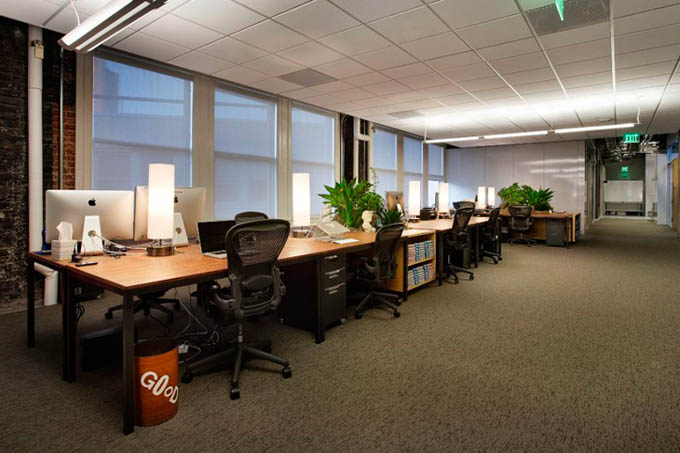
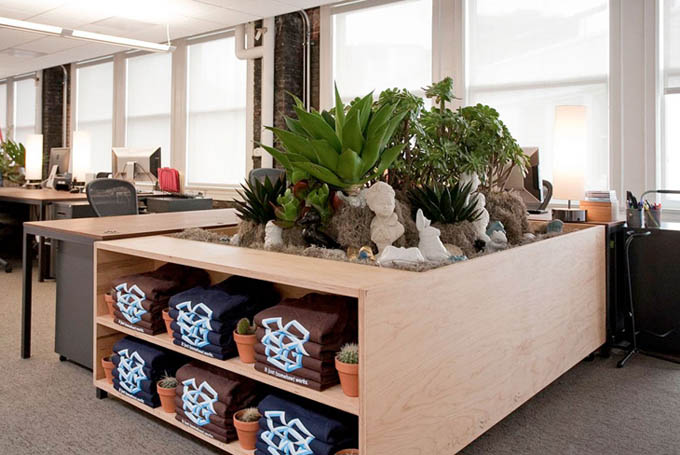
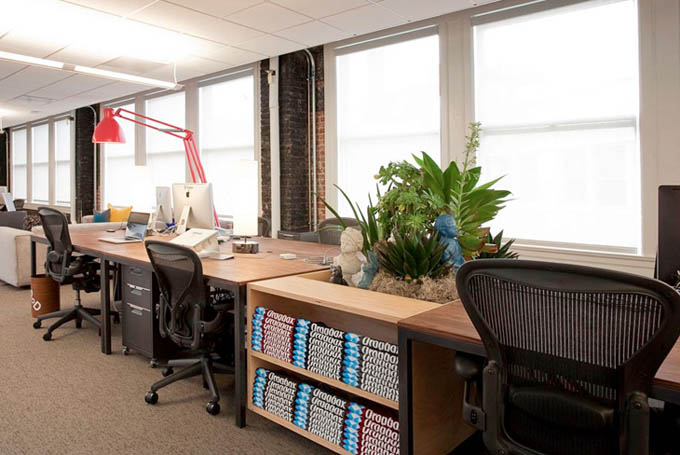
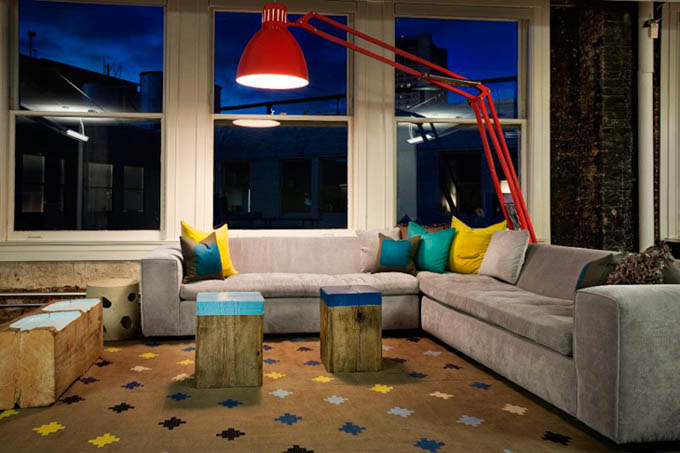
The Dropbox office without a single private office
How tech companies turned the workplace into culture
The office of the future was once imagined as a place without walls, without executive suites and without heavy corporate hierarchy. Space was supposed to function not as a collection of rooms, but as a living system: for focus, meetings, quick ideas, spontaneous conversations, rest and a sense of belonging to a team. One of the clearest symbols of this era was the Dropbox office in San Francisco - a project in which architecture, design and corporate philosophy were brought together in one large experiment about how work inside a technology company should feel.
Dropbox Inc., owner of one of the best-known cloud services for storing and sharing files, significantly expanded its office space in San Francisco during a period of rapid growth. The company, which had once operated from much more modest premises, moved into a large headquarters where the work environment was conceived not as a traditional office, but as a city inside a building.
The Dropbox headquarters in San Francisco became one of the most discussed examples of technology office design. The space was developed by Rapt Studio, AvroKO and Dropbox’s internal team. The concept was built around the idea of a village or urban structure: with central gathering points, distinct neighbourhoods, meeting areas, cafés, lounges and spaces where employees could quickly move between different modes of work.
A workspace without offices
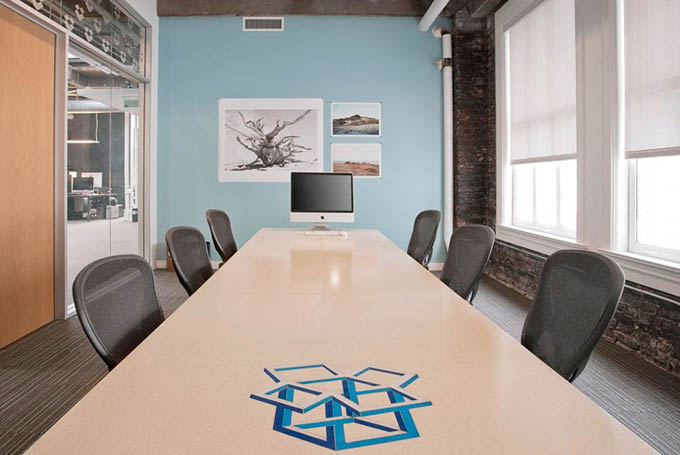
One of the defining features of the office was its rejection of traditional office hierarchy. There was no familiar system of separate executive offices and closed rooms as symbols of status. Instead, the space was organized around open work areas, flexible meeting rooms, lounge areas and shared places where people from different teams could cross paths naturally rather than only through scheduled calendar meetings.
The idea was simple and very characteristic of the technology culture of the 2010s: if the Dropbox product helps people work anywhere and exchange files almost invisibly, then the physical office should also avoid becoming a heavy administrative machine. It should be an environment that makes the movement of information, ideas and people easier.
This approach was not merely a fashionable image for presentations. The open office carried a management philosophy: fewer barriers, more transparency, less distance between teams and more accidental encounters. In a period of rapid growth, that seemed especially important. When a company expands quickly, the greatest danger is losing a shared culture. Architecture was expected to help preserve it.
The office as a city
The most interesting technology offices of that period were rarely designed simply as desks plus conference rooms. They tried to imitate an urban environment: streets, squares, small districts, places for chance conversations, quiet corners and communal spaces. Dropbox followed exactly this path.
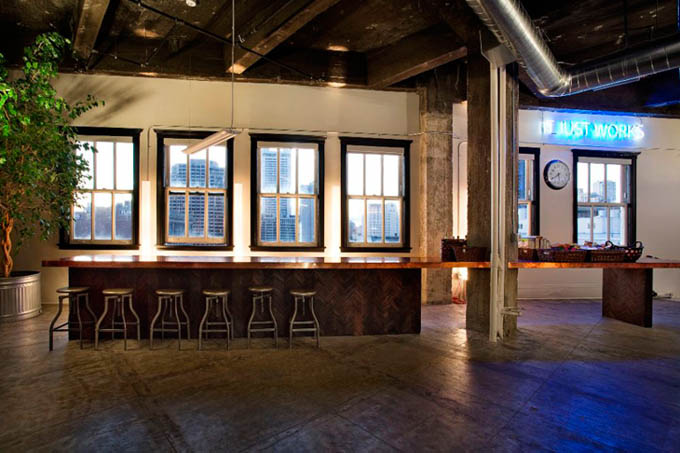
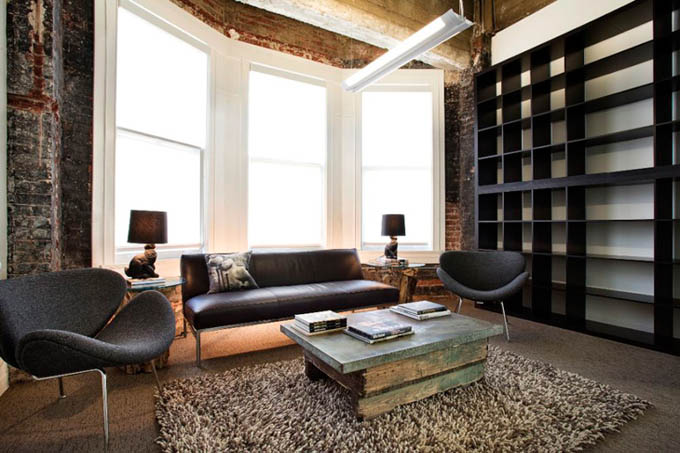
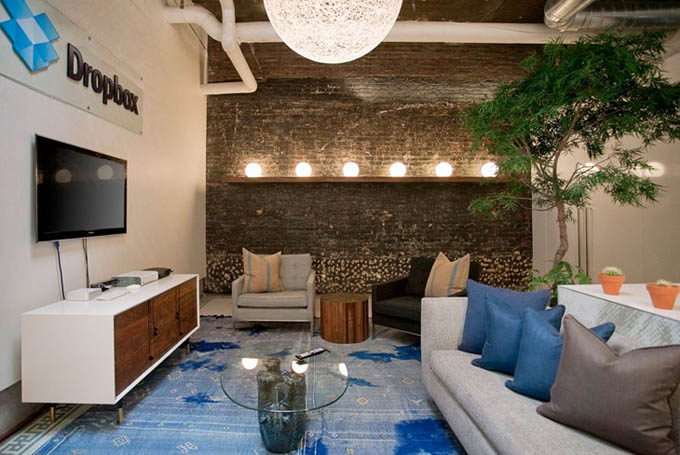
Inside the headquarters, work zones sat alongside cafés, conference spaces, lounges, kitchens, informal meeting areas, fitness areas and places to gather. The office was meant to support different human states throughout the day: deep work, team discussion, a quick conversation, lunch, a short pause, a presentation, a meeting with colleagues or a company-wide Friday gathering.
In good office architecture, beauty is not enough. Scenarios matter. Where does a person encounter colleagues from another team? Where can an idea be discussed without booking a room? Where can someone spend an hour in quiet concentration? Where does the whole company gather as one? The Dropbox office tried to answer exactly these questions.
The music room and the energy of informal culture
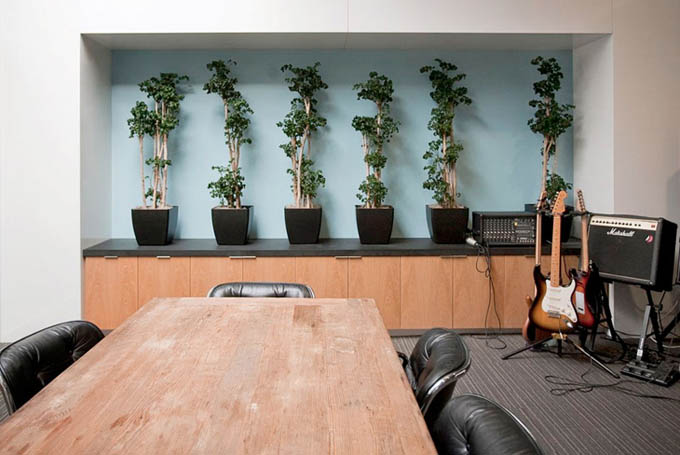
One of the most memorable spaces was the music room. It included guitars, a piano, drums and other instruments. At first glance, this may seem like a pleasant employee perk, but such spaces played an important role in shaping the corporate atmosphere.
The music room functioned as the opposite of a private office: a place where people could meet not by title, but by interest. It could host jam sessions, informal gatherings, Friday meetings and moments when work stopped being only a production process. For a technology company, this was part of the image: ideas are born not only at a desk, but also where employees feel freedom, trust and shared energy.
These are the kinds of details that separated the offices of the new technology era from traditional corporate headquarters. In the old model, status was expressed through an office, an assistant, a view and a closed door. In the new model, a company’s status was expressed through culture: food, music, flexibility, design, informality and the ability to create an environment people wanted to enter.
The beauty and contradiction of the open office
Yet the story of offices without private rooms turned out to be more complicated than it first appeared. An open office can indeed strengthen communication, reduce distance and help teams exchange ideas more quickly. But it can also interfere with concentration, increase noise and create a feeling of constant availability. Not every employee is equally productive in an open environment, and not every kind of work benefits from endless visibility.
That is why the best offices gradually moved away from the naïve idea that everyone should sit in one open space. A more mature approach is not simply the absence of offices, but a diversity of scenarios: open zones for teamwork, quiet rooms for focus, small meeting rooms, phone booths, lounge spaces, shared areas and places where the rhythm of the day can change.
The Dropbox office is interesting precisely as a transitional symbol. It reflected the technology world’s belief in openness, speed and shared culture, while also showing that the future of work cannot be reduced to one universal format. People need not only communication and energy, but also quiet, privacy, focus and the right to psychological comfort.
After the pandemic: a new meaning for the office
The pandemic sharply changed the idea of why an office is needed at all. Dropbox became one of the first major technology companies to move to a Virtual First model, making remote work the default and the office a place for gatherings, team sessions, brainstorming and social interaction. This was an important turn: if the office once tried to contain the entire work life, its role has now become more precise.
The modern office no longer has to be a place where a person goes every day simply because that is the rule. Its value must be clear. It is needed when physical presence genuinely provides more than a screen: for trust, difficult conversations, team energy, learning, culture and those spontaneous conversations that are hard to schedule as a call.
In this sense, the Dropbox story is especially revealing. A company whose product allowed people to work anywhere first built one of the most striking physical offices of the technology era, and then became an example of a more flexible relationship with workspace. This is not a contradiction, but an evolution of the same idea. The office stopped being the mandatory container of work and became a tool to be used intentionally.
What this office says about the future of work
The Dropbox office without a single traditional private office was not just a design gesture. It was an attempt to give physical form to a new corporate culture: less hierarchy, more movement, more visibility, more shared points of connection and more emotional connection between people. At their best, such spaces can genuinely accelerate culture.
But the deeper lesson is more important. A good office of the future is not necessarily the most open, the most expensive or the most visually dramatic office. It is a space that honestly understands how people work. Sometimes they need the energy of a group. Sometimes they need silence. Sometimes they need a stage for a big idea. Sometimes they need a small room where they can think clearly. Sometimes they need a music room, where a team unexpectedly becomes not a list of job titles, but a living community.
Dropbox showed that an office can be more than a place with desks. It can be part of a brand, a culture and the internal architecture of a company. And although the very idea of work changed after the pandemic, this project remains an important example: workplace design matters. It does not solve everything, but it shapes behaviour, mood and the sense of what a company considers important. That is the true power of a good office - not the number of square feet, but the ability to turn space into culture.