
The Versace Mansion
Еhe house where Miami Beach became a fashion legend
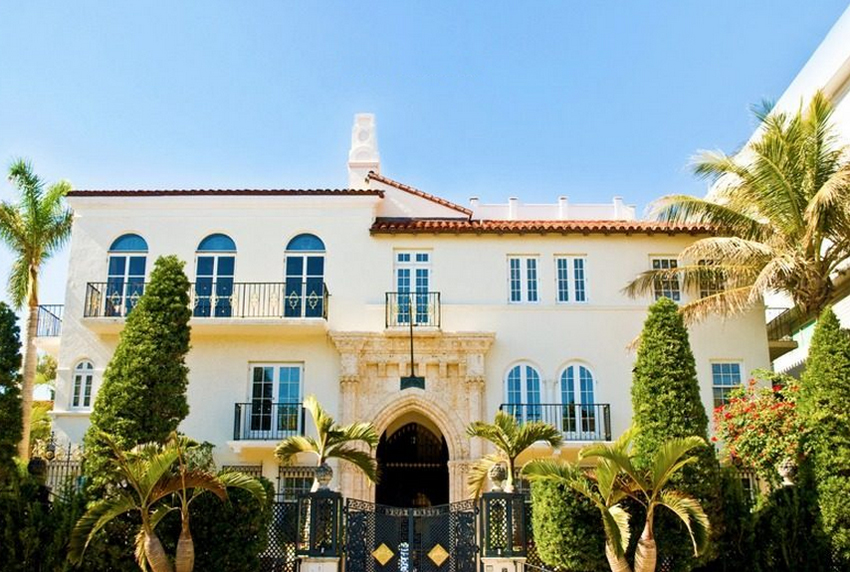
Ocean Drive has many beautiful façades, but Casa Casuarina is impossible to confuse with any of them. Behind its heavy gates, decorated with Medusa and Greek key motifs, lies not simply the former home of Gianni Versace. It is one of the most mythologized addresses in America - a place where Mediterranean Revival architecture, Italian theatricality, Hollywood fame, tragedy and the cult of luxury came together in a story that Miami Beach still tells to tourists, photographers and fashion devotees from around the world.
Casa Casuarina, known widely as the Versace Mansion, stands at 1116 Ocean Drive in the historic South Beach district. Today it operates as the luxury boutique hotel The Villa Casa Casuarina, with ten unique suites and the restaurant Gianni’s. But before becoming one of Miami’s most recognizable houses, the villa lived several entirely different lives: the mansion of a Standard Oil heir, an apartment building, an almost forgotten historic property, the private residence of one of the most vivid designers of the twentieth century and, finally, a hotel of legend.
A house born from a love of history
Casa Casuarina was built in 1930 for Alden Freeman - heir to a Standard Oil fortune, traveller, collector and a man with a clear taste for architectural drama. Freeman was deeply interested in history, travelled widely and wanted to create in Miami Beach not just a house, but a romantic architectural image connected to the colonial Spanish Americas.
The design was inspired in part by the Alcázar de Colón in Santo Domingo, a palace connected with the history of Christopher Columbus’s family. Casa Casuarina acquired arches, a courtyard, stone details, the atmosphere of an old Mediterranean palazzo and a decorative richness that would later align perfectly with Versace’s aesthetic. Even the name Casa Casuarina sounds like part of a literary legend: it has been linked either to a casuarina tree that grew on the property or to W. Somerset Maugham’s story collection The Casuarina Tree.
After Freeman’s death, the house lost its status as a private residence. It was purchased by Jacques Amsterdam and converted into an apartment building called the Amsterdam Palace. Later it became known as the Christopher Columbus Apartments. This chapter was far less glamorous: the future palace of fashion spent years as an unusual but tired building rather than a symbol of luxury.
How Versace saw a palace where others saw an old house
Gianni Versace bought Casa Casuarina in 1992. According to legend, he noticed the house while walking along Ocean Drive and was struck by its resemblance to architectural images he loved. For most buyers, it would have been a complicated historic property requiring expensive restoration. For Versace, it was a stage on which he could build his own version of Miami glamour.
He purchased not only the house itself, but also the neighbouring Revere Hotel, which was demolished to make way for a pool, garden and new wing. Tens of millions of dollars were spent on reconstruction, expansion and interior design. Versace restored the house’s original name, returned it to private use and transformed Casa Casuarina into an extension of his own aesthetic: bold, sensual, Baroque, Italian and instantly recognizable.
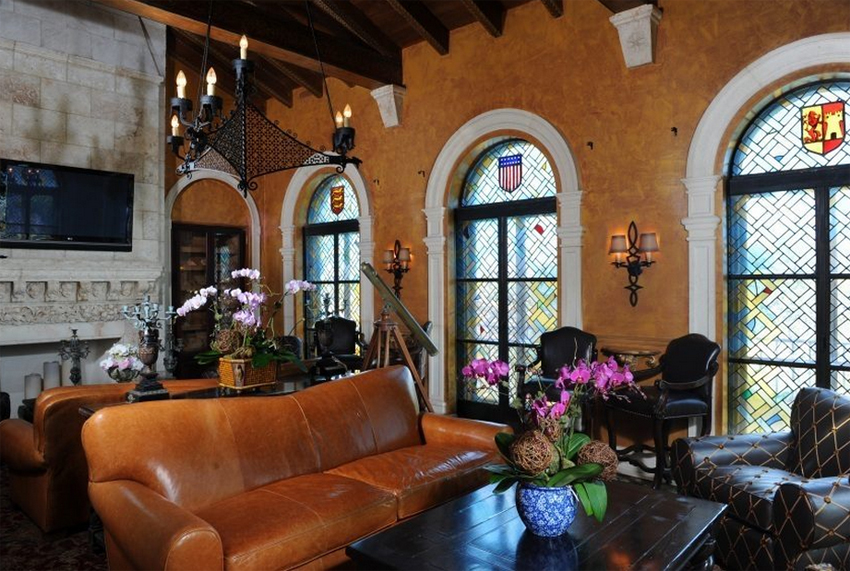
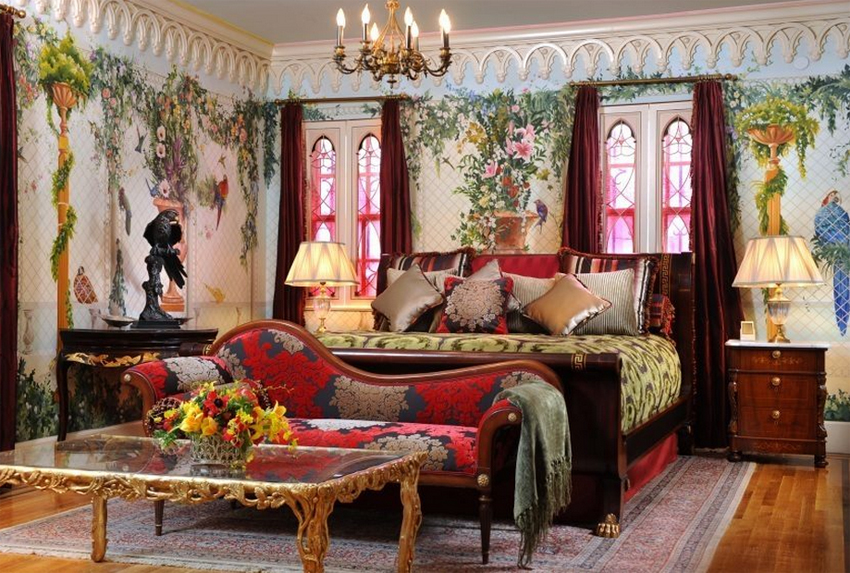
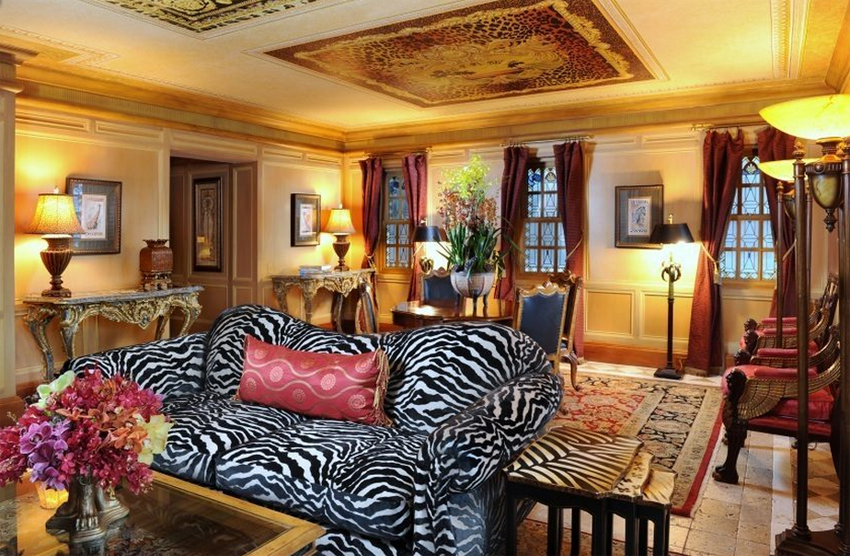
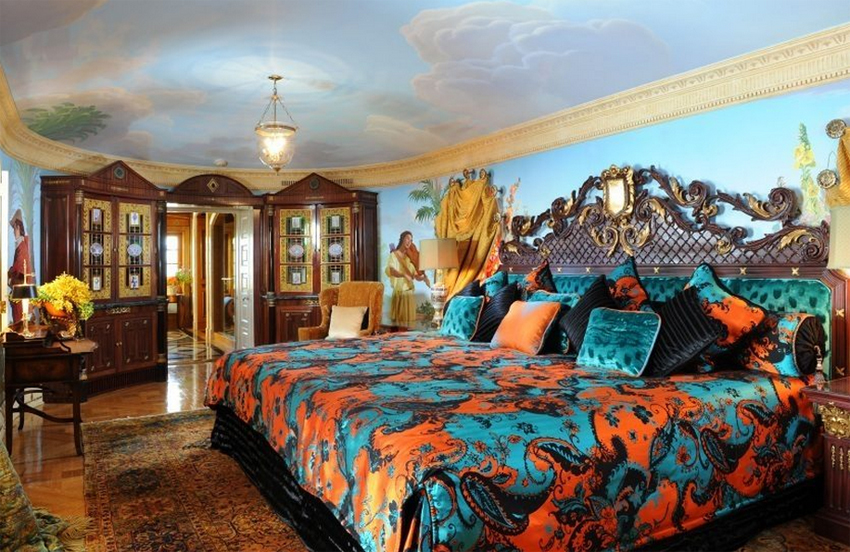
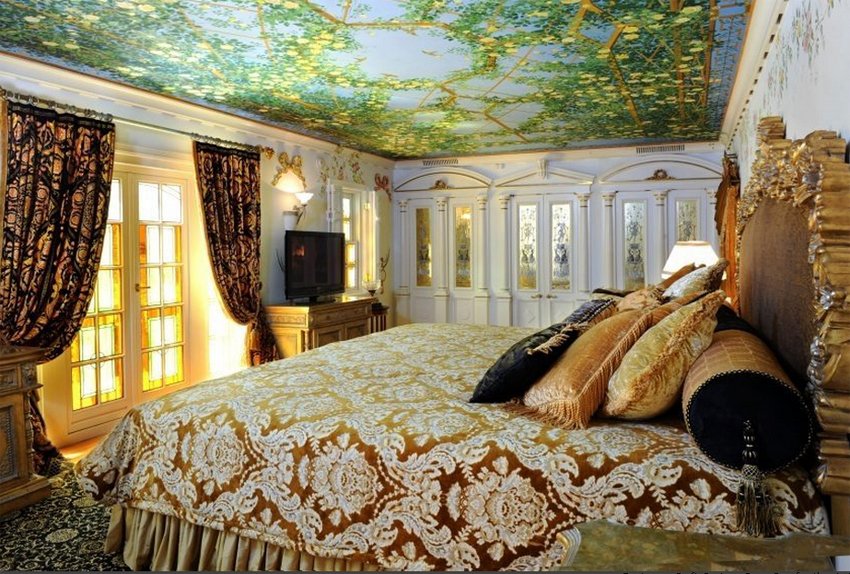
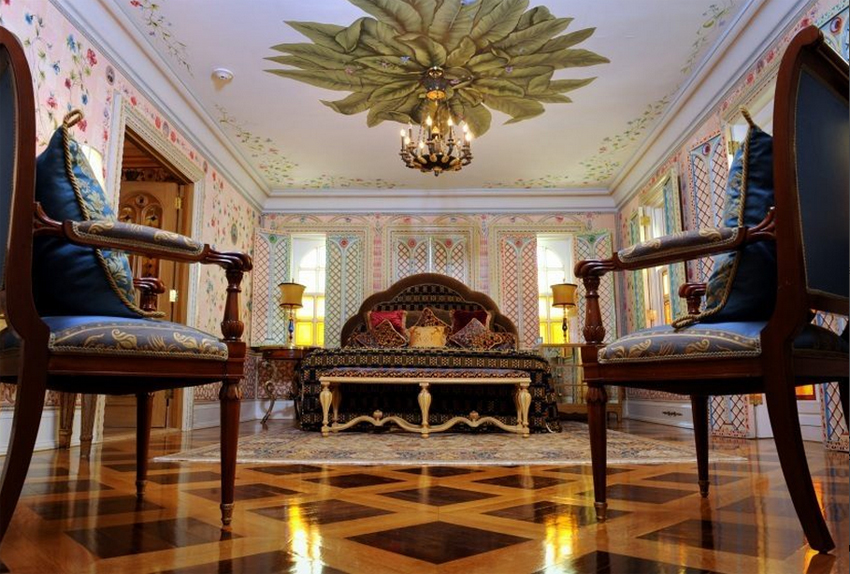
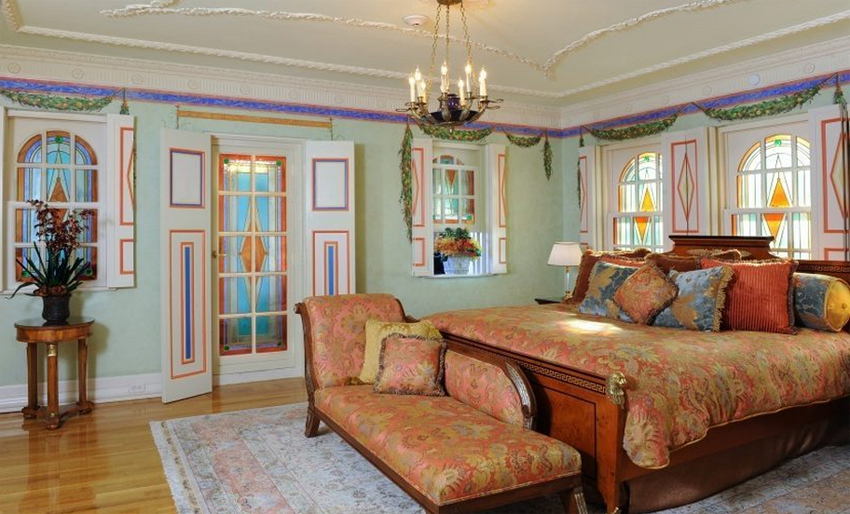
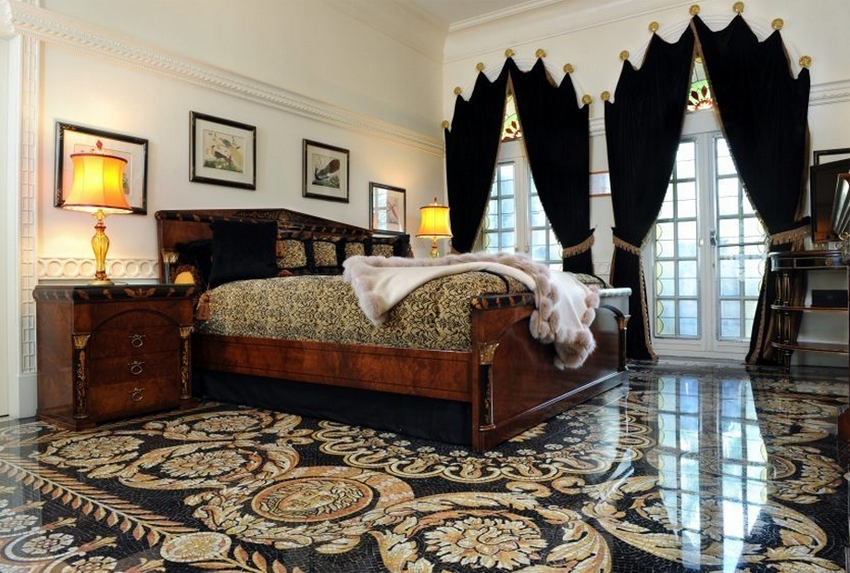
The interiors gained mosaics, frescoes, rich colour, antique references, painted ceilings, marble, gold, ornament and a decorative excess that might have looked heavy in another owner’s hands, but became the language of personality in Versace’s. The house was not merely a place to live. It was a statement: about taste, the power of image, love of history and the right to turn life into theatre.
The pool, the mosaics and 24-karat gold
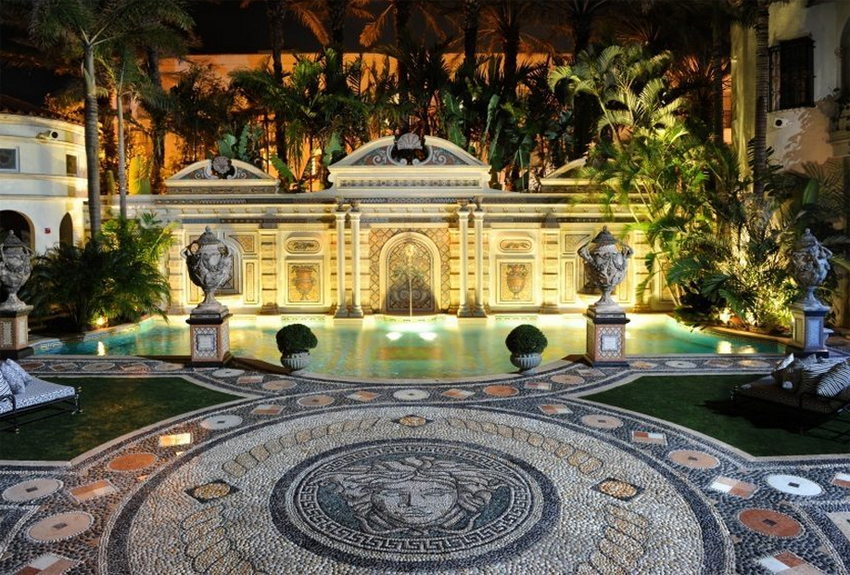
The most famous part of the villa is the pool, lined with thousands of mosaic tiles. Its decoration includes elements made with 24-karat gold, and the entire composition has become one of the house’s most recognizable symbols. This is not simply a pool for swimming, but almost a piece of stage design: a reflection of sky, palms, façades, ornament and the very luxury that Versace knew how to turn into visual myth.
The gardens and interior spaces were designed as extensions of the house. There were no random details. Every ornament, column, colour, tile and line worked toward the overall image. Casa Casuarina became for Versace not so much real estate as a personal world - a place where Italian high fashion met South Beach, Latin sensuality, Art Deco Miami and the nightlife of the 1990s.
Miami in the 1990s and the myth of the house
In the 1990s, Casa Casuarina became one of the addresses around which a new image of Miami Beach was formed. South Beach was no longer just a faded district with beautiful architecture from the past. It was becoming a stage for fashion, music, restaurants, celebrities, photographers and nightlife. Versace was one of the people who sensed this energy and amplified it with his presence.
The house welcomed famous guests, drew endless attention and symbolized the moment when Miami Beach began to be seen not only as a beach destination, but as a place of style. Casa Casuarina was a private residence, but in cultural terms it had already become a public image. Passersby photographed the gates, fashion lovers came to see the façade, and the house entered ever more deeply into the mythology of the city.
Tragedy at the gates
On July 15, 1997, Gianni Versace was shot at the entrance to Casa Casuarina. He was 50 years old. The killer was Andrew Cunanan, whose series of crimes and later death became part of one of the darkest criminal stories of the 1990s. For the fashion world, it was a shock; for Miami Beach, a trauma; and for the house itself, the moment that forever changed how it would be seen.
After that, Casa Casuarina could no longer be viewed only as a beautiful villa. Its image became dual: dazzling luxury and the memory of tragedy, a celebration of form and the shadow of death, a façade for tourist photographs and the site of real human grief. It is this complexity that makes the house so magnetic and at the same time so difficult. It is beautiful, but not serene.
The sale, the auction and the cold logic of the market
After Versace’s death, the villa’s fate changed several times. In 2000, it was purchased by entrepreneur Peter Loftin, and later used as a boutique hotel, restaurant and event space. In 2012, Casa Casuarina was listed for an astonishing $125 million. That price was based not only on square footage and location, but on the name, myth, history, tragedy and uniqueness of the address.
The market, however, proved colder than the legend. After price reductions and financial difficulties, the property was sold at auction in 2013 for $41.5 million to VM South Beach LLC, connected with the Nakash family, owners of the neighbouring Hotel Victor and the Jordache brand. The sale became a revealing lesson in luxury real estate: a famous story can strengthen a property, but it does not cancel the realities of demand, liquidity and deal economics.
Casa Casuarina today
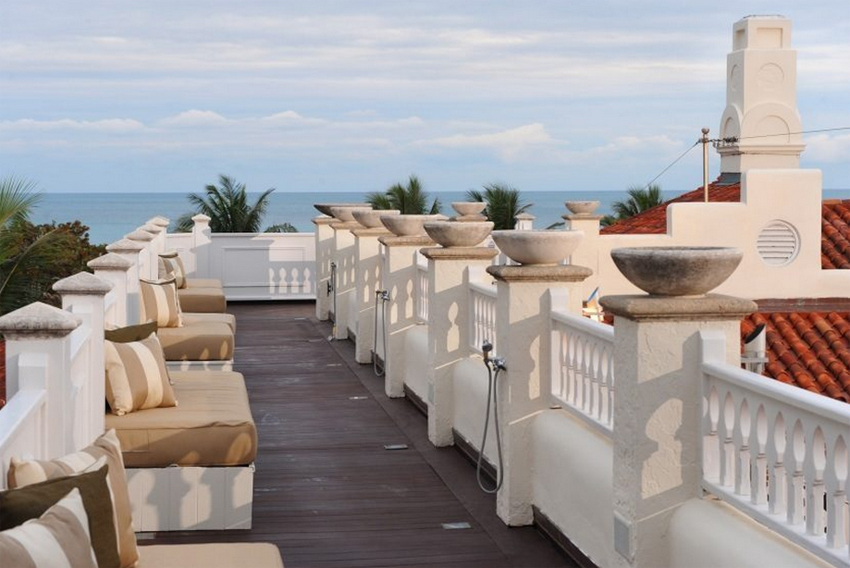
Today, The Villa Casa Casuarina operates as a luxury boutique hotel with ten individual suites. For guests, it offers the rare chance not only to look at the famous façade, but to spend a night inside one of the most famous houses in America. The restaurant Gianni’s continues the line of dramatic, almost theatrical hospitality: dinner here is perceived not just as a meal, but as contact with a myth.
Inside, Versace’s aesthetic is still felt: ornament, mosaics, intensity, gold, palace-like decoration and the ability to turn space into a stage. At the same time, the house now lives a different life. It is no longer a closed private residence, but a commercial property, a historic address, a tourist magnet and part of the cultural memory of Miami Beach.
Why this house still matters
Casa Casuarina matters not only because Versace lived there. And not only because tragedy happened there. Its meaning is deeper. This is a house about how architecture can become a brand, how a private aesthetic can change the perception of an entire district, how real estate becomes a cultural symbol and how a place continues to live after its most famous owner is gone.
In the world of luxury real estate, people often speak about location, square footage, finishes and price. Casa Casuarina shows that sometimes the true value of a property lies elsewhere - in history, image, memory and the ability of a place to create emotion. That is why the Versace Mansion remains one of the most famous addresses in Miami Beach. It is not simply a house on Ocean Drive. It is a stage on which architecture, fashion, fame, tragedy and the eternal human desire to live beautifully met - even if beauty sometimes comes dangerously close to myth.