
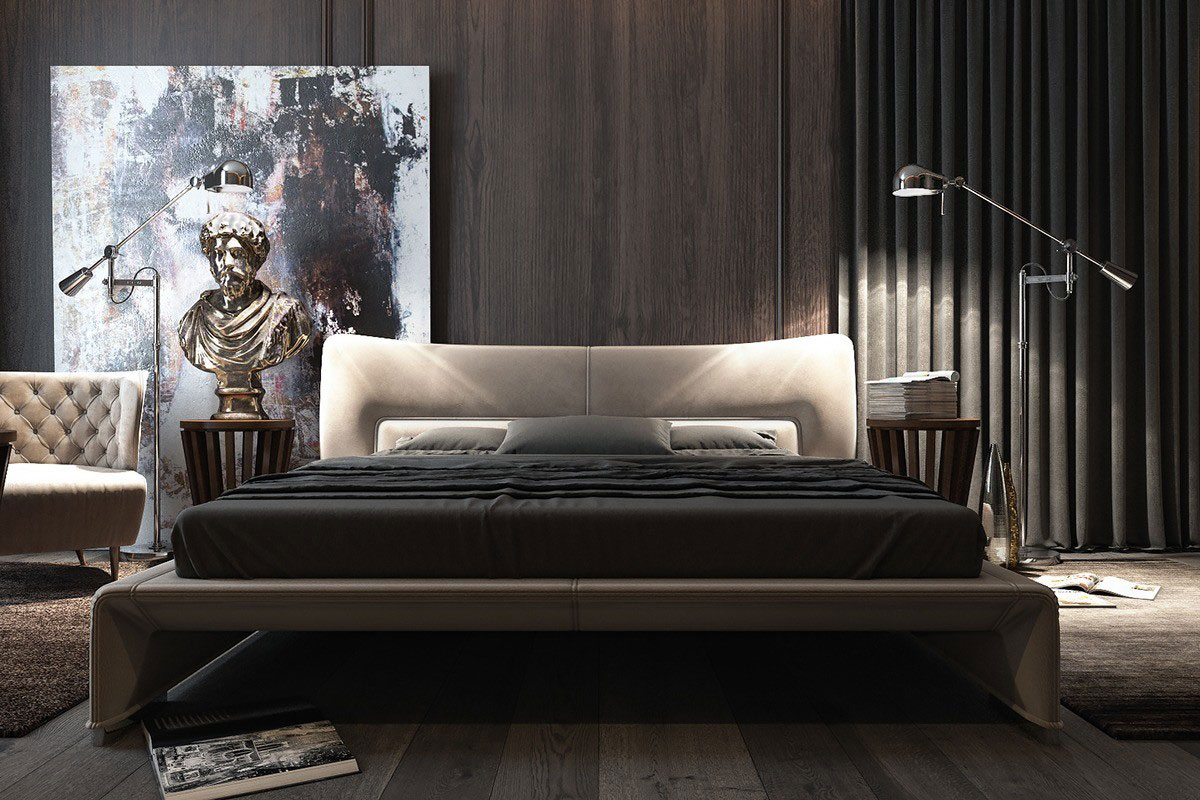
How to create a stunning dark interior
A dark interior is not about gloom. It is about depth, character, intimacy and a very grown-up sense of luxury. Many people still avoid rich shades because they assume dark colours will visually shrink a space, make a home feel heavy or create too much drama. In reality, the opposite is often true: a well-designed dark interior can look more expensive, more inviting and more expressive than a safe pale room with no real character.
The main mistake is thinking that a dark interior must mean charcoal-black walls and minimal light. In fact, the palette is far richer: graphite, inky blue, dark green, chocolate, deep greige, wine, plum, anthracite, saturated olive. Black is best used not as the only star of the room, but as a tool for graphic definition: in frames, lighting, door hardware, furniture legs, slim lines and accents.
A good dark interior is built not on fear of colour, but on balance. It needs light, texture, reflective surfaces, natural materials and precise contrast. Then it becomes not heavy, but enveloping; not gloomy, but stylish; not cold, but genuinely comfortable.
Plan your lighting scenarios
Lighting is the most important tool in a dark interior. A single overhead light almost always makes a room feel flat, harsh and uncomfortable. Rich walls and deep colours come alive only when a space has several layers of light: ceiling lighting, wall lighting, table lamps, floor lamps, decorative light and focused accent light.
In a dark room, warm lamps, sconces, picture lights, lights near a sofa or bed, soft eye-level lighting and accent illumination for niches, shelves or textured surfaces are especially important. It is the lighting that creates the evening atmosphere for which dark interiors are often chosen in the first place.
Before painting walls or buying major furniture, always test the shade in different light: morning, daytime, evening and artificial light. The same deep blue may look noble in daylight and almost black at night. Dark green may feel elegant under a warm bulb and too cold under white light. In a dark interior, such nuances decide everything.
Do not limit yourself to black
Black is powerful, but it should rarely be the only dark shade in an interior. More complex deep tones are usually far more interesting. Dark blue creates a feeling of calm and intellectual restraint. Graphite looks modern and architectural. Emerald or forest green adds depth and a connection to nature. Chocolate and warm brown make a room softer and more expensive in feeling.
The more complex the shade, the more refined the interior usually looks. Simple flat colours can quickly become tiring, while deeper undertones change throughout the day and make the room feel alive. That is the beauty of a dark palette: it works not only as colour, but as mood.
Use textiles
Textiles are one of the easiest ways to soften a dark interior. If a room feels too heavy after renovation, it can be quickly balanced with light bedding, textured cushions, a wool throw, linen curtains or a soft rug. Light textiles do not destroy the drama of a dark space; they add air and touchability.
The rule also works in reverse. If the walls feel too calm and the room lacks expression, introduce deeper textiles: velvet cushions, a dark rug, heavy curtains, a bedspread in wine, pine, graphite or dark chocolate. Texture is what makes a dark colour look expensive rather than simply heavy.
Play with shades
A dark interior should not be one-note. In fact, layering related shades is what makes it feel complex and professional. In a room with dark green walls, wine, bronze, dark blue, tobacco and chocolate accents can all work beautifully. In a graphite interior, beige, milk, caramel and brass details look excellent. In a dark blue space, walnut wood, cream textiles and warm metal feel especially elegant.
The key is not to gather too many random colours. Choose one main dark palette, one or two supporting shades and a few light accents. The room will then feel composed rather than chaotic.
Keep the floor or ceiling light
A dark interior does not require every surface to be dark. On the contrary, the most successful rooms are often built on balance. If the walls are saturated, the floor and ceiling can remain light. This is especially useful in apartments and houses where the ceilings are not very high or natural light is limited.
A light ceiling preserves the sense of height, while a light floor gives the space more ease. At the same time, dark walls still create the desired atmosphere: depth, comfort and a feeling of shelter. Even near-black walls will not look gloomy if there is enough light, air and contrast around them.
Add reflective surfaces
Mirrors, glass, metal, glossy ceramics and polished surfaces are especially important in dark interiors. They catch light, return it to the room and add visual depth. Without such elements, a dark room can feel too dense and closed.
A large mirror opposite a window, a glass coffee table, brass sconces, chrome hardware, glossy tile, a polished tray or a metallic picture frame can noticeably enliven the interior. The goal is not to turn the room into a collection of shiny objects. A few precise reflective surfaces are enough to multiply light and add a subtle gloss.
Use natural stone
Natural stone, or a high-quality imitation, works beautifully in dark interiors. Marble, travertine, slate, granite, quartzite or porcelain stoneware with an expressive pattern can make a space feel more solid and elevated. Stone is especially effective around a fireplace, on a kitchen island, in a bathroom, on a countertop or as a decorative wall panel.
Light stone creates striking contrast against dark walls or furniture. Dark stone, by contrast, makes an interior deeper, more intimate and more dramatic. Surfaces with veining are especially beautiful: they break up monotony and add movement without overwhelming the room.
Add indoor plants
One of the simplest ways to make a dark interior feel alive is to add plants. Against deep walls, greenery becomes especially expressive: leaves look more graphic, and the space immediately feels warmer and more lived in.
Large plants in beautiful planters can replace decorative objects. Ficus, monstera, ZZ plant, snake plant, olive tree or a tall palm all work well in dark interiors. The important thing is to consider the light. If natural light is limited, choose plants that tolerate partial shade well, or add a grow light in an attractive fixture.
Bring in wood
Natural wood is an ideal partner for a dark palette. It adds warmth, texture and the feeling of a real home. Without wood, a dark interior can become too severe or cold, especially if it contains a lot of stone, metal and smooth surfaces.
Light wood makes the space feel easier and more Scandinavian in mood. Walnut, oak, dark veneer and richer wood tones add substance and a more luxurious note. Wood works especially well in flooring, furniture, wall panels, kitchen fronts, shelving and decorative details.
Work with contrast
In light interiors, dark accents are often added for depth. In dark interiors, the reverse is true: they need light elements so the eye can rest. White, milk, beige, light grey, sand and natural linen tones help balance a saturated palette.
This can be an armchair, rug, lampshade, bedding, curtains, ceramics, artwork, stone countertop or even a few decorative objects. Contrast should not feel sharp and accidental. It works best when light accents repeat in several places and tie the room together.
Add complex bright accents
There is room for colour in a dark interior, but it should be grown-up colour. Simple bright tones often look cheap against a deep palette, while more complex shades make the space more interesting. Burgundy, terracotta, ochre, mustard, rust, deep turquoise, plum, aubergine and muted coral all work well.
Use these colours in measured doses: cushions, an armchair, a painting, a vase, a rug or a small piece of furniture. This keeps the interior refined without making it dull.
Combine textures
Texture is the key to comfort in a dark interior. If every surface is smooth and monochrome, the room can look flat and heavy. Add wool, linen, bouclé, velvet, leather, wood, metal, stone, woven accessories, handmade ceramics and chunky knits, and the space immediately becomes alive.
Textures are especially beautiful in a dark palette. Velvet catches light more deeply, wood feels warmer, metal glows more softly and stone becomes more dramatic. It is the combination of different materials that creates the feeling of an expensive interior, even when the colour scheme is restrained.
Think through the décor
Décor in a dark interior should be intentional, not random. Against a saturated background, large artworks, graphic pieces, sculptural vases, books, ceramics, metal objects, photographs in slim frames and expressive lighting all look particularly strong. Dark walls often act like a gallery backdrop, allowing art and objects to stand out more clearly.
Do not overload the room with small items. It is better to have fewer objects that are larger, better made and more expressive. In a dark interior, random décor is more visible than in a pale one, so each object should contribute to the overall atmosphere.
Pay attention to the small details
Switches, outlets, handles, hinges, door trim, ventilation grilles and curtain rods often seem like minor details. But they can either support the impression of a high-end interior or instantly cheapen it. Against dark walls, a cheap white outlet or random plastic hardware becomes especially noticeable.
Choose details deliberately: black, brass, bronze, graphite or painted to match the walls. Good hardware, elegant switches, quality handles and thoughtful finishing create a sense of completion. In a dark interior, there are no secondary details: every line, surface and element participates in the overall drama of the space.
A dark interior requires a little more courage and attention than a neutral light one. But that is exactly why it can look so impressive. Choose the right shade, plan the lighting, add textures, natural materials and precise contrast, and a dark room becomes not gloomy, but deep, inviting and truly luxurious. It is an interior not for those who fear colour, but for those who understand the power of atmosphere.