
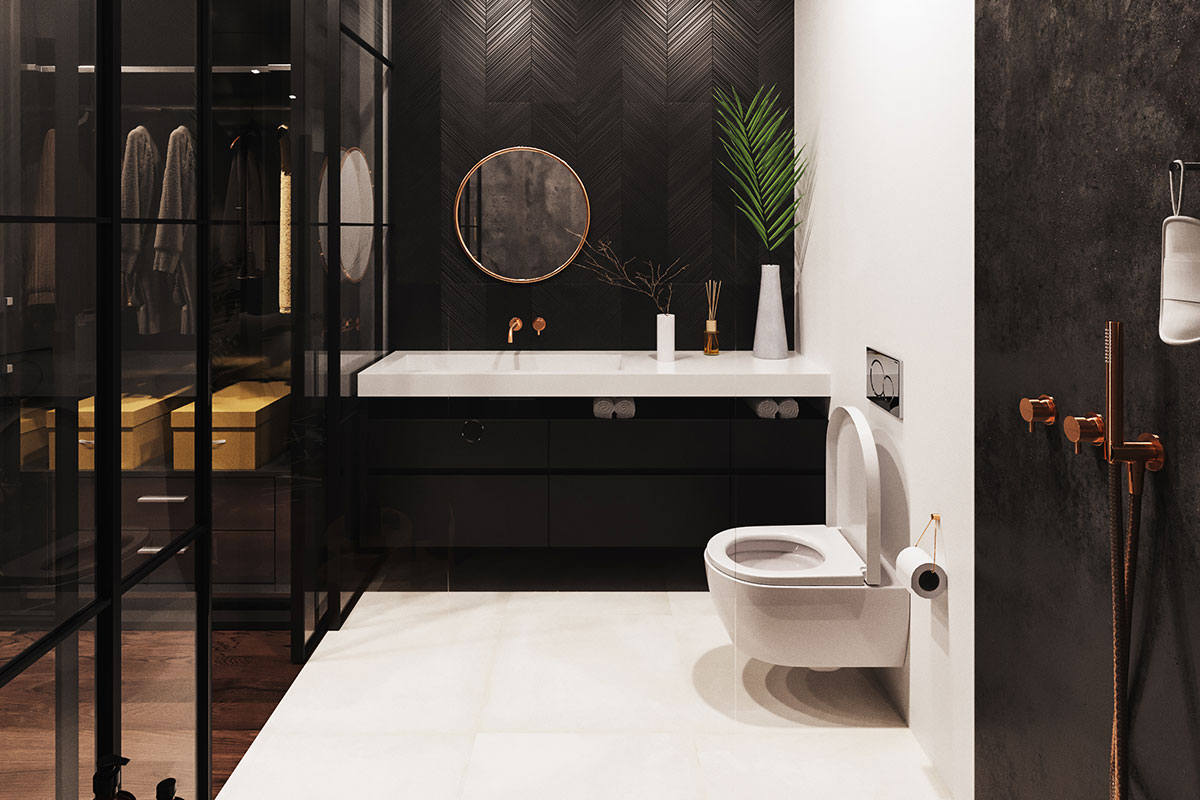
How to make a bathroom stylish and modern
A good bathroom today is no longer simply a place with a sink, a shower and a cabinet for towels. It is a private space for recovery: a small home spa, a morning ritual, an evening pause, a zone of quiet and order. That is why modern bathroom design is not built around one fashionable object, but around a feeling: how the light falls on the tile, how easy it is to store things, how pleasant the faucet feels to the touch, how simple the surfaces are to clean, and whether you want to stay there a few minutes longer.
If you are planning a bathroom renovation, do not begin by buying tile. Begin by finding the mood. Inspiration may come from a beautiful ceramic collection, the shape of a bathtub, natural stone, a hotel spa, an antique chest, a soft wall colour or even a single accessory. It is wonderful when the budget allows you to choose materials and fixtures without strict limits. But even when renovating sensibly, it is worth looking at the luxury segment: this is often where ideas are born before appearing, a year or two later, in more accessible collections. The goal is not to copy literally, but to understand the direction.
Tile: fewer grout lines, more architecture
One of the strongest trends of recent years is large-format tile and large panels that can be installed on walls and floors with minimal grout lines. This finish makes a bathroom feel calmer, more expensive and cleaner. The room is not broken into small squares, but reads almost as an architectural shell: stone, concrete, marble, travertine or a soft matte surface becomes the background for the entire interior.
But this does not mean mosaic is outdated. On the contrary, mosaic and small-format tile look interesting again when used with intention: on the shower floor, inside a niche, on one accent wall or as a subtle decorative detail. Natural tones, gentle geometry, handmade effects, zellige, smalti and tile with a living irregular surface work especially well. In an expensive-looking bathroom, what matters is not only the price of the material, but how gracefully it ages and how it behaves in different light.
The most common mistake is choosing a very active tile everywhere at once. When pattern, colour and texture compete with each other, the bathroom quickly becomes tiring. A stronger composition is one where one surface makes the statement and the others support it through tone, scale and texture.
Fixtures: not just form, but a way of living
Choosing bathroom fixtures begins with an honest question: how do you really use the room? Some people need a large bathtub because bathing is their main relaxation ritual. Others care more about a spacious shower where they can move comfortably without hitting the glass and begin the day quickly. Others need a combination: a bathtub for children, a shower for adults, a separate storage zone and good lighting at the mirror.
A modern bathroom does not have to show everything at once. A freestanding tub looks dramatic, but it needs space. In a small room, it can become a beautiful but inconvenient mistake. A curbless shower, by contrast, often makes a room feel larger and more comfortable, especially when the floor material continues through the space and the slope to the drain is carefully planned.
A classic clawfoot tub, a clean oval model, a deep Japanese soaking tub or a minimalist glass shower can all feel current. The question is not fashion, but proportion, comfort and the style of the home. The most modern bathroom is the one where every decision feels natural, not selected only for a photograph.
Showers and faucets: tactile luxury
Faucets and shower systems are no longer secondary details. These are the pieces you touch every day, and they often reveal the level of the project. A good faucet feels pleasant in the hand, operates smoothly, does not look accidental and supports the overall character of the room.
Current finishes include brushed nickel, polished nickel, warm brushed brass, matte black, gunmetal and calm steel tones. But more important than choosing the trendiest metal is maintaining consistency. If chrome, gold, black metal, bronze and random silver accessories all appear in the same bathroom, the interior begins to look unresolved.
Large rain shower heads, hand showers, thermostatic mixers, concealed systems, built-in niches and thoughtful lighting make the shower zone more comfortable and visually more expensive. Smart systems allow water temperature to be preset, which is especially convenient for families with children or older adults. But technology should serve comfort, not turn the bathroom into a showroom for gadgets.
The sink: the main gesture on the counter
A sink can be very quiet - and that is often the best choice. But if you want a focal point, the sink can become the main sculptural element of the bathroom. Today, vessel sinks are available in stone, ceramic, glass, concrete, metal and composite materials, along with integrated sinks where the counter and basin appear as a single surface.
An unusual sink requires discipline around it. If the form is complex, the vanity, mirror, faucet and tile should be calmer. Otherwise, instead of a designer accent, the result becomes visual noise. Be especially careful with overly literal shapes, decorative “shells,” aquarium sinks and deliberately whimsical solutions: they can quickly date and cheapen the room.
For a modern North American home, what usually works best is not strangeness for its own sake, but a clean line, a good material, the right height, a comfortable depth and ease of cleaning. True luxury in a bathroom is beauty that still works after three years of daily use.
Toilets, bidets and smart functions
Smart toilets and bidet seats are gradually becoming normal rather than exotic. Heated seats, built-in bidets, night lighting, automatic lids, self-cleaning functions, warm air drying and deodorizing systems no longer feel futuristic. In Japanese and Korean interiors, they are a familiar part of comfort, and in North America these solutions are becoming increasingly popular.
Here too, it is important not to be carried away by novelty. Before buying, consider electrical access, water connection, service, warranty, ease of control and whether the function is truly useful for your family. Sometimes a high-quality bidet seat is more practical and sensible than an overly complicated toilet with ten functions no one uses.
Furniture: storage must look expensive and work every day
A bathroom loses its beauty quickly when there is nowhere to store things. Even the most expensive tile cannot save a room if the counter is constantly covered with bottles, hair dryers, toothbrushes, cosmetics and everyday clutter. Bathroom furniture is therefore not a secondary detail, but the foundation of visual order.
Modern floating vanities create a feeling of lightness and reveal more of the floor, which is especially useful in smaller rooms. Closed drawers are more practical than open shelves because they hide visual noise. Built-in outlets, organizers, pull-out drawers, niches, mirrored medicine cabinets and tall storage towers for towels make the bathroom not only beautiful, but genuinely convenient.
Wood and wood-look finishes bring warmth back into a bathroom, which is often missing in spaces dominated by stone, glass and tile. The key is to choose materials designed for humidity. Beautiful furniture that cannot handle steam, water and cosmetics quickly stops being luxury and becomes a problem.
Classic furniture can also look magnificent: a chest converted into a vanity, raised-panel fronts, brass hardware, a marble countertop. But this kind of interior requires restraint. Too much ornament, and the bathroom begins to resemble a theatre set. The best result comes when classic elements are simplified, proportions are clean and the details are expensive, but not loud.
Lighting: the most underestimated element in the bathroom
Even the most beautiful bathroom will look poor under bad lighting. One cold ceiling light makes the face look tired, the tile look flat and the interior feel lifeless. A modern bathroom needs layered lighting: general, functional and atmospheric.
At the mirror, light works best when it comes from both sides of the face or from an even integrated source that avoids harsh shadows. In the shower, moisture-rated lighting matters. Niches, the lower edge of the vanity, soft evening light and dimmers can turn a utilitarian room into a mood-setting space. A night scenario is especially important: soft lighting near the floor or under the vanity is far more pleasant than bright overhead light at three in the morning.
Colour temperature matters too. Light that is too cold makes the bathroom feel clinical; light that is too yellow distorts skin tones and materials. The best choice is warm but clean light, close to the feeling of a hotel spa.
Accessories: small details that decide everything
A few well-chosen details can make even a standard bathroom feel warm and stylish. This is why many designers recommend choosing a calm base - neutral tile, quality furniture, good faucets - and changing the mood with accessories. Towels, dispensers, trays, mirrors, vases, hooks, rugs, candles and artwork allow the room to be refreshed without renovation.
But there should not be too many accessories. A bathroom looks more expensive when it has air. One beautiful tray is better than five random bottles. Two sets of quality towels are better than a bright mix of mismatched colours. A real plant, if there is enough light, is better than artificial décor that quickly gathers dust.
Good accessories should support the overall tone: spa, classic, modern, coastal, organic or hotel-inspired. When everything belongs to one logic, even a simple bathroom begins to look considered.
What makes a bathroom truly modern
Modernity in a bathroom does not necessarily mean a futuristic toilet, rainbow lighting and a sink in a strange shape. More often, it means quietness in design, quality materials, proper lighting, convenient storage, minimal visual noise and the feeling that the space helps you live better.
A good bathroom does not have to be large. It must be honestly planned. Where will the towel be when you step out of the shower? Where will the hair dryer go? Is the counter easy to wipe? Is the floor slippery? Is there enough light at the mirror? Can the drawer open without hitting the door? These are the questions that separate a beautiful picture from a truly good interior.
If you want to make a bathroom stylish and modern, do not begin with trends. Begin with the way you live. Only then choose the tile, fixtures, furniture, lighting and accessories. That is how the interior becomes not only impressive, but lasting - the kind of bathroom that will not feel tired after one season and will bring pleasure every day.