
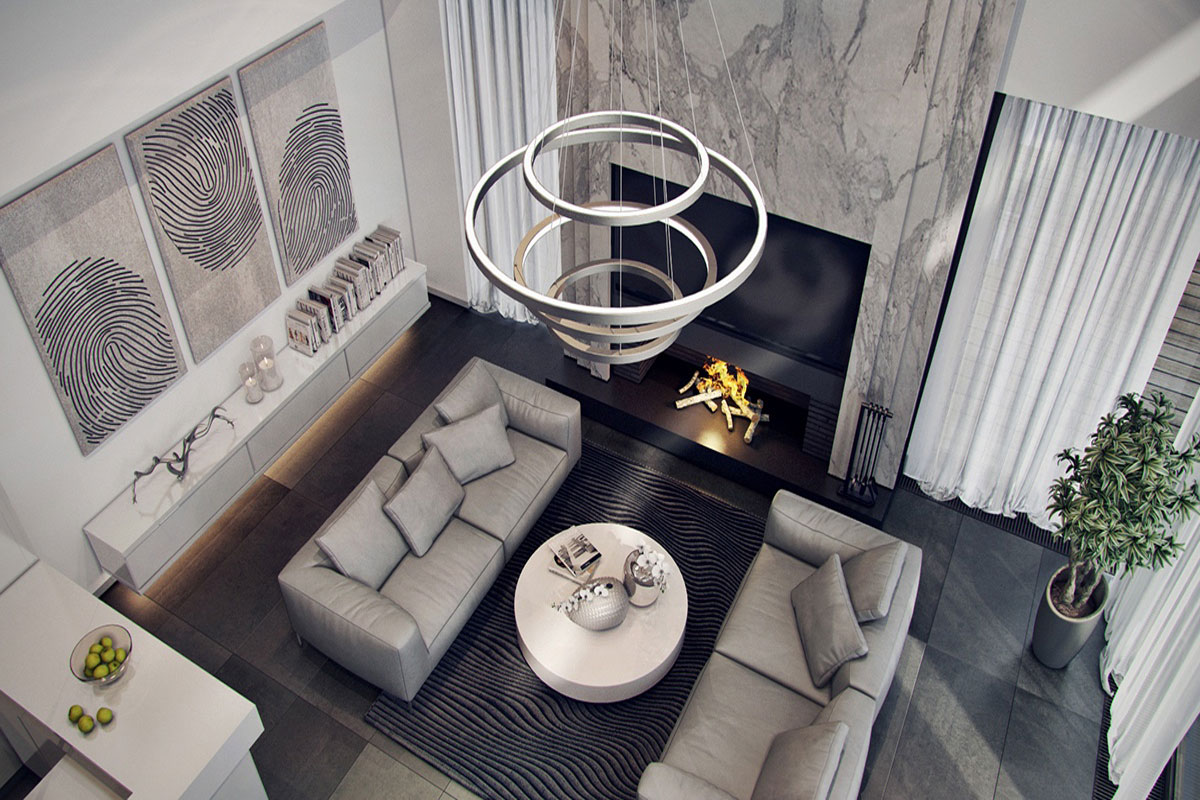
How to make the interior luxurious without a million budget
A luxurious interior rarely begins with an enormous budget. More often, it begins with taste, discipline and the ability to see a room as a whole. An expensive-looking home does not necessarily need marble from floor to ceiling, designer furniture priced like a car or a chandelier the size of a small satellite. True luxury is created through proportion, light, texture, pauses, the quality of details and that confident restraint that no amount of shopping can replace.
The biggest mistake is assuming that luxury equals expensive things. In reality, an interior often looks cheaper precisely when it tries too hard to impress: too much shine, too much décor, random accents, showroom furniture and objects that do not speak to one another. A good interior, by contrast, feels composed. It has air, rhythm, a focal point and the sense that every object has arrived in its place deliberately.
To add polish to a home, you do not always need to begin with a major renovation. Sometimes it is enough to change the lighting, remove visual clutter, choose one expressive mirror, make the bed properly, add fresh flowers or replace a few small details that reveal the fatigue of the space. Below are ways to make an interior feel more expensive, modern and refined without a million-dollar budget.
Choose one strong colour accent
Colour can instantly elevate an interior when it is chosen well. The simplest approach is to keep the background calm and make one major piece expressive. This could be a sofa in deep blue, olive, burgundy, caramel, terracotta or emerald. Against white, ivory, grey, beige or warm neutral walls, such furniture looks not loud, but expensive.
The key is not to turn the room into a colour argument. If the sofa is already the hero, the other elements should support it rather than compete with it. Pillows, a rug, artwork or ceramics can repeat the shade in small doses. Repetition is what makes an interior feel intentional rather than accidental.
If buying a coloured sofa feels too risky, start more gently: an armchair, ottoman, throw, curtains or large artwork can create the same effect without making the entire room depend on one decision.
Layer different textures
An interior feels richer when you want not only to look at it, but also to touch it. That is why textures often work more powerfully than colour. Linen, wool, bouclé, velvet, wood, ceramics, stone, metal, glass, rattan, leather or high-quality faux leather create depth even in a quiet colour palette.
In fashion, the combination of cashmere, silk, leather and denim can look more expensive than one costly item on its own. The same principle applies to interiors. A fabric sofa becomes more interesting with a wool throw. A smooth table feels better beside a ceramic vase. A minimalist bed gains presence with linen bedding, a quilted cover and several pillows in different sizes.
The most important thing is to avoid flatness. A room where everything is made of the same material, has the same level of shine and the same temperature quickly becomes lifeless. Luxury begins where layering appears: matte and smooth, soft and hard, warm and cool.
Mix styles, but stay in control
An interior held too strictly to one style can easily become anonymous. A room that is too perfectly “Scandinavian,” too literal in its “loft” references or too correct in its “classic” mood often looks like a set rather than a living home. What looks expensive is not blind loyalty to one style, but the ability to combine different elements in a way that creates character.
A modern sofa can live beautifully beside a vintage mirror. A simple kitchen can be elevated by an antique painting. A minimalist table can work with classic chairs. The important thing is that the objects share some kind of logic: colour, material, scale, era or mood.
If you are unsure of your instincts, use a safe formula: 80% calm modern foundation and 20% character accents. The interior will not look like a random collection, but it will gain individuality.
Add warm metal
Brass, bronze, warm gold and champagne metal can add refinement without making the room feel showy. The key is restraint. There is no need to turn an apartment into Versailles. A few well-chosen details are enough: cabinet handles, lamp bases, mirror frames, faucets, trays, sconces or the base of a coffee table.
Warm metal works best with natural textures: wood, stone, linen, ceramics, calm walls and soft light. It adds brightness and depth, but it should not be the only way the room tries to look “expensive.”
If you do not like gold, choose aged brass, brushed bronze or muted nickel. These finishes feel quieter, more modern and often more expensive than overly bright shine.
Leave empty space
Sometimes, to make an interior look richer, you do not need to buy anything. You need to remove things. Overloaded shelves, dozens of souvenirs, random frames, small décor and objects kept only because “it would be a shame to throw them away” create visual noise. Visual noise almost always cheapens a space.
Open shelves and bookcases look more expensive when they have breathing room. Leave some shelves half empty. Group books by colour or size. Add one sculptural object, one beautiful vase, one frame - not ten small things at once.
Luxury loves a pause. Empty space around a beautiful object makes the object more visible. And an interior that gives the eye and the body room to breathe almost always feels more expensive.
Treat the kitchen like a living space
A kitchen often feels purely utilitarian not because it is bad, but because everything in it is devoted only to function. Yet small decorative decisions can turn it from a work zone into a beautiful part of the home.
An open shelf, narrow cabinet, glass-front cupboard or small display case can become a place for beautiful ceramics, glasses, rare porcelain, wooden boards, small paintings or vases. You do not need to display everything you own. A few objects chosen by colour and shape are enough.
A kitchen looks more expensive when it has fewer packages, random jars and plastic visual clutter. Pour oil into a beautiful bottle, place salt in a ceramic bowl, clear the countertop, add a small lamp or a piece of art. These are simple moves, but they instantly change the atmosphere of the space.
Use pattern carefully
Patterned wallpaper can make an interior more expressive, but it is easy to go too far. What looks expensive is not necessarily the most complex or colourful pattern, but the one with rhythm, scale and a calm colour logic. Geometry, lattice, fine stripes, botanical patterns or soft classic motifs can add architecture and depth to a room.
It is usually better to use pattern not everywhere, but on one wall, in a niche, in a powder room, in an entryway or behind a headboard. Then it becomes an accent rather than visual pressure.
If the budget is limited, wallpaper is one of the most effective tools. Even an affordable option can look refined if the pattern is chosen with taste and the installation is done neatly.
Bring in fresh flowers or branches
Expensive interiors almost always contain something living. You do not need to buy an enormous bouquet of roses. Sometimes a few eucalyptus branches, seasonal peonies, tulips, hydrangeas, chrysanthemums, wildflowers or even one expressive branch in a tall vase work better than a costly but generic bouquet.
Fresh flowers make an interior not only prettier, but fresher. They show that the home is alive, changing and breathing. Flowers work especially well in the entryway, on the dining table, on a bedside table, in the bathroom and on the kitchen island.
If you do not want to buy bouquets regularly, use houseplants. The key is to choose the right planter. A plastic nursery pot rarely looks luxurious. Ceramic, stone, woven texture or a simple matte form immediately elevates the composition.
Create layered lighting
A lonely chandelier in the centre of the ceiling rarely makes a room beautiful. It lights the space, but it almost never creates atmosphere. An expensive interior is always built on several lighting scenarios: general, local, decorative and soft evening light.
Add table lamps, floor lamps, sconces, picture lights, warm LED strips in niches or under shelves. A living room should feel pleasant in the evening without overhead lighting. A bedroom should allow reading in soft local light. A bathroom should show your reflection not in cold clinical brightness, but in gentle, flattering light.
Pay attention to the colour temperature of bulbs. Light that is too cold makes even a good interior feel harsh and cheap. At home, warm or neutral-warm light usually works best. It softens skin, fabrics, wood and walls.
Add a sculptural object
A sculpture does not have to be huge or museum-grade. A small plaster bust, ceramic object, stone form, abstract figure or even a beautiful candlestick can give an interior a sense of artistry.
Such objects work especially well on a console, mantel, bookshelf, coffee table or in a niche. They give the eye a place to stop and make the interior feel more composed.
The key is not to buy an imitation of luxury for its own sake. One simple but expressive object is better than a group of random figurines. Sculptural quality is about form, silhouette and shadow, not the amount of décor.
Choose large-scale art
Small pictures hung too high and too randomly often disappear. One large artwork can make a room feel much more expensive. It might be an oil painting, contemporary graphic work, large-format photograph, vintage poster, textile art or abstract piece by a local artist.
You do not need to buy expensive art. What matters is choosing something with scale and confidence. A large piece above a sofa, console or bed creates a focal point and makes the interior feel more mature.
If you choose an oil painting, do not be afraid of size. A large format often creates a gallery feeling. But the frame and placement matter as much as the work itself. Art should not hang too high, should have space around it and should not fight with the rest of the room.
Use a real mirror
A mirror does not have to be only a closet door or a functional object in the bathroom. A large mirror in a beautiful frame can make a room brighter, deeper and more substantial. Vintage mirrors, brass or wooden frames, arched shapes and large floor mirrors work especially well.
A mirror can be placed opposite a window to amplify natural light, or in an entryway to make the space immediately feel more considered. In a living room, a mirror can replace a painting if the frame has enough presence.
The main rule is to watch what the mirror reflects. If it doubles beautiful light, flowers or an architectural detail, it is a success. If it reflects clutter, wires or a closet door, the effect will work against you.
Turn the bathroom into a real room
The bathroom is one of the most underrated spaces in the home. In restaurants and hotels, powder rooms have long become small theatrical spaces, while at home we often leave them cold, utilitarian and accidental. Yet the bathroom can create a sense of luxury on a relatively modest budget.
A beautiful mirror, good lighting, a woven basket, neat towels, a ceramic dispenser, a small vase, a plant stand, stool or side table can change the mood immediately. Remove visual clutter: colourful bottles, packaging, old towels and random bath mats.
If possible, replace the standard light fixture, update the faucet, add a quality shower curtain or a glass partition. Even a small bathroom begins to look more expensive when it has order, soft light and thoughtful details.
Make the bed like a good hotel
A bedroom can be very simple, but if the bed is beautifully made, the entire space looks more expensive. Many people stop at a bedspread and a couple of pillows, assuming that proper styling takes too much time. In reality, you only need to choose a simple formula and repeat it every day.
Good bedding, a neatly tucked duvet, a coverlet or quilt, two to four sleeping pillows and one or two decorative pillows already create a hotel-like sense of order. There is no need to build a pyramid of ten pillows. What looks expensive is not quantity, but cleanliness, texture and proportion.
Choose calm shades: white, ivory, grey, taupe, sand, dusty blue, olive. They combine easily and create a feeling of freshness. A bedroom does not need a large budget to look luxurious. It needs to feel calm, clean and composed.
The main secret: remove randomness
The most expensive feeling in an interior comes not from one specific object, but from the absence of randomness. When colours relate to one another, lighting is considered, shelves are not overloaded, textures are layered and every object has a place, a home begins to look more expensive even without major spending.
Luxury is not always a question of price. It is a question of choice. Not buying more, but choosing better. Not filling every corner, but leaving air. Not chasing every trend, but creating a space with taste, rhythm and respect for daily life.
That is the interior that looks truly expensive: not because it shouts about budget, but because it reveals attention. And attention to detail is the most accessible and most reliable language of luxury.