

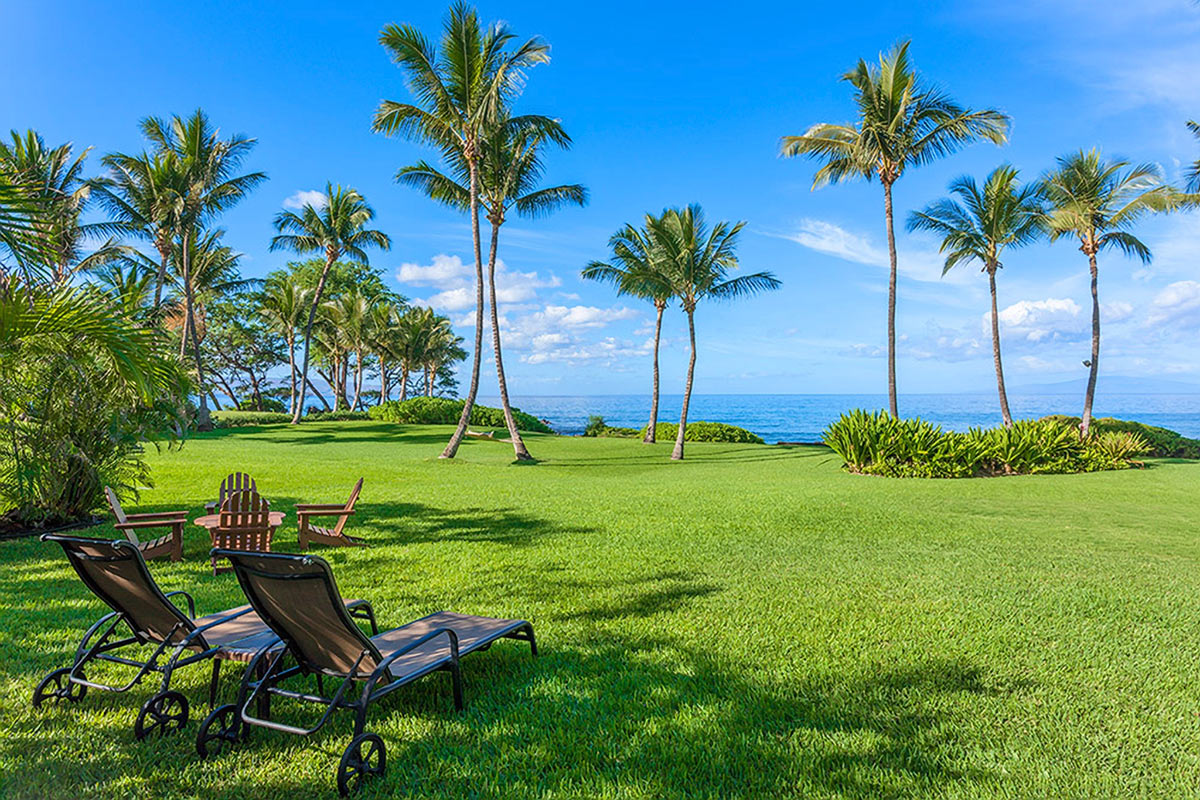
How Hawaii could become Russian
Everyone knows that in the 18th and 19th centuries Russia owned Alaska, but few people know that, for a very short time, Russia also had its own colony in the Hawaiian Islands. This story is a striking example of how foreign policy should not be conducted. After all, Hawaii could have become Russian territory.
The Hawaiian, or Sandwich, Islands were discovered in 1778 by James Cook’s third expedition. It was here that Cook died in February 1779, after returning to the islands following his voyage through the northern Pacific, which included a visit to Kamchatka. He named them the Sandwich Islands in honour of the British First Lord of the Admiralty. By the time Cook arrived, the Hawaiian Islands had already been inhabited by Polynesians for almost fifteen centuries. From that moment on, the fairy-tale archipelago captured the imagination of every traveller who saw it. The Pearl of the Pacific became an object of intense interest for foreign seafarers.
However, the Hawaiian king Kamehameha (1752-1819), sometimes called the “Napoleon of the Pacific,” managed to defend his independence and, by the end of the 18th century, became ruler of the entire archipelago, with the exception of the two northern islands - Kauai and Niihau - where his rival, Kaumualii, had established his power and ruled from 1795 to 1821. Kamehameha showed great interest in seagoing vessels and even formed his own flotilla, which included not only small craft but also large three-masted ships. He was supported by British and American traders, who supplied him with firearms and ammunition, yet he did not meet their expectations and pursued an independent policy. It is true that in 1794 George Vancouver persuaded him to seek the patronage of the British king and raise the British flag; to make George III’s “possession of the Sandwich Islands” appear more indisputable, Vancouver also installed a copper plaque bearing the relevant inscription. But the British government declined Vancouver’s “gift.” Europe was engulfed in major wars, and, lacking the additional forces needed for active operations in the Hawaiian region, Britain focused its attention on Australia and the neighbouring part of Polynesia.
Meanwhile, the region began to be developed by the “Boston shipmasters,” who gradually turned the islands into the main base for their intermediary trade between Russian America, California, and China. Until the 1830s, they were the fiercest competitors of the Russians in America. The Boston shipmasters violated the monopoly privileges of the Russian-American Company (RAC), competed with the Russians in the Chinese market through the fur trade, traded weapons with Indigenous peoples, and so on. On the other hand, ties with the Americans allowed Russian settlers in America to solve many problems, including the purchase of food supplies and ships, the organization of joint hunting expeditions, and other practical matters.
The Russians’ first direct acquaintance with the Hawaiian Islands took place in June 1804, when the Nadezhda and the Neva, under the command of Ivan Kruzenshtern and Yuri Lisyansky, visited the archipelago during their round-the-world voyage. The participants of the expedition not only left valuable observations about the economy, customs, and daily life of the Polynesians, but also enriched the museums of St. Petersburg with numerous exhibits. The most valuable observations were made by Yuri Lisyansky, commander of the sloop Neva, who devoted more than 70 pages of the first volume of his Voyage to a description of the archipelago. Russian sailors established good relations with the local population. It also became clear at that time that the islands could serve as an excellent food-supply base for Kamchatka and Russian America. A participant of the expedition, V. N. Berkh, later noted that it would be advisable to send a ship from Kamchatka to the Hawaiian Islands every autumn, where it could remain for the entire winter and return in May with a cargo of provisions.
Lisyansky was able to form a very detailed view of the economy, trade, customs, and life of the islanders, as well as of the successful rule of the energetic King Kamehameha I. The Neva also visited the island of Atuvai, or Kauai, where the Russian vessel was visited by the local king Kaumualii. He was interested in developing trade with Europeans and wanted protection from his rival Kamehameha. Even then, King Kaumualii asked not only for iron but also for Russia’s protection. “It was desirable to him,” wrote N. I. Korobitsyn, an agent of the Russian-American Company, “that we anchor our ship at his island to defend him from King Tomiomi, for which reason” he even expressed his willingness “to agree to place his island under Russian sovereignty.”
Kamehameha also wanted to establish relations with the Russians. Learning that the Russian colonies suffered from a shortage of food, the king informed the ruler of Russian America, A. A. Baranov, that he was ready to send a trading vessel every year to Novo-Arkhangelsk, the capital of Russian America, with a cargo of provisions - pigs, salt, sweet potatoes, and other goods - if, in exchange, he received “sea otter pelts at a reasonable price.”
Interesting thoughts on the prospects for developing relations between the Hawaiian Kingdom and Russian America were expressed by N. P. Rezanov in a letter to N. P. Rumyantsev dated June 17 (29), 1806. “The king of the Sandwich Islands, Toome-Ome-o, offered Mr. Baranov his friendship... He bought up to 15 single-masted vessels... and has now bought a three-masted vessel from the Americans. The navigator Clark... has lived in the Sandwich Islands for two years, and has a wife, children, and various establishments there. He has been several times in these parts, was received kindly by Alexander Andreyevich, and, knowing the needs of this region, spoke so much to his king that the latter sent him to negotiate trade, and, if permitted... Toome-Ome-o wishes to be in Novo-Arkhangelsk, laying the foundation for commerce...” The Hawaiian king Kamehameha promised to transport food supplies and wanted to receive manufactured goods from the Russians.
In 1806, on his own initiative, a Russian-American Company employee named Sysoy Slobodchikov undertook a daring voyage from California to the Sandwich Islands aboard the schooner St. Nicholas. Kamehameha received the Russians very favourably and sent gifts to Baranov. Slobodchikov also obtained the necessary provisions in exchange for furs and safely returned to Russian America.
The First Project for the Development of the Hawaiian Islands
In the autumn of 1808, taking advantage of the presence in Novo-Arkhangelsk of the sloop Neva under the command of Lieutenant L. A. Hagemeister, the ruler of Russian America, Baranov, decided to carry out a more serious study of the Hawaiian Islands. Lieutenant Hagemeister was to examine the archipelago, establish relations with the local king, learn the latest news from Europe through the Americans, and try to locate islands northwest of Hawaii that had allegedly been discovered by the Spaniards as early as the 17th century. In Baranov’s instructions to the commander of the Neva, he was ordered “to proceed first to the Sandwich Islands for a sufficient supply of provisions not only for the crew but also, if possible, for this region, and to remain there during the stormy season.” The lieutenant was to collect detailed information about the political situation in the kingdom, and then focus all his attention “on the most important objective: the search for islands, as yet undiscovered by anyone,” between Hawaii, Japan, and Kamchatka.
Hagemeister gathered information about the situation in the Hawaiian Islands and their potential importance for supplying Russian possessions with food. He concluded that it would be possible to purchase a plot of land on the islands, or even seize one, for which two ships would have to be allocated.
Later, while in Kamchatka, Hagemeister sent Foreign Minister N. P. Rumyantsev a proposal for founding an agricultural colony in the Hawaiian Islands. At the first stage, it was proposed to send about twenty workers and roughly the same number of soldiers with one cannon, as well as to build a fortified blockhouse. Hagemeister’s project received the support of the Main Board of the Russian-American Company. However, it found no response from the Russian government. St. Petersburg saw no need to expand Russia’s possessions, and in the context of the rupture with Great Britain - the Russo-British War of 1807-1812 - the founding of a colony on distant islands could have turned into a clear adventure. Moreover, pro-Western sentiment was strong in St. Petersburg, and any effort by Russian pioneers to expand Russian lands anywhere, especially in the East, was met with hostility. Immediately, people began speaking of the danger of damaging relations with the West - with England, France, or America.
Schäffer’s Mission
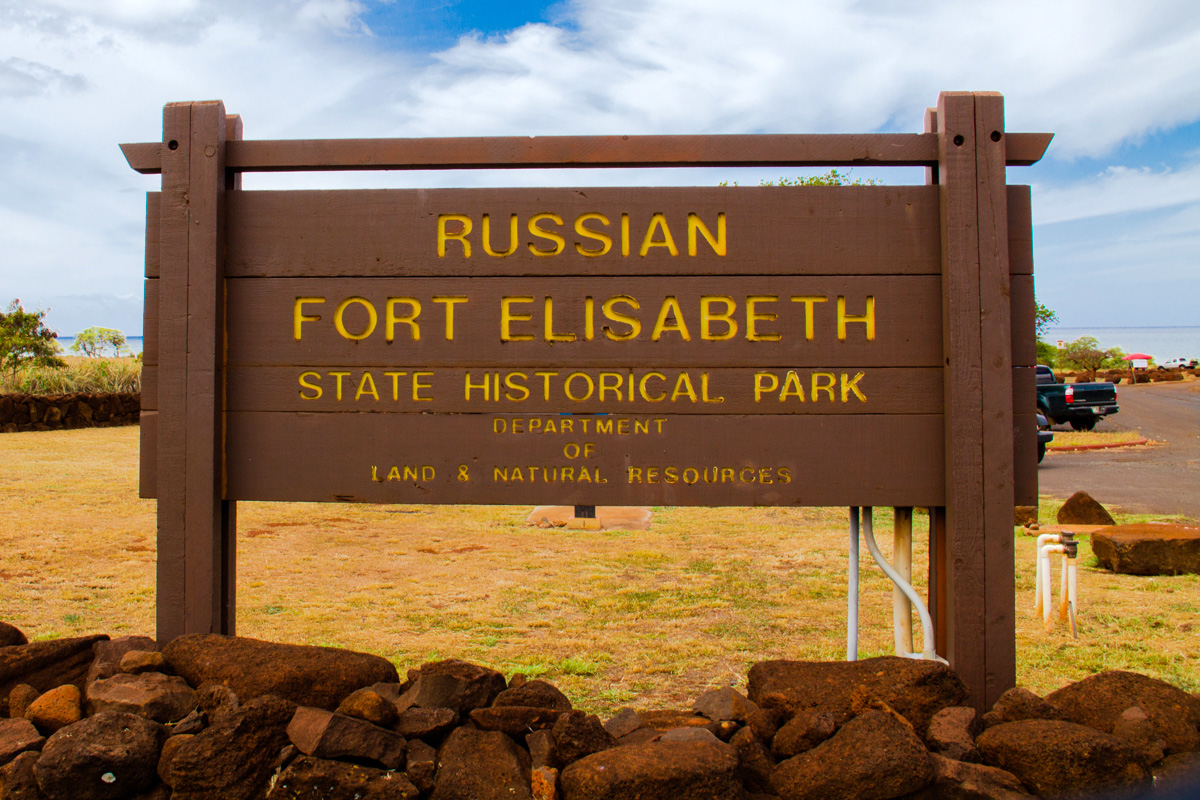
The attempt to establish a Russian foothold on the islands took place only in 1816. The occasion was an incident involving the ship Bering. At the end of January 1815, off the coast of Kauai, the ship Bering, commanded by Captain James Bennett and operating on Baranov’s instructions to purchase provisions, was wrecked. The vessel, thrown ashore together with its cargo, valued at 100,000 rubles, was seized by King Kaumualii and the local inhabitants.
This served as the reason for sending to Hawaii, in the autumn of 1815, Dr. Georg Schäffer, a German by origin, whom the Russians called Yegor Nikolayevich. Schäffer had received a medical education in Germany and later moved to Russia. In addition to medical practice, he devoted much time to the study of botany and minerals and took part in an experiment in Vorontsovo to build a military steerable balloon. For his services, he was granted the title of baron. The loss of his property during the burning of Moscow and his wife’s illness forced him, in 1813, to join a naval expedition to Alaska. There he remained.
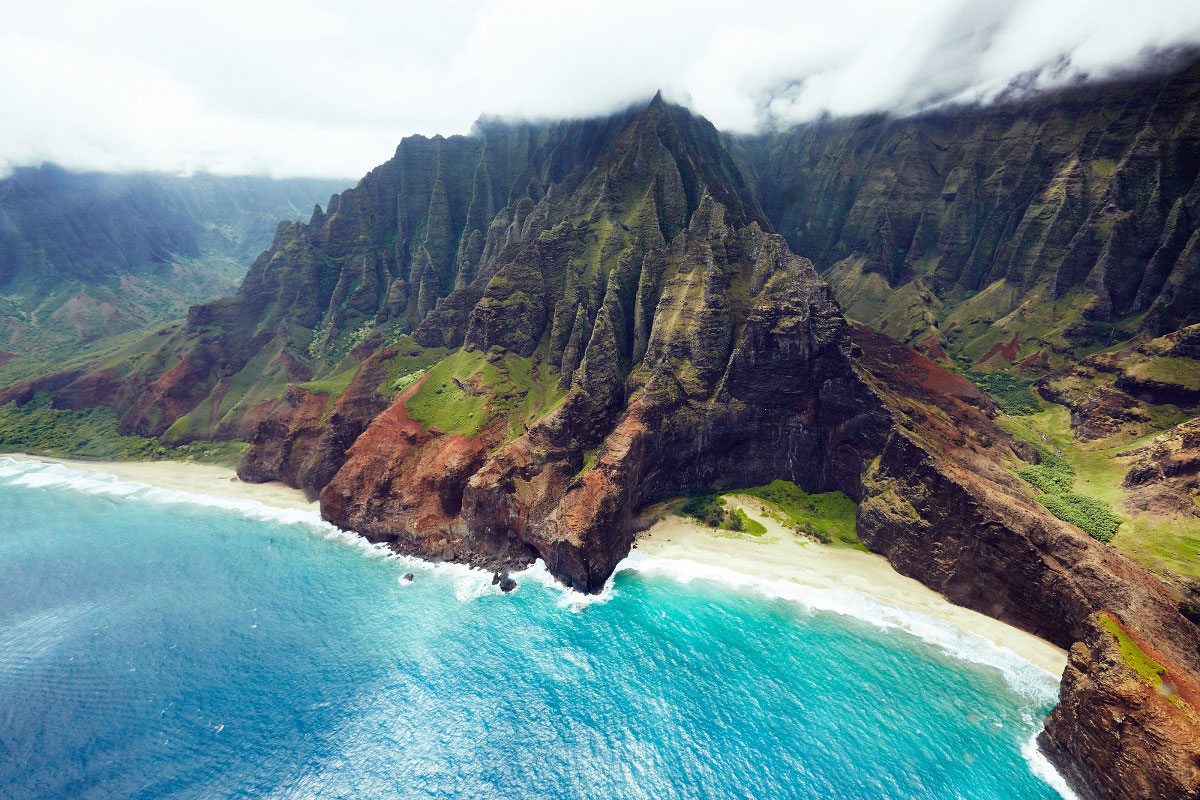
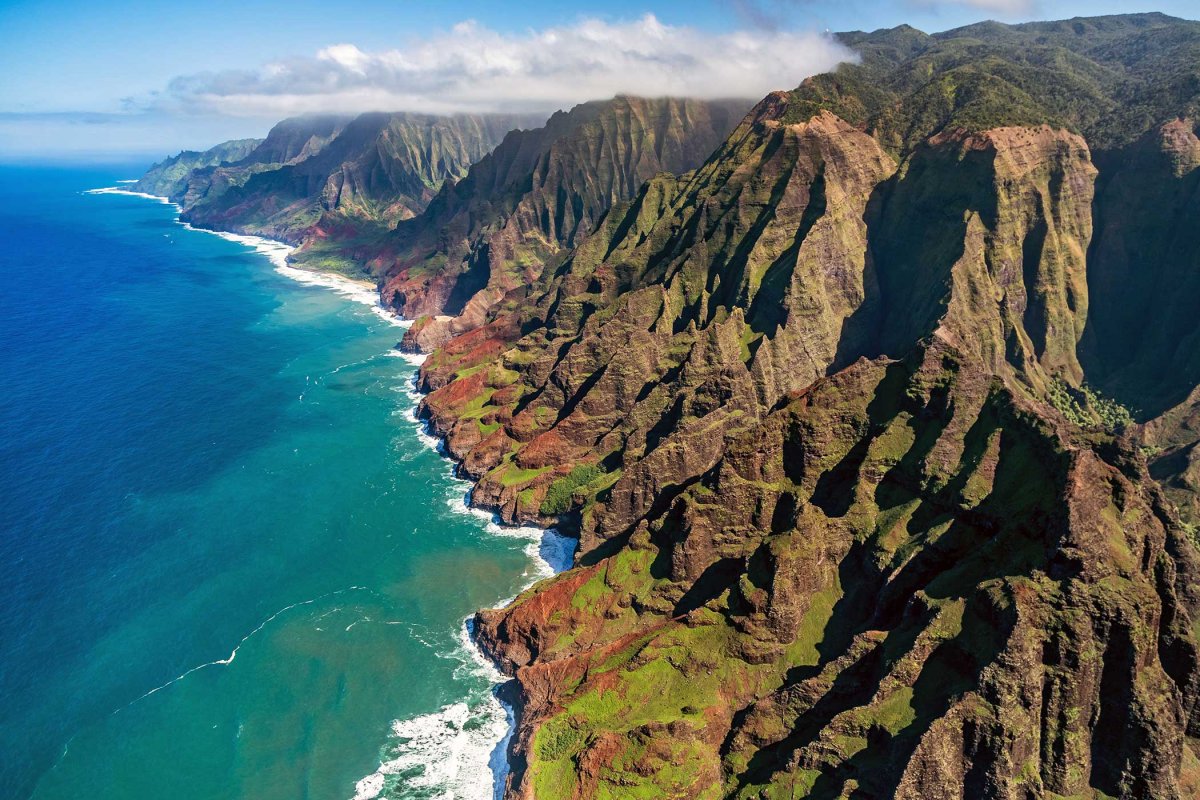
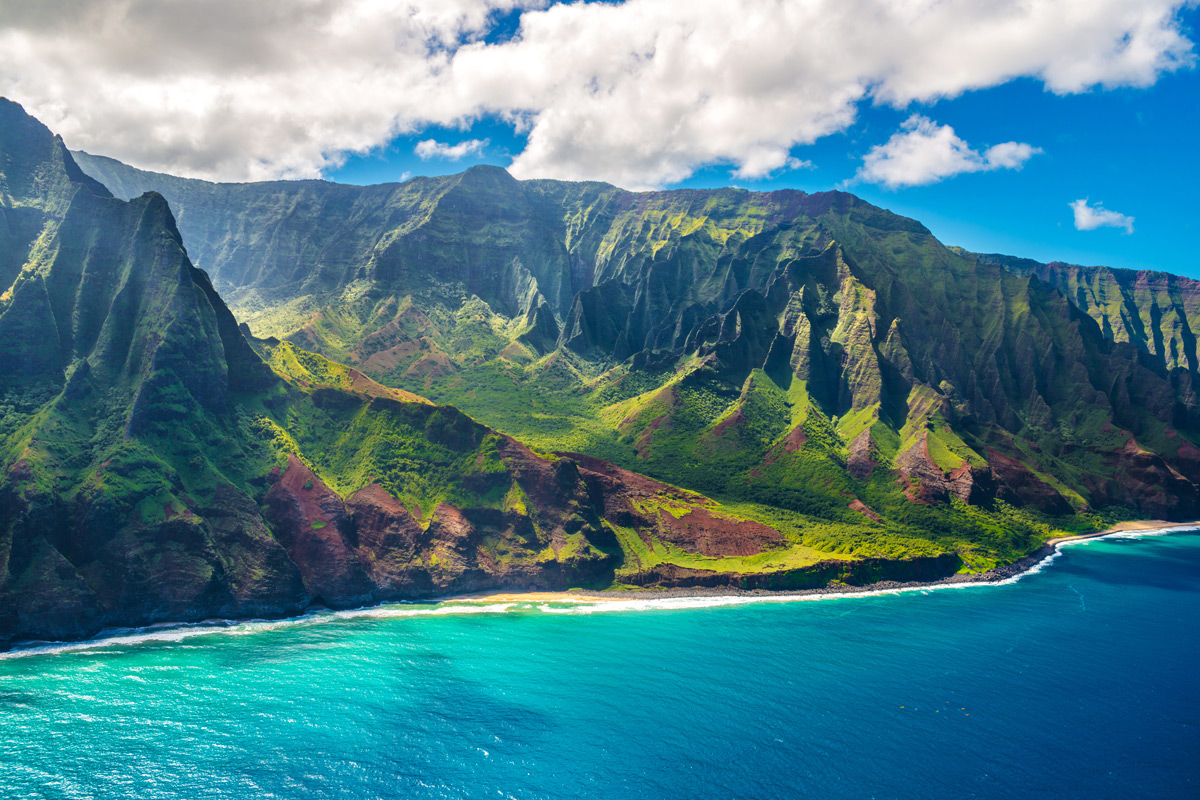
Schäffer’s task was to secure the return of the ship and cargo, or to obtain proper compensation in sandalwood, which was in great demand in the region. At first, Kamehameha received the Russians very well, but soon, because of American opposition and intrigue - including rumours that Schäffer had allegedly arrived on a reconnaissance mission to prepare a Russian seizure of the islands - the king’s attitude changed. Under these circumstances, Schäffer was forced to leave Oahu and move to Kauai, to Tomari. In the end, this produced an unexpected but necessary and desired result: after curing Tomari and his beloved wife of illness, Schäffer gained the full trust and favour of the ruler of Kauai. As a result of negotiations, Schäffer concluded an agreement with Tomari that opened a real possibility for the Company to establish itself in Hawaii by creating its own settlement there. Kauai, the “Garden Island,” is the fourth largest of the Hawaiian Islands.
The agreement concluded by Schäffer included the following terms:
1. The ship Bering and the seized cargo were to be returned to the Company.
2. King Tomari undertook to deliver annually to Russian America a full shipload of dried taro, another important Hawaiian export commodity.
3. All sandalwood from the islands under Tomari’s authority was to be placed at Schäffer’s disposal, and trade in it was to be conducted only with the Russian-American Company.
4. The Russians were granted the right to establish factories, or trading settlements, in all of Tomari’s possessions. In addition to Kauai, he also controlled the island of Niihau.
For his part, Schäffer undertook to place at Tomari’s disposal 500 men and several armed vessels for the struggle against Kamehameha, for which Tomari was to pay with the same sandalwood. In addition, Schäffer was entrusted with command of Tomari’s troops on the condition that half of the island of Oahu would be ceded to the Company, where the creation of a fortified settlement was also planned. On the basis of a special agreement, Tomari and the population under his rule came under the protection of the Russian emperor - a step which, as noted earlier, usually served as the first stage on the path to actual “subjecthood.” One may recall the example of Khvostov accepting the Ainu of southern Sakhalin “under the highest protection.” As a sign of Tomari’s “entry” under this “highest protection,” the Russian flag was raised on the island. The condition concerning the cession of half of Oahu to the Russian-American Company fully corresponded to Baranov’s intentions. In his additional instructions to Schäffer, Baranov had ordered him to discuss the establishment of a Russian factory on the island, where an American settlement belonging to the Winship brothers already existed.
Having concluded the agreement, Schäffer energetically began implementing it: he purchased two ships for Tomari and began building fortified factories, using timber delivered to Hawaii by a Company vessel from Novo-Arkhangelsk. Construction proceeded very successfully - settlements were being established simultaneously on Kauai and Oahu - and by 1815 the creation of a Russian outpost in Hawaii had practically been completed. Moreover, in this matter the Russians were clearly ahead of foreigners, since Russia’s “establishment” in Hawaii, unlike the temporary American settlements, promised to be substantial and long-term. The first foreign missionaries arrived on the islands only in 1820. This circumstance later became the main reason for fierce American opposition to the “Russian settlement” in Hawaii: the representatives of the Russian-American Company were seen as real and serious competitors, as subsequent events confirmed. And so, it seemed, the matter was settled, and all that remained was to continue and develop the successful beginning. But this is where the difficulties began - and, strangely enough, they arose at first not because of foreign competitors, but because of the actions of Russia’s own authorities.
First, Baranov, who until then had consistently supported bold initiatives aimed at strengthening the Company’s position, refused to approve the purchase of the ships and the agreements themselves without the authorization of the Main Board of the Russian-American Company, which since 1800 had been located in St. Petersburg. He referred to reports that the Sandwich Islands were under British protection - further evidence of the importance of this formal legal institution in determining the status, or “national affiliation,” of a colonial territory. Then came the refusal from St. Petersburg: Alexander I declined to accept Tomari under Russian protection and ordered that the document drawn up in this connection be returned to him - which, in effect, would have meant renouncing the concluded agreement. This order, however, was later cancelled. Such inconsistent, wavering policy was highly characteristic of the second period of Alexander’s reign. It is known that Alexander I actively interfered in the affairs of the Foreign Ministry, often conducting his own “personal” foreign policy - a policy that was frequently contradictory, inconsistent, and, most importantly, unprofessional, which only harmed the cause. In the mid-1810s, this led to a real “ministerial shuffle,” when, in addition to the emperor himself, four people were effectively responsible for Russia’s foreign policy - an unprecedented fact in the history of Russian diplomacy, noted by many contemporaries and later researchers.
At the insistence of the leadership of the Russian-American Company - which, to its credit, often succeeded in persuading Alexander to change his mind and restraining him from rash steps - the act of Tomari’s “highest protection” was not returned. Instead, the “king” was awarded a gold medal on the Order of St. Anna ribbon with the inscription “To Tomari, ruler of the Sandwich Islands, as a sign of his friendship toward the Russians,” and was also given the traditional gifts customary in such cases. But that was where everything ended. The “Schäffer project” received no real state support. From that point, events developed according to the familiar rule: if you do not score, someone scores against you. The Americans seized the initiative and prevented the Russians from establishing themselves in Hawaii.
As a result, the Russian factory, created in record time, was effectively abandoned to its fate even by the Russian-American Company, and foreigners did not fail to take advantage of this. They did everything possible to eliminate the Russian factories, which gave Russia indisputable rights to the occupied territories. Let us recall: the cession of territory for construction on the basis of a treaty with a local ruler, the raising of the flag, the creation of settlements, and the acceptance of a local chief under “highest protection” - and the act of protection, let us also recall, had not been returned to Tomari - all of this formed a legal basis for Russian claims. The foreigners succeeded in undermining it. The first thing the Americans tried to do was to have the Russian flag lowered - the flag that, once again, had been raised as a sign of Tomari’s entry under Russia’s protection. This, however, they were not immediately able to achieve.
Then, in 1816, the Americans bought from Tomari everything he had undertaken to supply to the Russian-American Company under the agreement with Schäffer, and then, through bribery and intrigue, began directly forcing the Russians out. First, they managed to destroy the factory on Oahu and drive Schäffer from the island; then the same happened on Kauai. As always, the Americans - like other Europeans in the struggle for colonies - acted without ceremony, cynically and aggressively, as researchers of the Russian-American Company repeatedly noted. When the first attempt to destroy the Russian factory on Kauai failed, a rumour was spread that if the Russian flag was not lowered on the island, the Americans would send ships and massacre all of its inhabitants. Then these same inhabitants were “helped” to seize Russian property. The situation became even more difficult when the American captain Vozdvitt of the Company vessel Ilmen, as Tikhmenev writes, “unceremoniously abandoned his ship.” Under threat of violence, Schäffer and his companions were forced to move aboard the ships - besides the Ilmen, the vessel Kodiak was also in Hawaii - and when he tried to land and recover the property, the Russians were fired upon with cannon. After remaining under this kind of siege for a considerable time, Schäffer was forced to leave for the port of Honolulu on one of the ships, sending the other to Novo-Arkhangelsk to inform Baranov of what had happened.
In July 1817, without receiving help from Sitka and leaving the Russian-American Company employees on Oahu under the supervision of the promyshlennik Tarakanov, Schäffer departed for Canton aboard a foreign vessel, through which he eventually managed to return to St. Petersburg. Thus ended the first stage of the struggle for a Russian presence in Hawaii. Upon his return to the capital, Schäffer submitted a memorandum in 1818 to the Minister of Internal Affairs Kozodavlev - the Russian-American Company, as a semi-governmental enterprise, was under the jurisdiction of the Ministry of Internal Affairs - in which, arguing for the profitability of trade with the Sandwich Islands, he again raised the question of the Company occupying one of the Hawaiian Islands and establishing a Russian factory there. The council under the Main Board of the Company, created in 1814, supported the project, placing special emphasis on the importance of establishing uninterrupted food supplies not only for Russian America, but also for Kamchatka and the Kuril Islands, which were also under the Company’s jurisdiction. Indeed, guided by logic and common sense, it was difficult not to support the project. However, in St. Petersburg a different point of view again prevailed: Alexander once more refused to approve the “Hawaiian project,” declaring that “the idea of settling Russians on one of the Sandwich Islands has very little foundation,” and giving the Company the right to dispose at its own discretion of the gifts “appointed in the highest name” for the ruler of the islands.
The reasons for such a strange decision may yet need to be clarified. But one thing is clear: for the sake of one political attitude or another, a merchant project advantageous in every respect - and the problem of supplying Alaska with food had been one of the most acute since the very beginning of Russian America - was once again drowned by the bureaucratic machinery of the state. Thus Russia, for the second time and now definitively, missed a real opportunity to create a support base in the very centre of the Pacific Ocean. As a result, “the Company’s relations with the Sandwich Islands were subsequently limited only to the acquisition there, when the occasion allowed, of food supplies, especially salt.”
There is hardly any need to explain the strategic importance, in every sense, of such an outpost - above all, for the security of Russian America, both military security and the equally vital security of food supply. In this regard, the opinion of the well-known researcher of the Russian-American Company, Captain-Lieutenant P. K. Golovin, who visited the American colonies in 1860, is highly revealing: the Sandwich Islands offered every convenience for maintaining a permanent station there. From them, routes were open to America, Japan, and China, and the commanders of Russian warships would have had every opportunity to familiarize themselves with navigation in the very regions where, in the event of war, all their activity would have to be concentrated.