Why the United States owns part of Cuba
In reality, the world has many examples of disputed borders and contested islands, but the 45-square-mile American enclave at Guantanamo is something of a global geopolitical anomaly. There is no other place in the world where the U.S. military openly occupies another countrys land against the will of its owner.
American warships approached Guantanamo Bay in 1898 and, together with Cuban rebels, defeated the Spanish fleet. On February 23, 1903, the United States, leaving Cuba with no real choice, leased the former Spanish naval base located on Cuban territory, along with the adjoining waters. The terms of the agreement signed at the time were disadvantageous to Cuba from the very beginning. The lease term was defined by the vague formula “for the period of time required.” To implement this, a special amendment was included as an appendix to the Cuban Constitution. Among other things, the treaty set a fixed rental price of 2,000 pesos in United States gold currency per year. The treaty itself is indefinite and can be terminated only by mutual consent of the parties or in the event of a violation of the lease terms.
However, the United States had taken an active part in the war of liberation against the Spanish colonial authorities. For that reason, the Cuban authorities were forced to allow their conditional allies to deploy their own troops and provide territory for their accommodation. Thanks to the strategic location of the base, its personnel took part in all major U.S. military operations conducted in the Caribbean and Central America.
For nearly a hundred years, Guantanamo was a highly popular destination for those who dreamed of obtaining political asylum in the United States. During that period, almost 50,000 refugees passed through the naval base, and some continue to live and work at Guantanamo to this day. For example, in the mid-20th century, many Cubans subjected to repression by Fidel Castro’s newly established government made their way onto the base by any means possible, thereby saving their own lives.
The current status of the base is governed by the 1934 treaty, concluded after a series of coups in Cuba in the early 1930s. As a result, the payment for use of the base was raised to $3,400. These funds were paid to Cuba until the pro-American regime of dictator Fulgencio Batista was overthrown as a result of a popular uprising. It is worth noting that for similar bases in Taiwan and the Philippines in the 1950s–1970s, the United States paid $120 million and $140 million per year, respectively.
After the victory of the 1959 revolution, the Cuban state refused, beginning in 1961, to accept the derisory rental payments from the United States for this base, demanding either its liquidation or, failing that, a fiftyfold increase in rent. That same year, Havana unilaterally withdrew from the 1934 U.S.–Cuban agreement confirming the lease terms. But the United States refused outright to negotiate with Havana on these matters, instead expanding its military presence at Guantanamo.
The United States did not want to hand the base over to Soviet control. During periods of peak tension in the Cold War, such as the Cuban Missile Crisis, the base became a front line in the Soviet-American standoff. American and Cuban forces sometimes exchanged artillery fire. One such episode was dramatized in the 1992 film A Few Good Men, in which an agitated Jack Nicholson told Tom Cruise that he was unable to handle the pressure of living under constant threat at Guantanamo.
Castro cut off water and electricity in 1964, and today the base is completely isolated from the rest of Cuba. Visitors say it resembles a small American town. The base is separated from the rest of the island by mines, barbed wire, and thickets of prickly cactus.
The worsening U.S.–Cuban relationship nearly brought the world to nuclear war. After the resolution of the Cuban Missile Crisis in 1962, the United States promised Moscow that raids by Cuban émigré opponents of Castro would not be launched from the territory of the Guantanamo naval base. Washington has kept that promise to this day. In return, Moscow promised to restrain Havana from taking action against Guantanamo, and that too was achieved. Therefore, even during the Soviet period, the base and the area it occupied were not included by Soviet delegations at the United Nations, unlike by Chinese delegations, on the list of colonial and dependent territories.
Not a single Soviet statesman, whether speaking in Cuba or in the USSR, ever mentioned this base or the illegality of its existence even once. And Cuban leaders visiting the Soviet Union were advised by Kremlin representatives to speak about it as little as possible in public, or better still, not to mention it at all.
In the 1970s, Albanian, North Korean, and Chinese representatives at the United Nations sharply criticized Moscow for keeping silent about the illegal American base at Guantanamo. At times, this criticism was so harsh that Soviet representatives at the UN often had to leave the chamber in protest.
There are opinions that the Soviet Union’s position on this issue was one of the reasons why the American base remains on Cuban territory to this day. For a great many interconnected reasons, the United States continues not only to occupy part of Cuba’s sovereign territory, but also to use it to control a very extensive region.
Nevertheless, in the past, the U.S. military regularly conducted exercises for the emergency evacuation of personnel and equipment from Guantanamo. At the same time, Cuban units during the Cold War regularly held military maneuvers in areas adjacent to the base.
There is no doubt that, if necessary, the Cubans could have quickly eliminated the American base; the real question is that this would inevitably have led to unpredictable consequences. Understanding this, both sides, despite their mutual hostility, refrained from reckless actions. One of the major factors restraining the Americans was the presence of a Soviet military contingent on the “Island of Freedom.” Aggression against Cuba would automatically have meant armed escalation with the USSR.
After the political coup that took place in Haiti in 1991, American forces set aside space on the territory of Guantanamo for fleeing Haitians, although they later managed only with difficulty to expel them back to their country. Taking advantage of the claim that they had crossed the U.S. border and were on American territory, the Haitians demanded political asylum under the laws then in force. American justice issued a decisive verdict in this dispute, and in 1994 the last Haitian was expelled from Guantanamo.
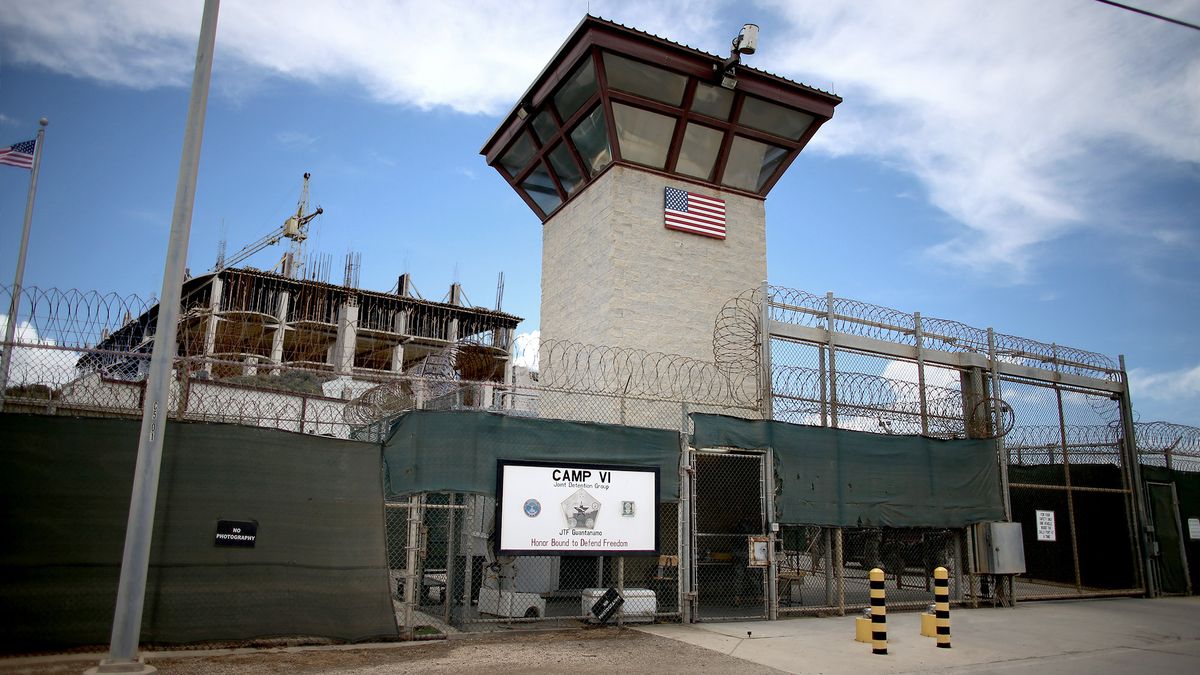
The Cuban authorities tried several times to challenge the existing lease agreement and even stopped accepting rental payments from the United States, but the base was never returned. In 2002, after the first twenty detainees—considered the most dangerous, ruthless, and brutal killers—were brought to Guantanamo, part of the naval base was converted into a prison.
Many rumors circulated about the Guantanamo prison. It was believed that the prisoners held there, who were members of terrorist organizations and direct participants in military operations in Afghanistan and Iraq, were subjected to all manner of sophisticated torture. They were deprived of sleep and water, forced to listen to loud music for days on end, blinded with lasers, and subjected to waterboarding.
Despite the obvious violation of human rights, none of the prisoners’ lawyers was able to stop what was happening at Guantanamo. Even five years after U.S. President Barack Obama signed an order in 2009 to close the prison and transfer all detainees held there to other correctional facilities in America, more than 100 people remained within Guantanamo’s walls.
On the territory of the Guantanamo naval base there is a small town with all the usual attributes of peaceful life: movie theaters, clubs, tennis courts, basketball courts, and baseball fields. Around 10,000 American soldiers continue to serve at Guantanamo, and despite constant demands to revise the lease agreement, the United States does not plan to return the base to Cuba.
The Cuban government declares the presence of the American base illegal, citing Article 52 of the 1969 Vienna Convention, under which unequal international treaties concluded under the threat of military force are considered invalid. The U.S. authorities, however, refer to Article 4 of the same convention, according to which the convention does not apply to previously concluded agreements.
In effect, the United States exercises its state sovereignty over this territory unconditionally and in full, while Cuba’s jurisdiction is purely formal, a reality acknowledged by the U.S. Supreme Court. “From a practical standpoint, Guantanamo is not abroad,” the justices ruled.