
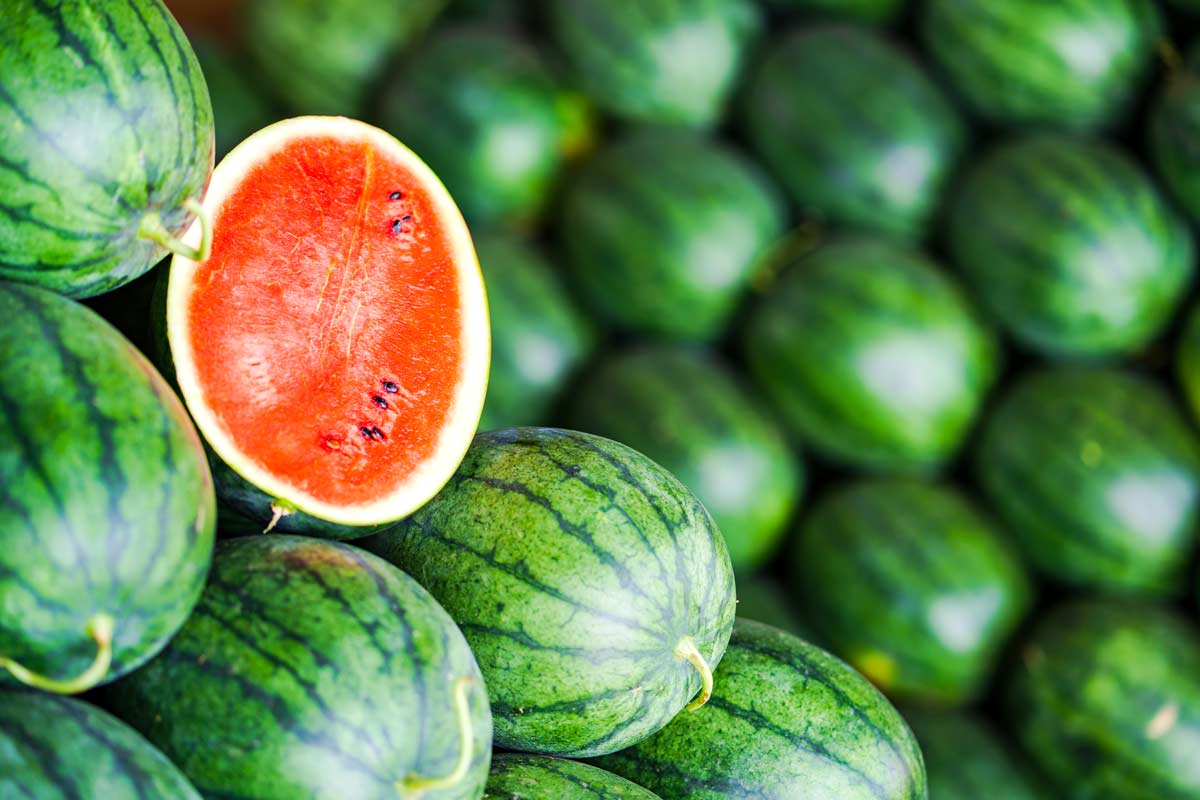
The Secret Science of a Perfect Watermelon
How to Choose the Sweetest One Every Time
There is a particular kind of summer disappointment that only a watermelon can deliver: you haul home something the size of a toddler, slice it open with real anticipation, and find pale, watery flesh with barely a whisper of sweetness. The good news is that this is almost entirely avoidable. Watermelon ripeness leaves visible, physical evidence - you just need to know where to look. Here is what food science, commercial growers, and decades of market experience actually say about picking the sweetest melon in the pile, plus a guide to the surprising range of varieties now sold across North America.
The Field Spot Is the Single Best Clue
Every watermelon spends its life lying on the ground, and the patch of rind touching the soil can't develop the same color as the rest of the fruit exposed to the sun. That patch is called the field spot, and it is, by a wide margin, the most reliable indicator of ripeness available to a shopper.
As the melon matures on the vine, the field spot shifts color in a predictable sequence: white, to pale yellow, to a deep, buttery yellow that can edge toward orange. A white or barely-there yellow spot means the melon was picked too early and never developed its full sugar content - no amount of counter-ripening at home will fix that, since watermelons, unlike bananas or avocados, do not continue to sweeten meaningfully once cut from the vine. A deep butter-yellow to orange field spot is the single strongest sign that a melon spent enough time in the sun to convert its stored starches into sugar. When comparing several melons side by side, the one with the darkest field spot is very often the sweetest one in the pile.
Webbing: The Marks Bees Leave Behind
Look at the rind and you may notice rough, brown, web-like or spider-veined patterns, sometimes called "sugar spots" by farmers. These form from scarring during heavy pollination - the flower was visited repeatedly by bees, and the resulting fruit tends to be both larger and measurably sweeter. Far from a defect, dense webbing is one of the best positive signs you can find on a watermelon, seeded or seedless alike. A rind with little or no webbing isn't necessarily bad, but between two otherwise similar melons, take the one with more of it.
The Knock Test, Done Correctly
The classic tap test works, but only if you know what you're actually listening for. Hold the melon, or rest it on a surface, and give it a firm flick or knuckle-rap in a few different spots around its middle. A ripe watermelon produces a deep, resonant, hollow sound - think of a knock on a wooden door, or a low drum. An underripe melon rings higher-pitched and tighter, because the flesh is still dense and hasn't yet developed the moisture and cellular structure of a fully ripe fruit. An overripe or spoiling melon tends to sound dull and flat rather than resonant. The sound is a genuine physical signal - as flesh matures and juices up, it forms fine internal air pockets that make the fruit resonate differently when struck - but it takes practice. Tap two or three melons in a row to calibrate your ear before trusting the result on your final pick.
Weight, Shape, and the Stem
Set the knock test aside for a moment and simply pick the melon up. Watermelon is roughly 92 percent water, so a fully ripe fruit should feel distinctly heavier than its size suggests - noticeably heavier, in fact, than a same-sized melon that hasn't developed its full juice content. When choosing between two similarly sized melons, the heavier one is almost always the better bet.
Shape matters too, though it's a subtler clue: look for a symmetrical, evenly rounded fruit rather than one with flat sides, lumps, or dents, which can signal uneven watering or growing stress that may have affected flavor development. And check the small curled tendril nearest the stem, where the melon attached to the vine: a brown, dry, shriveled tendril suggests the fruit was left on the vine until it was properly ready and either fell off naturally or was cut at peak ripeness. A green, fresh-looking tendril is a sign of an early harvest.
The "Boy" and "Girl" Myth, Debunked
You may have heard a folk rule that watermelons come in two "genders" - supposedly, elongated, oval melons are "male" and taste watery, while round, squat ones are "female" and are sweeter. It's a charming piece of produce-aisle folklore, and it's simply not true. Watermelon plants do have separate male and female flowers on the same vine, but only the female flowers are ever fertilized into fruit - male flowers exist purely to supply pollen and never develop into a melon at all. Every watermelon you've ever eaten, in other words, grew from a female flower; there is no such thing as a "boy" watermelon to compare it to. The round-versus-oblong shape you're actually seeing is simply a trait of the variety - Crimson Sweet tends round, Charleston Gray and Jubilee tend oblong - and has no bearing on sweetness whatsoever. Agricultural extension specialists have confirmed this directly when asked: shape comes down to genetics and variety, while sweetness comes down to growing conditions, rainfall, and how ripe the fruit was when it left the field. Skip the gender-sorting and go back to the field spot, the webbing, and the knock test - those are the clues that are actually real.
What "Brix" Actually Means
Commercial growers measure watermelon sweetness using a scale called Brix, which quantifies the percentage of dissolved sugar in the fruit's juice using an instrument called a refractometer. A typical supermarket watermelon lands somewhere between 8 and 12 Brix; genuinely exceptional varieties, grown and ripened under ideal conditions, can reach 13 or even 14. For context, that puts a great watermelon roughly on par with a ripe peach in sugar concentration - which is part of why a truly good one feels less like produce and more like dessert. Brix isn't something you can measure at the grocery store without special equipment, but it explains why the same variety can taste wildly different depending on the grower, the season, and how close to full ripeness it was picked. Heat, sun, and consistent watering in the final two weeks before harvest are what push sugar content toward the top of that range; drought stress or an early pick keep it at the bottom.
Seeded, Seedless, and the Difference That Actually Matters
Nearly all watermelon sold in North American supermarkets today is seedless - technically a triploid hybrid created by crossing plants with different chromosome counts, which produces a fruit that can't develop viable seeds. This is a breeding technique, not genetic modification, and it dates back decades. Seedless melons still contain small, soft, white seed traces that are perfectly edible and easy to overlook; they are not, contrary to a common myth, artificially sweeter or blander than seeded fruit - sweetness is a function of variety and growing conditions, not the presence or absence of seeds. If anything, breeders generally note that seedless flesh tends to be slightly crisper and denser in texture. Traditional seeded varieties remain widely available, particularly at farmers markets and from smaller growers, and are often prized by people who grew up with them for a firmer bite and, in some heirloom types, a more complex flavor than mass-market hybrids.
The Major Varieties You'll Actually See in Stores
North American watermelon breeds fall into a handful of recognizable categories, and knowing them helps you understand what you're actually buying.
Crimson Sweet is the workhorse of supermarket watermelon: round to slightly oval, striped rind, dense and very red flesh, consistently high sugar content, and widely considered one of the most reliably sweet types grown at scale. Charleston Gray and Jubilee are the classic oblong "picnic" watermelons - large, pale green-rinded, bred originally for the hot, humid conditions of the American South and still common in the 20-to-35-pound range. Sugar Baby is the standard "icebox" melon: small, round, dark green, and bred specifically to fit in a home refrigerator - usually 8 to 12 pounds, sweet, and popular precisely because it doesn't require committing counter space to a 30-pound fruit.
Mini and personal-sized watermelons - sold under names like Mini Piccolo, Extazy, or simply "personal watermelon" - have become increasingly common in North American grocery chains over the past decade, running 2 to 7 pounds and usually seedless, aimed at smaller households and reducing food waste from an uncut fruit going bad in the fridge.
Then there is the flesh color itself, which surprises a lot of shoppers who assume all watermelon is red. Pink-red is the overwhelming majority of what's sold, but yellow-fleshed and orange-fleshed varieties - sold under names like Golden Crisp, Tropical Sunshine, or Orangeglo - show up regularly in specialty and farmers-market settings and increasingly in mainstream supermarkets. Growers and tasters frequently describe yellow and orange watermelon as tasting slightly sweeter and more honeyed than red varieties, sometimes with a faint tropical or apricot note, and breeders note they can in fact run higher on the Brix scale on average. One practical note if you're growing rather than buying: yellow and orange-fleshed melons are somewhat more prone to developing a hollow center than red ones, though this doesn't affect flavor in the parts that are solid.
Choosing Beyond the Grocery Aisle
At farmers markets, don't hesitate to ask the grower directly which variety you're looking at and when it was picked - small growers selling vine-ripened fruit almost always have better flavor than supermarket melons, which are frequently picked slightly early to survive shipping and extended shelf time. A whole, uncut watermelon keeps well at room temperature for about a week and even longer refrigerated; once cut, refrigerate it and eat it within three to five days. Pre-cut watermelon sold in plastic containers is convenient but loses flavor and texture noticeably faster than a whole fruit, and it's worth checking the container for excess liquid pooling at the bottom - a sign the flesh is breaking down and past its best.
Putting It All Together
No single test is foolproof on its own, which is exactly why the pros stack several together. Start with the field spot - the darker and more buttery yellow, the better. Look for pronounced webbing as a bonus sign of good pollination and size. Give it a firm knuckle-tap and listen for a deep, hollow resonance rather than a high or dull sound. Heft it and pick the surprisingly heavy one over a same-sized rival. Check that the tendril near the stem has dried and browned. None of these guarantees perfection every single time - watermelon, like any fruit, has some irreducible variability - but together, they shift the odds dramatically in your favor. The next backyard barbecue, farmers market run, or grocery run doesn't have to end in a bland, watery letdown. The fruit is telling you exactly how sweet it is. You just have to know how to read it.